

Last year, I followed a cardboard box through the recycling process to see what actually happens after we toss it into the recycling bin. And someone left me a comment:
“Love it. Can you do one on plastic water bottles, please?”
I responded, “I’ll see what I can do.  ”
And, what can I say, I aim to serve. Somehow, I managed to turn that comment into a sponsored trip to Michigan, to attend the RECYCLE BOWL and follow the full journey of a bottle.
Lemme tell ya, I learned a lot about recycling, deposit programs, and football.
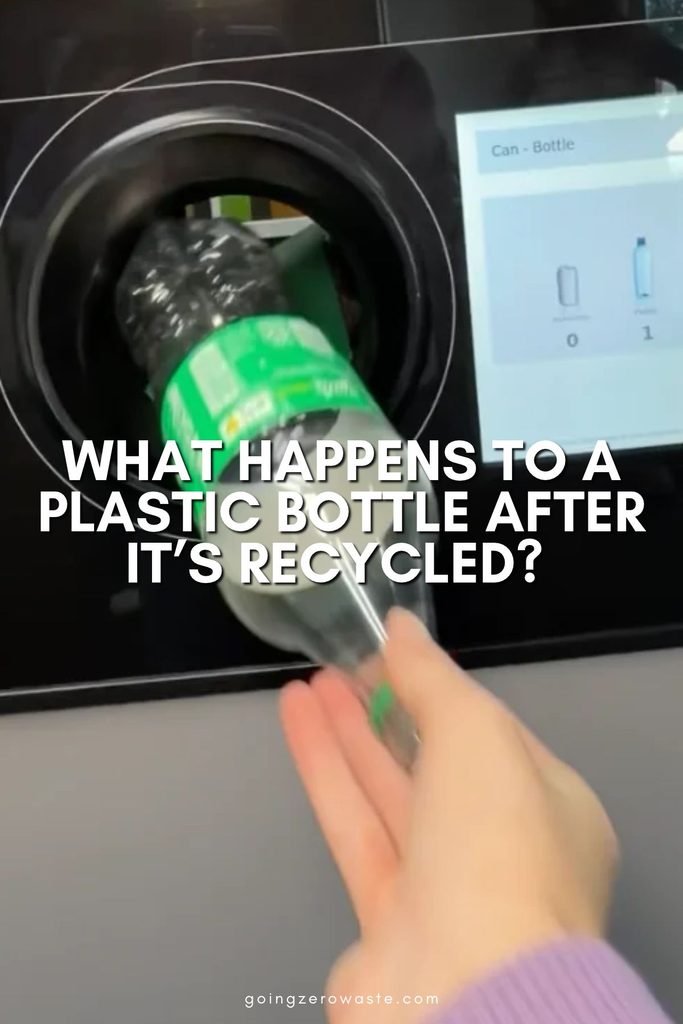
bottle deposits
I live in Maine, where we have a bottle deposit program, and I’ve been a big advocate for bottle bills for years.
If you’re unfamiliar, when you purchase certain beverages, you pay a small deposit, usually 5 or 10 cents, on the container. Once you’re finished with your drink, you return the empty bottle or can to a redemption center or participating retailer to get your deposit back.
It’s pretty simple, but it’s incredibly effective.
This is for things like aluminum cans, glass bottles, and different types of plastic beverage containers. And while each of these materials goes through its own recycling process, collecting them separately creates a cleaner, more reliable supply of material that manufacturers can use to make new products.
Which is really important, because recycling is a business!! REPEAT AFTER ME! RECYCLING IS A BUSINESS.
PEOPLE HAVE TO BUY WHAT YOU PUT IN YOUR BIN. Next time you go to your bin, I want you to ask yourself, ‘Would I buy this??’
When you start viewing your recycling in this way, it really changes how you approach the whole process in a good way. No more wishcycling!
That’s what makes these programs so exciting. It’s creating a reliable infrastructure that can almost guarantee a reduction in virgin material needed!
And Michigan has an incredibly effective system where you can go bottle to bottle in a 30 mile radius. This is an incredibly effective process I’d love to see replicated.
Michigan offers a 10-cent deposit on eligible beverage containers, and historically, the state has had some of the highest redemption rates in the country at almost 70%.
But, Germany’s deposit system collected approximately 96% beverage bottles in 2023, with an overall PET bottle collection rate of 98.7% across its different collection systems… so how do we increase this?
Because if we compare it to the United States, where the average is only 29% of PET bottles, that’s a LOT of valuable material we’re not collecting.
Which means we’re losing it to landfills, incinerators, litter, or other disposal routes.
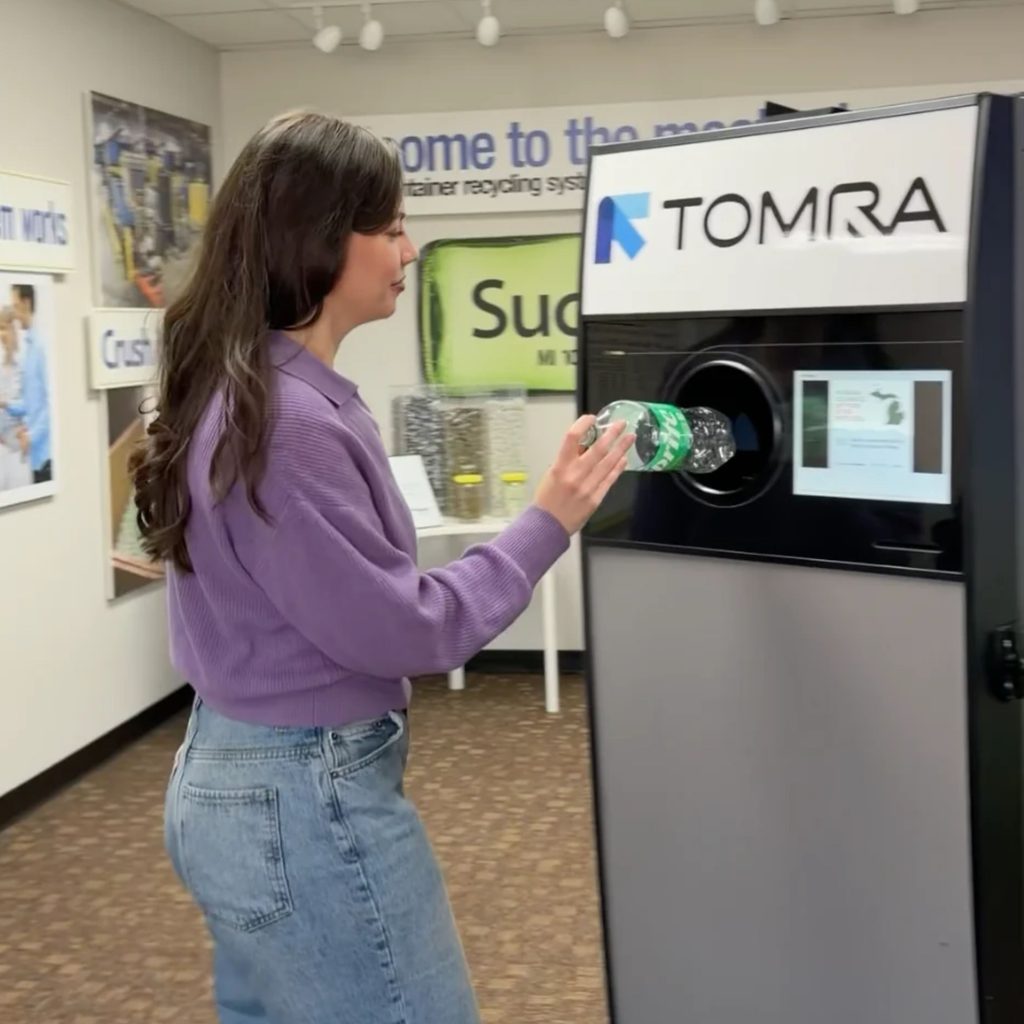
following a plastic bottle through the recycling process
While I was in Michigan, I visited Shcupan, Clean Tech, and Plastipak which is the full journey after you return your bottles at the grocery store or at a UM football game.
Now, I knew plastic bottles could be recycled into other materials like fabric or carpets, but did you know PET (plastic #1) could actually become another food-grade plastic bottle with 100% recycled material?
collecting and sorting
So after you drop your bottle or can into the beverage deposit machine at the grocery store, a truck comes and picks it all up. Where everything is sorted into like material. Glass is with glass, PET is with PET, HDPE is with HDPE. Aluminum is with Aluminum, you get the idea.
And, this is a very impressive process. Each material goes on it’s own journey. Once all the PET bottles were gathered, their first stop was my favorite machine – the label remover. When you recycle a plastic bottle you don’t need to remove the label and keep the cap on because they have machines to handle all of that for you.
shredding, washing, and separating
After the label is removed the bottles are shredded into small pieces, and they are passed through a machine that contains water. The lids of plastic bottles are made from HDPE (plastic #2) which floats while PET sinks so they can be separated and recycled with their own material.
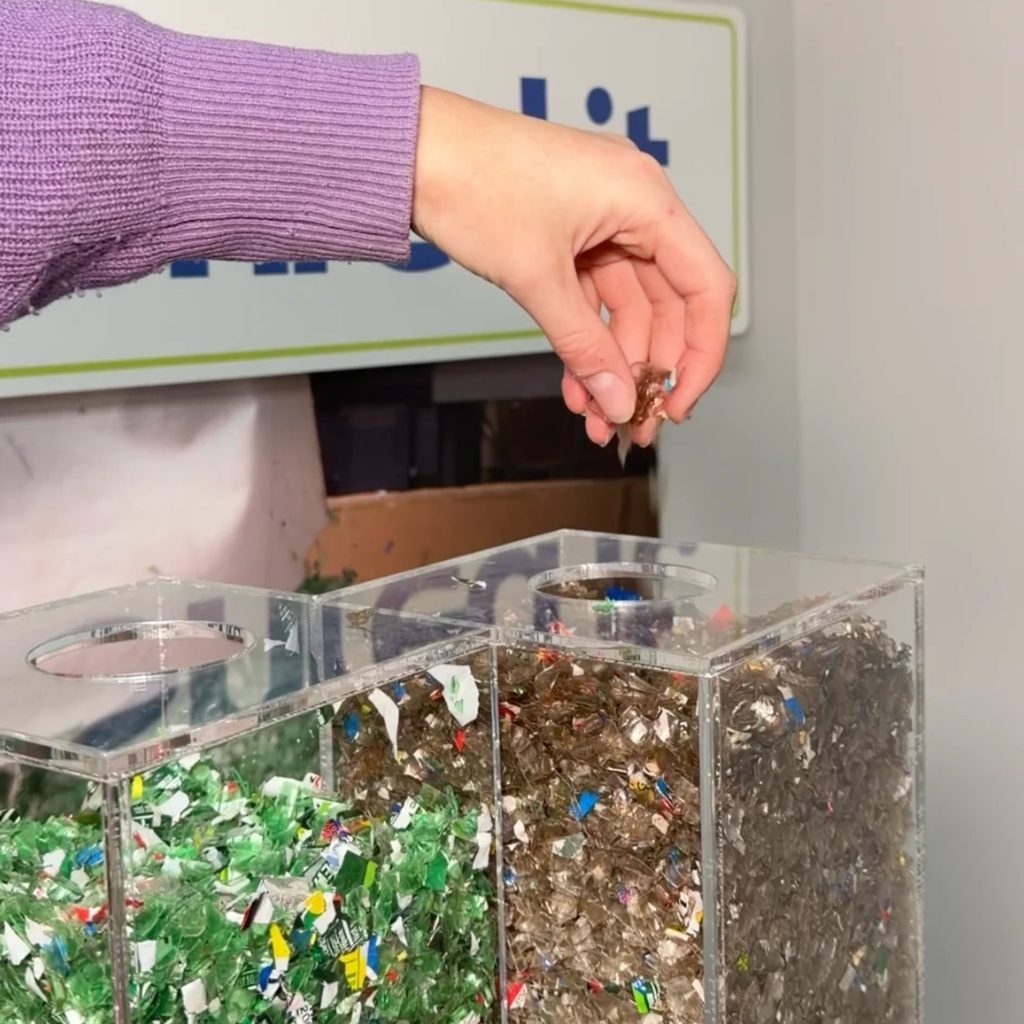
from plastic flakes to brand-new bottles
The clean PET flakes go through additional process to ensure it meets food safety requirements set by the FDA. This flake material is then turned into something called a preform, and these preforms are heated and blown into molds to create full-size bottles.
And just like that, an old plastic bottle has become a new plastic bottle, and I think that’s pretty cool! When I started my zero-waste journey, so much of the conversation around plastic recycling focused on downcycling, where materials are turned into products that might not be recycled again.
And while that still happens, It’s really nice to see bottle-to-bottle recycling that’s done mechanically and efficiently. (because chemical recycling is a whole ‘nother can of worms)
zero waste football stadium?
Part of my sponsored trip was to go to the University of Michigan RECYCLE BOWL!! UM has a zero waste football stadium and it’s one of the largest in the world.
Now, I love a good opps tour at a sporting event. Most people are excited to go to the game but I am thrilled to dig through the trash. There are really unique opportunities at arenas for education and really effective design.
Because if you can control what comes into the stadium, you can control what goes out and WHERE it goes. Essentially you can have a full end of life plan for every item sold or offered inside guaranteeing a massive diversion from landfill.
Michigan Stadium has a substantial recycling and composting program, with the university reporting that it typically diverts around 70-80% of game-day waste from landfills.
That’s an impressive undertaking when you consider just how much packaging, food waste, and other material can be generated during one football game with more than 100,000 fans in attendance.
In fact, we just got the results from the 2026 Recycle Bowl! Recycling is up 2,434 more pounds than last year, and 5 tons more than the very first Recycle Bowl.
Almost 50,000 pounds of material were collected for recycling, composting, reuse, and food donation. That’s nearly 25 TONS equivalent to almost 5 elephants. Not too shabby for a football game, but I have a confession to make. I actually bought a plastic bottle of water while I was there.
I could probably count on two hands the number of plastic water bottles I’ve purchased in the last decade. But you can’t bring your own bottles into the stadium, and I was thirsty.
The reality is that we’re not always going to have a reusable option available. Sometimes we’re going to forget something, find ourselves in a situation where reusables aren’t allowed, or simply need to buy a drink.
Thankfully, they had water refill stations, so I was able to refill my bottle instead of purchasing another one, but I feel a little less bad knowing that the stadium has a dedicated recycling program and I got to see the whole journey of my bottle.
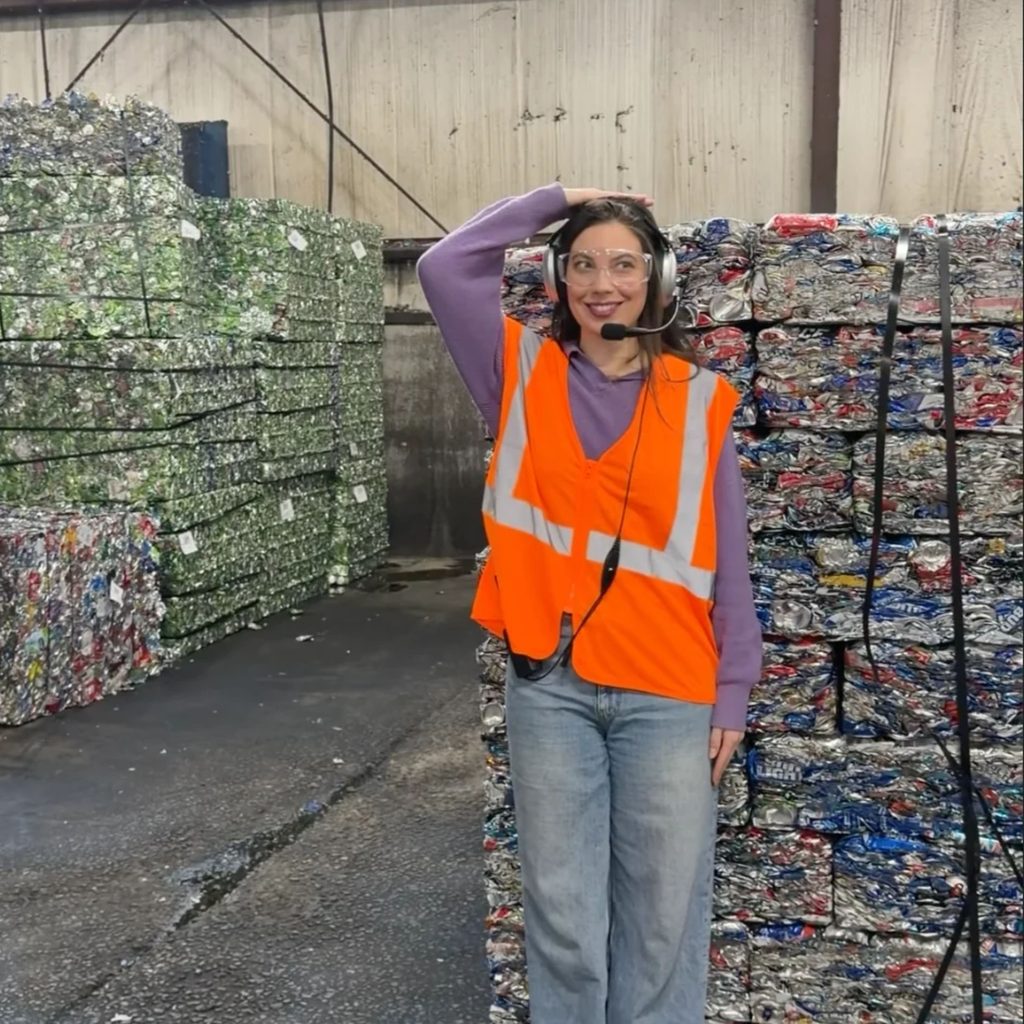
we need to reduce plastic AND recycle more of it
Now look, I’m not planning on buying more plastic bottles. I still believe we should reduce first, reuse second, and recycle as a last resort. But I don’t think reducing plastic consumption and improving plastic recycling are competing goals.
I wrote a blog post several years ago about whether glass or plastic is better for the environment, and it challenged a lot of my assumptions about packaging.
Glass is often viewed as the obvious environmentally friendly choice, but it’s also heavier to transport, and manufacturing it requires significant energy. The truth is that packaging has a lot of trade-offs, and we have to consider how it’s manufactured, transported, reused, and recycled.
And this trip has added another layer to that conversation for me.
I have family members who are never going to give up their bottled soda. And while I will always encourage people to reduce unnecessary packaging, I’d much rather see those bottles collected and turned into new bottles than have them end up in a landfill.
so how do we keep the bottles out of the landfill and environment?
BOTTLE BILLS. We desperately need more bottle bills. Since we’re capable of turning used plastic bottles into new, food-grade bottles, why aren’t we collecting more of them?
Germany’s collection rates show us what’s possible. We already have so much valuable material in circulation so let’s make sure we’re actually getting it back. We need more convenient redemption locations, and better infrastructure to reclaim the materials we’re already producing.
The post I Followed a Plastic Bottle Through the Recycling Process. Here’s What I Learned. appeared first on Going Zero Waste.
I Followed a Plastic Bottle Through the Recycling Process. Here’s What I Learned.

Doorframes decorated with fresh pine garlands are downright magical. But they sure cost a pretty penny.
Why spend all that money when you can make your own for free (or at a discount)? Not to mention, you’ll have way more fun getting creative and making it your own.

I’m all about slowing down and getting crafty during the holidays. After all, is it really the gifts we remember every year, or the memories we make with people we love?
Speaking of, it’s even better if you invite friends or family to help make a DIY garland! Put on some Christmas tunes, grab some hot cocoa, and it’s a Christmas memory you’ll be talking about for years.
Pine is also zero waste decor because it’s all compostable at the end of the season. Here’s how to make a DIY garland you’ll never forget.
materials you’ll need:
- Evergreens (you can get these while foraging, at a local nursery, or some from your own tree)
- 22-gauge floral wire (or dyed green twine)
- Heavy duty scissors
- Gloves (to protect your hands)
step 1 – measure your space
Where do you want your garland to hang? Above a doorway? A window? A fireplace? Measure the space so you know how long the garland will need to be. This will give you a better idea of how much pine you’ll need to bring your vision to life.
step 2 – find your pine
Now’s the time to decide if you want to forage or buy your pine. Faser Fir is a great option when it comes to garlands because of how sturdy the pine is, but any Fir will hold up great.
If you’re planning on foraging, try renting a book from the library that identifies the different types of native pine near you. This will help familiarize you on what to look for and what kind of effect different pines will have for your garland.
Generally, pines, firs, boxwoods and cedars make for good indoor decoration because they dry out more slowly.
Fraser fir, red pine, eastern white pine, and western red cedar are some great choices. You can use a mix of them to achieve a whimsical effect.
It’s a good idea to know how to identify different pine if foraging outdoors. Bring a reusable bag, gloves and heavy duty scissors with you while foraging. Be aware some pine trees are spikey and their needles can hurt! And never take too much off one plant.
If foraging isn’t for you, try hitting up a local nursery. They will likely have excess pine they’ll be happy to sell you for your garland. Christmas tree lots will often have a bunch of leftover greens they’ll likely part with for free too.
When in doubt, trimming some off your own tree works too (just be careful not to leave any bald spots).

step 3 – organize
Now’s the fun part – once you have all the evergreens you want, you’ll want to lay it out before you in the style of your choosing. The beauty of foraging for pine is that everything won’t be uniform – so embrace the imperfection.
You’ll want to make sure the sturdiest pieces are in the center. And make sure to pick which pine goes on the end – something with the right drip is always good. And don’t be afraid to prune them as needed.
When you have a structure you like, start layering and lining up your pieces properly. Then use the floral wire to secure them in place. You can also use dyed green twine if you’d like to compost the whole thing without hassle of removing the wire. But note that twine may be less subtle compared to wire.
Also, you’ll want to secure each end with a knot so nothing unravels. To make it easier to mount your garland, create loops with your wire or twine. Do this by simply making a loop and twisting the base until the loop is securely closed.
You can also add decorative elements if you wish, like upcycled ribbons, dried citrus, pinecone, and winter berries. It’s good to add these to any gaps you discover to help fill it in.
step 4 – hanging and display
Now you’ll want to mount your garland. You should set your hooks first (try two for single doorways, three for double, and four for triple width doorways).
Once your hooks are set in place, mount your garland using the loops you created earlier. Or, just by the wire you find – letting things shape naturally.
Don’t be afraid to add to it as needed. If you notice any gaps, this is a good time to fill them with more pine or decorative elements. And if you’d like, you can even entwine some battery operated string lights into the garland for added wow.
Have you ever made a DIY garland before? Drop your tips in the comments!
The post Easy DIY Garland: Step-By-Step Instructions appeared first on Going Zero Waste.
For 15 years, Toronto showed North America what a green roof mandate could build. Its 2009 bylaw, the first on the continent to both require green roofs and set a construction standard for them, produced more than 1,200 green roofs across the city. On November 3, 2025, the Ontario government revoked the provision of the City of Toronto Act that allowed the bylaw, with no advance notice or phase-out period.
That reversal represents the state of green roof policy in 2026. It’s a time of backlash against environment-minded construction practices. Housing-cost pressure is pushing some governments to loosen or drop requirements, while other cities keep adding them, and most of the newer laws let owners choose solar panels, vegetation, or both.
For building owners, advocates, and homeowners, the practical question now is which roof, under which local rule, delivers the most value for a specific building.
What Are Green Roofs?
A green roof, also called a living roof or ecoroof, is a roofing system that supports living plants. Sod roofs have existed since at least the Middle Ages. The modern version is engineered: Toronto’s definition calls for, at minimum, a root repellent layer, a drainage system, a filtering layer, a growing medium, and plants, all installed over a waterproof membrane.
Today’s ecoroof systems fall into two broad families. Extensive roofs use a few inches of lightweight media and hardy, drought-tolerant plants such as sedums. Intensive roofs, on the other hand, use deeper soil that can hold grasses, shrubs, and even trees. The difference is the price: the Environmental Protection Agency noted in January 2025 on a page now removed that a simple extensive roof without public access can cost one-tenth to one-third as much as an intensive roof built for public access.
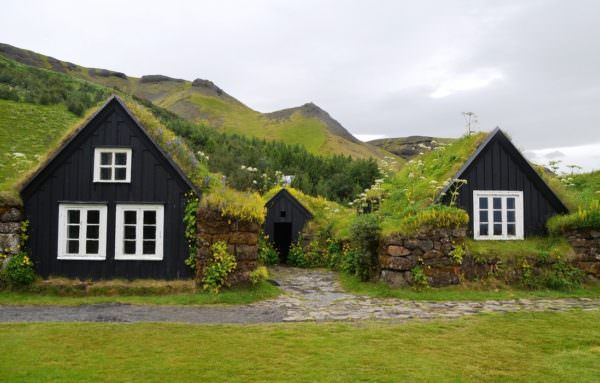
A modern green roof involves more than just plants. It needs high-quality waterproofing and protection against root damage, a drainage system, filter cloth, and a lightweight growing medium. The plants may be small, drought-tolerant ones like sedums, or larger grasses. The system can be modular or site-built, and depending on the planting medium depth, may even resemble a natural meadow or a garden with shrubs and trees.
Project Drawdown ranks green roofs and cool roofs as #73 in their list of solutions to global warming, with an anticipated 0.77 gigaton reduction in carbon dioxide by 2050. If green roofs cover 30% of roof space by 2050 and cool roofs cover 60%, approximately 407 billion square feet of efficient roofing would be in place globally.
A 2024 study published in Nature Cities reports that Seoul’s city-wide green roof implementation could reduce building energy use intensity by up to 7.7%. Another comprehensive 2024 study in Nature Urban Sustainability projected that by 2100, green and cool roofs could reduce HVAC use by up to 71.72% in six cities studied. A 2023 meta-analysis found that green roofs reduce rooftop surface temperatures by an average of 30°C during summer months.
A U.S. General Services Administration study that was removed from its website following the Trump Administration’s anti-green guidance estimated that the heating and cooling savings from green roofs on commercial and public buildings paid back the cost of installation in about 6.2 years.
Residential and Commercial Applications
Green roofs on private residences are very efficient. Despite the high cost of design and installation, which has slowed their adoption as a standard roofing option, they can provide lifetime savings.
Single-family homes accounted for less than 2 percent of green roofs in the U.S. in 2015. Multifamily homes, on the other hand, provide economies of scale that can justify the expense (and sometimes have the square footage to trigger green roof requirements), accounting for 22 percent of green roof projects. That still leaves the vast majority of green roofs to industrial and commercial buildings.
But private homeowners need not despair. Many of the incentives for green roof construction are also available for single-family residences.
Several impressive green roof installations have been completed in recent years:
Will’s Garden at Carle Foundation Hospital is a 2023 Award of Excellence winner that features a therapeutic garden in Urbana, Illinois. The immersive, wheelchair-accessible rooftop included significant technical achievements that allow the plants to grow in only six inches of media.
Construction began on the LXK Office and Residential Campus in Berlin. A designed development, it includes green rooftops and terraces.
Kö-Bogen II, in Düsseldorf, Germany, is a commercial complex features one of Europe’s largest green façades with over 30,000 hornbeam plants that provide a “green heart” and “urban mountain” in the city.
The Vancouver Convention Centre’s six-acre living roof remains the largest in Canada.
The California Academy of Sciences in San Francisco features 1.7 million plants in its living roof.
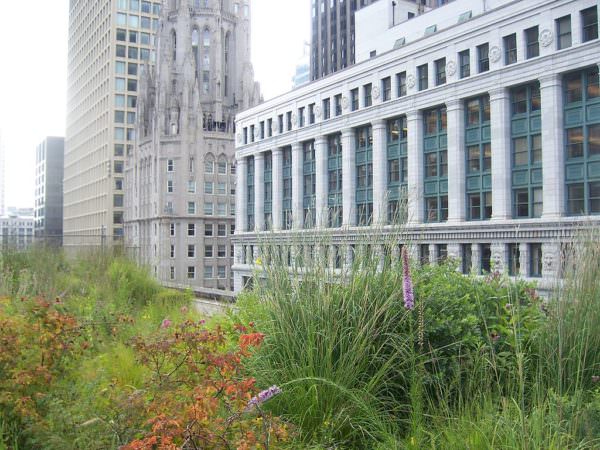
Chicago City Hall’s green roof remains one of the most studied examples, with more than 20,000 plants from 150 species.
Toronto’s Mandate Ends, Its Lessons Remain
Toronto’s bylaw applied to new commercial, institutional, and multi-unit residential developments with more than 2,000 square meters of floor area. Developers who could not fit the required coverage into a floor plan could pay $200 CAD per square meter in fees for the missing ecoroof. The city now advises building applicants that the bylaw is no longer applicable law under the Ontario Building Code.
The repeal followed Bill 17, the Protect Ontario by Building Faster and Smarter Act, which passed on June 3, 2025, after a rapid review process.
The province argued the law bars municipal requirements that go beyond the building code, including Tier 1 of the Toronto Green Standard; city staff disputed that reading, and a builders’ group was already suing the city over the standard. Green Roofs for Healthy Cities founder Steven Peck cited an analysis by local green roof companies that put the added cost at between $1 and $2.50 CAD per square foot of condominium living space, against units selling for $800 to $1,200 CAD per square foot.
Green roofs remain legal and voluntary in Toronto. The city published updated Eco-Roof Incentive Program terms in November 2025, so owners of existing buildings should check whether funding is available.
Where the Rules Stand in 2026
The most aggressive North American ecoroof requirements are concentrated in a handful of U.S. cities, and nearly all of them now treat solar as a qualifying or companion option. The summary below draws on city sources and a 2026 Roofing Brief roundup of mandates by city.
| Jurisdiction | What it requires | Applies to | Status, Nov. 2026 |
|---|---|---|---|
| New York City | Local Laws 92 and 94 (2019): a “sustainable roofing zone” of green roof, solar, or both | New buildings and full roof replacements | In effect |
| San Francisco | Better Roofs Ordinance (2017): 15% of roof as solar or 30% as living roof; SoMa needs 15% solar plus 50% living roof | Most new construction of 10 or fewer occupied floors | In effect |
| Denver | Green Buildings Ordinance (2019): cool roof plus one green option; the green-roof path means 60% vegetation (new) or 18% (existing) | New buildings, additions, and roof permits at 25,000 sq. ft. or more | In effect |
| Portland, Ore. | Central City 2035 ecoroof standard (effective July 2018) | Buildings of 20,000 net sq. ft. or more in the Central City | In effectSolar allowed as an alternative for residential projects since March 2024 |
| Cambridge, Mass. | Article 22 (2021): green roof and/or solar on 80% of available roof, or a per-square-foot payment | Most new buildings over 25,000 sq. ft. | In effect2026 payment is $64.29/sq. ft. of vegetated roof not built |
| Somerville, Mass. | Late 2023 ordinance: vegetation on 80% of available roof area | New mid-rise and high-rise buildings and major renovations, outside the Affordable Housing overlay | In effect |
| Toronto | Green Roof Bylaw (2009): 20% to 60% of available roof, scaled by building size | New buildings over 2,000 square meters | RepealedNo longer in effect since Nov. 3, 2025; Eco-Roof grants for existing buildings remain open |
| France | Climate and Resilience and APER laws: solar or vegetation on a share of the roof | Covered nonresidential new builds, extensions, and heavy renovations |