

The world saw the lowest amount of new coal mine capacity brought online for at least 10 years in 2025, according to a new report, as clean energy displaces coal for electricity generation in East Asia.
A report by Global Energy Monitor (GEM) found that new coal mine capacity declined by nearly 40% from 2024, the second consecutive year new mine capacity has hit a decade low. This represents an acceleration of a steady decline that began in 2019.
The slowdown in new coal mine openings was driven by China and Australia, where new additions fell by 44% and 96%, respectively. In China, the report said this was partly due to solar and wind displacing coal for electricity generation – although coal rebounded in the first half of 2026 – and the National Energy Administration implementing new rules to curb new mine openings.
In Australia, a 96% reduction in new coal mine capacity was driven by shrinking demand from the countries that import Australian coal for electricity, like Japan, South Korea and Taiwan, the report said.
This trend is likely to continue, according to GEM, as the Australian state of New South Wales recently banned new coal mines on undeveloped greenfield land. South Korea has promised to stop building coal-fired power plants that cannot capture and store the emissions produced. Meanwhile, Japan is pushing for a post-Fukushima nuclear revival to displace coal.
This Australian coal community is co-designing its own green future
Globally, growth in coal demand has slowed over the last few years and the International Energy Agency expects it to plateau through to 2030 because of the growth of renewable energy, nuclear and fossil gas.
Openings down, pipeline up
But while new coal mine openings fell, the amount of global coal mine capacity proposed increased by 11%. This was almost entirely driven by a spate of projects in the eastern Indian states of Jharkhand and Odisha.
“If built,” the GEM report says, “the projects would commit India – a country with no formal coal phaseout timeline – to years of coal expansion and would put a 1.5C-aligned transition away from fossil fuels farther out of reach”.
The Indian government says it needs to increase coal production to meet growing electricity demand from economic growth and from dealing with heatwaves. It plans to open more than 20 new coal mines to meet its coal production targets.
Because of energy security concerns, India is also aiming to produce chemicals with Indian coal rather than imported gas. China is also pursuing this strategy, although the Global Energy Monitor report said that Indian coal’s high ash content means the South Asian nation will find it harder to make chemicals from coal.
-
China’s coal-chemicals boom risks repeating the mistakes of the past
By reviving the problematic industry in the name of energy security, China runs the risk of higher emissions, stranded assets and setting back its ambitions as a clean energy leader -
South Africa’s offshore oil push meets grassroots resistance in court
Two court cases against oil majors TotalEnergies and Shell could derail South Africa’s plan to expand offshore fossil fuels -
Quarter of countries still missing UN climate plans 18 months after deadline
Egypt, Vietnam, Argentina and the Philippines are among the 45 nations that have breached the Paris Agreement by not submitting a new NDC to the UN


Nations agreed at COP26 five years ago to “phase down” coal power – a commitment that China and India successfully pushed to weaken from “phase out”. At COP28 in 2023, governments agreed to transition away from all fossil fuels in energy systems.
Since then, wealthy nations have partnered with coal-producing countries like South Africa, Vietnam and Indonesia on plans to transition from coal to clean energy. But, after preliminary talks, India and these governments did not agree a JETP.
The post New coal mine openings slow as East Asian demand plateaus appeared first on Climate Home News.

Dozens of countries – from big emerging economies to the world’s poorest nations – are calling for the UN’s new carbon market to reassess climate integrity rules, in a push that campaigners and researchers have blamed on industry lobbying.
At COP31 talks on the Paris Agreement Crediting Mechanism (PACM) this weekend, the Like-Minded Developing Countries – a group that includes Saudi Arabia, India and China – the Least Developed Countries (LDCs) and landlocked developing countries raised concerns about the requirements project developers must meet, according to sources familiar with the closed-door discussions.
They warned about the cumulative weight of those requirements developed under Article 6 of the Paris Agreement as barriers to implementation. Several countries, including Singapore and some Latin American states, said rules must keep projects financially viable, while South Korea asked for proportionate requirements, the sources said.
Their demands closely track arguments from carbon market industry groups, which claim PACM’s conservative approach to counting emission reductions is so strict that few projects will ever come to fruition.
Industry and NGOs lobby to weaken UN carbon credit rules in “coordinated” push
In a letter published ahead of COP31, the lobby groups asked governments to “raise implementation concerns” and to request that the Supervisory Body – the UN body that oversees the market – assess the “combined impact” of its rules on the feasibility of projects.
The letter was signed by the International Emissions Trading Association (IETA), a business group whose members include fossil fuel giants Shell, BP, Saudi Aramco and Chevron, along with the Project Developer Forum and the Wildlife Conservation Society, which develops forest conservation programmes.
Draft text reflects industry demands
Those demands are reflected in the first draft of the COP31 decision on the mechanism, published late on Saturday. To guard against over-crediting, PACM’s rules deliberately err on the side of issuing fewer credits when emissions cuts from projects are uncertain.
The document asks the Supervisory Body to look at how these cautious assumptions add up across its rules and what that means for the number of credits, project costs and prices. The aim, it says, is to avoid “excessive compounding of conservative adjustments”.
Other parts of the draft tell the body not to make its rules too cautious or too rigid. That includes efforts to guard against the risk that carbon captured by a project is later released. Most of these passages add that environmental integrity must be maintained.
Risk of another ‘failure’
“Weakening the rules is not climate ambition – it is a license to pollute,” said Erika Lennon, a senior attorney at the Center for International Environmental Law (CIEL). “As we are on the brink of permanently breaching 1.5C, we cannot afford to turn the carbon market into another loophole for polluters,” she added.
Axel Michaelowa, research director at Perspectives Climate Research, said that if attempts to weaken the rules succeed, it could lead to another failure of an international carbon market. Demand for credits rests on trust, he said, and the slightest doubt over integrity erodes buyers’ willingness to pay.
Calls to revise requirements “must be supported by scientific evidence, not unsupported claims of under-crediting – especially when these assumptions come from private actors whose revenues depend on the volume of transacted credits rather than real mitigation outcomes,” Michaelowa said.
The EU, Switzerland and Senegal are among a handful of countries pushing back against demands to re-assess the market rules, according to the sources, and are opposing requests to weigh up the profitability of projects or to lower standards.

Cookstove credits in focus
At the centre of the fight are new methodologies for projects that aim to cut emissions by distributing cleaner cookstoves – one of the carbon market’s most popular credit types and also one of its most criticised for overstating climate benefits. A 2024 study in Nature Sustainability found cookstove projects had been over-credited roughly tenfold.
Under the rules adopted by the Supervisory Body in October, cookstove project developers are required to set aside part of their credits in a buffer pool, in case the forests they claim to save later burn or are cleared.
The body rejected an exemption from this requirement sought by developers, corporate buyers, some conservation groups and the UN Environment Programme, in what critics called a coordinated lobbying campaign, as reported by Climate Home News.
Industry groups and some countries have seized on the cookstove methodologies to warn against excessively stringent requirements, which they say undercount emission reductions and deter developers. The LDCs told negotiators that developers had found some approved methodologies, including on clean cooking, difficult to apply.
Industry group calls for revisions
Industry representatives attacked the Supervisory Body’s approach in interventions that sources in the room described as very aggressive.
In a subsequent Linkedin post, IETA’s Andrea Bonzanni accused the regulator of following an unscientific approach that would deliver systematic under-crediting. He called on environmental integrity standards to be amended and rulebooks to be revised.
The mechanism “has had a false start”, he said, but countries in Antalya have a chance to agree on clear guidance that puts it back on track. “Unless the mechanism becomes workable across countries and activity types, its impact on the atmosphere risks remaining marginal,” he added.
IETA did not respond to a request for comment.
-
UN carbon market forces cookstove projects to protect against forest loss
Despite lobbying for an exemption, the UN regulator has for the first time made cookstove projects cover the risk that the trees they save are later destroyed -
Most “zombie credits” locked out of new UN carbon market after China and India snub
Fears of a flood of environmentally-dubious carbon credits have faded, with most old projects not able to transition to new UN market
Campaigners and researchers have pushed back on the claims. Arguing there is currently no evidence of under-crediting in the UN market, they stressed that more credits do not necessarily mean more emissions reductions if the rules underpinning them are not grounded on science.
“Having a Paris Agreement carbon crediting mechanism that cheats the atmosphere completely misses the point,” said Isa Mulder, a policy expert at Carbon Market Watch. “Countries should not allow Article 6 to become just another dangerous distraction from real, urgent climate action.”
The draft of the rules is an early version and will be negotiated during the COP31 summit’s final days. Under the Paris Agreement rules, the Supervisory Body must follow guidance that governments give through COP decisions.
The post Countries take up industry push to loosen UN carbon market rules at COP31 appeared first on Climate Home News.
Countries take up industry push to loosen UN carbon market rules at COP31
Mohamed Adow is director of Power Shift Africa.
International Energy Agency chief Fatih Birol celebrates the electricity demands of AI and electric cars, but the revolution must be about more than luxuries for the rich. It must bring clean, affordable power to the hundreds of millions still living without it.
The world is entering the age of electrification. But while wealthy countries focus on powering AI data centres, electric cars and other energy-hungry technologies, hundreds of millions of people across Africa and the developing world still lack access to electricity.
The real promise of the electricity revolution is not simply meeting the growing demands of those who already have plenty, but bringing clean, affordable power to those who have none.
So the decision by Türkiye and Australia to make electrification a flagship initiative at COP31 should be welcomed. Their proposed 35 by 35 goal, increasing electricity’s share of global final energy consumption to 35 per cent by 2035, could accelerate this transformation.
But who is this revolution actually for? Birol has celebrated the arrival of the electricity age, identifying AI data centres, electric transport and air conditioning as three major drivers of growing electricity demand.
-
Can AI data centres help power underserved African communities?
Three African countries join a pledge for sustainable AI at COP31, but the jury is still out on whether the energy-hungry industry can bring benefits for all -
COP31’s electrification pledge wins support, with caveats on clean power and finance
At least 14 countries have endorsed the voluntary pledge so far, but island nations warn it must not distract from the shift away from fossil fuels

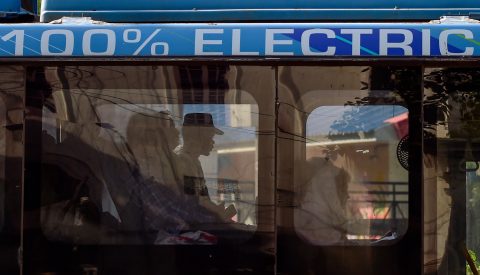
These technologies are reshaping the global energy system. But it is extraordinary that a discussion about the world’s electricity future can focus on infrastructure and services for the rich while overlooking those who still have no electric power at all.
For wealthy countries, electrification may mean powering AI or replacing petrol cars with electric ones. For millions across Africa and the developing world, it means something more fundamental: being able to turn on a light, refrigerate food and run a hospital or a business.
The electrification revolution cannot simply meet the growing energy demands of those who already have plenty. It must deliver electricity to those who have none.
A dirty energy goal?
There is another serious flaw in the COP31 proposal. It promotes electrification without ensuring that additional electricity comes from renewable sources or replaces fossil fuels.
Electrification is not automatically decarbonisation. A factory switching from coal to renewable electricity is a climate achievement. But building new gas-fired power stations to meet rising demand can increase electrification while prolonging fossil fuel dependence.
At COP28 in Dubai, governments agreed to transition away from fossil fuels. COP31 should be taking that commitment forward, not creating a target that could be achieved without delivering it.
For wealthy economies, electrification largely means replacing existing technologies. Petrol cars become electric vehicles. Gas boilers become heat pumps.
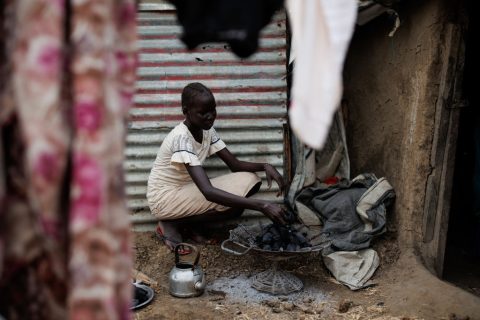
For Africa, the challenge is different. More than 600 million Africans still lack electricity. We are not simply replacing one energy system with another. In many places, we are building one that does not yet exist.
How clean energy can boost business for Africa’s food producers
The electricity needed to power another data centre in a wealthy country should not count as a greater achievement than electricity powering a rural African hospital for the first time. Yet a global target focused purely on consumption makes no distinction between the two.
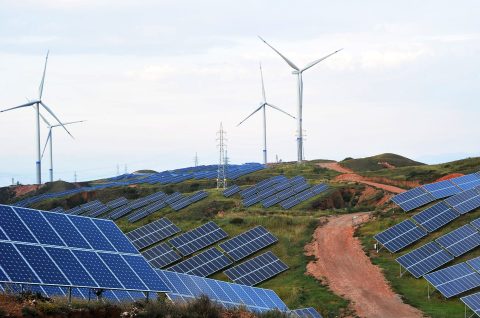
Africa possesses 60% of the world’s best solar resources, yet receives just 2% of global clean energy investment. That imbalance illustrates how far we remain from an equitable energy transition.
The 35 by 35 target could be achieved through rapid electrification in major economies while hundreds of millions of Africans remain without power. That might count as success on a global spreadsheet, but it would represent a failure of climate justice.
Money matters
Perhaps the most troubling weakness of the pledge is its failure to answer the question that matters most for developing countries: who will pay?
Africa does not lack renewable energy potential. It lacks affordable investment. High borrowing costs make clean energy projects far more expensive than comparable investments in wealthy economies.
The launch of the Electrify Now Finance Coalition at COP31 is welcome. But creating another coalition is not the same as delivering affordable finance at the scale required. Developing countries cannot embrace ambitious global targets without the means to achieve them.
Made in Nigeria: The race to build an African solar industry from scratch
If Türkiye and Australia want 35 by 35 to become a defining achievement of COP31, they must strengthen it.
The goal must prioritise renewable electricity and the displacement of fossil fuels. It must put universal electricity access at its heart and include credible financing for developing countries.
The twenty-first century will increasingly be built around electricity. But success cannot simply mean wealthy countries having more electric cars and bigger data centres while hundreds of millions across the Global South remain in the dark.
The real measure of the electricity revolution is not just how much power the world consumes, but who gets access to it, where it comes from and whose lives it transforms.
The post COP31’s electricity goal must be about more than AI and luxuries for the rich appeared first on Climate Home News.
https://www.climatechangenews.com/2026/11/16/cop31s-electricity-goal-must-be-about-more-than-ai-and-luxuries-for-the-rich/