

A dozen Grade A eggs peaked at roughly $6.22 in March 2025. In June 2026, the same dozen averaged $2.14.
That swing explains most of what happened in American backyards over the past two years. Bird flu emptied commercial henhouses, prices spiked, hatcheries sold out by February, and roughly 11 million U.S. households ended up keeping chickens. Prices have since collapsed, and the arithmetic has flipped back. The risk side of the ledger, meanwhile, has gotten heavier: H5N1 “Bird Flu” has killed two U.S. backyard flock owners since 2024, and a cluster of Salmonella outbreaks traced to backyard poultry has sickened more than 800 people so far this year.
Here is what the chicken economics and the cautions look like in 2026.
The Price Signal That Built the Boom, Then Reversed It
Retail egg prices rose 32.2% in 2022, 1.4% in 2023, 8.5% in 2024, and 21.9% in 2025, according to USDA’s Economic Research Service. Highly pathogenic avian influenza (HPAI) drove nearly all of it. Since the outbreak began in February 2022, the virus has affected more than 166 million birds across commercial and backyard flocks, including chickens, turkeys, ducks, pheasants, and geese.
As birds stopped dying, supply caught up with demand. USDA logged fewer new HPAI detections in the first quarter of 2026 than in the same period of 2025, and replacement pullets were plentiful enough to cover both routine flock turnover and unpredictable losses. Retail egg prices in May 2026 were 35.2% lower than a year earlier. ERS now forecasts a 30.4% decline for the full calendar year, with the prices paid to farmers down 82.9%.
The American Pet Products Association counted about 11 million U.S. households keeping backyard chickens in early January 2025, nearly double the 5.8 million reported in 2018. Feed stores across the country sold out of chicks weeks before their traditional spring “chick days,” and hatcheries reported order volumes up 80% or more. Everyone wanted birds.
As prices normalized through 2026, first-time buyers thinned out and most chick sales shifted back to existing keepers replenishing their flocks. The takeaway for anyone considering a flock now: the case for backyard chickens is a bet on egg-price volatility, and that bet just went the other way.
How Many Birds Do You Actually Need?
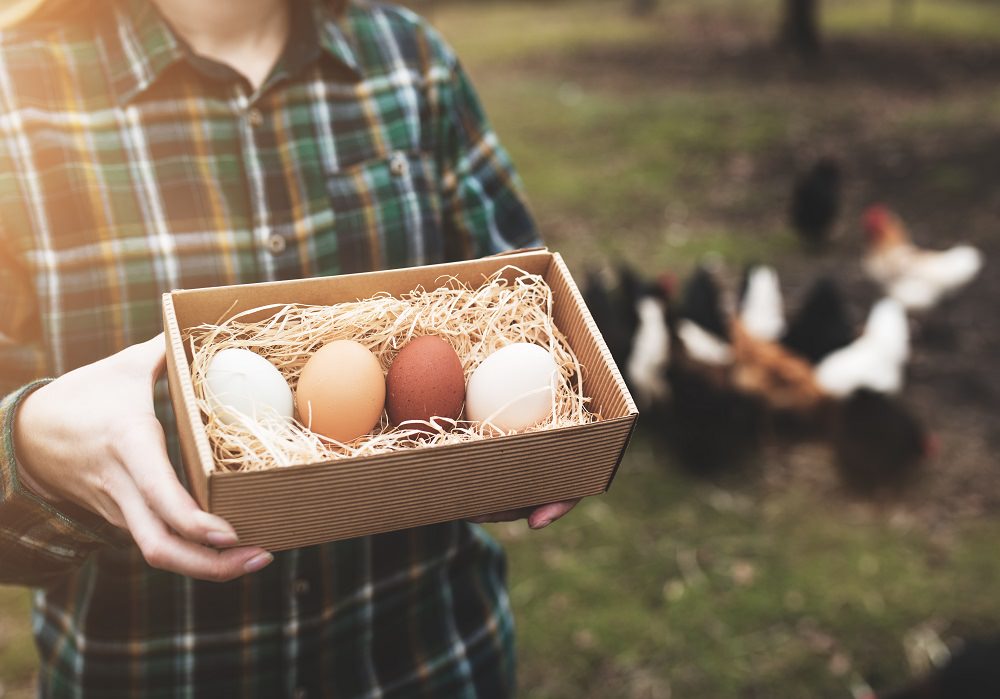
USDA projects 21.5 dozen table eggs will be available per person in 2025, rising to 22.9 dozen in 2026m, or roughly 260 to 275 eggs a year for the average American. That is how much supply is available, not a measure of what any given household eats, but it is a reasonable planning figure.
Commercial layers averaged 300 eggs each in 2025. Backyard flocks do not match that. University of Minnesota Extension notes that hens begin laying around six months and can keep laying for five to 10 years, with peak production in the first two. Plan on 180 to 250 eggs per hen in those peak years, tapering afterward, with a winter slowdown unless you add supplemental light to your coop.
So one productive hen roughly covers one person’s egg consumption during her best two years, and rather less after that. You’ll want to budget for more birds than the arithmetic suggests, or decide in advance what happens when a hen stops laying. They don’t make good eating, but can serve as the makings for delicious soup stock.
Meat is a different order of magnitude. The U.S. produced 102.7 pounds of broiler meat per person in 2025 and is forecast at 102.8 pounds in 2026, making chicken the most-consumed animal product in the country.
Dressed weight runs about 70% to 75% of live weight, so at four to five pounds of live bird, replacing a year of one person’s chicken consumption takes roughly 30 birds. Extension guidance on raising broilers is worth reading before you try. Meat breeds are not laying breeds, most broilers are processed before they are a year old, and the meat from a retired layer is considerably tougher than what you buy at the store.
What Your Local Code Says
Check your municipal ordinance before you buy anything. Rules vary enormously and change often.
City flock caps commonly land between four and eight hens, frequently scaled to lot size. Roosters are prohibited in most residential zones. Coop setbacks, which are typically 10 to 25 feet from property lines and sometimes 40 to 50 feet from a neighbor’s dwelling, are standard, as are permits, annual fees, rear-yard-only placement, and prohibitions on on-site slaughter or egg sales.
Homeowners association covenants can be stricter than city code and are enforced separately. Several states have recently passed laws preempting outright municipal bans on small hen flocks, so a rule you looked up three years ago may no longer be current.
Running the Numbers in 2026
The right comparison is against the eggs you buy, not the cheapest carton in the cooler. USDA’s weekly Egg Markets Overview for mid-July 2026 put the average advertised retail price at $1.02 per dozen for conventional caged eggs and $2.65 for UEP-certified cage-free, with organic priced higher still. If you are a pasture-raised or organic buyer, the math looks very different than it does for a commodity-egg household.
| Measure | Estimate |
|---|---|
| What six hens produce | |
| Eggs per hen per year, first two laying years | 180–250 |
| Annual flock output | 90–125 dozen |
| What that output is worth | |
| At June 2026 average retail ($2.14/dozen) | $190–270 |
| At cage-free feature price ($2.65/dozen) | $240–330 |
| At the March 2025 peak (~$6.22/dozen) | $560–780 |
| What it costs you | |
| Annual feed, bedding, grit, and supplies | $250–600 |
| Startup: coop, run, fencing, feeders, birds | $500–2,000 |
Production ranges from university Extension guidance; egg prices from the U.S. Bureau of Labor Statistics and USDA Agricultural Marketing Service. Startup and annual cost ranges are widely reported figures that vary substantially by region, coop choice, and feed quality.
The first five rows are calculated from BLS and USDA price data and Extension production ranges. The last two are ranges widely reported by hobbyist cost guides and vary substantially by region, coop choice, and feed quality; treat them as a starting point, not a budget. Oklahoma State Extension publishes an enterprise-budget method for backyard hens that tracks fixed and variable costs per coop across a three-year horizon.
At 2026 prices, a small flock’s output roughly covers its own feed in a good year and does not repay the coop. When compared with cage-free and organic prices, the gap narrows considerably. For example, when eggs cost $6 a dozen in March 2025, the flock pays for itself inside two seasons. But these numbers hold only over the course of a year, because feed and other costs may change, so here’s the real finding: backyard flocks are a poor hedge against grocery inflation and a solid hedge against grocery disruption.
Also, keep track of the costs the spreadsheets usually miss: predator-proofing after the first raccoon kills a layer; veterinary care, which most keepers never budget for; boarding or a neighbor when you travel; and the years a hen lives past her productive peak.
The Bird Flu Calculus
Wild birds are the primary vector for HPAI, carrying the virus in their droppings and contaminating shared water sources, particularly during spring and fall migration. People spread it too, on boots, clothing, equipment, and vehicles that have not been cleaned.
Since March 2024, 71 human cases of influenza A(H5) have been reported in the United States. Three of those occurred in backyard flock owners, and two of the three were fatal — one in Louisiana in early 2025 and the other in Washington in November 2025. The CDC’s assessment of risk to the general public remains low, but it does not apply to someone handling sick or dead birds without protection.
What Flock Owners Know, and Don’t
CDC surveyed 638 backyard flock owners across 48 states between July and December 2025 and published the results in Morbidity and Mortality Weekly Report in May 2026. Nearly all respondents — 94% — had heard of avian influenza. The knowledge gaps showed up in the specifics:
- Only 32% correctly identified all the signs of infection in birds. Another 13% did not know the signs at all.
- 27% did not know the signs and symptoms in humans. Just 16% identified all of them, including the non-respiratory ones, such as pink or watery eyes, diarrhea, and vomiting that are easy to mistake for the ordinary flu.
- 54% reported that wild birds could, or sometimes could, reach their flock’s food or water, the single most direct exposure pathway.
- 71% had no veterinarian to consult about their flock.
- 77% considered themselves at low risk of infection, and only 28% were somewhat or very concerned about avian influenza for their own health.
Respondents who knew more about the disease were significantly more likely to say they would use protective equipment around sick birds. Knowledge and protective behavior track together, which is the practical argument for reading the guidance before you need it.
The Four Steps USDA Recommends
USDA’s Defend the Flock program condenses backyard biosecurity into four habits. None of them are expensive.
- Clean up. Disinfect equipment, footwear, and clothing used in poultry areas daily or after each use. Store feed where wild birds and rodents cannot reach it. Keep water and bedding clean.
- Suit up. Keep dedicated boots for the coop and a footbath to disinfect them. Wear gloves or sanitize hands entering and leaving. Give visitors disposable shoe covers, and keep visitors to a minimum.
- Divide up. Separate species. Use covered enclosures and netting so domestic poultry and wild birds never share air, ground, feed, or water. Waterfowl can carry avian influenza without appearing sick, so mixed flocks raise the stakes.
- Brush up. Learn the signs, monitor your birds daily, keep health records, isolate anything that looks wrong, and know who to call before you need to call them.
Warning: Know the Signs and the Phone Number
Signs of avian influenza in birds: sudden or unexplained death, lack of energy or appetite, difficulty breathing, nasal discharge, a drop in egg production, and diarrhea.
Do not handle sick or dead birds, their litter, or contaminated water without personal protective equipment. Report sick or dead birds to your state veterinarian or to USDA at 1-866-536-7593.
If a backyard flock tests positive for HPAI, it is depopulated. Owners should keep wearing protective equipment in contaminated areas until infected birds, eggs, feces, and litter are gone from the property. Decide now whether you are prepared for that outcome.
CDC maintains specific guidance for backyard flock owners on which protective equipment to use and how to put it on and take it off without contaminating yourself or your house. Gear worn in the coop does not come indoors.
The Salmonella Problem Nobody Budgets For
Bird flu gets the headlines. Salmonella does the damage. As of July 27, 2026, CDC is investigating eight multistate outbreaks tied to contact with backyard poultry: 814 people sick across 44 states and one U.S. territory, 201 hospitalizations among those with information available, and one death in Washington. A quarter of the patients are children under five.
Among patients who owned poultry, 84% had gotten their birds since January 1, 2026, most often from agricultural retail stores. Investigators matched outbreak strains to seven hatcheries, and in five states found the same Salmonella inside the boxes used to ship chicks from hatcheries to stores. Several of the strains carry predicted resistance to antibiotics commonly used to treat severe infections, including ampicillin, ceftriaxone, and ciprofloxacin.
Outbreaks track the spring chick-buying season every year. In 2025, backyard-poultry-linked Salmonella sickened more than 500 people in 48 states, hospitalized 125, and killed two. Healthy-looking birds shed the bacteria; visible cleanliness tells you nothing.
Household Rules That Work
- Wash hands with soap for 20 seconds after touching birds, their supplies, or their eggs. Do it every time, no exceptions.
- Keep a dedicated pair of coop shoes that never come inside the house.
- Keep birds and their equipment out of the house entirely. No brooders in the kitchen.
- Children under five should not handle chicks, ducklings, or anything in the birds’ environment. The same caution applies to adults over 65 and anyone immunocompromised.
- No kissing or snuggling birds, and no eating or drinking around them.
- Collect eggs often, discard cracked ones, refrigerate promptly, and cook until both yolk and white are firm.
CDC’s backyard poultry health guidance covers the full list of precautions. Post it in the coop.
The Environmental Ledger
Earlier versions of this article estimated that backyard eggs carry roughly one-third the carbon footprint of commercial eggs. That figure does not survive scrutiny, and we are retiring it.
Feed dominates an egg’s footprint. The production of feed grains accounts for the large majority of total emissions in most life-cycle assessments. Backyard flocks almost always eat the same commercially formulated feed as commercial hens, without the scale efficiencies farmers enjoy, and they lay fewer eggs per pound of feed consumed. Fewer eggs from the same input means higher emissions per egg, not lower. No peer-reviewed U.S. life-cycle assessment of backyard flocks exists.
The largest global meta-analysis of food-system impacts puts eggs at roughly 4.7 kilograms of CO2-equivalent per kilogram and poultry meat at about 9.9, against roughly 60 to 99 for beef and about 1 for peas. Eggs are already among the lower-impact animal proteins, which means the headroom for improvement by switching production systems is narrower than it looks.
Where a backyard flock genuinely earns its environmental keep:
- Feed displacement. Every pound of kitchen scraps and pasture forage a hen eats is a pound of purchased feed she doesn’t, and feed is where the emissions live. This is the best environmental impacdt lever available to a small keeper.
- Manure on site. Composted chicken litter is a genuine soil amendment that displaces purchased fertilizer instead of entering a waste stream.
- No packaging, cold chain, or transport. While small in absolute terms because transport is a minor share of food emissions, the benefit of avoiding packaging, refigeration in the supply chain, and fuel impacts are real, and entirely yours to claim.
- Pest control. Hens working a garden bed are an excellent substitute for insecticide application.
- Low-input housing. Salvaged coop materials, the deep litter method, and skipping supplemental heat all cut embodied and operating emissions.
Ultimately, the enjoyment you get from caring for a flock will be the greatest reward. The environmental benefits are the bow on top of the personal satisfaction of reaching into a nest and pulling out a fresh egg.
What You Can Do
Before you buy birds
- Read your city or county ordinance and your HOA covenants. Verify both directly with the issuing authority because information sites can go stale fast.
- Compare the cost against the eggs you actually buy, at today’s prices, not last year’s headline numbers.
- Confirm you can meet the biosecurity bar: a covered run, feed and water inaccessible to wild birds, dedicated footwear, and a place to put gear on and take it off.
- Find a veterinarian who sees poultry before you have a sick bird. Most keepers don’t, and it shows up in how late problems get caught.
- Ask the hatchery or retailer about their Salmonella controls and NPIP participation, and plan for the birds’ full lifespan, not just their laying years.
Every day
- Clean up, suit up, divide up, brush up: USDA’s four habits, done consistently, are most of the protection available to a small flock.
- Wash hands for 20 seconds after any bird contact and keep coop shoes outside.
- Watch for sudden death, lethargy, labored breathing, nasal discharge, a drop in laying, or diarrhea. Isolate the bird and report it to your state agricultural agency.
- If you develop flu-like symptoms, red or watery eyes, or gastrointestinal symptoms after handling birds, tell your clinician about the bird exposure. That detail is what triggers the right test.
To shrink your egg footprint
- Feed safe kitchen scraps and let hens forage to displace purchased feed.
- Compost litter or run a deep litter system rather than bagging waste.
- Build with salvaged materials and skip supplemental heat in all but extreme climates.
- If the economics don’t work for you, buying cage-free, pasture-raised, or local eggs still moves the same levers without the biosecurity burden.
Related Reading
- Your Own Nest Egg: Keeping Backyard Chickens
- Repurpose Chicken Litter
- Go Green: Keeping Chickens Can Help
- Humane Shopping
Editor’s Note: This article was originally published by Gemma Alexander on July 7, 2020, and was substantially updated in July 2026.
The post Chickenomics: The Economics of Backyard Chickens appeared first on Earth911.
https://earth911.com/home-garden/chickenomics-the-economics-of-backyard-chickens/

Doorframes decorated with fresh pine garlands are downright magical. But they sure cost a pretty penny.
Why spend all that money when you can make your own for free (or at a discount)? Not to mention, you’ll have way more fun getting creative and making it your own.

I’m all about slowing down and getting crafty during the holidays. After all, is it really the gifts we remember every year, or the memories we make with people we love?
Speaking of, it’s even better if you invite friends or family to help make a DIY garland! Put on some Christmas tunes, grab some hot cocoa, and it’s a Christmas memory you’ll be talking about for years.
Pine is also zero waste decor because it’s all compostable at the end of the season. Here’s how to make a DIY garland you’ll never forget.
materials you’ll need:
- Evergreens (you can get these while foraging, at a local nursery, or some from your own tree)
- 22-gauge floral wire (or dyed green twine)
- Heavy duty scissors
- Gloves (to protect your hands)
step 1 – measure your space
Where do you want your garland to hang? Above a doorway? A window? A fireplace? Measure the space so you know how long the garland will need to be. This will give you a better idea of how much pine you’ll need to bring your vision to life.
step 2 – find your pine
Now’s the time to decide if you want to forage or buy your pine. Faser Fir is a great option when it comes to garlands because of how sturdy the pine is, but any Fir will hold up great.
If you’re planning on foraging, try renting a book from the library that identifies the different types of native pine near you. This will help familiarize you on what to look for and what kind of effect different pines will have for your garland.
Generally, pines, firs, boxwoods and cedars make for good indoor decoration because they dry out more slowly.
Fraser fir, red pine, eastern white pine, and western red cedar are some great choices. You can use a mix of them to achieve a whimsical effect.
It’s a good idea to know how to identify different pine if foraging outdoors. Bring a reusable bag, gloves and heavy duty scissors with you while foraging. Be aware some pine trees are spikey and their needles can hurt! And never take too much off one plant.
If foraging isn’t for you, try hitting up a local nursery. They will likely have excess pine they’ll be happy to sell you for your garland. Christmas tree lots will often have a bunch of leftover greens they’ll likely part with for free too.
When in doubt, trimming some off your own tree works too (just be careful not to leave any bald spots).

step 3 – organize
Now’s the fun part – once you have all the evergreens you want, you’ll want to lay it out before you in the style of your choosing. The beauty of foraging for pine is that everything won’t be uniform – so embrace the imperfection.
You’ll want to make sure the sturdiest pieces are in the center. And make sure to pick which pine goes on the end – something with the right drip is always good. And don’t be afraid to prune them as needed.
When you have a structure you like, start layering and lining up your pieces properly. Then use the floral wire to secure them in place. You can also use dyed green twine if you’d like to compost the whole thing without hassle of removing the wire. But note that twine may be less subtle compared to wire.
Also, you’ll want to secure each end with a knot so nothing unravels. To make it easier to mount your garland, create loops with your wire or twine. Do this by simply making a loop and twisting the base until the loop is securely closed.
You can also add decorative elements if you wish, like upcycled ribbons, dried citrus, pinecone, and winter berries. It’s good to add these to any gaps you discover to help fill it in.
step 4 – hanging and display
Now you’ll want to mount your garland. You should set your hooks first (try two for single doorways, three for double, and four for triple width doorways).
Once your hooks are set in place, mount your garland using the loops you created earlier. Or, just by the wire you find – letting things shape naturally.
Don’t be afraid to add to it as needed. If you notice any gaps, this is a good time to fill them with more pine or decorative elements. And if you’d like, you can even entwine some battery operated string lights into the garland for added wow.
Have you ever made a DIY garland before? Drop your tips in the comments!
The post Easy DIY Garland: Step-By-Step Instructions appeared first on Going Zero Waste.
For 15 years, Toronto showed North America what a green roof mandate could build. Its 2009 bylaw, the first on the continent to both require green roofs and set a construction standard for them, produced more than 1,200 green roofs across the city. On November 3, 2025, the Ontario government revoked the provision of the City of Toronto Act that allowed the bylaw, with no advance notice or phase-out period.
That reversal represents the state of green roof policy in 2026. It’s a time of backlash against environment-minded construction practices. Housing-cost pressure is pushing some governments to loosen or drop requirements, while other cities keep adding them, and most of the newer laws let owners choose solar panels, vegetation, or both.
For building owners, advocates, and homeowners, the practical question now is which roof, under which local rule, delivers the most value for a specific building.
What Are Green Roofs?
A green roof, also called a living roof or ecoroof, is a roofing system that supports living plants. Sod roofs have existed since at least the Middle Ages. The modern version is engineered: Toronto’s definition calls for, at minimum, a root repellent layer, a drainage system, a filtering layer, a growing medium, and plants, all installed over a waterproof membrane.
Today’s ecoroof systems fall into two broad families. Extensive roofs use a few inches of lightweight media and hardy, drought-tolerant plants such as sedums. Intensive roofs, on the other hand, use deeper soil that can hold grasses, shrubs, and even trees. The difference is the price: the Environmental Protection Agency noted in January 2025 on a page now removed that a simple extensive roof without public access can cost one-tenth to one-third as much as an intensive roof built for public access.
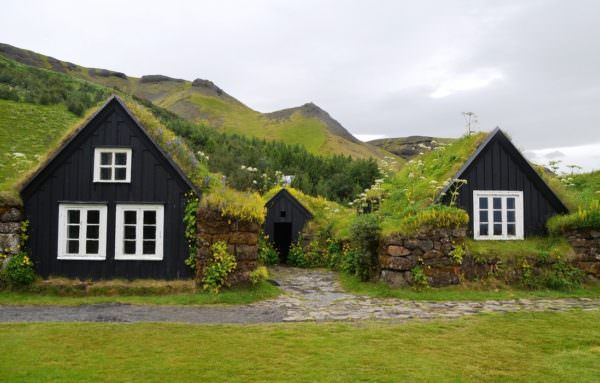
A modern green roof involves more than just plants. It needs high-quality waterproofing and protection against root damage, a drainage system, filter cloth, and a lightweight growing medium. The plants may be small, drought-tolerant ones like sedums, or larger grasses. The system can be modular or site-built, and depending on the planting medium depth, may even resemble a natural meadow or a garden with shrubs and trees.
Project Drawdown ranks green roofs and cool roofs as #73 in their list of solutions to global warming, with an anticipated 0.77 gigaton reduction in carbon dioxide by 2050. If green roofs cover 30% of roof space by 2050 and cool roofs cover 60%, approximately 407 billion square feet of efficient roofing would be in place globally.
A 2024 study published in Nature Cities reports that Seoul’s city-wide green roof implementation could reduce building energy use intensity by up to 7.7%. Another comprehensive 2024 study in Nature Urban Sustainability projected that by 2100, green and cool roofs could reduce HVAC use by up to 71.72% in six cities studied. A 2023 meta-analysis found that green roofs reduce rooftop surface temperatures by an average of 30°C during summer months.
A U.S. General Services Administration study that was removed from its website following the Trump Administration’s anti-green guidance estimated that the heating and cooling savings from green roofs on commercial and public buildings paid back the cost of installation in about 6.2 years.
Residential and Commercial Applications
Green roofs on private residences are very efficient. Despite the high cost of design and installation, which has slowed their adoption as a standard roofing option, they can provide lifetime savings.
Single-family homes accounted for less than 2 percent of green roofs in the U.S. in 2015. Multifamily homes, on the other hand, provide economies of scale that can justify the expense (and sometimes have the square footage to trigger green roof requirements), accounting for 22 percent of green roof projects. That still leaves the vast majority of green roofs to industrial and commercial buildings.
But private homeowners need not despair. Many of the incentives for green roof construction are also available for single-family residences.
Several impressive green roof installations have been completed in recent years:
Will’s Garden at Carle Foundation Hospital is a 2023 Award of Excellence winner that features a therapeutic garden in Urbana, Illinois. The immersive, wheelchair-accessible rooftop included significant technical achievements that allow the plants to grow in only six inches of media.
Construction began on the LXK Office and Residential Campus in Berlin. A designed development, it includes green rooftops and terraces.
Kö-Bogen II, in Düsseldorf, Germany, is a commercial complex features one of Europe’s largest green façades with over 30,000 hornbeam plants that provide a “green heart” and “urban mountain” in the city.
The Vancouver Convention Centre’s six-acre living roof remains the largest in Canada.
The California Academy of Sciences in San Francisco features 1.7 million plants in its living roof.
Chicago City Hall’s green roof remains one of the most studied examples, with more than 20,000 plants from 150 species.

Toronto’s Mandate Ends, Its Lessons Remain
Toronto’s bylaw applied to new commercial, institutional, and multi-unit residential developments with more than 2,000 square meters of floor area. Developers who could not fit the required coverage into a floor plan could pay $200 CAD per square meter in fees for the missing ecoroof. The city now advises building applicants that the bylaw is no longer applicable law under the Ontario Building Code.
The repeal followed Bill 17, the Protect Ontario by Building Faster and Smarter Act, which passed on June 3, 2025, after a rapid review process.
The province argued the law bars municipal requirements that go beyond the building code, including Tier 1 of the Toronto Green Standard; city staff disputed that reading, and a builders’ group was already suing the city over the standard. Green Roofs for Healthy Cities founder Steven Peck cited an analysis by local green roof companies that put the added cost at between $1 and $2.50 CAD per square foot of condominium living space, against units selling for $800 to $1,200 CAD per square foot.
Green roofs remain legal and voluntary in Toronto. The city published updated Eco-Roof Incentive Program terms in November 2025, so owners of existing buildings should check whether funding is available.
Where the Rules Stand in 2026
The most aggressive North American ecoroof requirements are concentrated in a handful of U.S. cities, and nearly all of them now treat solar as a qualifying or companion option. The summary below draws on city sources and a 2026 Roofing Brief roundup of mandates by city.
| Jurisdiction | What it requires | Applies to | Status, Nov. 2026 |
|---|---|---|---|
| New York City | Local Laws 92 and 94 (2019): a “sustainable roofing zone” of green roof, solar, or both | New buildings and full roof replacements |