Your bedroom is a sanctuary but there are toxic chemicals lurking in our furniture that can keep it from being a true safe haven. This guide to sustainable and non-toxic nightstands is here to help you check one to-do off of your list in creating a toxin-free bedroom.
Note that this guide contains affiliate links. As always we only feature companies that might rigorous standards for sustainability that we love, and that we think you’ll love too!
What is a Non-Toxic Nightstand?
There’s a lot to look out for with non-toxic furniture, which I’ve covered in detail in that article. For this guide we’re focusing on nightstands, which are primarily made with wood or engineered wood. So I will focus on what to watch out for with wood furniture.
Solid Wood Nightstands
When possible, prioritize solid wood for a non-toxic nightstand because many composite woods (though not all) are made with adhesives that contain formaldehyde, a known carcinogen.
With nightstands, even if the nightstand is solid wood, the drawers are frequently made with composite wood. If this is the case, ensure that it is free of formaldehyde and other toxic substances.
Zero VOC or Low VOC Finishes
Volatile organic compounds, or VOCs, include a variety of chemicals (such as formaldehyde). Some of these VOCs can be extremely toxic and harmful to our health, including another known human carcinogen, benzene. The EPA reports that VOCs are up to 10x higher indoors than outdoors, due to products we bring into our homes such as paints, building and furniture materials, and wood preservatives.
When it comes to wood products like nightstands, pay special attention to the finishes used on these pieces. Although wood is a natural material, it can still be finished with toxic chemicals.
Pure linseed oil — an oil made from flaxseeds — is a commonly used non-toxic finish.
What is a Sustainable Nightstand?
Again we’ll focus on wood here since most nightstands are made with wood (or composite wood) and typically do not contain any cushioning or fabrics.
Responsibly Sourced Wood
While wood is a natural renewable material, deforestation is a driver of climate change and biodiversity loss. Plus forests can help stem the effects of the third element in our triple planetary crisis, pollution.
When looking for sustainable wood nightstands, look for:
- Upcycled and repurposed wood
- Wood from reforestation projects
- Traceable, local (or at least domestic) wood
- FSC-Certified wood (though I would be remiss not to note that the FSC is far from perfect as a certifier)
Locally Made
When it comes to bulky, heavy objects like furniture, domestic production is a higher priority on my list when determining sustainability. Transportation is one of the largest sources of greenhouse gas emissions so the less a piece of furniture has to travel to get to me, the better.
In my case, this means made in the US. (I only know of one furniture company made in my state.)
Many sustainable American-made furniture companies even have their own furniture workshops, for maximum traceability, high social standards, and quality assurance.
Secondhand Nightstands
When it comes to sustainability, it’s hard to beat secondhand. This is furniture that already exists and may even be otherwise headed to a landfill. I’ve written in depth about my top picks for buying and selling secondhand furniture.
I’ll summarize it though as:
- Apps like OfferUp and Facebook Marketplace (I’ve had the most luck with those two)
- In-person options like furniture resale stores and at estate sales (the former is more curated, the latter might have better deals)
- Online secondhand furniture marketplaces like AptDeco and Kaiyo
Are secondhand nightstands non-toxic? Typically, no, given that the majority of furniture in general is not made with healthy materials. However if furniture is used it has likely off-gassed significantly already so there will be fewer fumes compared with buying that same piece new.
Be sure to check that the secondhand nightstand has come from a smoke-free home (and pet-free if you have allergies).
Where to Find Sustainable and Non-Toxic Nightstands
Feeling overwhelmed by everything there is to look for in a non-toxic or eco-friendly bedside table? I feel ya! That’s why I’ve done the hours of research and digging for you to curate the best of the best in non-toxic and sustainable nightstands.
You’ll find highlights of each company as well as other important information alongside each brand or retailer.
1. Medley
Crafted in the US by a production team with over 170 years of combined experience, Medley’s sustainable nightstands are built to last — the furniture frames even come with a lifetime warranty.
Medley’s expert team of furniture craftspeople make each of their bedside tables with FSC-certified solid walnut or maple for the tops, sides, and drawer(s). For the rest, Medley uses low-VOC CARB 2 compliant maple or walnut hardwood plywood to keep the nightstands light but sturdy.
Conscious Qualities: Zero and Low VOC Finishes, FSC-Certified Wood, USA-Made
Price: $745 – $1295

2. Copeland @ Urban Natural
Copeland crafts transitional furniture made with exceptional attention to quality in Vermont from hardwood sourced from the American Northern Forest. The company also uses renewable electricity from their own on-site solar array.
And Copeland’s standard finish for their products is a GREENGUARD Certified for low chemical emissions.
Conscious Qualities: Locally Sourced Solid Wood, GREENGUARD Certified Finish, Heirloom Quality, USA-Made
Price: $240 – $2205

3. Thuma
Modern, simple, and available in four different finishes, Thuma’s upcycled rubberwood nightstands are versatile storage furnishings that complement a range of interior design styles.
These sophisticated nightstands can be available to ship in just 1-3 days and arrive fully constructed, no assembly required.
Conscious Qualities: Upcycled Solid Wood, GREENGUARD Gold Certified
Price: $445

4. Avocado
Made with solid maple or walnut in their own FSC-certified woodshop in Los Angeles, Avocado’s nightstands are sustainably made to last. The nightstands even come with a 10-year warranty.
Avocado seals the nightstands with a zero-VOC stain and while plywood is used for the drawers, the maple wood option is formaldehyde-free verified by UL Environment.
Conscious Qualities: Zero VOC Stain, GREENGUARD Gold Certified, FSC-Certified, In-House Production
Price: from $249

5. Healthier Homes
Founded by “healthy home builders” Rusty and Jen, Healthier Homes curates furnishings without the toxins rampant in modern-day mass produced furniture.
Choose from the solid mango wood Playa End Table (pictured here) finished with a low VOC finish or the solid wood Mindi Wood Bedside Table finished with a water-based low VOC finish.
Conscious Qualities: Solid Wood, Low VOC Finishes, Sustainable Furnishings Council Member
Price: $695 – $869

6. MasayaCo
Handcrafted in Nicaragua, MasayaCo’s talented artisans craft the Terrabona Nightstand from 100% sustainably sourced solid teak wood.
The sustainable furniture brand sources wood from their own reforestation projects (they’ve planted 1.2 million trees to date!) and they leave 40% of their reforestation projects untouched, on average.
Conscious Qualities: FSC-Certified, Reforested Wood, Traditional Artisan Techniques
Concern: Little information on finishes
Price: $495

7. Maple Corner Woodworks @ Urban Natural
Building quality furniture with classic designs, Maple Corner Woodworks furniture is built to the highest standards.
MCW’s solid wood nightstands are made in Vermont by skilled woodworkers using responsibly-harvested cherry, maple, or walnut hardwood.
Conscious Qualities: Solid Wood, USA-Made, Exceptional Craftsmanship
Price: $1629+

More Furniture Guides:
11 Best Eco-Friendly and Non-Toxic Beds for a Sound Sleep
15 Non-Toxic Furniture Companies for a Healthier Home
Top 10 American-Made Furniture Brands Prioritizing Quality Over Quantity
The post 7 Best Places for Sustainable and Non-Toxic Nightstands appeared first on .
7 Best Places for Sustainable and Non-Toxic Nightstands (2025)

As a longtime book lover, I may be biased, but I think a full bookshelf is one of the most beautiful additions to a space. There’s nothing better than seeing a showcase of your favorite reads alongside a TBR list.
A bookcase, though, can of course be used for all sorts of purposes from placing your favorite photos of family and friends to showcasing treasured vintage finds.
Whatever the case, this guide will help you find the right sustainable bookshelf for your living room, office, or wherever you like to cozy up with a good read!
So what make a bookcase more sustainable? What makes a bookshelf non-toxic?
First of all: sustainable and non-toxic are two overlapping — but distinct — criteria. And both of those terms can come with a lot of opinions and varying definitions.
When it comes to sustainable bookcases, I look for:
- Responsibly Sourced Materials: most bookshelves are made primarily with wood. While natural, unsustainable wood sourcing can be a cause of deforestation, so we want to see that the wood was from responsibly managed forests or made from reclaimed or repurposed wood. Some bookshelves may feature metal, in which case recycled materials here are important.
- High Quality Construction: sustainability includes longevity — how long will you be able to use that furniture piece before it goes to the landfill and gets replaced? Look for transparency around craftsmanship and woodworking processes. Another sign of quality is the length of warranty a company has for its products.
- Ethically Made: this one is straightforward in theory — were the people making it paid fairly and working in safe conditions? — but is unfortunately not always easy to find information. In this category, I look for transparency in practices, what relationship the brand has with the manufacturer (some produce in-house which is the best case scenario for transparency!), where it was made, and how well the makers were paid.
Ideally a sustainable bookshelf would also be non-toxic — as toxic chemical fumes aren’t exactly sustainable! But this isn’t always the case. For example, if a company prioritizes upcycled materials, they don’t necessarily have control over what inputs were part of the original materials. And sometimes a company focuses more on ethical artisan partnerships and sustainable wood sourcing, more than, say, using non-toxic finishes.
But when it comes to non-toxic bookshelves, this is what I look for. (Note that non-toxic doesn’t necessarily mean safe for all chemical sensitivities. Nor does it mean zero potentially irritating chemicals.)
- Solid Wood (where possible): MDF or pressed wood contains glue to stick the various wood pieces together, which can contain added formaldehyde. I prefer solid wood, or if it is engineered wood, I’d make sure the company is transparent around the type of glue used and/or they at least have a product certification like GREENGUARD. (More on that in a second.)
- Low or Zero VOC Finishes: most wood furniture is completed with some sort of finish to provide a protection against scratches or moisture. Many of these finishes are synthetic, and some can contain high levels of toxic chemicals. Look for a natural finish like linseed oil or beeswax or a low VOC synthetic finish.
Relevant Certifications
You’ll see a few certifications referenced throughout this guide. Here’s what each one covers:
- FSC Certified = the wood sourcing was responsibly managed; this is not a finish, foam, or textile guarantee.
- GREENGUARD / GREENGUARD Gold Certified = the finished product was tested for low chemical emissions, including VOCs, with Gold representing the stricter tier.
- Fair Trade Certified
 = verifies that a factory meets standards for fair wages, safe working conditions, and ethical labor practices.
 - Cradle to Cradle Certified (Gold) = evaluates a product or material across material health, circularity, clean air/climate, water/soil stewardship, and social fairness.
Where to Find Sustainable Bookcases and Shelving
I’m always a secondhand first proponent, and that goes for furniture, too. While your local thrift store might not have used bookshelves, check for dedicated furniture resale shops near you or estate sales. (I use EstateSales.net to find ones near me.) You can also find gently used pieces on online marketplaces like Facebook Marketplace, OfferUp or AptDeco.
If you can’t find something you love secondhand, and you don’t want to DIY your own bookshelf, then the next best choice is to shop from one of the sustainable furniture companies below. (If you’re simply looking for a bookstand, I’d suggest browsing Etsy for a collection of solid wood, bamboo, and reclaimed wood book stands and cookbook stands!)
Note that this guide includes affiliate links, which means we may earn a small commission if you purchase through these links which helps us continue to run this website and create resources like these. As always all brands meet strict sustainability criteria and are brands we love — and that we think you’ll love too!
1. Medley
Best for: low VOC wood bookcases
Medley’s bookshelves are elegant and elevated, perfect for a living room. Each piece is made with 100% solid FSC-certified hardwood for the tops and sides, though low-VOC CARB 2 compliant plywood is used for the shelves.
Every eco-friendly bookcase is handcrafted in the US (California or North Carolina) and completed with a low-VOC wood finish.
Price: $2,395 – $2,995
Materials: White Maple, American Walnut Wood
Conscious Qualities: Made-to-Order, US-Made, FSC-Certified Wood, Natural Finish
2. Thuma
Best for: non-toxic modular bookshelf
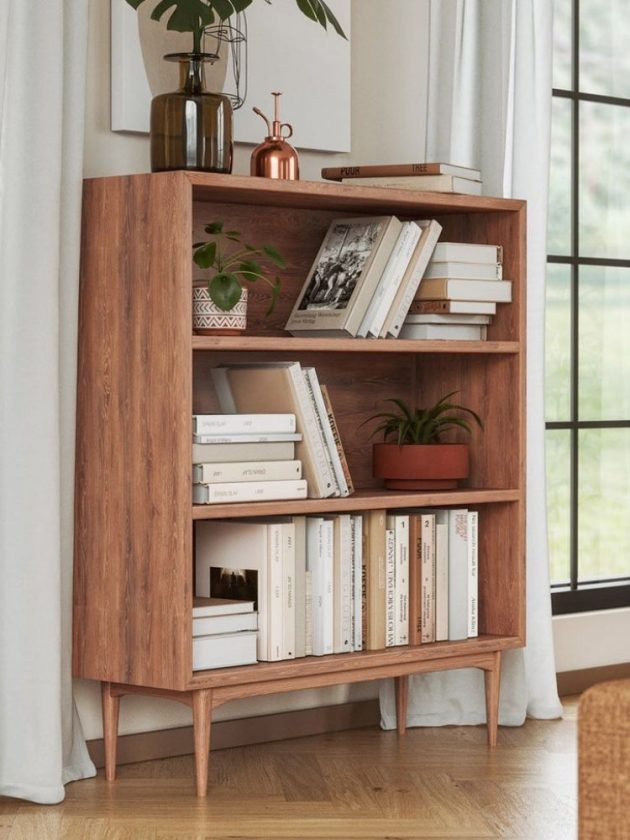
Thuma’s eco-friendly bookshelf is made from upcycled wood sourced from rubberwood trees no longer being used to source rubber. The brand’s bookshelf is also GREENGUARD Gold certified.
What makes Thuma’s bookshelf stand out to me, though, is its modularity — their Pillar Bookshelf can be set in 10 different configurations. And if you start with just a few shelves but later decide you want a larger bookshelf, you can simply buy an additional shelf or two to add on to it!
Price Range: $550 – $3,300
Materials: Upcylced Rubber Wood
Conscious Qualities: GREENGUARD Gold Certified, Repurposed Materials, Adaptable

3. West Elm GREENGUARD Certified
Best for: low-tox bookcases and bookracks for kids
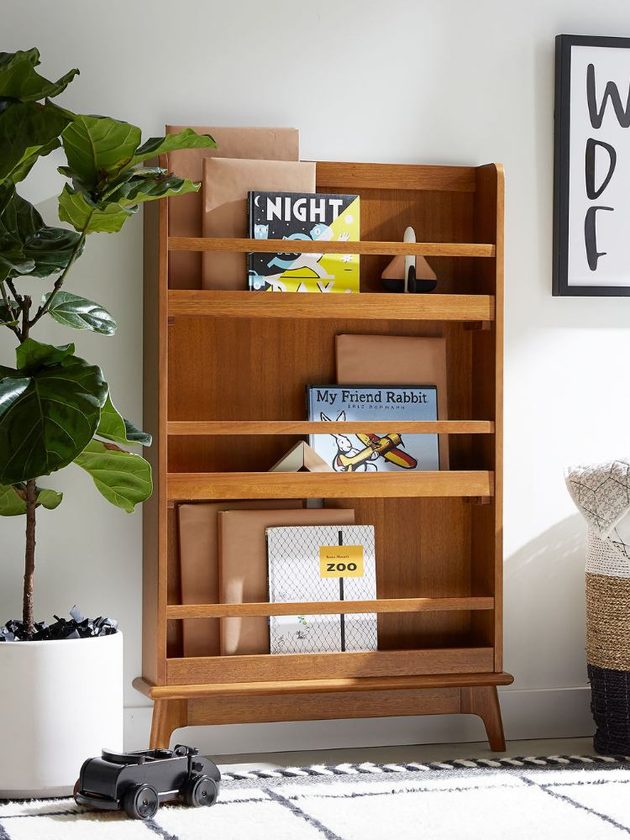
This furniture retailer has plenty of adorable, but functional, bookshelves for a playroom or kids’ bedroom. From cubby bookcases to mid-century bookracks, you’ll find plenty of options that are not only GREENGUARD certified, but made in Fair Trade Certifiedfactories, and/or with FSC-certified wood. Note that the company’s bookshelves are made with engineered wood, though.
West Elm also has GREENGUARD certified bookcases large enough for the adults too!
Price: $399 – $2,897
Materials: Solid Wood, Reclaimed Wood
Conscious Qualities: Fair Trade, FSC Certified, and GREENGUARD Certified Options
4. Urban Natural
Best for: a variety of eco-friendly bookshelves
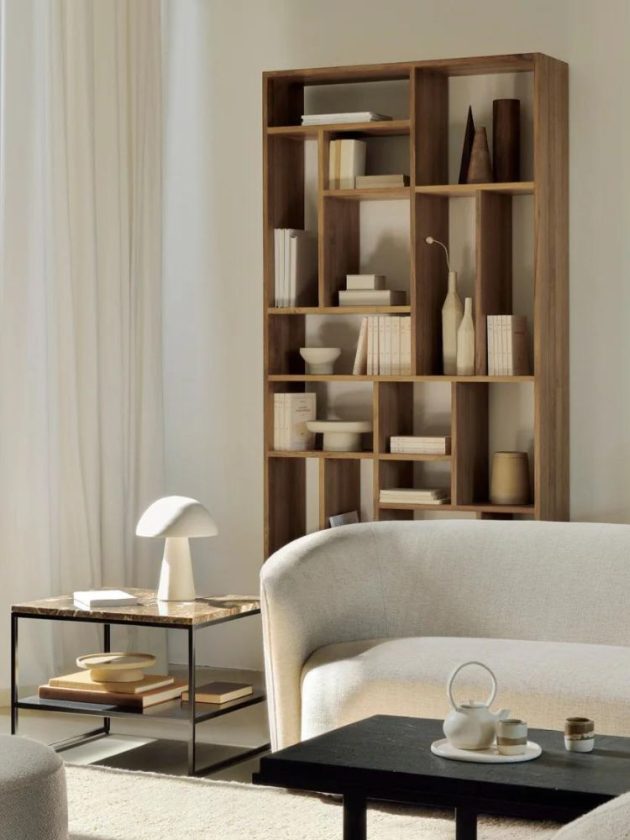
This natural home retailer has sustainable bookcases in all shapes and sizes. From traditional bookcases to open-back asymmetrical shelving units, Urban Natural has options for any interior aesthetic. Each brand they carry values quality craftsmanship, responsible production, and sustainable sourcing.
Price: $1,099 – $5549
Materials: Solid Teak, Maple, Cherry, Walnut, Birch (varies by brand)
Conscious Qualities: FSC-Certified Options, USA-Made Options, Low VOC Finish Options (varies by brand)
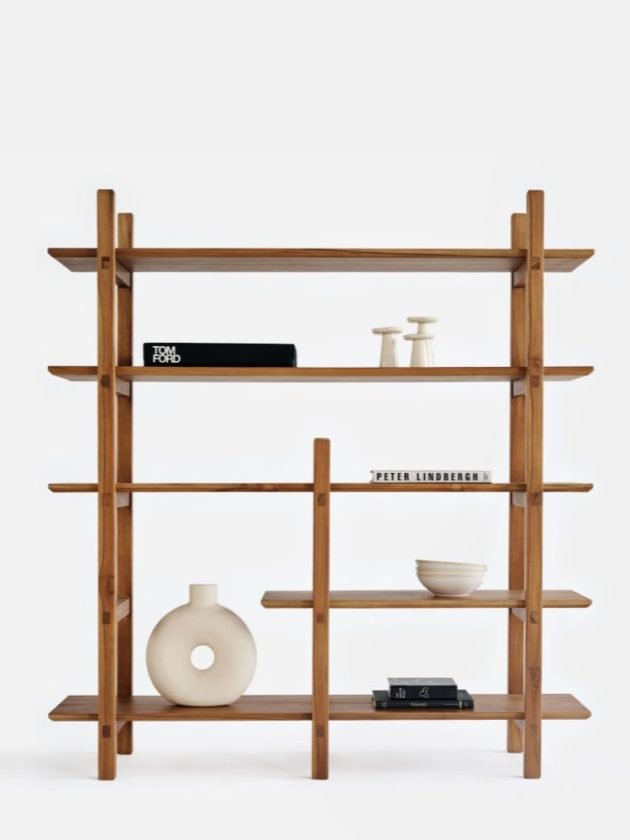
5. MasayaCo
Best for: sustainably-sourced wood bookshelves
MasayaCo has a stunning collection of sustainable shelves and bookcases handcrafted by artisans in Nicaragua. Not only is each piece of furniture made from responsibly harvested wood, but MasayaCo plants 100 trees for each order — and has planted 1.3 million trees to date. Plus they keep 40% of the reforestation projects completely untouched, to ensure the ecosystems have the chance to truly thrive.
The company shares that with the right care, their teak wood pieces can last up to 75 years. Note, though, that the finishes used aren’t disclosed, so if that’s one of your priorities, this might not be the top pick for you.
Price: $675-$1,295
Materials: Teak
Conscious Qualities: Artisan Made-to-Order, Reforestation Projects, FSC-Certified
6. Healthier Homes
Best for: affordable non-toxic bookshelves
With shelving options starting at under $250, Healthier Homes is a more affordable option for finding sustainable, non-toxic bookcases and shelving.
Most of their wood furniture is made from Parawood, rescued from rubber tree farms after the trees stop producing latex. And their wooden bookcases come unfinished, so you can have full control over the color and any chemicals used. (The company also sells zero VOC furniture paint.)
Price: $238 – $2,160
Materials: Repurposed Wood, Metal, Zero VOC Finishes
Conscious Qualities: Repurposed Materials
7. What We Make
Best for: reclaimed wood bookshelves
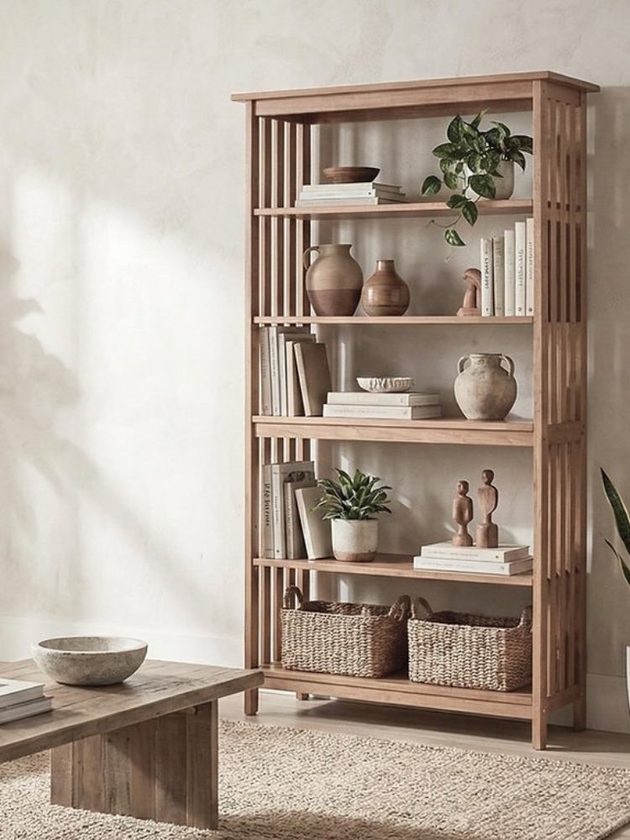
Illinois-based furniture company What We Make crafts non-toxic bookcases with a VOC-free finish.
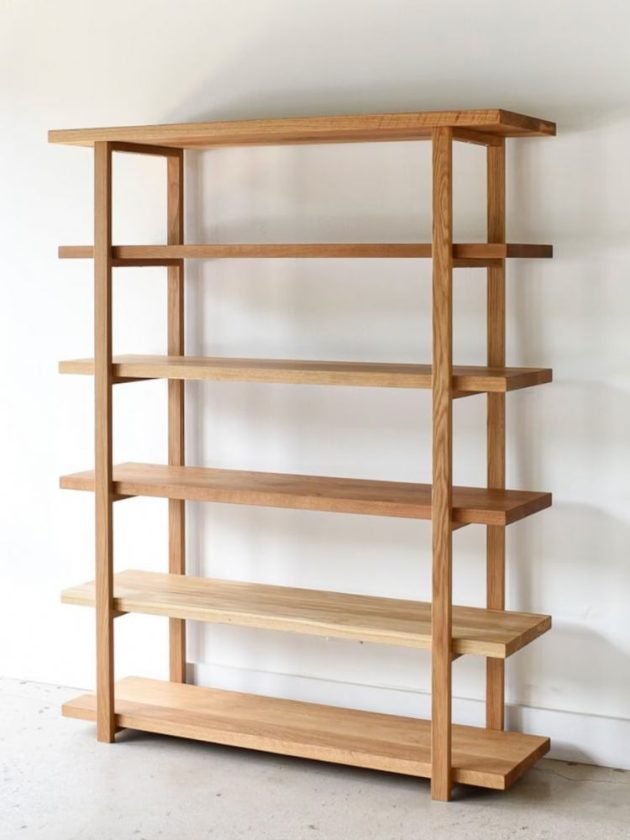
The shop offers both modern Scandinavian styles (pictured here) using solid oak and industrial style sustainable bookshelves made with a stainless steel frame and the reclaimed wood salvaged from 100+ year old Midwestern barns.
Price: $2,025 – $5,055
Materials: Oak, Reclaimed Wood
Conscious Qualities: Made-to-Order, Repurposed Material Option, Zero-VOC Finish