

Unless you’re studying for a high school science exam, lithium, nickel, copper, and cobalt probably won’t carry much meaning beyond being elements on the periodic table. But if there is a time to pull out those dusty science books, it would be now.
Across various sectors, these minerals are of increasing importance, including – perhaps most prominently – renewable energy generation and storage, and electric vehicles; but also other large and growing sectors such as military and AI (e.g., for datacenters). And around the world, many governments and companies are competing to control who can dig them up.
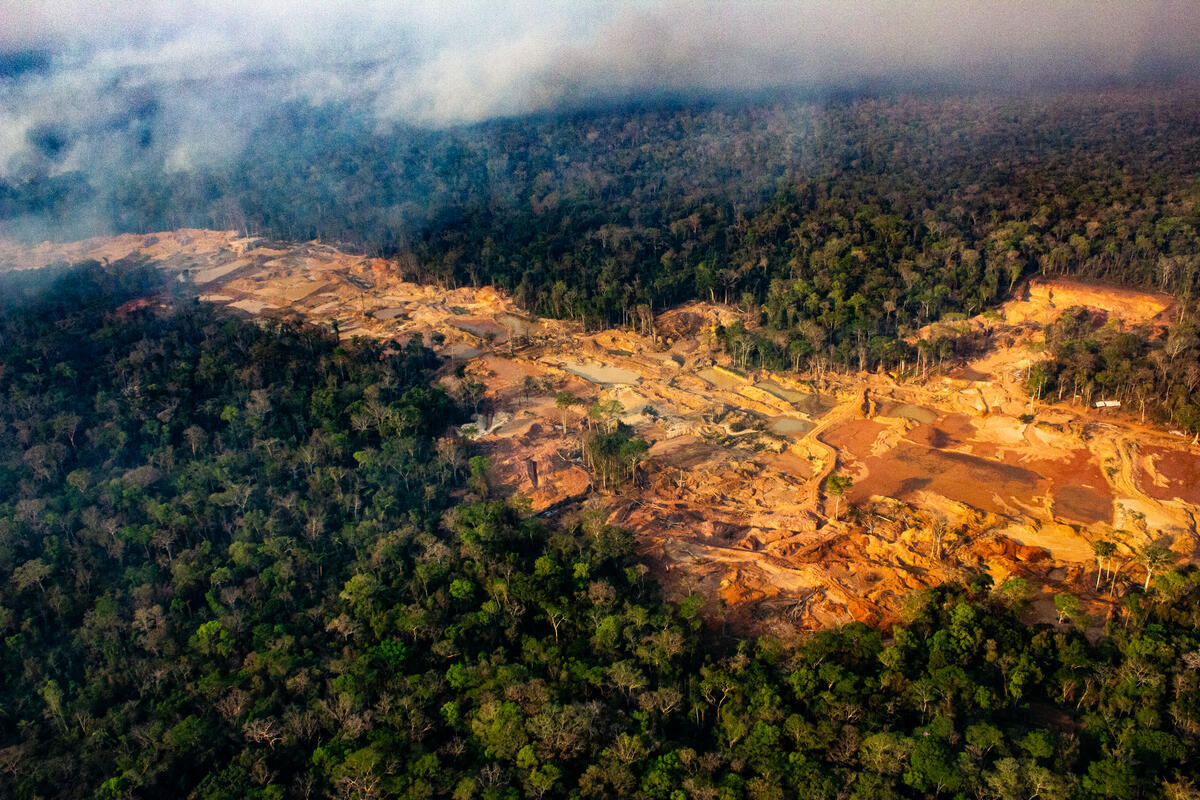
The global minerals rush
These raw Earth materials are often called “critical minerals” by governments and the mining industry, typically a reflection of national political priorities rather than essential societal or energy transition needs. This risks turning these minerals into the focus of a new neo-colonial resource grab, with powerful countries and corporations racing to control them, and wasting their potential to power a fair and green transition.
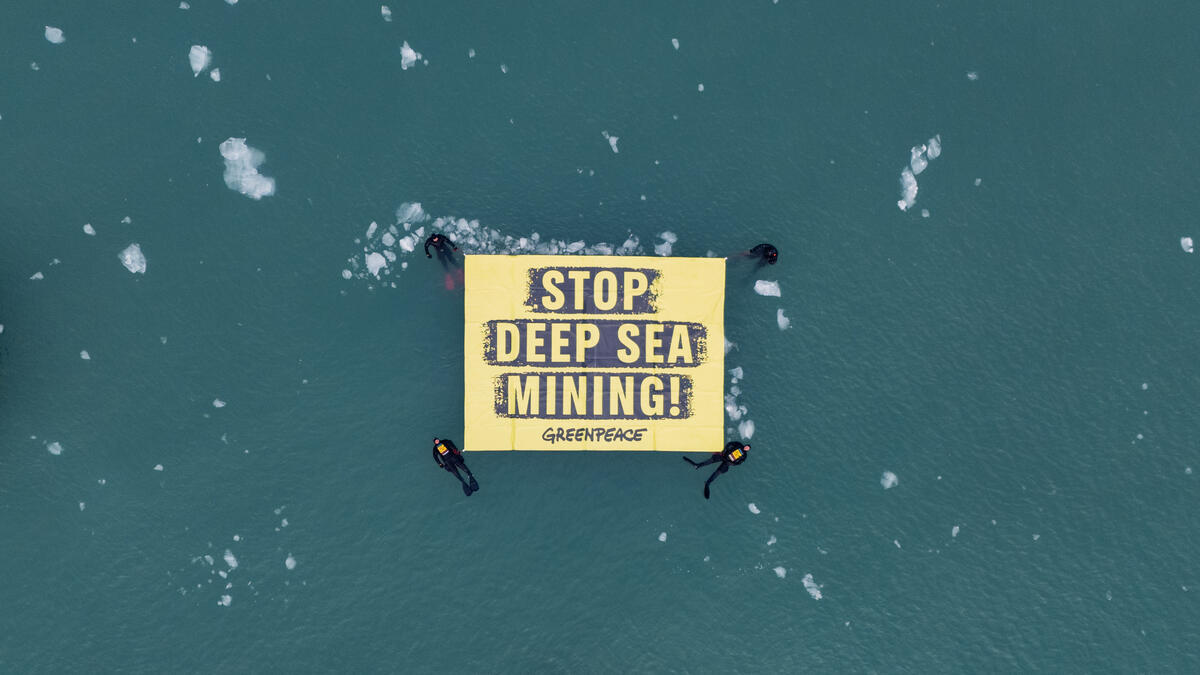
Globally – from Chile, Argentina, DRC, Indonesia, Sweden to the deep sea – the extractivist rush for minerals puts vital ecosystems, peoples’ rights and the lives and livelihoods of Indigenous Peoples and local communities at risk. The geopolitical scramble over minerals has also been linked to the current US government’s aggressive annexation threats to Greenland.
Minerals have different uses, and there are no guarantees that the minerals mined “in the name of energy transition” are used for wind turbines or energy storage. For example, big tech companies are consuming more and more of these minerals to expand AI infrastructure (such as datacenters). In addition to driving up energy demand and emissions, the vision of ‘progress’ advocated by big tech oligarchs also threatens to worsen extractive pressures on people and nature, and divert minerals away from energy transition. Moreover, mineral use in the expansion of AI-driven warfare systems has been found as a particularly concerning development.
In light of this, it is more important than ever to demand coordinated action to ensure that minerals are used where they matter most: principally, for a fast fair fossil fuel phase out and a transition to clean, affordable renewable energy and sustainable transport systems.
So how do we protect people and nature in the energy transition?
Reduce, recycle, restrict for a safeguarded energy transition
In a report commissioned by Greenpeace International, and authored by academics at the Institute for Sustainable Futures at the University of Technology, Sydney (UTS) in Australia, we’ve found that an ambitious energy transition can be achieved without mining in vital ecosystems – whether on land or at sea. With visionary leadership, sound policies, and innovative technologies, we can keep global warming within 1.5°C, safeguard vital ecosystems and reduce extractive pressures on people and nature.
Here’s five ways how:
1. Reduce mineral demand with improved public transport, car-sharing, and smaller, more efficient vehicles

Accessibility, efficiency, and reliability in how cities are governed make them great places to live in. Having improved public transport systems is one of the most effective ways to reduce the need for mineral-intensive electric vehicles and the batteries that power them. In addition to expanding high-quality public transport, employing car-sharing schemes, and investing in active mobility (e.g. walking and cycling infrastructure) would significantly decrease reliance on individual car ownership.
As an added bonus improving our public transport systems is essential not just for climate, but for connecting people to opportunities. Mobility justice is climate justice.
2. Incentivise and substitute battery technology towards alternatives requiring less lithium, cobalt, or nickel

Think about how many items you use that require batteries? Without it, our personal gadgets would be useless; we wouldn’t have advancement in items like electric cars or bikes; and batteries can also help store and use more eco-friendly sources of energy, such as solar and wind. But the production of large batteries is highly mineral-intensive.
Luckily, over the last decade, technological innovation has transformed the market. Lithium iron phosphate (LFP) batteries, now widely commercialised, eliminate the need for cobalt and nickel, reducing pressure on these supply chains. At the same time, sodium-ion (Na-ion) batteries are advancing rapidly, and offer a pathway to significantly reduce mineral demand for lithium, according to the report. It shows that, using innovative battery technologies and energy storage systems that do not require these key minerals would significantly reduce supply gaps for key minerals and ease potential development pressures for new mines targeting them.
3. Design for circularity and scale up recycling

We all know the drill by now – reduce, reuse, recycle. When it comes to transition minerals, this maxim is of key importance.
By maximising collection and the recovery of transition minerals from end-of-life transition technologies, recycling can significantly reduce the need for new extraction. Investing in advanced recycling technologies and collection systems, alongside policy incentives that reward high recycled mineral content in new products, ensures that transition minerals re-enter the supply chain.
Additional circularity measures like extending technologies’ lifespans, improving repairability, incentivising reuse, designing and standardising components for easy disassembly to help with repair and recycling, and enforcing extended producer responsibility (EPR), could also contribute to reducing overall mineral demands.
4. Prioritise mineral use for essential energy transition needs

Minerals are finite resources, and the practice of mining carries significant social, labour, and environmental risks. Therefore, the use of mineral resources should be prioritised where they matter most – in renewable energy and its storage and in electric mobility to enable a fast fair fossil fuel phase out.
Governments and industries must prioritise mineral use towards a fast, fair, and just energy transition. Coupled with supply chain transparency, prioritising minerals for energy transition ensures finite minerals are used to advance climate goals that benefit all people and the planet.
5. Protect key ‘Restricted Areas’ from mining development

Protecting human rights and ecological integrity is a non-negotiable foundation of a just and green transition. Restricted Areas have high environmental, ecological, and natural values, and may include Indigenous Peoples and local community territories. Defining and protecting these Restricted Areas is a crucial step to ensuring that mining of transition minerals respects the rights of Indigenous Peoples and local communities to their territories, and does not destroy biodiversity, critical natural ecosystems, natural carbon storage, freshwater systems and oceans.
After all, what is “critical” here is not a minerals scramble largely driven by geopolitical rivalry. Neither the AI race, nor the power and profit chased by States and corporations.
Critical are the ecosystems that all living beings on the planet depend on.
Critical are the rights of Indigenous Peoples and local communities.
Critical is meeting peoples’ needs and ensuring that current and future generations can live in a safe climate.
For this, it’s essential for our world leaders to take courageous and coordinated action to protect people and the planet, and ensure our Earth’s minerals help create a green and just future, rather than being exploited for short-term profit.
Author: Elsa Lee is the Co-Head of Biodiversity at Greenpeace International




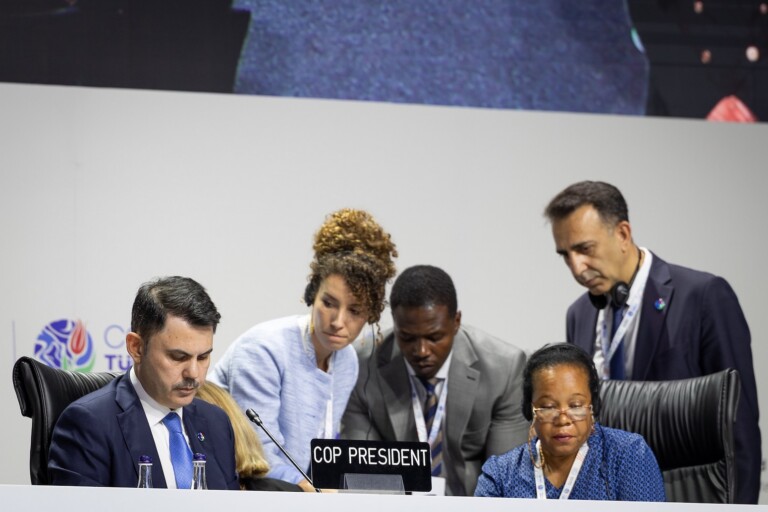
Following the close of COP31 in Antalya, Turkey, Carbon Brief’s journalists answered a range of questions in a CB Live panel discussion.
COP31 came to a dramatic conclusion nearly 50 hours after its scheduled close – making it the longest COP in history.
Less than 24 hours later, Carbon Brief published its 21,000-word summary, capturing everything that happened in the negotiations, the cover decision and more.
This includes the “Antalya pact”, proposed by the joint Turkish-Australian presidency, being rejected in the final hours of the summit by the EU, the UK and several climate-vulnerable nations.
There was some progress at COP31, including an agreement on the adaptation fund, as well as a raft of announcements within the “action agenda”.
Carbon Brief journalists – who followed every detail of the summit on the ground in Antalya and remotely answered a range of questions, including those sent ahead of time by CB+ members on CB Connect.
These covered climate finance, China, the “just transition mechanism”, the potential for COP reform and much more.
The discussion was moderated by Carbon Brief’s senior policy editor Dr Simon Evans and featured the following journalists:
- Daisy Dunne, associate editor
- Josh Gabbatiss, associate editor
- Aruna Chandrasekhar, policy journalist
- Molly Lempriere, policy section editor
- Anika Patel, China section editor
- Dr Giuliana Viglione, associate editor
A recording of the CB Live (below) is now available to watch on YouTube.


The post CB Live: Carbon Brief journalists discuss key COP31 outcomes appeared first on Carbon Brief.
CB Live: Carbon Brief journalists discuss key COP31 outcomes
Climate Change
COP31: Key outcomes for food, forests, oceans and nature at the UN climate talks in Antalya
The COP31 climate talks in Antalya, Turkey, failed to agree on a “pact” that – despite making no clear reference to fossil fuels or adaptation finance – had contained strong signals for oceans.
The “Antalya pact” took up much of the two weeks of negotiating time in Turkey, only to be rejected during the closing plenary by the EU, the UK and several climate-vulnerable countries.
Several countries expressed their regret during the plenary that significant work on advancing ocean-climate action would be lost.
The COP ran nearly 50 hours over time, but did not end with substantive outcomes on several key topics.
For the second year in a row, negotiations on agriculture and food security broke down and will now have to resume next year.
Food-systems advocates were, however, heartened by the explicit inclusion of “agroecology” in a decision within the “just transition work programme”.
Ocean-conservation groups noted an increased focus on ocean-climate links at this year’s COP, but said COP31 did not live up to its promise of being a “blue COP”.
There was also scant new funding for food systems and nature, with just a handful of small pledges to ocean initiatives and two newly announced contributions to the Tropical Forest Forever Facility.
Here, Carbon Brief analyses all of the key outcomes for food, forests, oceans and nature at COP31 – both inside and out of the negotiating rooms.
(See Carbon Brief’s coverage of food, forests, oceans and nature at COP30, COP29, COP28, COP27 and COP26.)