Connect with us

Published

on

Weather Guard Lightning Tech
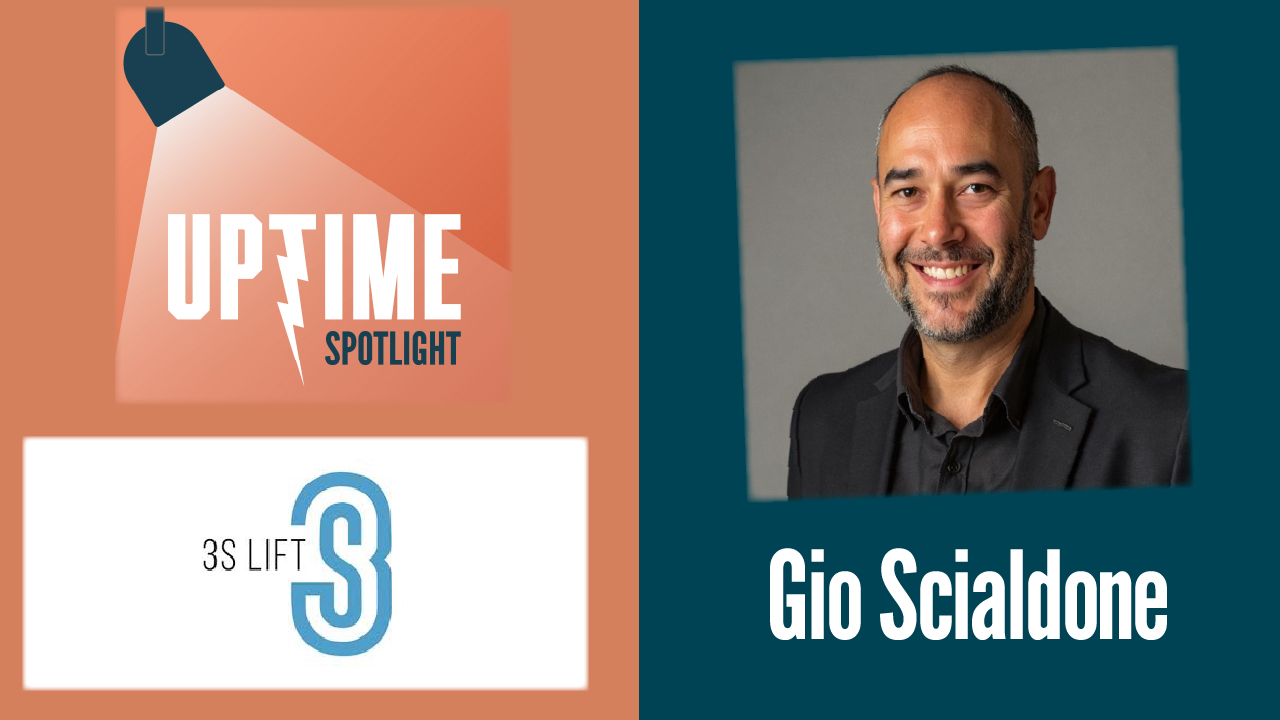
3S Lift Adds a Rescue Stretcher to Climb Auto System

Giovan Scialdone, president of 3S Lift Americas, joins to discuss 30,000 Climb Auto System installs and a new lift-mounted rescue stretcher.

Sign up now for Uptime Tech News, our weekly newsletter on all things wind technology. This episode is sponsored by Weather Guard Lightning Tech. Learn more about Weather Guard’s StrikeTape Wind Turbine LPS retrofit. Follow the show on YouTubeLinkedin and visit Weather Guard on the web. And subscribe to Rosemary’s “Engineering with Rosie” YouTube channel here. Have a question we can answer on the show? Email us!

Welcome to Uptime Spotlight, shining light on wind energy’s brightest innovators. This is the progress powering tomorrow

Allen Hall: Gio, welcome back to the program.

Gio Scialdone: Hey, thanks, Allen.

Allen Hall: So a lot’s happened over the past year since we last spoke with you at 3S Lift. Yeah. And there’s all kinds of new technology and improvements and the- The expansion of the Climb Auto system in the United States is remarkable. Yeah. How many systems do you have installed in North America?

Gio Scialdone: Yeah, I appreciate that. I mean, it’s, it’s… The, the pride that we take in, in those numbers are, are serious. We, we feel, uh, a great responsibility to help technicians, to help our customers operate more, uh, more efficiently. We have 30,000 installed.

Allen Hall: Wow.

Gio Scialdone: So yeah, last year was a busy year. We installed close to 8,000, uh, in North America, so a bit in Canada as well.

Um, [00:01:00] yeah, it’s… And, you know, before we get into some more numbers too, a funny story for you, a Massachusetts native- Right … or lived in Massachusetts- Long time … for a period of time. Uh, Hoosac Wind Farm, you know the Hoosac Wind Farm. Oh, yeah, yeah,

Allen Hall: I can see it out my front door.

Gio Scialdone: This is what’s great about this industry and being at this conference.

Um, I ran into… At, at one point in time working for GE a long time ago, I was a site construction manager for Hoosac. I ran into my EHS safety manager, who I haven’t seen in 14 years-

Allen Hall: Wow …

Gio Scialdone: uh, who now works for another prominent, uh, company, uh, in the industry, and, uh, she remembered the name of my dog that- Really?

I used to take to the site as a- Oh,

Allen Hall: wow.

Gio Scialdone: So, uh, you know, it’s good to be here, see you, and see, see, you know, lots of former colleagues, so,

Allen Hall: you know. Well, it’s a small world in wind.

Gio Scialdone: It’s a very small world. And, you know, we’re, we’re a company that, um, you know, again, we, we, we have a unique product, and there, there are some other companies that are, um, also coming out with a product quite similar, and we, [00:02:00] we appreciate that competition.

Sure. In fact, I think, you know, we spend a lot of our time trying to, uh, sell our customers on the value that the ClimbAuto system is a need and not a nice to have, and I think having some competition with a similar ladder access product further, uh, maybe pushes that point to, to, to be true. So, um, you know, it’s good to be here and see some expansion in, in our little, uh, you know, ladder lift space.

Allen Hall: Well, I think it shows the work that 3S has done to demonstrate the value of that system. I remember several years ago, I think when I first talked to you, there wasn’t a lot of adoption, and you were… And the operators were thinking, “Do I really need this?” But the reality was that the technicians loved it.

They improved performance. They had technicians using those towers and wanted to work on those specific towers. Yeah. And, and then, uh, just kind of the flood happened. It, it was everybody was testing the [00:03:00] waters. You were basically installing test systems- Yeah … or sort of sample system to try it. Yeah.

Everybody loved it, and then boom, you’re up to 30,000 units.

Gio Scialdone: I, I think, I think a part of that too to add on is you, you have to have a quality product.

Allen Hall: Oh, sure. It has to work. For, for… It has to work. Right.

Gio Scialdone: That’s the most important thing. Yeah. Um- The th- the, the, the value and the function in theory makes sense to lots of people, but does it work and is it reliable?

And I think having been here nine years and, and, you know, the first three years we only had 500 units installed. Yeah. So it’s really the last three or four years that have expanded our, our installation base. And I think a lot of that is, you know, thank, you know, we’ve got a great team behind it. You know, we’ve got 70 technicians, and we’ve got a sales team, and an engineering team, and, um, you know, a project management team.

So we, we’ve, we’ve staffed up as, as you need to. But the product we’ve, we, we really believe has, um, you know, been our best [00:04:00] salesperson. You know, it takes some service. That’s one thing I wanted to, to let you know, too. You know, in the early days, we- a lot of our customers were servicing our lifts. Sure.

Right, yeah. And we still, um, uh, promote that if they would like to. Uh, annual inspection, you know, 30 minutes a year, um, that kind of pre-use inspection of one or two minutes before you ride it is- Sure … is, is, uh- Yeah, yeah … required. But now we’ve got a team of 20 to 25 technicians who their only job is to go around and, and service these lifts.

So- Wow … we’re proud now that, you know, the oldest lifts are nine years. Oh, wow. And they’re still working very, very well as designed. You know, no, no major correctives, no motor replacements. So, you know, stand behind the product and, and, you know, service it, and servicing our customers is really what we’re, we’re proud to, to, to show.

Allen Hall: Well, that was always the hard part early on. Um, my recollection was I could install this system, and yes, I could help my technicians, but am I fixing it, replacing it? The, the, the quality was the question mark at the moment.

Gio Scialdone: Yeah.

Allen Hall: [00:05:00] But you’ve really hammered that, and I think 3S has done a good job of mainta- maintenance and inspections and just delivering a quality product.

That’s why I think you’ve seen the growth as rapidly as you have, and the price point’s right, too.

Gio Scialdone: The price point has to be right. I think, you know, um, we’ve– we, we are offering some additional, let’s call them, like, support services. So we’ve got an online store where you can come and buy spare parts. You can buy every spare part that you need on our online store.

Allen Hall: Nice.

Gio Scialdone: You know, accessories are required, fall arresters and battery kits and things like that, that even if you’re an ISP or, or a third party, uh, not the owner per se, you, you need that, that, that equipment. In addition to the online store, we- we, last year we launched, uh, an online training academy. So what’s…

You know, it’s a very simple system to use. We’ve seen it. I’ve seen it. Used it.

Allen Hall: Yeah.

Gio Scialdone: Um, but we need to make sure as an industry and as a company that we take responsibility to make sure as, as best we can that every [00:06:00]person that uses this uses it appropriately and has the intelligence and the knowledge and skills to, um, troubleshoot basic things or perform safety evacuation features.

So we’ve got an online training, um, uh, academy that we launched last year, and that’s been going well too. So more information we feel is better, uh, for our customers, for our technicians. Sure. You know. Um, so that’s been fantastic to see a lot more activity and customer… Again, a really small, you know, $200 per, per training course, and the certificate’s good for two years.

You know, um, a robust course for an hour or two. It’s worth it.

Allen Hall: Well, it’s a reasonable price for an excellent product. Yeah. And that’s been the key for a long time. Yeah. Opening up the ability to get spare parts online, that’s huge. I know when you talk to operators, what’s the pain point? I have to call somebody- Yeah

somewhere far away to try to get a part. Sure. It’s gonna take six months to get it.

Gio Scialdone: Yeah.

Allen Hall: Getting it online is the way- Yeah … that they wanna do it. [00:07:00] So it’s a lot of smart moves to be the support part of, of that system.

Gio Scialdone: Yeah. We’ve come… I’m, I’m smiling because in Chicago, uh, maybe seven years ago, our, our first spill- spare parts process was-

uh, my office had a closet that I housed all the spare parts.

Allen Hall: Yeah.

Gio Scialdone: You know? And, and when I needed to ship out something, I put it in a box and gave it to the, to, like, the building secretary, you know? That’s how it worked. And now we’re, we’re a little more sophisticated than that. We’ve- Y- you got a

Allen Hall: massive organization

Gio Scialdone: behind it We’ve got a 40,000 square foot warehouse that we’re, we’re really proud of, and a great team behind it to perform the logistics and track everything and…

You know. So yeah, we’ve, we’ve come a long way, and our customers are helping us try to get better as well, you know. There’s still, there’s still a long way to go. Our objective as a company is to eliminate climbing, Alan. And it- And, and, and you know, I think there’s not much pushback, frankly.

Allen Hall: Not today.

Right? Three years ago, a lot of pushback.

Gio Scialdone: Yeah. Yeah. I think, um… And what I mean, too, is, like, I think- From a, uh, a [00:08:00] value perspective, there’s no pushback. There’s still a budget perspective. Sure. And I think the challenges we’re finding still are if you’re at a wind farm and you have blade issues or, or, or drive train issues, uh, you might need to spend your dollars there before you spend them on a lift, and we, we, we understand and respect that.

And so we’re working together with customers to try to come up with creative commercial solutions, be it, uh, you know, deferred payment models or multi-year, look at that as a, a capital cost plus some operational cost. Smart. Defer some of that capital, um, to, to sort of reduce that first year burden, right?

Allen Hall: Yeah. So- That’s the

Gio Scialdone: scary

Allen Hall: part, right? They, they… The lump sum- It’s a big budget item. Yeah … is always an item, and they, especially in today’s world where we got gearbox and blade issues, they don’t want to spend on something that’s not directly there because it’s the, that’s what- Yeah … produces power.

Gio Scialdone: Right.

Allen Hall: But technicians working on the turbines also produce power. That’s a great point.

Gio Scialdone: And

Allen Hall: you, and you need them, they go up and down- Yeah. That’s a good point … and sometimes you need them to go up and down a lot. Yeah. And if you don’t [00:09:00] wanna wear out those technicians, the, the lift is the way, the climb model system is the way to go.

Right. It just makes… In today’s world, not having it, you’re the odd one out because most sites have some, if not all the turbines with the climb model system.

Gio Scialdone: There’s a, a… It reminded me of a, I talked to a customer today who said, you know, lots of these sites are clustered with phases. Uh, this particular customer retrofitted, uh, one of the two phases at their site.

They’re split, let’s call it 50 turbines each or so, um, maybe two years ago, and then their struggle is they haven’t yet got the budget to do the second phase. Now, it’s the same group of

Allen Hall: technicians-

Gio Scialdone: Yeah … that work on both phases. So she, she explained to me that every morning when they go in and they kinda see which, which turbine they’re going to, there’s a, there’s a few of them going, “Yeah.”

And there’s a couple other ones that are like, “Ah,” you know? Yeah. So there’s a real like… And I th- and I believe, you know, while that’s kind of a, an anecdotal kind of funny story, there’s, there’s, there’s real objective measures that you [00:10:00] can look at to say that it is, it is- correlated, hard to prove causation, but likely that those technicians who are climbing are gonna be less efficient at the same task than those who are not climbing, right?

Yeah. And, and the customer knows that. And so, um, you know, we’ve gotten to that point as an industry that we’re, again, we’re not arguing the, the value too much anymore. That’s good. It’s more about finding the solution for the right, at the right time. Pre-repower, do we do it pro- post-repower? You know, those questions are being asked.

Um, you know, it makes more sense potentially, if you will repower in a year, to put that in that budget. Um, so we’re seeing lots of that activity, especially as the lead up to this July 4th, uh, sa- uh, start a construction repower- Right … cliff.

Allen Hall: Yeah. Are, are you getting a lot of inquiries about that? Like, we wanna book a contract, try to get before that July date?

Gio Scialdone: Yeah, look, one of the interesting things is, you know, to qualify for the PTC by [00:11:00] July 4th, you need to start construction.

Allen Hall: That’s right.

Gio Scialdone: Um, or, and you can do that in a couple different ways, right? Right. And we are having customers who are using our lifts as a start of physical work on site.

Allen Hall: Oh,

Gio Scialdone: that’s so smart.

So they’re installing lifts- To start that process and show a continuous effort on site. It’s on-site work. Yes, it is. Uh, we have, you know, pri- uh, PWA, prevailing wage apprentice- Right … qualified- Sure … technicians in our program, if that’s something that’s required- Yeah … which a lot of times it is- It is

nowadays on these, a lot of these sites. So, um, yeah, we’re offering both of those things to customers. It is an interpretation. There are some customers who aren’t, um, but, but there are, there are those that, that do see the lift as a great tool for them to start that, that clock.

Allen Hall: Right. So- Because the parts are there, you’re ready to go.

You can get them- Yeah … installed and- Yeah … unlike other components of a wind turbine- That might

Gio Scialdone: have longer lead time …

Allen Hall: that will have longer lead times. Right. If you’re doing main bearings or something of that sort- Right … it’s gonna be several months before you get those assets on site and can [00:12:00] start working them.

Gio Scialdone: Yeah. And you’ve got three months until July 4th,

Allen Hall: right? Right. You gotta go.

Gio Scialdone: Yeah, you gotta go.

Allen Hall: Right. And that- You gotta go … I think that’s, that’s the key to all this. Yeah. Boy, that, that’s genius. I’m, I’m glad that people- … are thinking outside the box.

Gio Scialdone: We are too. Our customers are creative.

Allen Hall: Yeah.

Gio Scialdone: And that’s good.

We’re happy to support that, at times.

Allen Hall: So there’s, there’s some new technology at 3S in- involving evacuation and- Yeah … you know, the, one of the most, uh, critical pieces of being a technician is working safe, but occasionally things happen. Mm-hmm. And there’s a lot of ways to get technicians from the nacelle downtower.

Some of them involve tossing them over side and roping them down, which can be kind of extreme, honestly. Mm-hmm. And a, a lot of technicians do get hurt in not necessarily life-threatening ways- Right … but in ways where it makes it really hard to kind of get them up and down- Safely, yeah … the, the tower safely, right.

So 3S has been thinking about this for a while, and now you have a, a new product.

Gio Scialdone: We do. We have a rescue stretcher, uh, which has been in development for about a year or [00:13:00] so. We’ve tested it in the field. Um, yeah, the, the climb onto system with all its functions, uh, has not been a rescue system. Right. Right?

Um, so what, what we’ve been doing is if, if there is an incident in the tower, you’re utilizing a, a, a, one of the many rescue devices that are in the industry. Sure. Now, w- with the stretcher, uh, this is a, a device that attaches to the ClimbAuto System and uses the ClimbAuto System to safely bring the person down.

Um, it can be installed by, with one, uh, rescuer. So one person can fix this to the rail. It has pulley, uh, systems to bring the person up onto and attached to the ClimbAuto System, and then send down. Now, so then you’re, you’re, you’re immobilized, right? So we secure your head, your feet, your body. Um, and to your point earlier, yes, it’s in, in the event that an injury occurs [00:14:00] and you have, let’s call it some time, 10 to 15 minutes of setup time, ’cause that’s what it will take- Sure

then this is a great product. And the idea would be, you know, one per truck, similar to a rescue device. Um, you know, and then, you know, you can, can get it up and down the tower pretty easily. It’s, it’s light. It, the package is like a, it’s like a tent bag. It folds up into, like, a bag of a tent, if you picture that.

Um, it maybe weighs, like, 15 pounds. It’s quite light. Oh, that’s good. Yep, yep. You know, ’cause there’s no long rope, right? So there’s no, like, hundred-meter rope that you need, which is the, the heavy stuff. Right. Um, and, you know, so you’re using the lift. So the, the weight of the, the system, the stretcher itself, is quite light.

So we’re excited. We’ve got a few customers that have demoed it. And, uh, yeah, we’re, we’re, we’re looking to continue to improve the, the, the, the features that we offer. Well,

Allen Hall: yeah. If, if there’s 30,000 ClimbAuto Systems out there- Mm … there should be these rescue kits along in the trucks- Yeah … because you just don’t know.

Gio Scialdone: Yeah.

Allen Hall: Right? And guys get hurt.

Gio Scialdone: Yeah.

Allen Hall: They [00:15:00] dislocate their shoulders. They’re dislocating their knees. Yeah. It, it’s a hard task. It is. Uh, you used to climb and do that job. It is. You know that- It is … there’s, there’s things that happen uptower that it makes it hard to get down.

Gio Scialdone: You know, I remember doing some training w- where a lot, I mean, we all have, at some point, maybe done some rescue training and, you know, if you’re in a traditional uh, auto descent or sort of rescue device, you may be banging against the tower wall or the ladder- Yep

potentially causing further injury. The benefit of this system is, is that, you know, you’re stable on the lift as you go down. Um, so yeah, it’s a little, um… We, we feel is gonna be helpful f- for the sites that have, for sure, climb auto systems, and again- … it’ll take some training.

Allen Hall: Sure.

Gio Scialdone: Right? Sure. It’ll take some training to, to…

Just like any, any rescue device will take. Um, but we, we see some value in the future that, again, it’s adding… It’s another tool, uh, for customers- Yeah … to consider to keep their people safer.

Allen Hall: Yeah.

Gio Scialdone: You know? So.

Allen Hall: I, I, I- Yeah. I see a lot more operators now being very proactive about safety.

Gio Scialdone: Yeah.

Allen Hall: And if I can have a simple tool- Yeah

that [00:16:00] makes life easier just in case, ’cause things happen, and you wanna be ready for it, something in, in the back of the truck makes infinite sense and is a, a smart way to handle it. Because the thing about tower heights today, we’re above 100 meters on a lot of towers.

Gio Scialdone: Yeah.

Allen Hall: And that’s a long way to get lifted down.

Speaker: That’s

Gio Scialdone: true. Yeah. That’s a, it’s a… And, and, you know, and if you’re in a condition, a wind condition where it-

Allen Hall: Which is where these

Gio Scialdone: turbines

Allen Hall: are,

Gio Scialdone: yeah … towers sway, yeah. Then, then it’s- It’s- … even harder and need multiple people. You know, so again, in these remote areas where more and more turbines are being located as new construction, m- way more remote, uh, y- your, your, the next team of two technicians may be a, an hour away.

Probably, yes. Right? Worst case, it could be an hour away. Yeah. Oh,

Allen Hall: yeah.

Gio Scialdone: And so as a team of two, you know, to be able to rescue you and safely bring you down, it could be critical. It could be critical. It

Allen Hall: will be.

Gio Scialdone: Yeah. Yeah, because there’s not gonna be a third or fourth person to come assist us

Allen Hall: for an hour,

Gio Scialdone: you know?

So yeah, it’s an exciting… You know, [00:17:00] we, we’re, we’re trying to do, you know, uh, add-ons to the product to, uh, you know… We, we’ve modified some things over the years. We’ve got a new battery kit style, uh, to improve functionality. Clip-on battery as opposed to a plug-in. Um, you know, we’ve added a lot of different safety features over the years, like, um, uh, simultaneous handle switches.

Right, yeah. So, you know, we’re, we’re trying to avoid, uh, a misuse of, of, uh, one hand at a time or no hands. Um, so there’s, there’s lots of features that we have, uh, added and also are able to, when we go service these t- towers- Bring the add-on at no cost if we’re performing the service for the customer. So we’re gonna upgrade your software, so to speak- Sure

to the newest and latest, greatest software, um, so that, you know, you can be safer than, than you were maybe a few years ago.

Allen Hall: Oh, yeah. But that’s why you buy a 3S Climboto system. Ouch. Is because you know that those upgrades are coming. Yeah. And they’re- Yeah. You guys are not sitting still. You don’t have- No

you hadn’t device- No … [00:18:00] created a device 10 years ago and haven’t changed it. Yeah. It’s evolved every single year- It has … that I’ve talked to you. Yeah. And every single year it’s safer, more reliable- Yeah … does more features, and the technicians love it.

Gio Scialdone: Yeah.

Allen Hall: Absolutely love it.

Gio Scialdone: I credit our, you know, our company is, is…

This is our, this is our, uh, our passion, right? So, like, we’ve, we’ve been in this business for, for 20-plus years. In the US, we’ve been in it for nine and, you know, we’re not, we’re, we’re not going anywhere. No. You know, notwithstanding, um, uh, any, any, any political issues, we’re gonna ride through, so, so is everybody here, you know?

Sure. Yeah. We’re, we’re, we’re in this and, you know, our mindset is, again, to eliminate climbing and, and do the best we can to keep people safer and have turbines run more efficiently.

Allen Hall: So if you’re an operator or a wind farm asset manager or site supervisor- Yeah … at a, at a wind farm and you don’t have the Climboto system yet Who do you call?

Where do you go to get started?

Gio Scialdone: Yeah, you can, you can definitely get us on the [00:19:00]website. You know, there’s a Get Info button that still goes directly to me if you’re gonna say, “Hey, can I get a quote on this?” So, you know, we’ve got five salespeople. Uh, you can certainly ask your management team because there’s a l- strong likelihood that we’ve been in touch with them.

We, we visit sites. You know, we visited 200 sites last year. So our… We’re out. We, we… You know, if, uh, if we haven’t visited you, let us know. But, um, you know, yeah, you can definitely reach us on, on the web or, uh, you know, we’ve got a phone number as well on there, so.

Allen Hall: Yeah, it’s easy to reach out. Yeah. Just look up 3S Lift.

Climb Model System’s another quick way, and if you Google that you’ll get to the 3S Lift website, and you can find all the cool features, and, and the new devices, and you can find your parts and everything you want right there. It’s, it’s amazing the growth and, and the, and the, uh, adoption of that system.

It’s, it’s great to hear. It’s one of those things that when it’s a real success story. Yeah. And I, I know you’re, you’re really close to it of course.

Gio Scialdone: Yeah, I know.

Allen Hall: Yeah. But from the outside looking in, it’s [00:20:00] amazing.

Gio Scialdone: We’re proud of

Allen Hall: the team. 500 turbines to 3,000, that’s a lot.

Gio Scialdone: It is. We’re proud of the team. I’m, I’m grateful to the customer base that, that have seen this, this value, you know, and recognize it.

Um, and you know, not only for the soft sell, that it helps people and the morale, and, you know, there is a, a, a, a harder to measure injury improvement factor.

Allen Hall: Yeah.

Gio Scialdone: Um, but, but there’s absolutely some objective measures. We have sites that before the lifts were installed were at 95% availability, and now they’re at 96.2.

Now, correlation and causation aren’t the same thing, but we, we believe, and we means the industry I think at this point, especially to see competitors come in, I think that further, uh, drives home the idea that this is the right thing to do, to stop climbing and, and help your t- technicians be more efficient, effective.

So yeah, we’re, we’re proud of it and, um, you know, we’re looking forward to being here for another nine years.

Allen Hall: Absolutely. Yeah. Gio, so good to see you. Congratulations on everything. Thanks, Allen. And yeah, [00:21:00] good luck this year. I know you’re gonna have a l- a lot more growth, so- Thanks … congratulations.

Gio Scialdone: Appreciate the time.

3S Lift Adds a Rescue Stretcher to Climb Auto System

Continue Reading

Renewable Energy

American Crusade?

Published

on

Does America have to be constantly starting new wars against the imaginary enemies of straight white male Christian morons?

Of course!

It’s the only path to peace.

American Crusade?

Continue Reading

Renewable Energy

Profound Nihilism?

Published

on

Normally, “nihilism” means the belief that life is without objective meaning, purpose, or intrinsic value.  Trump was elected by mean-spirited idiots, but they could hardly be called “nihilists.” For example, they believe very strongly in white supremacy, the dismantling of the federal government, saving people from the lethality of vaccinations, etc.

Now, there is a secondary meaning to the word, i.e., those who reject established social systems.  In this sense, I suppose they are indeed nihilists, in that they reject lawfulness, honesty, human rights, truth, science, tolerance, and compassion.

Profound Nihilism?

Continue Reading

Renewable Energy

Vestas Shares Jump 20%, UK Blocks Ming Yang Factory

Published

on

Weather Guard Lightning Tech

Vestas Shares Jump 20%, UK Blocks Ming Yang Factory

Vestas doubles second quarter profit and adds €4.7 billion in market value overnight. Plus EnBW finishes He Dreiht after a V236 blade break, the UK blocks Ming Yang’s Scottish factory, and India rules turbines are movable goods.

The Uptime Wind Energy Podcast is brought to you by Weather Guard Lightning Tech, creators of the StrikeTape Ultra LPS retrofit. Subscribe to Uptime’s Substack newsletter. And check out Rosemary’s “Engineering with Rosie” Youtube channel. Have a question we can answer on the show? Email us!

The Uptime Wind Energy podcast, brought to you by StrikeTape. Protecting thousands of wind turbines from lightning damage worldwide. Visit StrikeTape.com. And now, your hosts

Allen Hall: Welcome to the Uptime Wind Energy podcast. I’m your host, Allen Hall, and I’m here with Rosemary Barnes, Matthew Stead, and Yolanda Padron. And three out of the four of us will be in Melbourne Australia talking to a number of operators and interested parties about WOMA 2027. Matthew, where will we be the couple of days we’re in Melbourne?

Matthew Stead: So, um, first of all, we’ve got the Pullman, uh, East Melbourne, which is, uh, where the venue will be for, for 2027. Um, so that’ll be our home base. Um, we’ve got around about eight meetings planned already. So what we’re doing is we’re talking to the operators and a few other industry, um, players about [00:01:00] what we need to talk about, how we’re gonna move the industry forward in Australia.

Uh, so it’s gonna be jam-packed, but there’s a little bit of time left on the Friday afternoon if there’s any late-minute, um, people that wanna get in contact and catch up with us, um, for next Thursday, Friday, or actually Friday. Uh, so yeah, it’s gonna be a, a jam-packed time. I think we’re gonna be tired, too many coffees, and talking to all the key, all the key operators, uh, about what they wanna hear about and how we can move the, the industry forward.

Allen Hall: And if someone wants to put an input into the WOMA panel about what will be discussed at WOMA 2027, Matthew, how would they do that? How do they get ahold of you?

Matthew Stead: Well, we have a wonderful website, and that’s got all the details you could ever want. Um, you can also register on the website, so please register.

Otherwise, um, I’m sure we’re gonna be a sellout this year for sure. So woma2027.com.

Rosemary Barnes: I just wanna add that when people talk to [00:02:00] me about the event, they always say how they love that the topics are so relevant, and the reason why that they’re so relevant is because we make sure to go around to operators and find out what are the issues that they’re really dealing with.

So anybody that’s thinking of attending, even if you can’t, you know, meet us up, meet up with us in Melbourne, get in touch and tell us what are the, yeah, what are the topics that you’re struggling with that you’re not, um, you’re having trouble finding enough information, having trouble finding the people that can help you.

And y- yeah, like we take all of that information, and that’s how we come up with our agenda each year. And yeah, I mean, for us, that’s the, the main thing is that this has to be really relevant, up-to-date information for the industry, and we need your help to make sure it stays that way. I

Matthew Stead: mean, that’s what we’ve done the last two years, so this is– we’re just repeating the formula, um, listening to the operators and getting the good topics and the good speakers.

Allen Hall: Well, Vestas has had a good quarter. Uh, the, for the last couple of years, honestly, s- [00:03:00] Vestas has been really thin on margins. There was questions about it continuing on. Rising costs mostly, uh, supply chains, especially during COVID, were bad. Uh, and, uh, but for the most part, the shareholders stayed attached.

Well, that story is changing rapidly. The world’s largest turbine maker posted second quarter operating profits of $400- €46 million, more than double what the analysts had expected, and it’s raised its full-year margin guidance alongside half-year results for the first time in a decade. The shares climbed about 20% in Copenhagen, adding roughly €4.7 billion of market value in a single session.

Now, the chief executive, uh, Henrik Andersen, ha- put it plainly to, uh, uh, in a couple of news sources that something much bigger is happening and Vestas is gonna be the, the leader in wind. That’s how I read it, that everybody [00:04:00]at Vestas was super happy with the, the change in direction and things were moving up steadily.

But a 20% jump in a day is remarkable. You don’t see that in large industrial businesses like wind energy. Matthew, this has real implications on what happens next for Vestas because success like this usually means more orders.

Matthew Stead: Yeah, I wonder what’s going on under the hood there. Um, I mean, Vestas is a quality company, although, although can I just do a quick segue?

How many turbines were installed in Denmark in the last, uh, two years? Like last year and the year before?

Allen Hall: I don’t know. How many?

Matthew Stead: I believe it was eight turbines installed onshore in Denmark last year, and the year before it was 12. So, you know, maybe, maybe Vestas needs to focus on their own backyard a little bit as well.

Allen Hall: I’m not sure there’s a lot of opportunity there. Yeah, onshore.

Matthew Stead: How can you ever be full? I mean, there’s always, um, [00:05:00] uh, you know, um, you know, resiting or, um, you know, upgrades and-

Rosemary Barnes: You know what? Allen and I are probably gonna get some time in Jutland, uh, later this year, um, and that area and the old wind turbines there was actually the inspiration for my whole YouTube channel.

It just, ’cause there’s, you know, there’s turbines there from, the earliest one is, um, from the ’70s and still going. I think it’s one and a half megawatts, actually huge for, for that time. Um, and it was like community made, um, at Tvind. But anyway, I’m interested to revisit the site and have a look and see are these, you know, all these old turbines still there.

It’s only, like six years since I went through and did the experience but for the most part, they don’t seem to be yet pulling down the, the small old ones and putting up big ones. There’s a lot of, a lot of them are community owned. Um, and yeah, I mean, Danish people love wind turbines, but there’s only so many that you can have onshore.

Like, people are happy to live near them by, you know, the standards of people in other countries, but you don’t want [00:06:00] one in your literal backyard. I think that there is, there, there is a, a limit to how many more onshore wind turbines that you can get in that area and offshore expansion is the more likely way to go.

Um, and also I think it’s, it’s, it’s good to recognize that if you have a domestic only or a domestic first strategy, that will only get you so far and then you have to expand, and I think Denmark did that really well. I think Germany a little bit less. I think that Enercon were a bit surprised, um, by their strategy.

It, uh, they had a real hard time anyway when they had to transition away from mostly Germany to getting overseas. And obviously, like if you look at China, they have most of their installations are in China. They are trying so hard to get outside of China because it’s not, like even a market as big as China, it’s got decades to go before it will be full.

Um, you can still recognize that that’s not your, like long-term strategy for growth has to involve expansion, I think.

Allen Hall: I think Vestas, regardless of what happens in Denmark, is making a play for the United States. That seems to be [00:07:00] where a significant effort is happening at the moment and on offshore. Their– Vestas seems very excited about the offshore opportunities.

Of course, there’s a ton of wind turbines gonna be installed in the UK and, and all around Northern Europe. Offshore, the opportunities to buy turbines, there’s only a couple that you could get today. Uh, uh, the GE Vernova offerings I, I don’t think are gonna fit the mold, and I don’t know if GE’s even actively selling.

So their competitor realistically is Siemens Gamesa, which does seem like the smaller player at the minute versus Vestas, which is heavily pushing the V236 and will fill order books like crazy, I think, uh, just based upon the, the history they’ve had and everybody knowing who they are. So Also on the move in Australia, right?

Vestas is huge in Australia right now.

Rosemary Barnes: I think it’s really good that their, um, yeah, finances, uh, are [00:08:00] looking a bit better ’cause it’s been funny. Like, I tried early on in my wind career to invest in, you know, wind turbine manufacturers knowing that there would be immense growth, and I was right. There, there was immense growth.

Not that that was so hard to figure out that there would be, but it did not lead to any kind of, um, return on, on anything, you know. Like, that did not keep pace with the just general market. Um, so I, I stopped trying to, stopped trying to invest to that. But it has been really, really hard for the companies to, you know, raise money or y- you know, do any of the things that they need to do because they’ve always, like, they’re growing, growing, growing, but finances has been so tight that it has been a real constraint on the amount of engineering that they could do, and I really hope that Vestas are gonna take this opportunity that they’ve got compared to, you know, a lot of the other manufacturers.

Vestas do have really strong, um, innovation and, yeah, engineering capabilities for doing– you know, developing new technologies and improving them, and I really hope that they’re taking this opportunity to build that up. There are a lot [00:09:00] of very good engineers with a lot of experience in the industry in that area that are working in other fields at the moment because, you know, there’s been a lot of contraction in Denmark.

So I don’t know, it seems like a really good time to hire back some of that really in-depth knowledge and, yeah, get a- get ahead of, you know, some of the future quality problems. We’re going through such a hard time at the moment from the fast development that happened in the 20-teens when there wasn’t a whole lot of money around.

We’re dealing with quality problems now, so, you know, maybe we can get ahead and not have the next round of them if we can invest in just a lot more, uh, engineering capacity.

Allen Hall: When you have success like Vestas has, usually the upper level management and some of the executive team starts getting pilfered, that they’ll get offers to repeat that success at another company, and it sounds like that process has started already.

There’s a couple of executives that have recently departing or are in the midst of departing from Vestas. [00:10:00] I would see that continuing f- at least for the next six months, uh, because everybody wants to repeat that, right? If you can get a 20% increase in your valuation overnight, uh, I can, I can list a number of companies, regardless of industry, that would love to participate.

Even in a 5% increase, that would be remarkable. So, um, Vestas is gonna have a hard time holding onto this. That’s just the nature of the business where things are successful, people will wander. And Rosemary, I, I think they’re– And Yolanda In, in my book, Vestas should sort of s-stand down and just make quality products.

I’m not sure you sh-should tinker too much at the time being and just make the good stuff better. That seems like a way to really increase profits.

Yolanda Padron: Yeah, I mean, solving a lot of the issues that– And, and that’s not just a Vestas exclusive thing, right? All of these OEMs have some sort of issue that maybe– I know Rosie’s touched a lot on, on it, where [00:11:00] you build this version A and then version B solves one of the small little issues, but now it creates another little problem, and then you have version C, and then everything just kinda has its own niche little issue, um, that really expands over time.

So if they could solidify what they already have in, in a, in a model that, that would help them just even keep a lot of their customers, I think that’d be great, and it would help, certainly help them, um, not continuously, like, rotate around the customers, ’cause it almost feels like, at least in the States, right, you, you get GE to be really, really strong and have a huge market share, and then GE starts focusing more on gas turbines, so then they all go onto Vestas, and then they all go onto Ontara now.

Um, and then just, you know, just kind of everybody starts cycling through them because they just kind of want something that’s better quality than what they’re getting in the long haul.

Matthew Stead: Allen, you, you talked about you think there’s something big under the hood. I think you, you [00:12:00] thought that maybe Vestas was angling towards something or being quite bullish.

Do you think that they might take over GE Vernova?

Allen Hall: I don’t think they’re gonna grab Vernova, and I don’t think Vernova is for sale at the minute, but I wonder if Siemens Gamesa is, or Nordex. I mean, Nordex has done terrific the last couple of quarters and is making inroads in places that I didn’t think possible three, four years ago.

Uh, the European marketplace is be- becoming really unique in that sense that there’s a lot of money being put out. But is there a sole perfect solution for Europe? Not at the minute, ’cause you got two competitors there, and then China trying to, to work its way in. Will the Europeans come together and form something more united, even if it’s just a partnership, a loose partnership, versus letting China on the shores?

We’ll see. 64 of the largest machines that Vestas has builds are standing off the German coast, but one blade is missing a [00:13:00] piece. We’ll talk about that when we come back.

Speaker: Are you overspending on lightning repairs? Most operators are because solving lightning damage is complicated. Weather Guard Lightning Tech helps operators reduce lightning damage. Our innovative StrikeTape lightning diverter protects over twenty thousand blades worldwide. Now, StrikeTape Ultra installs faster than ever.

StrikeTape Ultra cures uptower in just fifteen minutes, even in cold weather. Visit weatherguardwind.com to schedule a call.

Allen Hall: Well, Germany’s largest offshore wind farm is now fully installed, and EnBW confirmed this, uh, past week that all 64 of the Vestas V236 15-megawatt turbines are s- standing at the He Dreiht wind farm about 85 kilometers northwest of Borkum. Uh, 960 megawatts, [00:14:00] 2.4 billion euros invested. Man, these offshore projects are expensive to get installed.

Uh, so it’s power for roughly 1.1 million households, and there’s no state subsidy behind any of it. And so this is a little bit of a u- unique situation. Uh, th- well, the one footnote about the wind farm is they had a V236 blade break and fall into the North Sea, and they had fished it out and I think I passed along s- pictures that I saw online of, uh, one of the police boats pulling the shear web out of the water I don’t know what to think anymore about some of these offshore blade issues.

Obviously, Vestas is very conscientious about it and will be doing RCAs and engineering reviews and all the above to go identify what the problem is. But it does just lead to a little bit of a pause of do– what is going on for some of these offshore [00:15:00] wind blade installations or, or whatever’s causing these blades to break?

Do we have a good handle on it? Yolanda, is– are we following up on all the design details so that we can prevent these things in the future?

Yolanda Padron: I mean, I’d, I’d hope you’d be following up on the design, right? Like, and, um, but I think there is still a little bit of a disconnect from, from what we’ve seen, and again, not just Vestas exclusive, um, between the people who are designing and the people who are manufacturing, the people who are in operations, right?

So, uh- The, from what we’ve heard, uh, this could have potentially been a, um, partially because of a transportation issue, which is what happens a lot in onshore. It’s a lot more common than we would like it to be. Um, and so that even goes beyond what would go on in the design studio and what would go on in the manufacturing and what would [00:16:00] go on even just for the people that are running the site, right?

So, so some sort of, um, in between, uh, EPC error. Um, but yeah, I just think that, like in a lot of industries, there should be a lot more communication between all of these teams on the lower level, so that way a lot of these problems can, can be avoided.

Allen Hall: I’m wondering if it’s actually an issue on the, the testing side.

And, uh, the one question that just popped up, and we saw from the ORE Catapult, uh, survey that’s being conducted at the moment, and if you haven’t participated in that, you just visit ORE Catapult and answer some of the survey questions. But torsion on a blade, which is very difficult to test for, and it really isn’t tested for today, but does happen during the move and the transportation of these big offshore blades.

Is it one area that we need to do a little more work in or maybe spend some more time focusing on it to see what is happening as blades are [00:17:00]moved?

Rosemary Barnes: The thing about te- torsion is that it is much more significant as blades get longer. I can’t, I can’t remember the equation off the top of my head, which is, um, bothering me.

But I think it scales with, like, the fourth power or something of, of length. And so whilst it was always a bit of a problem, it’s much more of a problem as it gets, as blades get bigger. I mean, they’ve never, like, fully tested a blade, and there was always a lot of reliance on, hey, y- you know, like we’ve tested certain things that is possible to test in a test facility on the ground.

But they also rely on their decades of experience of how blades actually behave in the field. But, you know, remember, that’s a real lagging, lagging indicator because y- you know, their decades of experience is mostly with lots smaller blades. Now, blades are really different because they’re longer and different effects are, are taking over.

It’s not just, uh, torsion, but it’s also the laminates get much thicker, and then y- you know, you, you have issues with the way that they’re curing, [00:18:00] and there’s a lot more just space for, um, defects to be present in a really thick laminate All of those things add up. Oh, yeah, then add in addition, like new materials, carbon fiber is new, and then new ways of producing it, you know, pultrusions, um, all kinds of different materials like balsa’s being replaced with foams and, um, like, you know, 10 times that number of what sounds like a small innovation, but all of these things have the potential for damage and don’t have a really long track record in the field to be able to kind of calibrate.

We do need to remember that, like, when you do something new, things are gonna break, uh, sometimes, they’re gonna fail sometimes. If they don’t, then you’re definitely being too conservative, and your product is costing more than it should, and nobody wants more expensive wind energy, right?

Matthew Stead: Rosie, Rosie, I, I know you’re doing some, some excellent work on, um, industry studies around erosion and temperature and so forth.

Um, I just wanted to let a little secret out of the bag that, um, in the future there will also be some [00:19:00] other studies on torsion and blade twist and blade dynamics. So, um, just a few things are in, in train at the moment, which I can’t share, share, but, uh, watch this space around better understanding blade twist.

Allen Hall: The Hydride wind farm runs on European turbines, but the next one might not. Two governments with two very different answers on who gets to build Europe’s wind fleet.

Delamination and bondline failures in blades are difficult problems to detect early. These hidden issues can cost you millions in repairs and lost energy production. CIC NDT are specialists to detect these critical flaws before they become expensive burdens. Their nondestructive test technology penetrates deep into blade materials to find voids and cracks traditional inspections completely miss.

CIC NDT maps every critical defect, delivers actionable [00:20:00] reports, and provides support to get your blades back in service. So visit cicndt.com because catching blade problems early will save you millions

Well, two countries and two decisions, one question. In Scotland, the UK government blocked plans for the Chinese manufacturer Mingyang to build a turbine factory, uh, near Inverness on national security grounds. 1.5 billion pounds of investment, up to about 1,500 jobs. And First Minister John Swinney has asked the new prime minister to reconsider.

And the UK energy secretary minister called that request irresponsible. Meanwhile, up in Denmark, Vattenfall has just won two offshore wind farms and will not say whether it will buy European turbines. Danish suppliers are not taking that quietly. So [00:21:00] the Scotland question about the Mingyang factory is at least being discussed again with the new prime minister in the UK.

It does seem like there’s a lot to do and get the government formed and make all this stuff happen. But I don’t see a Burnham administration changing the outcome for Mingyang, but I could be wrong. At the, the same time, Vestas is pushing for a more Eurocentric focus and to really keep out the Chinese.

Uh, something has to give here pretty soon.

Matthew Stead: I actually think Mingyang should, um, set up a factory in Scotland. I, I mean, what’s wrong with that? I mean, uh, why is that a security issue?

Rosemary Barnes: Set up the factory and put the, like, whatever you’re worried about, put protections in place for it, require it to be a local joint venture or whatever.

You know, we’ve seen the blueprint in many of what used to be, you know, less rich countries. That’s how they, you know, got a head start on some of these technologies. It’s not like, I don’t think that China [00:22:00] has a head start on wind, wind turbine technology, but they certainly have different ways of doing things that, um, yeah, we could, we could learn from.

But I think across the board, wind turbines, batteries, solar panels, whatever, let them set up factories, put the rules in place that mean that your country benefits from it and you’re getting the, you know, the information transfer.

Yolanda Padron: Do you think that’ll, like, impulse a lot of these more established European companies to maybe start fixing some of the issues that they’ve known about for, for a while, um, particularly regarding the blades and everything that we’ve talked about earlier?

Like, there’s enough competition there, so maybe they need to start looking a little bit more deeply into their problems.

Allen Hall: Do we think that Chinese operations have been out front, forward, honest, I’ll even use, about their blade issues?

Rosemary Barnes: No, but this is a good way to find out, isn’t it?

Allen Hall: Governments decide who is allowed to build a turbine after a discussion on Scotland.

Uh, but, but [00:23:00] occasionally, a court decides what a turbine legally is. India has just settled that question, and the reasoning should be of interest to anybody who ships machines across a border right after this. As wind energy professionals, staying informed is crucial and let’s face it, difficult. That’s why the Uptime Podcast recommends PES Wind Magazine.

PES Wind offers a diverse range of in-depth articles and expert insights that dive into the most pressing issues facing our energy future. Whether you’re an industry veteran or new to wind, PES Wind has the high-quality content you need. Don’t miss out. Visit peswind.com today. A tax fight in India has produced a definition every turbine supplier should read.

Is a wind turbine bolted to a concrete foundation movable goods, or is it immovable property? State tax authorities argued immovable, which would have [00:24:00] taxed erection and commissioning contracts at 18% instead of 5%. The Andhra Pradesh, uh, High Court disagreed, and on the 12th of August, the Supreme Court declined to interfere.

The reasoning rests on something this whole industry takes for granted. A turbine can be taken down, moved, and put back up. So a turbine is a movable object, and it has less taxation. Bonus. So this is a really interesting discussion that’s happening in India because it’s probably symptomatic of things we’re seeing elsewhere across the world about taxation for wind turbines, right?

That, um, if there’s a way to tax a wind turbine, we’re gonna try to do it. This is a unique way, uh, that happens in India where depending on if it’s permanent or movable, the tax rates are different. I, I guess that would apply to a lot of components inside a wind turbine too, Matthew, don’t you? Like the, the generator, the, the big heavy things, [00:25:00] gearbox, generator, blades, rotors, tower sections, would be taxed at a, a lesser rate.

Matthew Stead: I agree with the court case that it’s all movable and, uh, you can actually buy turbines on the secondhand market, can’t you? I mean, if I wanted to buy, yeah, whatever, whatever, I could buy one and, and put it up in my backyard if I had a bigger backyard. Um, so yeah, I vote for movable. I vote for lower taxes.

Yolanda Padron: The way that it would work a lot of times in the US is, I mean, it’s, you pay, the company itself pays a lot less than they would’ve over time, right? Just by pure, the, the regular kind of tax laws. Um, but the community, there’d be just direct donations to the community, so then they’d get, uh, like money would actually come into the community where the turbines were being built instead of just distributed around the state, which I mean, in a state as big as Texas, it gets, um, but easier for that c- um, that county to get a lot more, uh, funding than they would typically get if it was [00:26:00] through a big enough area.

Um, but yeah, no, I agr- I completely agree with you guys that, that this should be a movable good. I mean, how many times have we seen, uh, even just a blade, um, that it looks like it’s, uh, just a, a failed blade that they have to go in and replace, and then they take it out, fix it, and then just bring it back to the same site or take it to another site across the country.

And, and to that point, like if you were to h- judge it as something that’s immovable, would then any blade replacement just not be taxed? Because then it’s, you’re moving that one component and two, but it’s essentially the same turbine. Like, I don’t know how that all would make sense.

Allen Hall: I think the Uptime Supreme Court agrees with the Indian Supreme Court that wind turbines are movable, and that’s good.

Well, that wraps up another episode of the Uptime Wind Energy podcast. If today’s discussion sparked any questions or ideas, we’d love to hear from you. [00:27:00] Reach out to us on LinkedIn. And if you found value in today’s conversation, please leave us a review. It really helps other wind energy professionals discover the show.

And don’t forget to subscribe so you never miss an episode. For Rosa, Yolanda, and Matthew, I’m Allen Hall. We’ll see you here next week on the Uptime Wind Energy podcast.

Vestas Shares Jump 20%, UK Blocks Ming Yang Factory

Continue Reading

Trending

Copyright © 2022 BreakingClimateChange.com