

A hot cup of tea can bring us comfort, joy, and warmth when we need it most — and choosing fair trade, organic, and/or zero waste tea can help ensure that we’re sipping in good conscience.
The conventional tea industry faces no shortage of problems between well-documented labor issues, including child labor and environmental destruction, such as land degradation and deforestation. There are also health concerns to be aware of when it comes to what may be lurking in our tea like high levels of pesticide residues or microplastics.
While there are significant challenges facing the industry, there are sustainable and ethical tea brands paving a better way for the planet and the growers behind our tea.
What is sustainable tea?
“Sustainable” is a broad word, but for this guide, it means:
- The tea was grown organically, regeneratively, and/or biodynamically without synthetic pesticides, fertilizers, or insecticides. Most brands included here are certified organic and there are a few using regenerative farming practices.
What is zero waste tea?
- Generally, zero waste tea is loose-leaf tea. Bonus points if you can get the loose-leaf tea from a bulk store! However, when shopping online for zero waste tea, it’s not possible to go completely package-free, though reusable and recycled options can make it lower waste!
- Or, the tea comes in plastic-free and compostable zero waste tea bags.
What is fair trade tea?
For this guide, it means that the tea was sourced ethically either through transparent direct trade from farm to brand or through a fair trade-certified partner. Many brands included in this guide source from Fair Trade-Certified farms, which is included in their descriptions.
All brands in this guide follow one or both of these standards — you’ll see which one (or both) of the standards each brand follows in their descriptions.
Now let’s dive in so you can get to sipping on some sustainable tea!
Note: This guide includes affiliate links. As always, all brands included meet high standards for responsibility and all opinions are my own.
Ethical and Sustainable Tea Companies to Know
1. Firebelly Tea

Firebelly Tea crafts flavorful tea blends with all natural, high-quality ingredients. The loose-leaf teas are USDA-Certified Organic and arrive in at-home compostable bags and the boxes are recyclable, making them one of our top zero waste tea picks! I’ll be composting the packaging in my own compost and will keep you posted here how it goes.
If you’re searching for a gift, or just want a starter set to get going, Firebelly Teas has Tea Samplers and Tea & Accessory Bundles. I sampled their Uppers and Downers as well as their Shades of Earl Grey tea. My personal favorites were the No Ordinary Joe (from the Uppers sampler) and After Dinner Mint (from the Downers sampler).
Conscious Qualities: USDA Organic Certified Teas, Rainforest Alliance Certified Teas, Compostable Packaging
2. Art of Tea

The Art of Tea imports high-quality organic teas, including many loose-leaf options. Their eco-friendly loose-leaf tea options include many different varieties — like green, black, herbal, yerba mate, and caffeine-free — as well as multiple flavor note options — such as citrus, floral, crisp, refreshing, and fruity. The ingredients used in the brand’s teas are USDA-certified organic
Conscious Qualities: Certified Organic
3. BLK&BOLD

My personal favorite spot for finding loose-leaf tea, BLK+BOLD is a coffee and speciality tea company with black, green, and herbal teas. I love their Earl Grey Black Tea and Chai Green Tea. I drink their Earl Grey nearly every day and the Chai is delicious hot in the winter and iced in the summer.
The Certified B-Corp also donates 5% of profits to organizations serving in-need youth. You can subscribe to their subscription plan to save and make sure you never run out of your tea!
Conscious Qualities: Black-owned, loose-leaf tea (not individually packaged), B-Corp, Gives Back
4. Equal Exchange

Equal Exchange is a worker-owned company with ethically-sourced food and beverage products. A worker co-op structure means that Equal Exchange’s employees and farmer partners all have a voice and vote in the operations of the for-profit organization.
Believing in social responsibility throughout their supply chain, Equal Exchange also follows fair trade standards, like increasing and stabilizing wages and promoting safe farming practices and working conditions. Equal Exchange’s teas are also USDA Organic-Certified.
Conscious Qualities: USDA Organic-Certified, Fair Trade Practices, Worker Co-Op Structure
5. Sacred Blossom Farm

Sacred Blossom Farm is a localish-to-me (about 300 miles away) small-scale farm in Wisconsin producing herbal teas free of pesticides, herbicides or flavor additives using low-input, sustainable, innovative farming practices.
Working to mimic natural systems practices, Sacred Blossom Farm relies on the interconnectedness of nature to maintain the fertility of their fields and to support the health of their plants instead of synthetic fertilizers.
Using practices like minimal tillage, innovative polyculture systems, inter-seeding strategies, intensive cover-cropping, and hand-scale harvesting, Sacred Blossom Farm is really challenging the status quo when it comes to quality botanicals.
In addition to all of this, beginning this year, Sacred Blossom Farm is tracking ALL of the inputs used on the farm. This includes not only the tangible inputs used on the farm but also the fuel for the tractor and even all the miles the owner drives for the business.
Sacred Blossom Farm will also be launching completely plastic-free and biodegradable packaging this summer.
Conscious Qualities: Organic, Biodynamic Farming Practices
6. Numi

Numi sources fair trade-certified and USDA-certified organic teas. The brand is also B-Corp certified (which is a holistic certification for companies ensuring social and environmental responsibility) and they’ve partnered with farming communities to ensure access to clean drinking water through an initiative called Together for H(2)OPE.
On top of all of this, Numi also uses packaging made up of 85% post-consumer waste and biodegradable paper tea bags and they invest in carbon offsetting through Carbon Fund.
Conscious Qualities: Certified Organic, Certified Fair Trade, B-Corporation, Gives Back, Offsets Carbon Emissions
7. Pukka

Pukka is a B-corp with a lovely range of organic, fair trade teas suited for any situation or time of day, including “Tumeric Active”, “Clean Matcha Green”, and “After Dinner”. Each package of organic tea comes in plastic-free tea bags and a recyclable envelope.
Pukka is also a member of 1% for the Planet, donating 1% of revenue to environmental causes.
Conscious Qualities: B-Corp, Soil Association Organic-Certified, Member of 1% for the Planet, Fair for Life-certified
8. Arbor Teas

Arbor Teas offers an exceptional selection of organic loose leaf teas, including black, green, white, oolong, Pu-erh, rooibos, and herbal teas. Many of Arbo Teas tea options are Fair Trade-Certified as well (about two thirds).
In addition to sustainable sourcing, Arbor Teas offsets their carbon emissions from transportation through Carbon Fund, powers their packaging facility using solar energy, and has backyard compostable packaging.
Conscious Qualities: USDA Certified-Organic, Many Fair Trade-Certified Teas, Compostable Packaging, Offsets Carbon Emissions
9. Organic India

Organic India is another tea brand going beyond organic and sustainable by using regenerative, biodynamic farming practices. Committed to sustainability throughout their supply chain, Organic India’s facility is LEED (Leadership in Energy and Environmental Design) Platinum Certified.
Having partnered with both Ayurvedic and Western physicians, Organic India has tea formulas specifically created with both traditional wisdom and modern science in mind.
Conscious Qualities: B-Corp, USDA Organic-Certified, Regenerative Practices
10. Choice Organic Teas

Choice Organic Teas were truly industry pioneers, having been the first exclusively organic tea company in the U.S. The brand also purchases renewable energy credits for 100% of the electricity used by their facility and packages their teas sustainably, using 100% recycled paperboard and unbleached tea bags made with natural fiber.
The majority of Choice Organic Teas tea varieties are Fair Trade Certified and the brand has a map where shoppers can get more information about the farms that Choice sources from.
Conscious Qualities: USDA Organic-Certified, Many Teas are Fair Trade-Certified, Eco-Friendly Packaging
Also looking for a responsibly-crafted mug to sip these teas in? Check out our guide to sustainable tableware.
The post 10 Fair Trade & Zero Waste Tea Brands to Sip On Sustainably appeared first on .

As a longtime book lover, I may be biased, but I think a full bookshelf is one of the most beautiful additions to a space. There’s nothing better than seeing a showcase of your favorite reads alongside a TBR list.
A bookcase, though, can of course be used for all sorts of purposes from placing your favorite photos of family and friends to showcasing treasured vintage finds.
Whatever the case, this guide will help you find the right sustainable bookshelf for your living room, office, or wherever you like to cozy up with a good read!
So what make a bookcase more sustainable? What makes a bookshelf non-toxic?
First of all: sustainable and non-toxic are two overlapping — but distinct — criteria. And both of those terms can come with a lot of opinions and varying definitions.
When it comes to sustainable bookcases, I look for:
- Responsibly Sourced Materials: most bookshelves are made primarily with wood. While natural, unsustainable wood sourcing can be a cause of deforestation, so we want to see that the wood was from responsibly managed forests or made from reclaimed or repurposed wood. Some bookshelves may feature metal, in which case recycled materials here are important.
- High Quality Construction: sustainability includes longevity — how long will you be able to use that furniture piece before it goes to the landfill and gets replaced? Look for transparency around craftsmanship and woodworking processes. Another sign of quality is the length of warranty a company has for its products.
- Ethically Made: this one is straightforward in theory — were the people making it paid fairly and working in safe conditions? — but is unfortunately not always easy to find information. In this category, I look for transparency in practices, what relationship the brand has with the manufacturer (some produce in-house which is the best case scenario for transparency!), where it was made, and how well the makers were paid.
Ideally a sustainable bookshelf would also be non-toxic — as toxic chemical fumes aren’t exactly sustainable! But this isn’t always the case. For example, if a company prioritizes upcycled materials, they don’t necessarily have control over what inputs were part of the original materials. And sometimes a company focuses more on ethical artisan partnerships and sustainable wood sourcing, more than, say, using non-toxic finishes.
But when it comes to non-toxic bookshelves, this is what I look for. (Note that non-toxic doesn’t necessarily mean safe for all chemical sensitivities. Nor does it mean zero potentially irritating chemicals.)
- Solid Wood (where possible): MDF or pressed wood contains glue to stick the various wood pieces together, which can contain added formaldehyde. I prefer solid wood, or if it is engineered wood, I’d make sure the company is transparent around the type of glue used and/or they at least have a product certification like GREENGUARD. (More on that in a second.)
- Low or Zero VOC Finishes: most wood furniture is completed with some sort of finish to provide a protection against scratches or moisture. Many of these finishes are synthetic, and some can contain high levels of toxic chemicals. Look for a natural finish like linseed oil or beeswax or a low VOC synthetic finish.
Relevant Certifications
You’ll see a few certifications referenced throughout this guide. Here’s what each one covers:
- FSC Certified = the wood sourcing was responsibly managed; this is not a finish, foam, or textile guarantee.
- GREENGUARD / GREENGUARD Gold Certified = the finished product was tested for low chemical emissions, including VOCs, with Gold representing the stricter tier.
- Fair Trade Certified
 = verifies that a factory meets standards for fair wages, safe working conditions, and ethical labor practices.
 - Cradle to Cradle Certified (Gold) = evaluates a product or material across material health, circularity, clean air/climate, water/soil stewardship, and social fairness.
Where to Find Sustainable Bookcases and Shelving
I’m always a secondhand first proponent, and that goes for furniture, too. While your local thrift store might not have used bookshelves, check for dedicated furniture resale shops near you or estate sales. (I use EstateSales.net to find ones near me.) You can also find gently used pieces on online marketplaces like Facebook Marketplace, OfferUp or AptDeco.
If you can’t find something you love secondhand, and you don’t want to DIY your own bookshelf, then the next best choice is to shop from one of the sustainable furniture companies below. (If you’re simply looking for a bookstand, I’d suggest browsing Etsy for a collection of solid wood, bamboo, and reclaimed wood book stands and cookbook stands!)
Note that this guide includes affiliate links, which means we may earn a small commission if you purchase through these links which helps us continue to run this website and create resources like these. As always all brands meet strict sustainability criteria and are brands we love — and that we think you’ll love too!
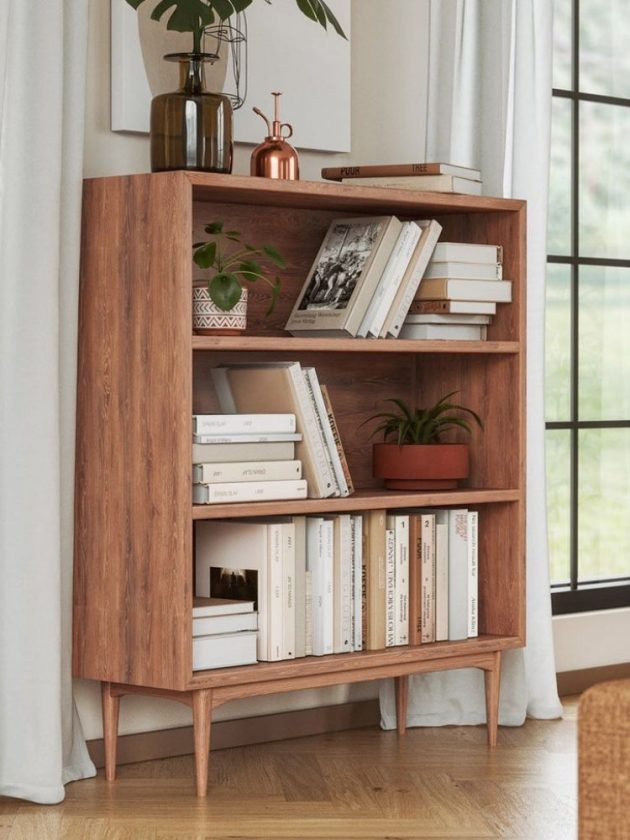
1. Medley
Best for: low VOC wood bookcases
Medley’s bookshelves are elegant and elevated, perfect for a living room. Each piece is made with 100% solid FSC-certified hardwood for the tops and sides, though low-VOC CARB 2 compliant plywood is used for the shelves.
Every eco-friendly bookcase is handcrafted in the US (California or North Carolina) and completed with a low-VOC wood finish.
Price: $2,395 – $2,995
Materials: White Maple, American Walnut Wood
Conscious Qualities: Made-to-Order, US-Made, FSC-Certified Wood, Natural Finish
2. Thuma
Best for: non-toxic modular bookshelf
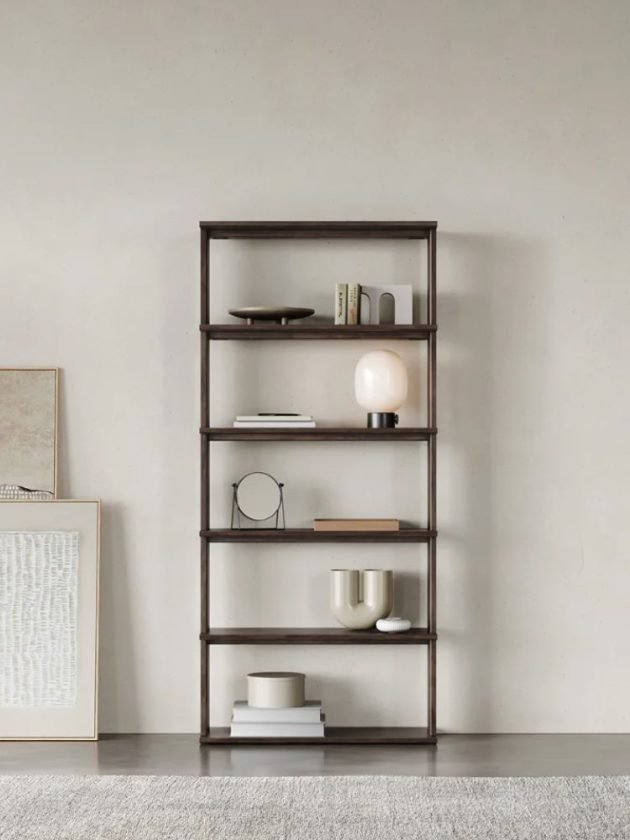
Thuma’s eco-friendly bookshelf is made from upcycled wood sourced from rubberwood trees no longer being used to source rubber. The brand’s bookshelf is also GREENGUARD Gold certified.
What makes Thuma’s bookshelf stand out to me, though, is its modularity — their Pillar Bookshelf can be set in 10 different configurations. And if you start with just a few shelves but later decide you want a larger bookshelf, you can simply buy an additional shelf or two to add on to it!
Price Range: $550 – $3,300
Materials: Upcylced Rubber Wood
Conscious Qualities: GREENGUARD Gold Certified, Repurposed Materials, Adaptable
3. West Elm GREENGUARD Certified
Best for: low-tox bookcases and bookracks for kids
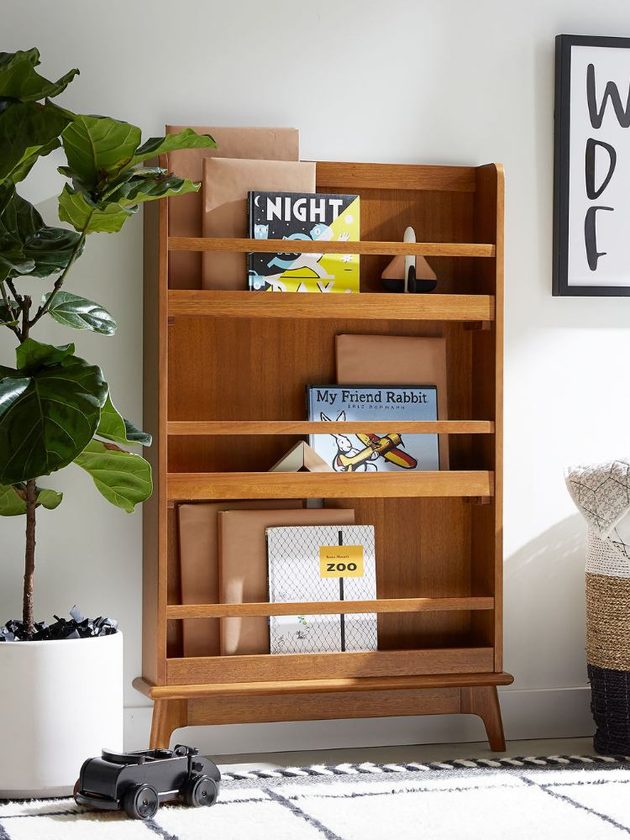
This furniture retailer has plenty of adorable, but functional, bookshelves for a playroom or kids’ bedroom. From cubby bookcases to mid-century bookracks, you’ll find plenty of options that are not only GREENGUARD certified, but made in Fair Trade Certifiedfactories, and/or with FSC-certified wood. Note that the company’s bookshelves are made with engineered wood, though.
West Elm also has GREENGUARD certified bookcases large enough for the adults too!
Price: $399 – $2,897
Materials: Solid Wood, Reclaimed Wood
Conscious Qualities: Fair Trade, FSC Certified, and GREENGUARD Certified Options
4. Urban Natural
Best for: a variety of eco-friendly bookshelves
This natural home retailer has sustainable bookcases in all shapes and sizes. From traditional bookcases to open-back asymmetrical shelving units, Urban Natural has options for any interior aesthetic. Each brand they carry values quality craftsmanship, responsible production, and sustainable sourcing.
Price: $1,099 – $5549
Materials: Solid Teak, Maple, Cherry, Walnut, Birch (varies by brand)
Conscious Qualities: FSC-Certified Options, USA-Made Options, Low VOC Finish Options (varies by brand)

5. MasayaCo
Best for: sustainably-sourced wood bookshelves
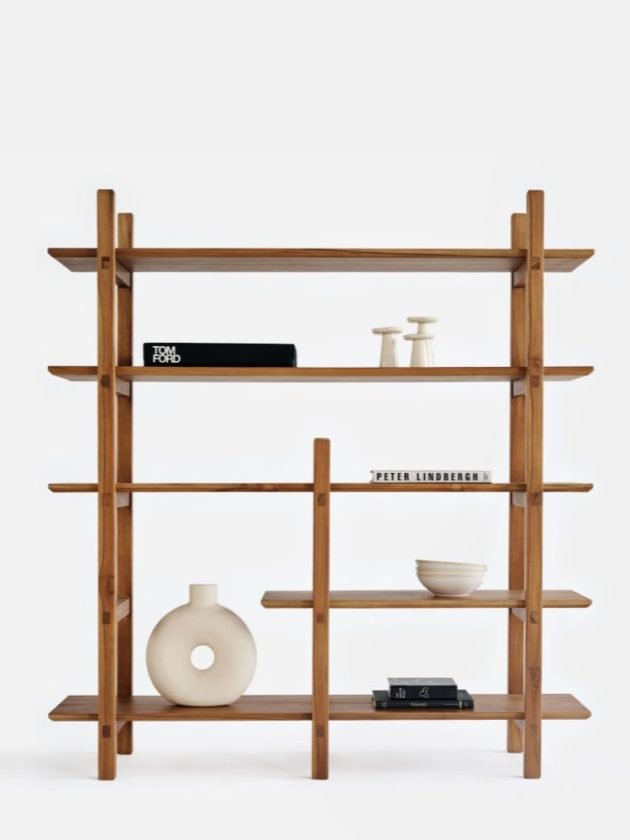
MasayaCo has a stunning collection of sustainable shelves and bookcases handcrafted by artisans in Nicaragua. Not only is each piece of furniture made from responsibly harvested wood, but MasayaCo plants 100 trees for each order — and has planted 1.3 million trees to date. Plus they keep 40% of the reforestation projects completely untouched, to ensure the ecosystems have the chance to truly thrive.
The company shares that with the right care, their teak wood pieces can last up to 75 years. Note, though, that the finishes used aren’t disclosed, so if that’s one of your priorities, this might not be the top pick for you.
Price: $675-$1,295
Materials: Teak
Conscious Qualities: Artisan Made-to-Order, Reforestation Projects, FSC-Certified
6. Healthier Homes
Best for: affordable non-toxic bookshelves
With shelving options starting at under $250, Healthier Homes is a more affordable option for finding sustainable, non-toxic bookcases and shelving.
Most of their wood furniture is made from Parawood, rescued from rubber tree farms after the trees stop producing latex. And their wooden bookcases come unfinished, so you can have full control over the color and any chemicals used. (The company also sells zero VOC furniture paint.)
Price: $238 – $2,160
Materials: Repurposed Wood, Metal, Zero VOC Finishes
Conscious Qualities: Repurposed Materials
7. What We Make
Best for: reclaimed wood bookshelves
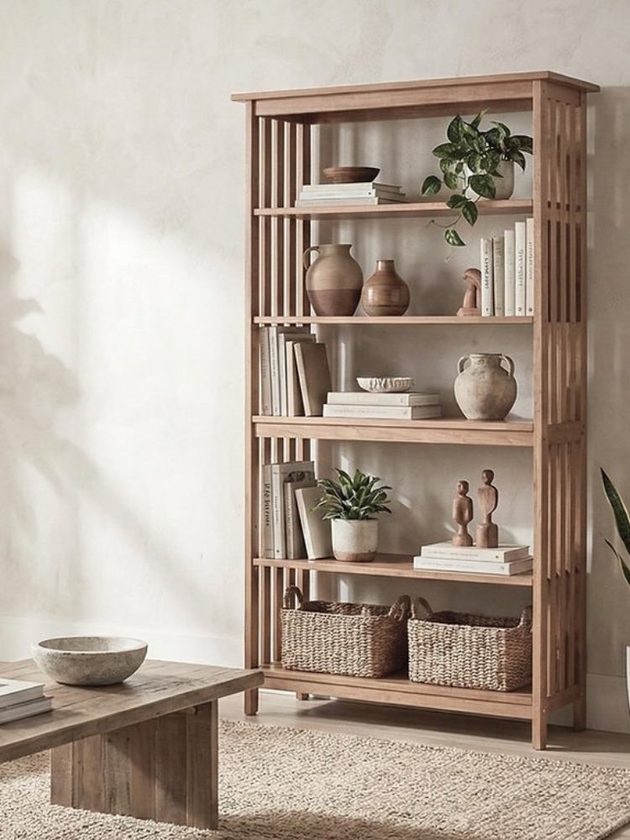
Illinois-based furniture company What We Make crafts non-toxic bookcases with a VOC-free finish.
The shop offers both modern Scandinavian styles (pictured here) using solid oak and industrial style sustainable bookshelves made with a stainless steel frame and the reclaimed wood salvaged from 100+ year old Midwestern barns.
Price: $2,025 – $5,055
Materials: Oak, Reclaimed Wood
Conscious Qualities: Made-to-Order, Repurposed Material Option, Zero-VOC Finish