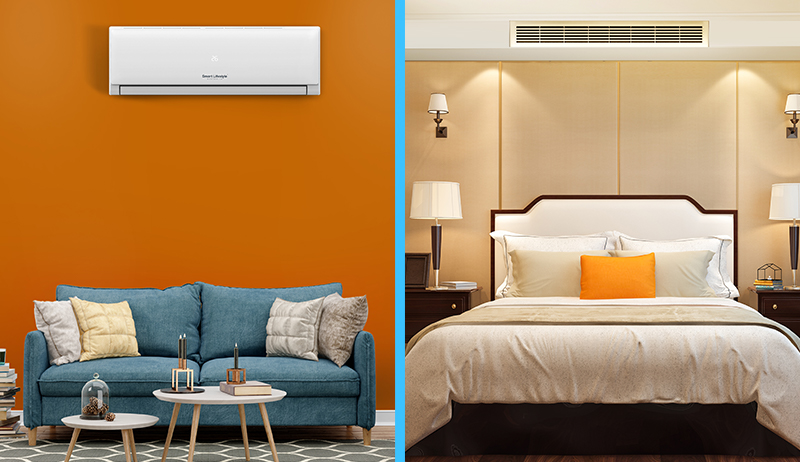
When it comes to cooling and heating homes in Victoria, there are three main system types you’ll find in the Australian energy market. Each type has its own relevance under the VEU scheme.
Before moving to the details, here we’ve shared an overview for better understanding:
Split (Single-Split) Systems
A standard split system air conditioner, often referred to as a single-head unit, features one outdoor unit connected to one indoor unit.
This type of air conditioner is ideal for heating or cooling a single room or a zone. Under the VEU rebate, many split systems are eligible. Also, Split systems are typically the cheapest upgrade option, and a good entry point into the rebate scheme if you have budget issues.
Multi-Split Systems
These aircons are basically an outdoor unit connected to multiple indoor units or heads, which allows zoned climate control across several rooms. It provides greater flexibility and improves energy efficiency while reducing energy costs.
The VEU program clearly lists “multi-split reverse cycle air-conditioners” as eligible products. These systems qualify under the “high efficiency air-conditioner” (Activity 6) category of VEU.
Multi-split air conditioners are an excellent option for larger homes or for those who want separate control in bedrooms, living areas, etc.
Ducted Reverse-Cycle Systems
Ducted systems distribute conditioned air via ductwork to multiple rooms, effectively covering the entire house. A reverse-cycle ducted system, capable of both heating and cooling, is eligible under VEU when it meets the specified criteria.
For example, data from the VEU fact sheet shows that ducted reverse-cycle upgrades attract higher rebates.
Although these tend to be higher-cost, more complex installations, they also offer greater rewards in terms of comfort and rebates when done correctly.
In Victoria, whether it’s a single split, multi-split, or full-ducted system, all three system types can qualify if they meet the efficiency, warranty, product registration, and installer criteria.
So, keep reading—we’ll cover them all in the next section.