Carbon Footprint
Samsung SDI Signs $6.8 Billion Multi-Year EV Battery Supply Deal with Mercedes-Benz

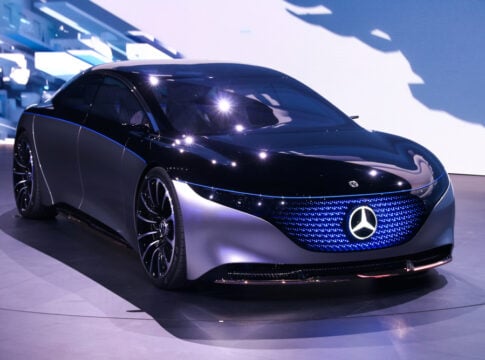

Samsung SDI has signed a multi-year battery supply agreement with Mercedes-Benz worth more than 10 trillion won, or about $6.8 billion. The deal marks the South Korean battery maker’s first direct supply contract with the German luxury automaker.
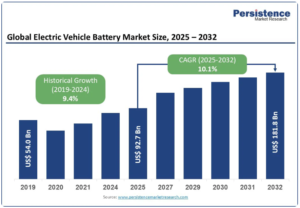
It comes at a time of fast growth in the electric vehicle (EV) battery market. Industry forecasts predict growth from around $92.7 billion in 2025 to $181.8 billion by 2032. This rise is fueled by increasing EV adoption in Europe, China, and the United States.
The agreement strengthens Samsung SDI’s position in the premium EV supply chain. It also shows how automakers are reshaping their sourcing strategies to reduce risk, improve supply stability, and meet long-term carbon goals.
Mercedes-Benz Secures Long-Term Battery Supply for Next-Gen EVs
Mercedes-Benz will use Samsung SDI’s batteries in upcoming compact and mid-size electric SUVs and coupe models. These vehicles are expected to form part of the company’s next wave of electrification plans.
The batteries will use high-nickel NCM (nickel, cobalt, manganese) chemistry. This design improves energy density and driving range. It also supports longer battery life and higher output, which are important for premium EV performance.
The agreement also includes cooperation beyond supply. Both companies plan joint development work on next-generation battery technologies. This signals a deeper strategic partnership rather than a short-term contract.
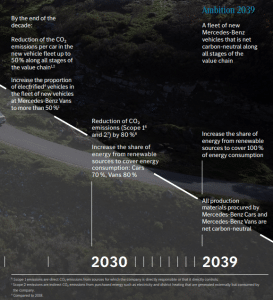
Industry reports suggest the batteries will likely be used in Mercedes-Benz EV platforms from around 2028. This matches the company’s broader shift toward electric-first vehicle architecture, aligning with its Ambition 2039.

Samsung SDI Expands Its European EV Footprint
The deal significantly strengthens Samsung SDI’s position in Europe’s premium automotive market. The company supplies batteries to major global automakers. This includes BMW, Volvo-linked platforms, and Stellantis joint ventures.
A Samsung SDI official remarked:
“This partnership brings together the innovative DNA of both companies. It is meaningful in that SAMSUNG SDI has secured a battery order aimed at strengthening its position in the global EV market.”
Europe is becoming a key battleground for battery suppliers. Automakers are moving away from single-source supply chains. They are also reducing dependence on China-based production networks due to geopolitical and logistics risks.
Samsung SDI’s entry into Mercedes-Benz’s supply chain adds scale and visibility. It also improves its exposure to high-margin luxury EV segments.
At the same time, the partnership supports Mercedes-Benz’s supplier diversification strategy. The company already works with LG Energy Solution and SK On for EV batteries, reflecting a multi-supplier model now common in the industry.
The $180B Battery Boom: Why EV Demand Is Still Accelerating
The global EV battery market continues to expand rapidly. Persistence Market Research says the market will grow at a compound annual growth rate (CAGR) of 10.1%. It should hit around $181.8 billion by 2032.

Other industry data shows strong near-term concentration. In 2025, the top two battery producers accounted for 55.6% of global installations, equal to 659.5 GWh out of a total 1,187 GWh, according to SNE Research.
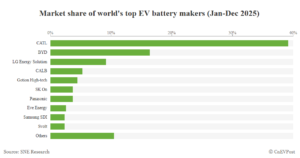

This concentration highlights two trends:
- A small number of leaders dominate large-scale production.
- Mid-tier players compete for premium contracts and long-term OEM deals.
At the same time, EV battery demand is projected to rise by over 25% each year until 2030. This growth is driven by increased EV adoption in key markets and tougher emissions regulations.

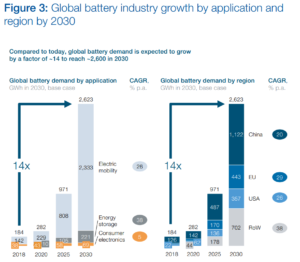
This growth is also linked to broader energy transition trends. EV batteries are now central to national decarbonization plans, especially in Europe and North America.
Net-Zero Pressure Shapes Both Automakers and Battery Makers
The Mercedes–Samsung SDI deal is also shaped by climate targets and ESG pressure across the automotive value chain.
Mercedes-Benz has set a goal for its new vehicle fleet to become net carbon-neutral by 2039 across the full lifecycle, including supply chains and production. The company also aims to reduce CO₂ emissions per passenger car by up to 50% compared to 2020 levels.
To support this, Mercedes-Benz is expanding renewable energy use in production. It is also pushing suppliers to reduce emissions in materials such as steel, aluminum, and battery cells.
Samsung SDI is also increasing its focus on low-carbon manufacturing. The company has been expanding efforts in sustainable sourcing and battery efficiency improvements. It is part of a wider Korean battery industry push toward cleaner production and circular battery systems.
Mercedes-Benz has already introduced net carbon-neutral battery cell production requirements for suppliers in its EV programs. This means battery partners must reduce emissions across raw materials and production processes.
These policies are reshaping competition. Battery performance is no longer the only factor. Carbon intensity is becoming a key procurement metric.
Technology Focus: High-Nickel and Prismatic Battery Design
Samsung SDI’s batteries for Mercedes-Benz will use high-nickel NCM chemistry. This type of battery increases energy density while reducing reliance on cobalt over time.
Higher nickel content generally improves driving range. This is critical for luxury EVs competing on performance and long-distance capability.
The batteries will also use a prismatic format. This rectangular design improves space efficiency inside the vehicle. It also helps with thermal control, which improves safety and performance stability.

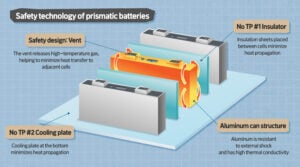
Key advantages include:
- Higher energy density for longer range,
- Better space utilization in vehicle design,
- Improved thermal management for safety, and
- Strong fit for compact and mid-size EV platforms.
These features are important as automakers move toward more compact EV architectures while maintaining premium performance standards.
Market Impact: Strategic Shift in EV Supply Chains
The Samsung SDI–Mercedes-Benz agreement reflects a wider transformation in the EV industry. Automakers are now prioritizing:
- Supply chain diversification,
- Long-term battery partnerships,
- Access to advanced chemistry technologies, and
- Lower carbon production systems.
For Samsung SDI, the deal strengthens its position in the global battery race. It adds a major European luxury OEM to its customer base and increases visibility in the premium EV segment.
For Mercedes-Benz, the agreement supports its electrification roadmap while reducing reliance on single suppliers and improving supply chain resilience.
The financial scale of the deal also signals confidence in long-term EV demand, despite short-term market volatility in the sector. As EV adoption continues to grow and battery demand rises sharply toward 2030, partnerships like this are likely to become more common across the industry.
The agreement highlights a key shift. Battery supply is no longer just a procurement decision. It is now a strategic pillar of global automotive competition and decarbonization.
The post Samsung SDI Signs $6.8 Billion Multi-Year EV Battery Supply Deal with Mercedes-Benz appeared first on Carbon Credits.