Climate Change
EU carbon tax risks penalising efficient producers over data gaps
Nicolas Endress is the chief executive and founder of ClimEase, a Swiss-based software company providing a platform designed to help businesses comply with the EU’s Carbon Border Adjustment Mechanism.
From the start of this year, the EU’s Carbon Border Adjustment Mechanism (CBAM) started to impose additional tariffs on imports of carbon-intensive products – from aluminium and steel to cement and fertilisers.
Large industrial producers based in the European Union have been paying a carbon price under the EU Emissions Trading System (EU ETS), Europe’s carbon market, for nearly two decades. The CBAM – the world’s first carbon border tariff – extends that carbon cost to goods entering the bloc from abroad.
The logic behind the mechanism is that since EU-based manufacturers have paid for the carbon emissions created during their production of goods using the EU ETS, so too should all the other nations that make the same goods.
-
Indian official calls EU carbon border tax unfair and unacceptable
Ajay Seth said the EU’s proposals on its carbon border adjustment mechanism were “not practical” for a developing country like India -
EU’s new climate target lines up multibillion-dollar boost for carbon markets
Analysts estimate the EU will buy at least 50 billion euros worth of carbon credits in the 2030s to help meet its emissions-cutting goals, giving a huge boost to the market in offsets -
UK imports of “green” jet fuel linked to Amazon deforestation
A Texas refinery shipping sustainable aviation fuel to Europe has sourced beef tallow with links to a meatpacking firm fined over illegal cattle purchases





However, as companies begin to prepare for the cost side of the CBAM, many are finding that the biggest savings today do not necessarily come from switching to cleaner production. Instead, they come from replacing default emissions values with verified emissions data using EU-approved methodologies and independent verification.
Moving from the default values can significantly reduce their exposure to carbon tariffs even when verified emissions are not especially low.
That could potentially disadvantage relatively efficient producers that do not have access to accredited auditors. If exporters’ capacity to secure verified data is distributed unevenly, the system risks perpetuating inequalities.
Default values inflate exposure
The CBAM requires all EU importers to report the “embedded” carbon dioxide equivalent (CO2e) emissions – that is, the total amount of greenhouse gas emissions – associated with the imported goods.
They must then compute the actual carbon cost based on the supplier’s reported product-specific emissions data. If no such product-specific emissions data is available, importers must instead apply the default emissions values stipulated by the European Commission.
“House of cards”: Verra used junk carbon credits to fix Shell’s offsetting scandal
To evaluate emissions, manufacturers determine the total amount of fuel and other direct inputs used during the manufacturing process, such as the fuel burned during production at a steel mill.
These inputs are then converted into tonnes of CO2 using EU-approved methodologies. The results are subsequently verified by an independent expert who is accredited under EU rules. This verification process can be expensive and may be difficult to obtain in many developing countries.

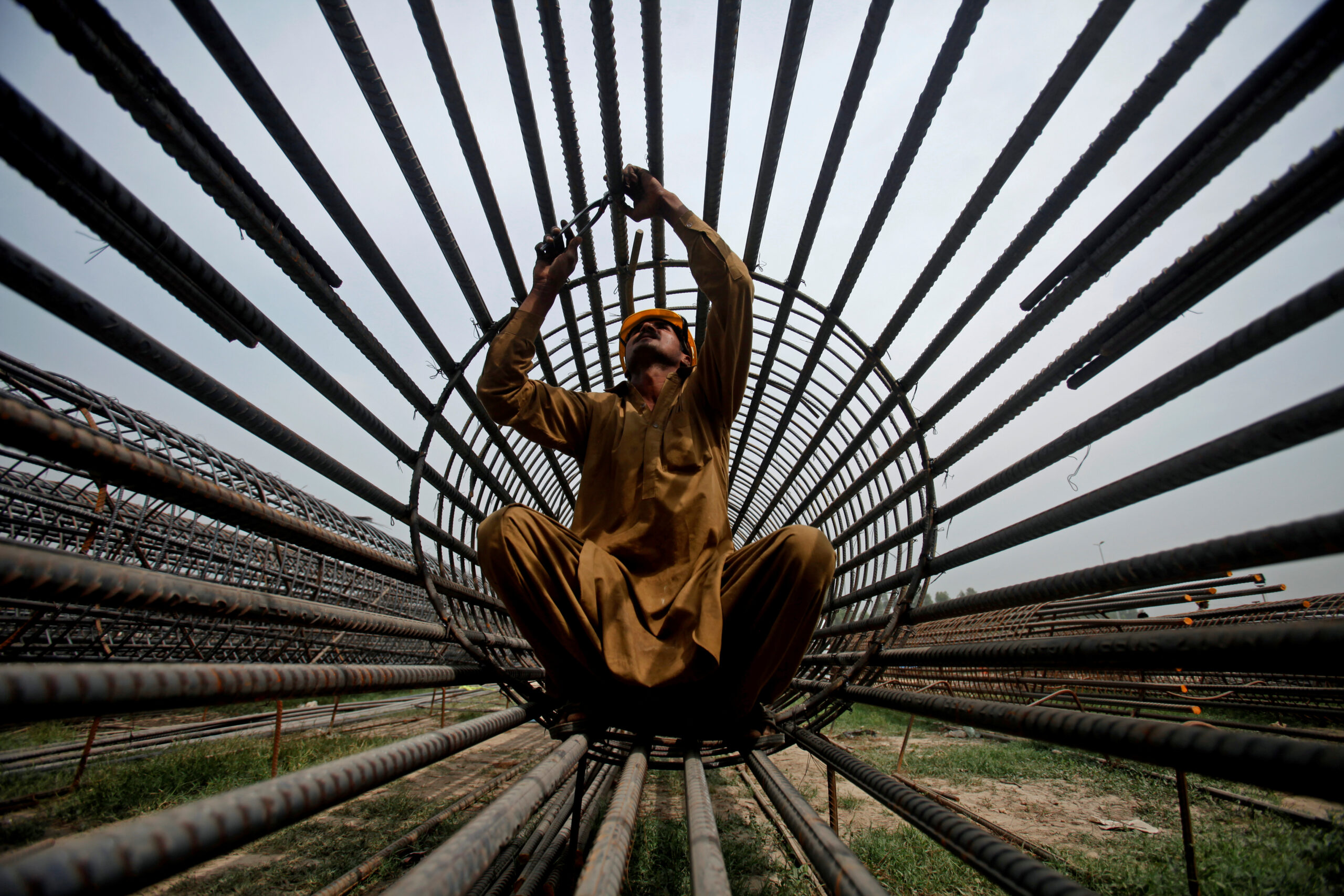
CBAM also requires emissions from key precursor materials to be included. This means upstream suppliers’ emissions must also be calculated and verified. If they are not, importers must apply default values for those inputs.
Since these upstream processes can account for up to 80% of a product’s footprint, companies may still face significant exposure to default values even when their direct supplier’s emissions are verified.
EU’s new climate target lines up multibillion-dollar boost for carbon markets
These default values are in general very high and often represent the maximum possible emissions of the most polluting facility within a specific country or region. A highly efficient steel plant in, for example, India, Brazil or Türkiye, would be evaluated as if it was the least efficient plant in that region due to the lack of formally verified emission data which meet EU standards.
Equity at stake
Equity issues exist here as well. Developing-economy suppliers that have actually decreased their emissions will likely see no decrease in their CBAM costs if they have not had their improvements officially recognised by the EU.
However, obtaining third-party verification requires time, expertise and financial resources, which can present practical challenges for some suppliers – especially those with complex supply chains that require multi-stage verification.
EU importers will have to apply the default values when no verified data is available, leading to significantly higher carbon costs even when the manufacturing process is relatively efficient.
Threat of EU carbon tax prompts dubious “green aluminium” claims in Mozambique
To address this imbalance, the EU could focus on expanding access to accredited verification, particularly in developing markets, while providing clearer guidance and standardised frameworks for emissions reporting across supply chains.
Improving recognition of credible local verification schemes and investing in digital reporting infrastructure would also help reduce reliance on conservative default values.
Without these adjustments, there is a risk that the CBAM rewards those best-equipped to navigate verification requirements, rather than those achieving the lowest emissions in practice.
In this new trade environment, data that proves efficiency – rather than low emissions alone – will determine which producers gain an advantage.
The post EU carbon tax risks penalising efficient producers over data gaps appeared first on Climate Home News.
EU carbon tax risks penalising efficient producers over data gaps