

Trade measures that impose tariffs and penalties on cleantech and emissions-intensive goods are poised to re-emerge as a challenging issue at the UN climate talks in Türkiye next month, after China signalled it wants COP31 to focus on ensuring the free flow of green technologies.
China, which dominates global manufacturing of cleantech equipment, has staunchly denounced US and EU tariffs and measures restricting the import of Chinese green technologies, which Washington and Brussels argue receive unfair government subsidies that threaten their nascent domestic industries.
China’s vice-minister of ecology and environment, Li Gao, told a press conference last week that COP31 should discuss the free flow of green technology as well as trade “unilateralism and protectionism”, warning that Beijing would give a “firm response” to attacks against it.
-
International trade linked to 20% of global emissions – but imports ignored
Researchers say governments should discuss how to tackle emissions linked to globally traded goods and services, especially in large importing countries -
New Zealand accused of breaching EU trade deal over climate rollbacks
The EU’s climate trade rules face their first major test after a green group alleged New Zealand violated binding environmental provisions under its trade deal with the bloc

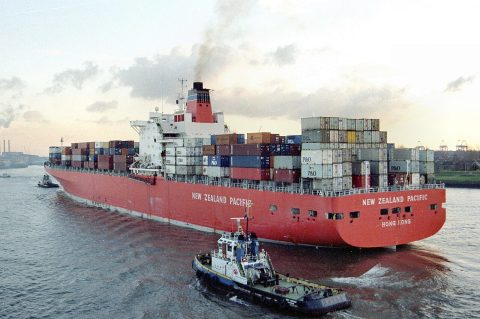
Trade tensions spilled over into the climate negotiations at COP30 in Brazil last year, quickly becoming one of the talks’ major flashpoints after large emerging economies, including China, India and South Africa, pushed to get “unilateral trade measures” on the agenda of the UN climate negotiations.
Observers of the UN talks told Climate Home News trade is likely to re-surface as a major sticking point between the EU and emerging economies, including China, during COP31 this November after newly created spaces for dialogue on climate and trade adjacent to the formal negotiations have so far failed to yield practical solutions on a way forward.
“We should be prepared for the climate-trade issue to be one of the prominent issues in Antalya,” said Li Shuo, director of the China Climate Hub at the Asia Society Policy Institute.
China’s game plan unclear
Although there is currently no designated track in the negotiations to discuss trade issues, China and other large emerging economies have repeatedly used the climate conference to air their grievances over trade barriers. How far China is willing to push the issue within the UN climate process and what it hopes to achieve remain unclear, however.
The vehemence which characterised the trade discussions at COP30 could be tempered in Antalya next month, Li said.
“My expectation is that all sides will be mindful of the trade issue creating more frictions to the multilateral system and will be more measured at COP31,” Li told Climate Home News. “That said, we should continue to expect rhetoric around this issue. Domestic politics in different countries will demand emotions on this issue to be unleashed.”
An EU-China deal struck earlier this month to halve exports of Chinese hybrid vehicles to the bloc could also help ease tensions, with further talks planned in March.
The Trump administration did not send an official delegation at COP30 and is not expected to attend COP31 either, after it quit the Paris Agreement and is also withdrawing from the UN climate convention.
A space for dialogue
At COP30, China and other large emerging economies used the trade discussions to take aim at the EU’s Carbon Border Adjustment Mechanism (CBAM), which they staunchly oppose.
The mechanism imposes a border levy on imports of high-emitting products from countries with less stringent emissions regulations to protect European industries from unfair competition and help drive down emissions. The UK is set to implement its own version from January.
But China and other developing countries argue that the levy violates international trade rules and disproportionately punishes countries with fewer resources to clean up their industries or pay a premium for greener products in their supply chains.
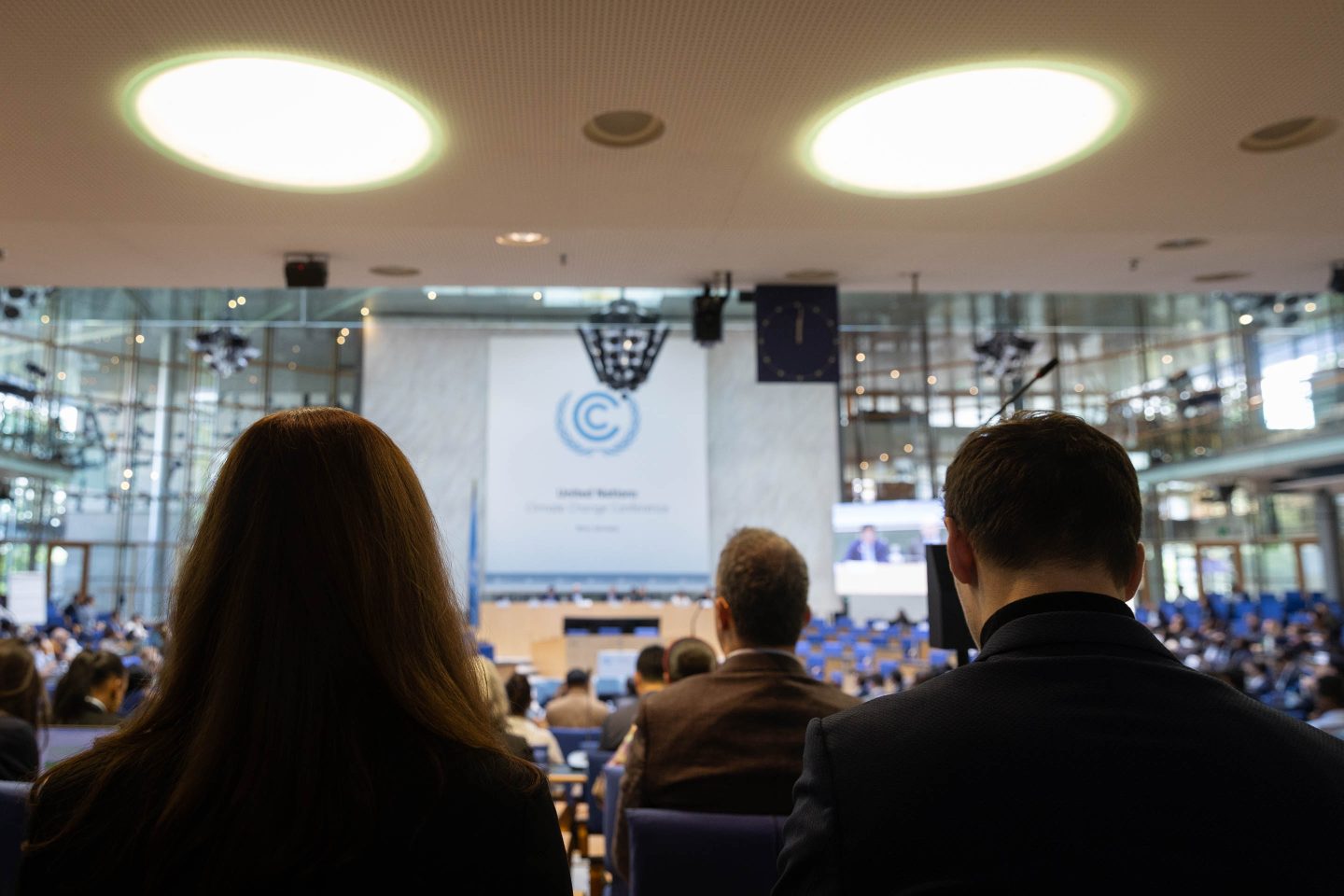
To keep the issue outside the formal negotiations, the COP30 Brazilian presidency bundled trade with other contentious issue into an overarching political decision, in which governments agreed to establish the first UN climate and trade dialogue.
The “Global Mutirão” decision repeated previously agreed language that unilateral measures to address climate change “should not constitute a means of arbitrary or unjustifiable discrimination or a disguised restriction on international trade”. Brazil also launched a voluntary climate and trade forum for countries to discuss how trade can support sustainable economic growth.
But recent discussions “have remained stuck at the level of principled debate and have failed to identify practical solutions”, said Ellie Belton, who tracks climate and trade issues for think-tank E3G.
Voluntary dialogue off on wrong foot
During the first of three trade dialogues scheduled annually between now and COP33, countries largely reiterated their existing positions at the June session in Bonn.
The EU defended its carbon border mechanism, and noted that the dialogue “should not become a space to address trade disputes or make judgements about the legitimacy of climate measures”. A spokesperson for the European Commission told Climate Home News that the bloc “welcomes continued dialogue” to enhance cooperation on measures to prevent carbon leakage.
Russia and the group of African countries suggested the creation of a formal negotiation track for trade discussions at the UN climate talks. But the EU and other developed economies will be reluctant to reopen the matter in Antalya, said Belton.
Meanwhile, the first meeting of the Integrated Forum on Climate Change and Trade (IFCCT) – also held during the Bonn climate talks – was poorly attended after last-minute participation by Russia, which led many developed countries skipping the dialogue, three attendees told Climate Home News.
Countries that joined the session “had a useful discussion but it wasn’t the meeting it was originally envisioned to be”, one delegate said.
Can UN climate talks deliver trade progress?
Although the World Trade Organization is the obvious venue to discuss trade issues, it does not assess the climate impacts of trade interventions – a gap the UN climate talks could help bridge, observers say.
“Trade can generate real economy benefits to help advance global climate action – failing to address this at the UNFCCC is a missed opportunity,” said Belton, of E3G. “Unfortunately, it is likely to remain challenging to focus attention on the positive role of trade co-operation at COP31 if these longstanding tensions continue to consume so much bandwidth,” she added.
Some of the solutions proposed by countries in the first trade dialogue included ways to make different carbon markets work together, including by exchanging data, and using free trade agreements to lower barriers for clean technologies.
Access to affordable clean energy technologies such as solar panels, EVs and batteries has become a key issue for developing countries seeking to wean their economies off expensive and polluting fossil fuels. At the same time, nations want a share of cleantech value chains to create jobs and spur development.
-
COP31 electrification pledge leaves out clean power commitment
Campaigners and experts say the goal’s effectiveness in reducing emissions may be limited unless countries agree to meet it using only clean energy -
Early speakers’ list suggests few powerful leaders will attend COP31
Just 77 heads of state or government are scheduled to address the COP31 climate summit in Antalya, a third less than the COP28 peak -
Paris Agreement committee names three countries snubbing it over NDCs
More than 30 countries have failed to submit an NDC, but only three have repeatedly ignored the committee’s efforts to engage with them
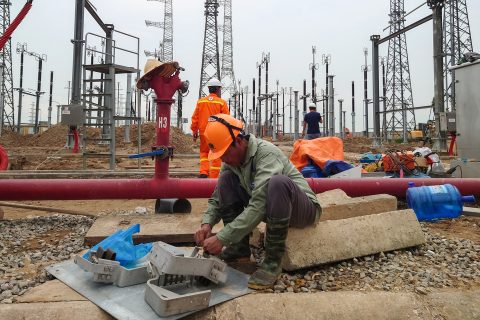


A background paper for the climate and trade forum, seen by Climate Home News, shows that some of the areas identified for co-operation include reducing the cost of low-carbon trade, protecting trade flows after climate-induced disasters, and better connecting systems to report and verify the sustainability of traded goods.
Alden Meyer, a senior associate at E3G, said the forum is meant for countries to “hold hands and move together in a more ambitious and faster way” without the need for global consensus required by formal negotiations.
Meanwhile, the accompanying trade dialogues are designed to “feed into the negotiations over the second Global Stocktake” at COP33, where countries will issue a set of recommendations to ramp up global climate policies. This package could include trade provisions for the first time.
“That could be useful if the next two years demonstrate that there’s a willingness to look for ways in which the UNFCCC can be constructive in the trade space, and make trade a driver of climate ambition rather than a finger-pointing exercise and an irritant,” Meyer said.
The post Tensions set to flare over trade at COP31 as China makes it a priority appeared first on Climate Home News.
Tensions set to flare over trade at COP31 as China makes it a priority

The UK has spent £12.8bn on climate aid for developing countries since 2021, according to official figures obtained by Carbon Brief.
Freedom-of-information (FOI) requests reveal how the UK has used its “climate finance” to support everything from solar projects in Mozambique to carbon offsets in the Amazon.
UK climate funding, which reached a record £4bn this year, has supported roughly 500 aid projects, climate funds and private-investment initiatives over the past five years.
With this spending, the UK has surpassed its £11.6bn climate-finance target for this period, although Carbon Brief analysis shows that it has partly relied on “questionable accounting”.
This target is part of the UK’s ongoing responsibility under UN climate treaties to financially support developing countries in their efforts to tackle climate change.
Despite being central to its international climate policy, the UK government does not routinely release data on progress towards its climate-finance goals.
Here, Carbon Brief has published the data in full for the first time and pulled out key trends since 2021.
The UK has supported around 500 climate projects since 2021
According to the FOI data obtained by Carbon Brief, at least 493 projects, funds and institutions received UK climate finance between 2021-22 and 2025-26.
These included £45m to help Ukraine curb its reliance on fossil fuels, £40m in cash transfers for Kenyans affected by drought and £30m to provide flood resilience in Nepal.
Larger sums were provided to projects spread across multiple countries, often with the stated goal of “mobilising” additional finance from the private sector.
For example, the UK channelled £198m into a World Bank-backed project to help Colombia, Cambodia and others create and sell “high-integrity” carbon offsets.
The UK also provided £229m to a group that uses foreign aid to attract private capital for projects in predominantly low-income nations, such as a solar farm in Uganda and a “sustainable aviation fuel” project in Pakistan.
All of the funded projects can be viewed in the interactive table below.
The UK has been criticised by campaigners and MPs for its lack of transparency around climate finance data.
In line with its international obligations, the government routinely releases its climate-finance figures to the UN – albeit with a two-year delay.
However, it does not publish this data broken down by financial year, making it impossible to accurately gauge progress towards the £11.6bn goal.
The data gathered by Carbon Brief is therefore the most comprehensive attempt to track this information to date. Carbon Brief has been periodically tracking this data since 2017.
UK climate aid has reached record levels – but is set to drop
The UK government committed in 2019 to spending £11.6bn of the nation’s aid budget on “climate finance”, between 2021-22 and 2025-26.
This is the nation’s contribution to an international goal to mobilise $100bn of climate finance a year between 2020 and 2025.
Developed countries are obliged under UN climate treaties to financially support developing countries, assisting their efforts to cut emissions and adapt to climate change.
However, alongside other major donors, such as the US, the UK has dramatically cut its aid budget, placing significant strain on the nation’s climate finance.
Despite this, FOI data shows that UK climate finance reached a record £4bn in 2025-26, as shown in the chart below.
Not accounting for inflation, this amounts to a tenfold increase from 2011-12, when the UK started providing climate finance.
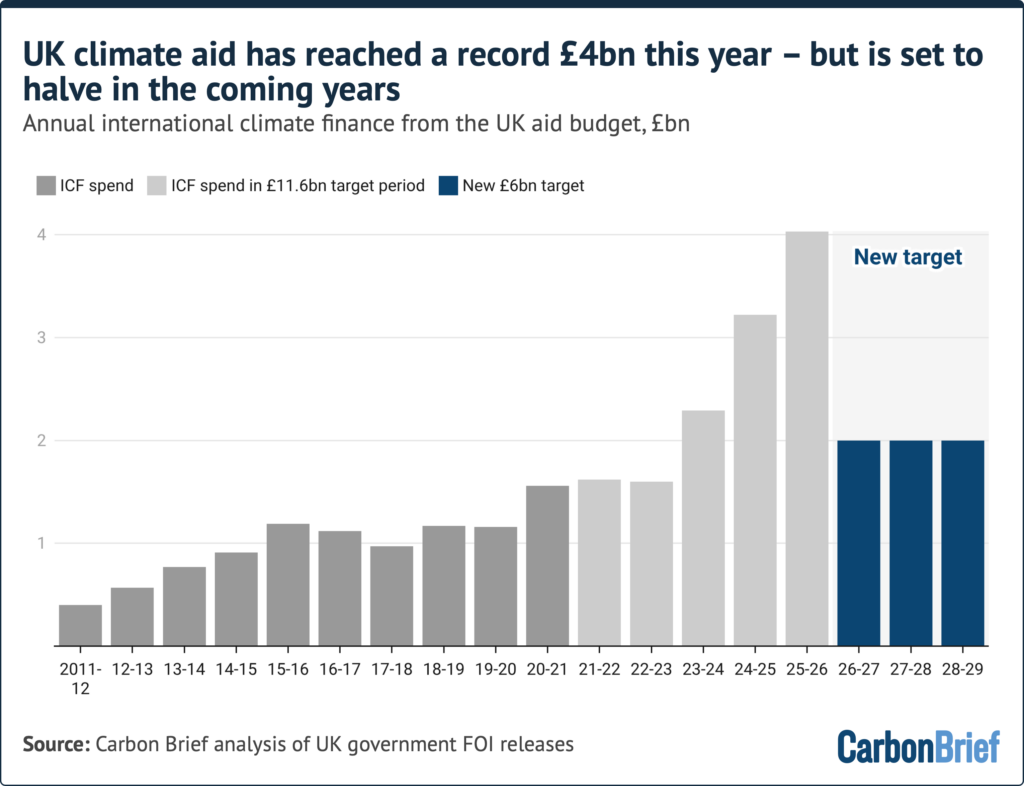
The £11.6bn target was met comfortably, with £12.8bn provided over the five-year period.
However, as separate Carbon Brief analysis shows, the target was only met due to the government reclassifying £2.2bn of existing foreign aid as climate finance, without spending any more.
Rather than setting a new five-year goal, in March 2026 the Labour government committed to spending “around £6bn” of UK aid as climate finance over the next three years. On average, this would mean £2bn in climate aid annually