

Power, like water, is now a necessity. When you hear that a hurricane is headed your way, you immediately worry about losing power. What if you could remove power from your list of concerns?
We are living in a reality where storms are stronger and more frequent. The climate crisis increases the chances that we will experience stronger storms, regardless of our location. With investments of time, money, and planning, you can equip your residence with solar plus battery storage, depend on an emergency shelter that hopefully has solar plus battery storage, or evacuate to a safe location.
Resilience Hubs
Solar plus battery storage can turn a local shelter into a resilience hub. The Urban Sustainability Directors Network defines a resilience hub as a community-serving facility augmented to support residents and coordinate resource distribution and service before, during, and after a natural hazard event. Resilience hubs are being built throughout the United States. For example, Together Louisiana is building resilience hubs through its solar lighthouse project. These lighthouses worked well during a hurricane in September and helped about 500 individuals. If a permanent hub is unsuitable, mobile versions such as those used in Georgia during Hurricane Helene are also an option.
Residential Solar Plus Battery Storage
Solar plus battery storage can also allow you to shelter in place during and after the storm as power companies work to restore power. When so many were without power for a week or more after Hurricane Helene, those with solar plus battery storage systems were able to keep the lights on. And a Florida neighborhood built to withstand hurricanes fared well recently during Hurricanes Helene and Milton: the homes were built above the flood zone and equipped with solar connected to withstand hurricane wind speeds. Additionally, batteries were installed with an emergency mode setting so they would stay charged to 100%. And importantly, programs such as Georgia BRIGHT are being developed to help make this option more affordable. Batteries can be set to be fully charged during the storm, and the solar panels can recharge the batteries after the storm passes.
#BuildBackGreener
Many organizations have stepped up to assist in rebuilding with clean energy after Hurricane Helene. One such effort is being led by the NC Sustainable Energy Association and Greentech Renewables Raleigh. They are partnering with the Footprint Project and Land of Sky Regional Council to provide clean energy resources and microgrids in Western North Carolina. These efforts will hopefully provide a gateway to deploying more of this technology in the Southeast so we can #BuildBackGreener. A microgrid is a small network of electricity users with a local source of supply. Microgrids are usually attached to a centralized national grid, but can also function independently. Utilities can also use this technology: A microgrid operated by Duke Energy in Hot Springs, NC was able to provide the downtown area with power after Hurricane Helene.
How can we implement solar plus battery storage in the Southeast?
Many factors come into play when we explore options to expand solar plus battery storage throughout the Southeast.
Cost
Solar plus battery technology comes at a higher cost than a gas or diesel generator. However, there are funding programs and tax incentives available to help reduce that initial investment even if you are not a tax-paying entity. And a solar plus battery system does not require fuel.
Rates
Most electric utility rates for solar do not allow their customers to build more than they consume, and the benefits from generating power from solar and adding unconsumed power to the grid are not cost-beneficial. Allowing customers the option to build and benefit from excess generation would increase participation and reduce project payback. For example, my church, which mostly operates on Sundays, just purchased a new roof and has a lot of land next to the church. This would be a great location for a resilience hub and an opportunity to provide benefits to the community if they were able to build out the property for solar. Because of the rate their electric utility has for solar, this is not currently possible – instead, they are limited based on their electric demand. But Duke Energy in North Carolina has a new solar plus battery rate called PowerPair, and South Carolina and Georgia programs are on the horizon that can help increase the adoption of solar plus battery technology.
Policy
Allowing entities to generate their own power can reduce pressure on the electrical grid. Opening up this access in many cases comes down to policy. This can even be as simple as requiring homeowners associations to allow homeowners to install solar panels on their homes.
After Hurricane Helene, my son asked, “Where can we live where we won’t have to worry about these storms?” The answer is that no place is out of harm’s way. Climate change is here, and it is causing an undeniable increase in the frequency and severity of storms like the ones we have seen in recent weeks.
We Are the Clean Energy Generation
We live in an unprecedented climate crisis, but we are also alive to see momentous leaps in technology. Together, we are the Clean Energy Generation and we have the tools and support to secure a safer future. Solar plus battery storage is just one small part of the solution. It can start with a conversation. Join us every second Friday of the month to get involved.
JOIN THE CLEAN ENERGY GENERATION
We know that our current situation results from decades of burning fossil fuels for power and transportation, and we are working to usher in clean energy technology to help reverse its effects. Clean energy solutions that reduce the emissions driving the climate crisis can also increase our resilience in the face of its impacts.
In the meantime, let’s prepare for the next storm. Solar + Storage is one tool we should be utilizing to make our homes and communities more resilient.
The post Resilience and Reliability: Ready for the Storm appeared first on SACE | Southern Alliance for Clean Energy.

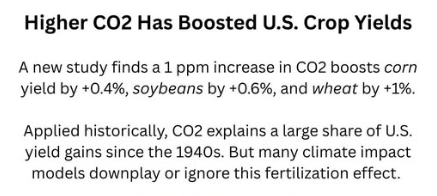 No.
No.
Higher CO2 concentrations don’t increase crop yields, just like higher O2 concentrations don’t grow stronger or healthier animals. We take the chemicals out of the atmosphere that we need for our metabolism.
 At left is a great example of something affecting all our lives here in the United States.
In this case, it’s that the U.S. military functioned fairly well for 250 years before an alcoholic Fox News commentator took over our national defense. Moving forwards from 1775, when the Marine Corps was formed, our nation expanded to become the most powerful country on the planet. Does anyone with a brain larger than the size of a pea believe that Pete Hegseth was needed to save us from immanent destruction?
In voting, something similar has occurred. Until 2020, when Trump falsely claimed that the election from rigged and attempted to overthrow the federal government, we had done perfectly well. Our states, charged as they are in the U.S. Constitution with the security of our elections, took us successfully through 230 years of presidential elections.
What’s changed?
Some say it’s national stupidity, and just maybe they’re right. It’s not Trump and his lying sycophants; it’s tens of millions of hateful morons.
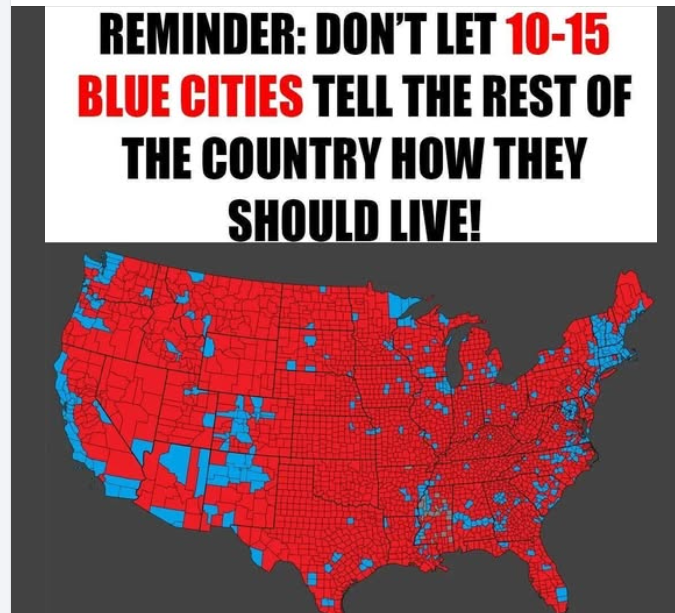 If acres of farmland and desert could vote, the author of the meme here would have a point. But fortunately for us all, that’s not the case.
To a large degree, the nation’s electorate is composed of well educated, affluent people in the northeast and along the Pacific coast.
Another point to be made is that no one is telling you how to live. Anything you want to believe, regardless of how asinine, is fine with us progressives. Anything you want to do, as long as it’s legal and conforms to the Constitution, is also fine.


Do Higher CO2 Concentrations Help Grow Plants?
Greenpeace response to NSW Police attacks on peaceful protesters in Sydney

Aspects of American Life Under Trump
Guest post: Why China is still building new coal – and when it might stop
Guest post: Why China is still building new coal – and when it might stop
Bill Discounting Climate Change in Florida’s Energy Policy Awaits DeSantis’ Approval
-
Greenhouse Gases6 months ago
Guest post: Why China is still building new coal – and when it might stop
-
Climate Change6 months ago
Guest post: Why China is still building new coal – and when it might stop
-
Climate Change2 years ago
Bill Discounting Climate Change in Florida’s Energy Policy Awaits DeSantis’ Approval
-

 Greenhouse Gases2 years ago
嘉宾来稿:满足中国增长的用电需求 光伏加储能“比新建煤电更实惠”
-
Climate Change2 years ago
Spanish-language misinformation on renewable energy spreads online, report shows
-

 Climate Change2 years ago
嘉宾来稿:满足中国增长的用电需求 光伏加储能“比新建煤电更实惠”
-
Climate Change Videos2 years ago
The toxic gas flares fuelling Nigeria’s climate change – BBC News
-
Renewable Energy2 years ago
GAF Energy Completes Construction of Second Manufacturing Facility