Green Living
Winnow Review: A Probiotic That Binds Microplastics
Microplastics are one of those topics that can make you want to throw your hands in the air.
Because once you start looking, they’re everywhere.
They’re in our air, our water and even new born babies. And, they seem to come from everywhere like food packaging, bottled water, synthetic clothing, household dust, cutting boards, takeout containers, and our clothes.

I’ve spent more than a decade talking about ways to reduce plastic exposure, but it’s not something that can be wholly avoided. Winnow reached out to me to learn more about their science and give their product a try.
Winnow is a daily probiotic designed for gut support, but with an added purpose: it uses probiotic strains selected for their ability to bind microplastics in preclinical testing.
(And I want to be very clear: I do not think any supplement is a magic solution to plastic pollution. I don’t think a capsule replaces reducing plastic exposure, better regulation, safer materials, or holding companies accountable for the amount of plastic they produce.)
But the science is so cool, and a useful tool for the world we’re actually living in.
So in this post, we’re going to talk about what winnow is, how microplastic-binding probiotics are supposed to work, what the science says, and the everyday swaps I’d still prioritize if you’re trying to reduce your microplastic exposure.
This post is sponsored by winnow. As always, all thoughts and opinions are my own.

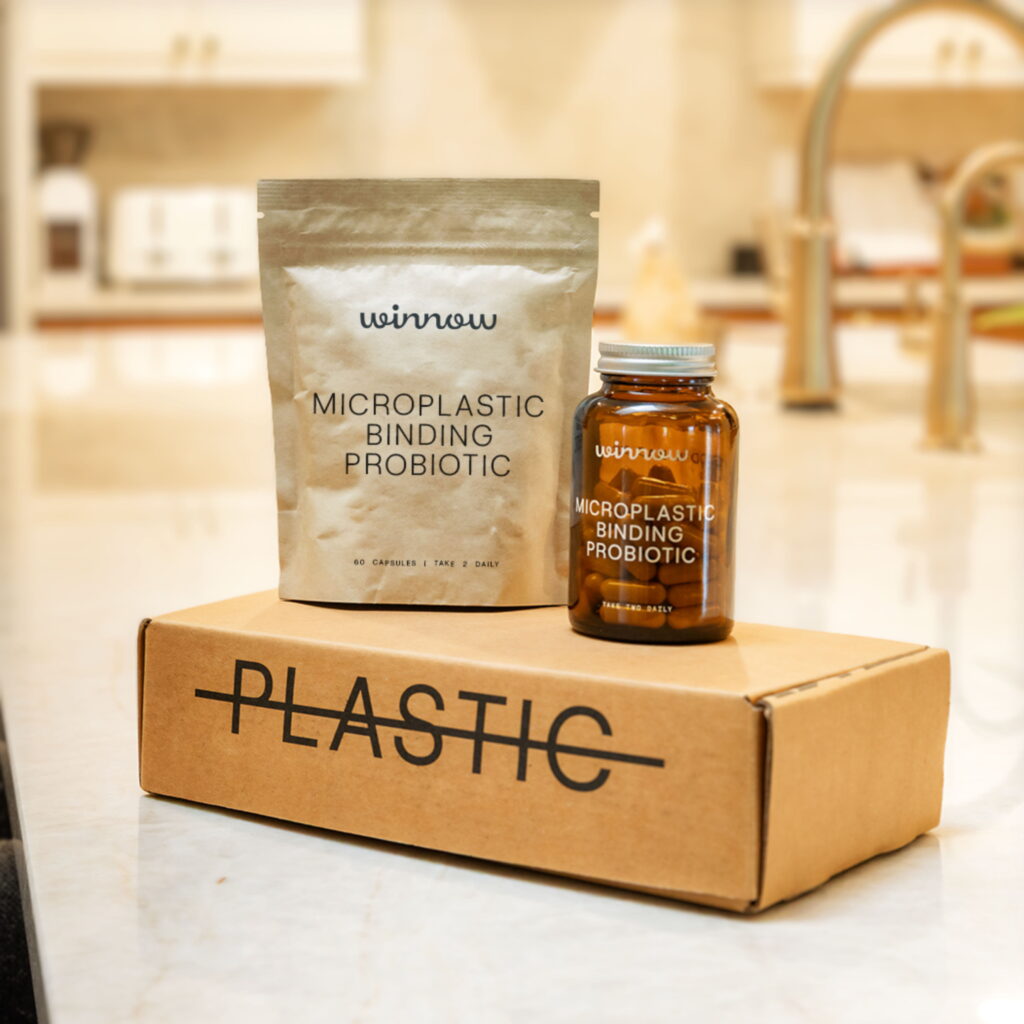
what is winnow?
Winnow is a daily probiotic designed to support gut health, with an added focus on helping bind ingested microplastics in the gut.
The formula uses probiotic strains selected for digestive support, along with strains studied for their ability to attach to certain microplastic particles in preclinical testing.
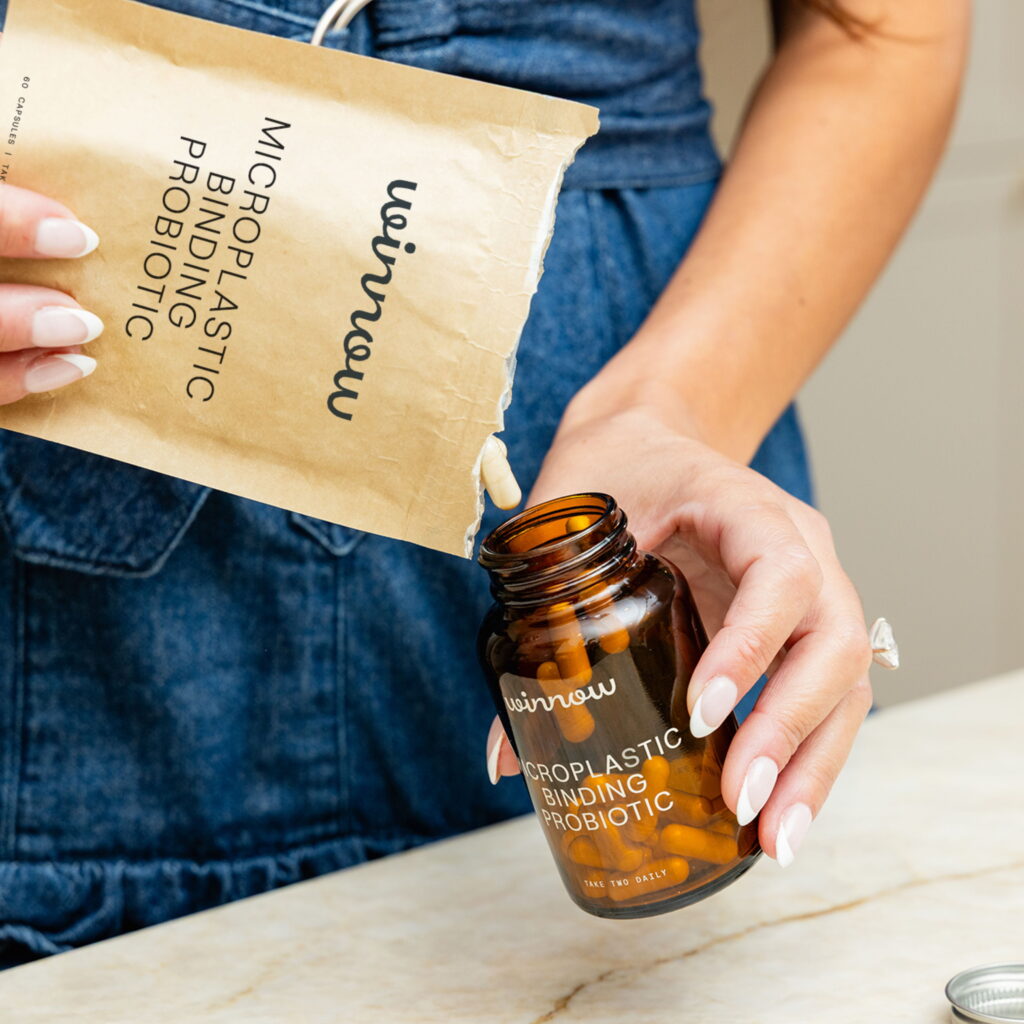
Winnow is also completely plastic-free with all of their packaging!
how does it work?
Winnow is a daily probiotic for gut health with microplastic-binding science built in.
The team set out to make a high-quality probiotic, something many people already take every day for digestive support, but through their research they found that certain probiotic strains also showed the ability to bind microplastic particles in preclinical testing.
Winnow chose the best strains for both gut health support and microplastic-binding potential. Which resulted in an encompassing probiotic with daily gut support and targeted strains designed to help bind ingested microplastics and move them through the digestive tract.
what does the science say?
Winnow’s formula is built on two different layers of research: clinically studied probiotic strains for gut health, and preclinical testing on microplastic binding.
On the probiotic side, winnow uses strains with existing human research behind them. According to winnow, its clinical backbone includes L. rhamnosus ATCC 53103, L. reuteri DSM 17938, and L. acidophilus ATCC SD5212. These strains have been studied for digestive comfort, regularity, immune support, gut barrier support, and related health endpoints.
The microplastic-binding side is newer.
Winnow describes the mechanism as surface adsorption, meaning plastic particles physically adhere to the surface of the probiotic bacteria as they move through the intestinal tract. The company points to bacterial surface structures like exopolysaccharides, also called EPS, and S-layer proteins as possible binding sites.
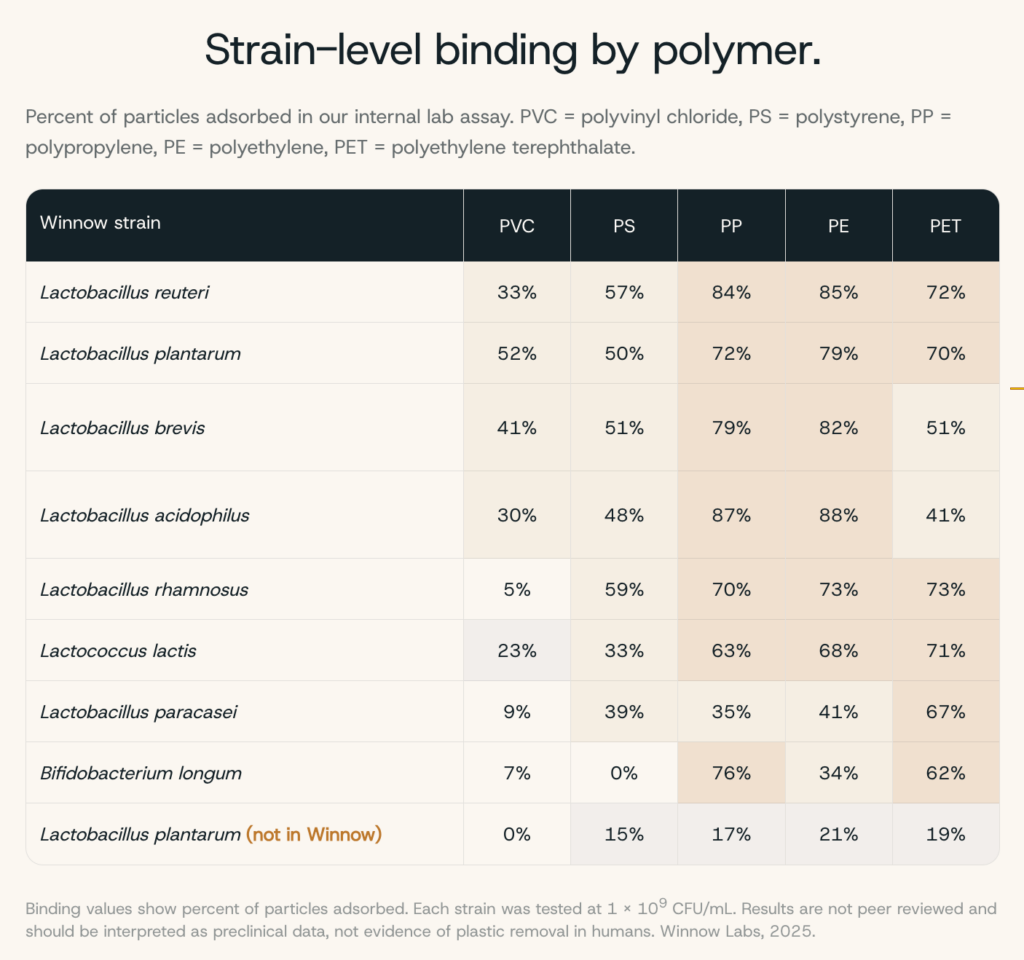
In winnow’s internal testing, binding varied widely by strain and by plastic type. That matters because “probiotic” is not one thing. Different strains can behave very differently.
Winnow states that its full multi-strain formula bound 1.8x more of a blended plastic mix than any single strain alone.
Winnow tested binding across common plastic polymers, including PE, PP, PS, PET, PVC, and a blended plastic mix. According to the data published on winnow’s science page, the full winnow formula outperformed the average single strain in every category tested:

There is also peer-reviewed research looking at this broader concept. A 2025 study screened 784 bacterial strains and identified specific probiotic strains with strong microplastic adsorption potential. In animal testing, those strains increased microplastic excretion and reduced plastic accumulation in intestinal tissue.
So the current science is split into two categories: the gut-health side of probiotics has human clinical research behind several of Winnow’s strains, while the microplastic-binding side is still preclinical.
my experience trying winnow:
Before trying winnow, I was taking Seed, so I was already used to taking a daily probiotic. Winnow feels very comparable to me. It’s a premium probiotic with similar price point and easy to take daily. The main difference is that winnow is completely plastic-free and has the added microplastic-binding science built in.
I like the idea of choosing a probiotic that supports gut health and also addresses something I care a lot about: plastic exposure.
I’ve been traveling more for work this year, and travel always messes up my routines – different food, different schedule, different sleep, different everything. And taking daily probiotic helps keep that part of my routine consistent.
I eat a pretty high-fiber diet, which is already important for gut health, but I still like having a probiotic as another layer of support and even better to help with microplastic exposure.
who is winnow right for?
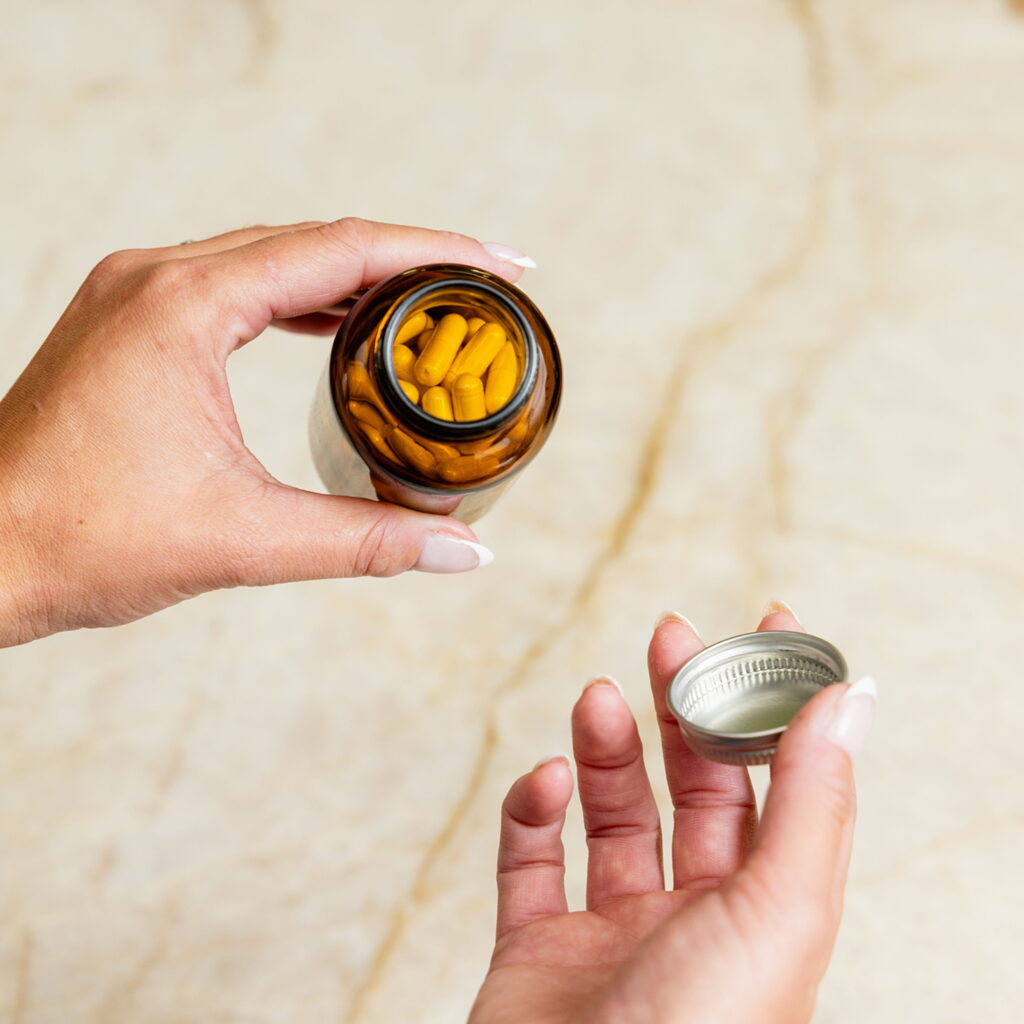
Winnow makes the most sense for people who already take a daily probiotic, or are thinking about adding one, and want the added microplastic-binding science.
They also have an exposure quiz on their site, which I thought was helpful. It looks at everyday habits like bottled water, takeout, food storage, synthetic clothing, and other common plastic exposure points.
I scored pretty low, which makes sense after more than a decade of living zero waste, but that’s where winnow fits: a premium daily probiotic first, with an added layer that lines up with the same reason I started reducing plastic in the first place – less exposure, better health, and saving money where I can.
faqs: winnow and microplastics
can probiotics remove microplastics from the body?
Some preclinical research suggests certain probiotic strains can bind microplastic particles in the gut and increase excretion.
does winnow remove microplastics?
Winnow is designed to bind to microplastics in the gut so they can pass through normal digestion. The gut-health side of the formula uses clinically studied probiotic strains, while the microplastic-binding side is based on preclinical and internal lab testing.
what is the best probiotic for microplastics?
The research suggests strain selection matters. Not all probiotics bind plastic the same way. Winnow was specifically formulated as a daily probiotic with strains selected for gut health and microplastic-binding potential.
how can I reduce microplastics in my body?
Start by reducing repeated exposure: don’t heat food in plastic, avoid bottled water when possible, use glass or stainless steel for food storage, switch from heavily scratched plastic cutting boards, filter your water, dust and vacuum regularly, and eat more minimally packaged foods when realistic.
is winnow worth it?
Winnow makes the most sense if you already take a daily probiotic or want to add one. It’s a premium probiotic at a similar price point to other high-end probiotics, with plastic-free packaging and added microplastic-binding science.
So, would you give Winnow a try? Let me know in the comments!
And, a huge thank you to Winnow for sponsoring this post. Be sure to visit Winnowlabs.com to learn more about their microplastic binding probiotic.
The post Winnow Review: A Probiotic That Binds Microplastics appeared first on Going Zero Waste.