Renewable Energy
Wind Industry Operations: In Wind’s Next Chapter, Operations take center stage

Wind Industry Operations: In Wind’s Next Chapter, Operations take center stage
This exclusive article originally appeared in PES Wind 4 – 2025 with the title, Operations take center stage in wind’s next chapter. It was written by Allen Hall and other members of the WeatherGuard Lightning Tech team.
As aging fleets, shrinking margins, and new policies reshape the wind sector, wind energy operations are in the spotlight. The industry’s next chapter will be defined not by capacity growth, but by operational excellence, where integrated, predictive maintenance turns data into decisions and reliability into profit.
Wind farm operations are undergoing a fundamental transformation. After hosting hundreds of conversations on the Uptime Wind Energy Podcast, I’ve witnessed a clear pattern: the most successful operators are abandoning reactive maintenance in favor of integrated, predictive strategies. This shift isn’t just about adopting new technologies; it’s about fundamentally rethinking how we manage aging assets in an era of tightening margins and expanding responsibilities.
The evidence was overwhelming at this year’s SkySpecs Customer Forum, where representatives from over 75% of US installed wind capacity gathered to share experiences and strategies. The consensus was clear: those who integrate monitoring, inspection, and repair into a cohesive operational strategy are achieving dramatic improvements in reliability and profitability.
Takeaway: These options have been available to wind energy operations for years; now, adoption is critical.
Why traditional approaches to wind farm operations are failing
Today’s wind operators face an unprecedented convergence of challenges. Fleets installed during the 2010-2015 boom are aging in unexpected ways, revealing design vulnerabilities no one anticipated. Meanwhile, the support infrastructure is crumbling; spare parts have become scarce, OEM support is limited, and insurance companies are tightening coverage just when operators need them most.
The situation is particularly acute following recent policy changes. The One Big Beautiful Bill in the United States has fundamentally altered the economic landscape. PTC farming is no longer viable; turbines must run longer and more reliably than ever before. Engineering teams, already stretched thin, are being asked to manage not just wind assets but solar and battery storage as well. The old playbook simply doesn’t work anymore.
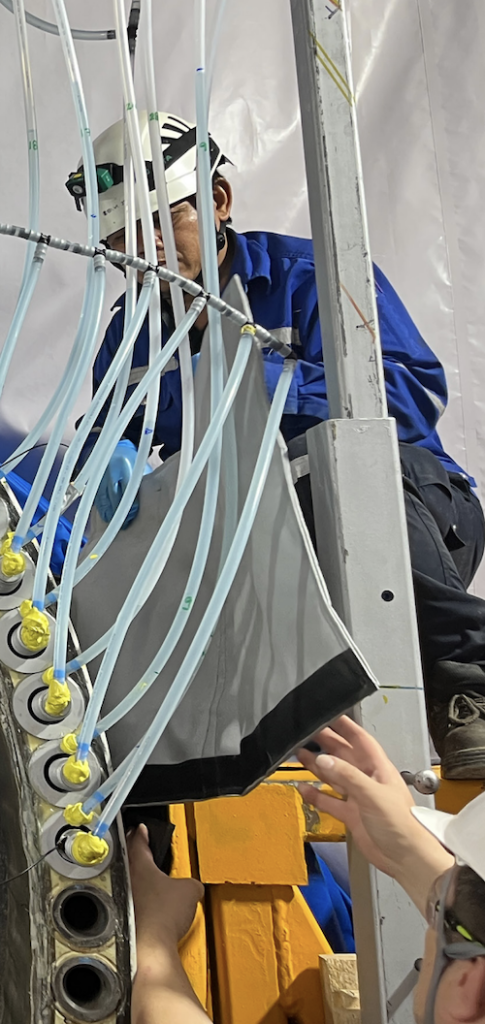
Consider the scope of just one challenge: polyester blade failures. During our podcast conversation with Edo Kuipers of We4Ce, we learned that an estimated 30,000 to 40,000 blades worldwide are experiencing root bushing issues. ‘After a while, blades are simply flying off,’ Kuipers explained. The financial impact of a single blade failure can exceed €300,000 when you factor in replacement costs, lost production, and crane mobilization. Yet innovative repair solutions, like the one developed by We4Ce and CNC Onsite, can address the same problem for €40,000 if caught early. This pattern repeats across every major component. Gearbox failures that once required complete replacement can now be predicted months in advance. Lightning damage that previously caused catastrophic failures can be prevented with inexpensive upgrades and real-time monitoring. All these solutions are based on the principle that predicted maintenance is better than an expensive surprise.
Seeing problems before they happeny, and potential risks
The transformation begins with visibility. Modern monitoring systems reveal problems that traditional methods miss entirely. Eric van Genuchten of Sensing360 shared an eye-opening statistic on our podcast: ‘In planetary gearbox failures, they get 90%, so there’s still 10% of failures they cannot detect.’ That missing 10% represents the catastrophic failures that destroy budgets and production targets. Advanced monitoring technologies are filling these gaps. Sensing360’s fiber optic sensors, for example, detect minute deformations in steel components, revealing load imbalances and fatigue progression invisible to traditional monitoring. ‘We integrate our sensors in steel and make rotating equipment smarter,’ van Genuchten explained.
Other companies are deploying acoustic systems to identify blade delamination, oil analysis for gearbox health, and electrical signature analysis for generator issues. Each technology adds a piece to the puzzle, but the real value comes from integration. The impact of load monitoring alone can be transformative.
As van Genuchten explained, ‘Twenty percent more loading on a gearbox or on a bearing is half of your life. The other way around, twenty percent less loading is double your life.’ With proper monitoring, operators can optimize load distribution across their fleet, extending component life while maximizing production.
But monitoring without action is just expensive data collection. The most successful operators are those who’ve learned to translate sensor data into operational decisions. This requires not just technology but organizational change, breaking down silos between monitoring, maintenance, and management teams.
In Wind Energy Operations, Early intervention makes the million-dollar difference
The economics of early intervention are compelling across every component type. The blade root bushing example from We4Ce illustrates this perfectly. With their solution, early detection means replacing just 24-30 bushings in about 24 hours of drilling work. Wait, and you’re looking at 60+ bushings and 60 hours of work. Early detection doesn’t just prevent catastrophic failure; it makes repairs faster, cheaper, and more reliable.
This principle extends throughout the turbine. Early-stage bearing damage can be addressed through targeted lubrication or minor adjustments. Incipient electrical issues can be resolved with cleaning or connection tightening. Small blade surface cracks can be repaired in a few hours before they propagate into structural damage requiring weeks of work.
Leading operators are implementing tiered response protocols based on monitoring data. Critical issues trigger immediate intervention. Developing problems are scheduled for the next maintenance window. Minor issues are monitored and addressed during routine service. This systematic approach reduces both emergency repairs and unnecessary maintenance, optimizing resource allocation across the fleet.
Turning information into action
While monitoring generates data, platforms like SkySpecs’ Horizon transform that data into operational intelligence. Josh Goryl, SkySpecs’ Chief Revenue Officer, explained their evolution at the recent Customer Forum: ‘I think where we can help our customers is getting all that data into one place.
The game-changer is integration across data types. The company is working to combine performance data with CMS data to provide valuable insights into turbine health. This approach has been informed by operators across the world, who’ve discovered that integrated platforms deliver insights that siloed data can’t.
The platform approach also addresses the reality of shrinking engineering teams managing expanding portfolios. As Goryl noted, many wind engineers are now responsible for solar and battery storage assets as well. One platform managing multiple technologies through a unified interface becomes essential for operational efficiency.
The Integration Imperative for Wind Farm Operations
The most successful operators aren’t just adopting individual technologies; they’re integrating monitoring, inspection, and repair into a seamless operational system. This integration operates at multiple levels.
At the technical level, data from various monitoring systems feeds into unified platforms that provide comprehensive asset visibility. These platforms don’t just display data; they analyze patterns, predict failures, and generate work orders.
At the organizational level, integration means breaking down barriers between departments. This cross-functional collaboration transforms O&M from a cost center into a value driver. Building your improvement roadmap For operators ready to enhance their O&M approach, the path forward involves several key steps:
Assessing the Current State of your Wind Energy Operations
Document your maintenance costs, failure rates, and downtime patterns. Identify which problems consume the most resources and which assets are most critical to your wind farm operations.
Start with targeted pilots Rather than attempting wholesale transformation, begin with focused initiatives targeting your biggest pain points. Whether it’s blade monitoring, gearbox sensors, or repair innovations, starting with your largest issue will help you see the biggest benefit.
• Invest in integration, not just technology: the most sophisticated monitoring system is worthless if its data isn’t acted upon. Ensure your organization has the processes and culture to transform data into decisions – this is the first step to profitability in your wind farm operations.
Build partnerships, not just contracts: look for technology providers and service companies willing to share knowledge, not just deliver services. The goal is building capability, not dependency.
• Measure and iterate: track the impact of each initiative on your key performance indicators. Use lessons learned to refine your approach and guide future investments.
The competitive advantage
The wind industry has reached an inflection point. With increasingly large and complex turbines, monitoring needs to adapt with it. The era of flying blind is over.
In an industry where margins continue to compress and competition intensifies, operational excellence has become a key differentiator. Those who master the integration of monitoring, inspection, and repair will thrive. Those who cling to reactive maintenance face escalating costs and declining competitiveness.
The technology exists. The business case is proven. The early adopters are already reaping the benefits. The question isn’t whether to transform your O&M approach, but how quickly you can adapt to this new reality. In the race to operational excellence, the winners will be those who act decisively to embrace the efficiency revolution reshaping wind operations.
Unless otherwise noted, images here are from We4C Rotorblade Specialist.

Contact us for help understanding your lightning damage, future risks, and how to get more uptime from your equipment.
Download the full article from PES Wind here
Find a practical guide to solving lightning problems and filing better insurance claims here

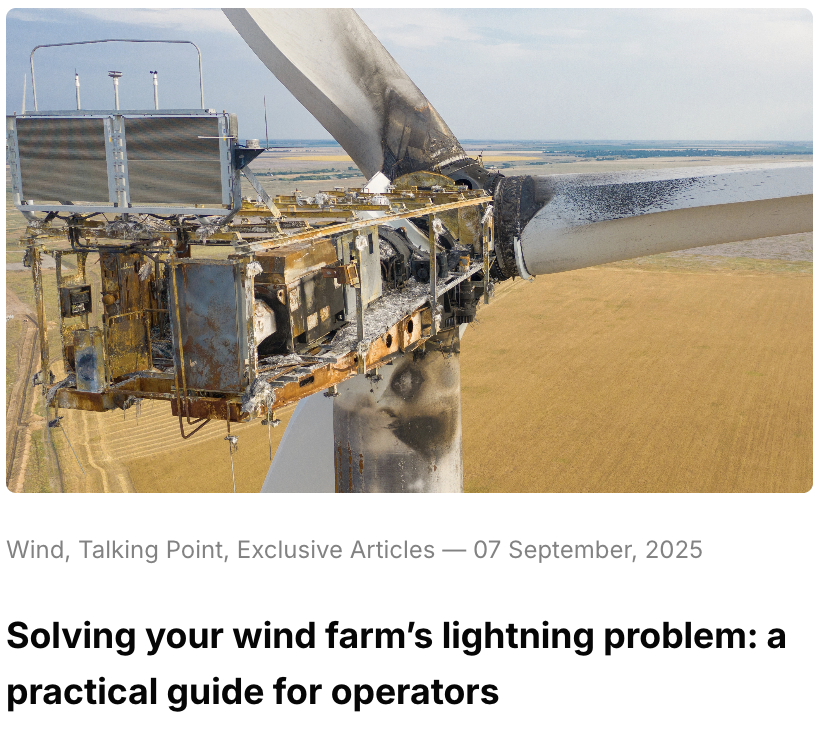
Wind Industry Operations: In Wind’s Next Chapter, Operations take center stage