Renewable Energy
Where Does Domestic Violence Come From?

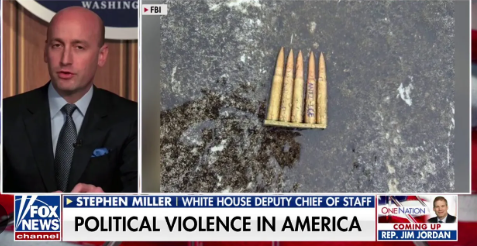

If you look at some coverage on the subject, however, you’ll learn that this is simple false. Here’s a bit from a PBS piece:
PBS: Policymakers and the public need reliable evidence and actual data to understand the reality of politically motivated violence.
Craig: No, they don’t. Are you serious? Are we to believe that Donald Trump is sending federal troops to democratically-led cities based on “reliable evidence and actual data?” This is a sick joke.
PBS: From our research on extremism, it’s clear that the president’s and Miller’s assertions about political violence from the left are not based on actual facts.
Here’s more from the PBS article:
After the Sept. 10, 2025, assassination of conservative political activist Charlie Kirk, President Donald Trump claimed that radical leftist groups foment political violence in the U.S., and “they should be put in jail.”
“The radical left causes tremendous violence,” he said, asserting that “they seem to do it in a bigger way” than groups on the right.
WATCH: Extremism scholar analyzes influence of rhetoric on political violence
Top presidential adviser Stephen Miller also weighed in after Kirk’s killing, saying that left-wing political organizations constitute “a vast domestic terror movement.”
“We are going to use every resource we have … throughout this government to identify, disrupt, dismantle and destroy these networks and make America safe again,” Miller said.
Political violence rising
The understanding of political violence is complicated by differences in definitions and the recent Department of Justice removal of an important government-sponsored study of domestic terrorists.
Political violence in the U.S. has risen in recent months and takes forms that go unrecognized. During the 2024 election cycle, nearly half of all states reported threats against election workers, including social media death threats, intimidation and doxing.
WATCH: Trump conspiracies inspire threats against judges, jurors and election workers
Kirk’s assassination illustrates the growing threat. The man charged with the murder, Tyler Robinson, allegedly planned the attack in writing and online.
This follows other politically motivated killings, including the June assassination of Democratic Minnesota state Rep. and former House Speaker Melissa Hortman and her husband.
These incidents reflect a normalization of political violence. Threats and violence are increasingly treated as acceptable for achieving political goals, posing serious risks to democracy and society.