Climate Change
When the oil companies leave, who pays?

As oil companies pull out of Argentina’s oil heartland in the Patagonian province of Chubut, workers and communities are struggling to secure their future, with little say in the decisions being made about it.
“The impacted are fragmented, the exploiters organised,” said José Glinski, a member of parliament from the province.
In Comodoro Rivadavia, where Argentina’s oil industry began in 1907, those words carry particular weight. For nearly 120 years, oil has shaped the city’s economy and that of Chubut province, which helped power Argentina for decades. Now the companies that built their fortunes there are shifting their investments elsewhere, threatening an economy that has depended on oil for generations.
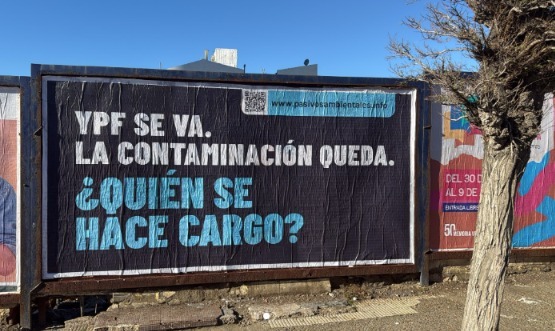
Argentina’s national oil company, YPF, whose roots lie in Comodoro Rivadavia, is selling off its mature oilfields in the region to concentrate investment in the shale oil and gas reserves of Vaca Muerta, further north. According to Glinski, around 10,000 direct jobs have gone in Chubut, and unemployment has climbed from 2% to 10% in a single year.
“And this while all remaining companies have kept extremely high levels of profit,” he said.
COP31 Briefing: What to expect from the Antalya climate summit?
Glinski blames government policy as much as the companies. “Companies are choosing to leave and the government lets them do so, while weakening tax and environmental regulations, leaving the city without the necessary income to organise the transition.”
Nobody has yet worked out who will clean up the old fields and more than 6,000 wells, look after the workers who remain, or pay for whatever comes next.
Comodoro Rivadavia is not alone. From Mejillones and Tocopilla in Chile to La Guajira in Colombia and Appalachia in the United States, from Scotland to Mpumalanga in South Africa and East Kalimantan in Indonesia, places built around fossil fuels for generations face some version of the same problem. As investment moves elsewhere, plans to protect workers, support communities and repair damaged land often lag far behind, if they exist at all.
Building an economy beyond fossil fuels
In Comodoro, as locals call the city, the community has not been passively waiting for oil to run out.
“We have looked into multiple alternatives for the territory, including building on geothermal capacity, an agricultural programme that could reinforce food security and focus on cultures that are not too water dependent, and exploring also aquaculture built on local species,” explained Ruben Zárate, who heads Comodoro Conocimiento, a public agency created by the municipality to develop economic opportunities. “The only alternative is economic diversification.”
But having ideas is one thing. Finding the money and securing the political support to put them into practice is another. In many countries, decisions that shape a region’s economy are made in the capital or in company boardrooms, and local authorities have little say, and few resources, when a major employer pulls out.
Glinski points to deals struck at the national level that leave communities without a meaningful say in decisions affecting their future.
“Some of the barriers relate to the absence of regulation of private actors which have negotiated conditions at the national level that prevent provinces or territories from capturing benefits that could be useful to fund the transition,” he said. “Comodoro had no voice in these deals.”

One example is Argentina’s Large Investment Incentive Regime, known as RIGI, which offers substantial tax benefits and regulatory guarantees to major investors. Argentina’s Fundación Ambiente y Recursos Naturales (FARN) has warned that this regime could also give large projects preferential access to water and energy at the expense of local communities and businesses, making it harder for regions to diversify their economies.
At root, it’s a question of power: who controls the money and the decisions, and whether the people who kept these industries running for generations have any control over what comes next.
“Comodoro, like most territories that developed around fossil fuels, is heavily dependent. Everyone knew the oil business would end, but none planned for it,” said Antonella Risso, a climate expert and community member. “Comodoro deserves a bright future. Its people have the capacity to chart a future for its next hundred years – a real Just Transition”.
What COP31 could do
Last year in Belém, governments agreed to develop a Just Transition Mechanism. At COP31 in Antalya they will negotiate how it should work, and civil society is pushing for a strong Belém-Antalya Mechanism (BAM) that can help channel resources for action on the ground.
Camila Mercure, a climate policy officer with FARN and a coordinator of CAN’s Just Transition working group, said, “For a city like Comodoro Rivadavia, the BAM could mean support to develop diversification plans, assess viable alternatives, and access public, grant-based finance to put them into practice.”
“Workers and communities must have a meaningful role in shaping these plans, building on local knowledge and priorities. The aim should be to create decent livelihoods beyond fossil fuels and avoid alternatives that reproduce the same economic dependence, inequalities and environmental harm,” she said.
Why COP31 needs to start talking about just transition finance
The BAM could also put regions in touch with each other. Officials in Patagonia, northern Chile, Mpumalanga or East Kalimantan are wrestling with many of the same questions, and sharing what has worked would spare them from starting from scratch.
Then there are the companies. Fossil fuel producers should not be able to walk away from their workers, their environmental obligations and the towns that depended on them. The BAM could help regions share experiences and develop ways to hold companies accountable, ensuring they plan ahead and pay their fair share of the transition costs.
In Comodoro Rivadavia, the transition has already begun, without the community’s consent and with little support. COP31 is a chance to help places like it plan ahead, before the last company leaves rather than after.
The post When the oil companies leave, who pays? appeared first on Climate Home News.
https://www.climatechangenews.com/2026/11/05/when-the-oil-companies-leave-who-pays/