Green Living
Using Reclaimed Materials in Your Home & Yard
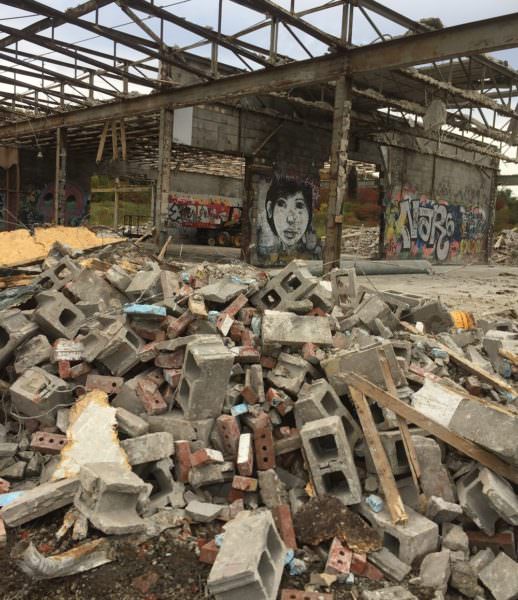
When most of us think of landfills, we think of rotting disposable diapers, apple cores, and old clothing. Our thoughts don’t usually turn to discarded construction materials. However, the U.S. generated 600 million tons of construction and demolition waste in 2018, according to the U.S. Environmental Protection Agency. That’s more than double the amount of municipal solid waste generated annually.
A lot of wood, concrete, bricks, glass, asphalt, and plastic are going to landfills instead of being recycled or reused. This creates a massive opportunity for improvement. Repurposing materials is a great way to reduce the ecological impact of a project. Demolition waste can be artfully repurposed in home remodeling, construction, and landscaping projects, adding beauty and charm. Reclaiming waste also helps you save money, as many people go into debt when constructing and remodeling homes.
Here are some easy strategies to help you get started.
Plan Ahead
Reclaiming materials typically takes more time than just buying new items. And it requires more planning.
It is challenging to take a cookie-cutter approach to salvaged materials. When constructing or remodeling your home, you may need to customize it to the available materials. One method is to analyze what materials are available and then plan your project design accordingly. The opposite approach is to design your project and then collect the needed reclaimed materials. When taking the latter approach, it is helpful to rely on salvaged materials that are more commonly available.
Regardless, planning ahead and having plenty of storage space is helpful.

Check Whether Your City Requires Deconstruction
A growing number of cities now require that old houses be taken apart by hand rather than knocked down, which puts far more salvaged material into circulation. Portland, Oregon, passed the first such ordinance in 2016. Today it requires deconstruction of any house or duplex built in 1940 or earlier, and the work must be done by a certified deconstruction contractor who documents every salvaged board.
San Antonio has gone furthest. Under the third phase of its ordinance, which took effect January 1, 2025, mechanical demolition is off the table for any single-family home, multi-unit building, or accessory structure built in or before 1945 anywhere in the city, and in or before 1960 in protected areas. City officials report that contractors recover about 70% of a building’s weight, with more than half of that going to reuse rather than recycling.
More than half a dozen cities from Pittsburgh to Boulder have adopted their own versions, and the ReBuilding Center and other reuse nonprofits are pushing for mandatory salvage minimums to make the rules bite. For anyone hunting materials, the practical upshot is simple: if your city has an ordinance, more old-growth lumber, doors, trim, and fixtures are moving through local salvage yards than used to.
Find Good Sources of Salvaged Materials
One of the easiest ways to find free materials and to prevent them from going to landfills is to visit demolition sites. This can be a great source of windows, doors, woodwork, fixtures, and even appliances. Construction sites can be excellent sources of surplus or slightly damaged materials and supplies. Construction dumpsters are often packed with useful materials.
It is essential to speak with the foreman to get permission before taking any materials. If you are seeking something specific, ask the contractors working on-site if they have found that window or door you want. They might be willing to set materials aside for you. But again, ask for permission first.
Antique malls, architectural salvage stores, and home improvement donation centers are good sources of anything from windows and doors to hardware, tile, and plumbing fixtures.
The Habitat for Humanity ReStore network is another valuable source of new and used building materials, and the proceeds benefit a good cause. Build Reuse, the national nonprofit for building material reuse, maintains a membership directory that will point you to salvage stores and deconstruction contractors in your region. ReuseWood.org, a directory built by the American Wood Council and Canadian Wood Council with Build Reuse, lets you search by ZIP code for barn wood, timbers, millwork, flooring, and reclaimed doors and windows.
Peer-to-peer platforms have become the fastest way to find one-off pieces. Craigslist, Freecycle, Facebook Marketplace, Nextdoor, OfferUp, and local Buy Nothing Project groups all turn up leftover tile, cabinets, pavers, and lumber from neighbors’ finished projects. Setting up saved searches and alerts beats checking in occasionally, since good material moves within hours.
Some people even purchase properties with reclaiming the materials in mind. For example, old barns are filled with gorgeous weathered lumber that can be deconstructed and repurposed.

Utilize Repurposed Materials
Beautify your home with reclaimed and repurposed wood beams and ceramic tiles.
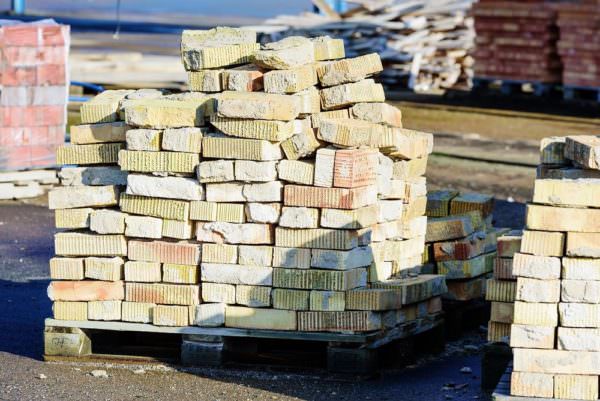
Use cleaned-up bricks recovered from construction debris to create patios, pizza ovens, and pathways, and other attractive features for your new home.
Repurpose shipping containers to make storage sheds. Or stack them to make multi-tiered structures, like a guest room.
Use crushed concrete as aggregate for walkways and driveways.
Sinks, vanities, bathtubs, cabinets, shower stalls, light fixtures, and even toilets can be repurposed.
Find Supplies with Recycled Materials
There are also some construction materials available on the market made from recycled materials.
Plastic bottles are recycled to make composite lumber or bricks, and recycled glass is made into tile and countertops. Old newspapers or blue jeans are made into insulation products, and cork bottle stoppers can make flooring and panels. Purchasing these materials might not be as economical but it does conserve resources.
Using salvaged materials in construction and renovation projects adds character and is a great way to reduce waste. And having an eye for reuse helps conserve precious resources and protect the environment.
Editor’s Note: Originally published on October 3, 2019, this article was updated in July 2026.
The post Using Reclaimed Materials in Your Home & Yard appeared first on Earth911.
https://earth911.com/home-garden/using-reclaimed-materials-in-your-home-yard/