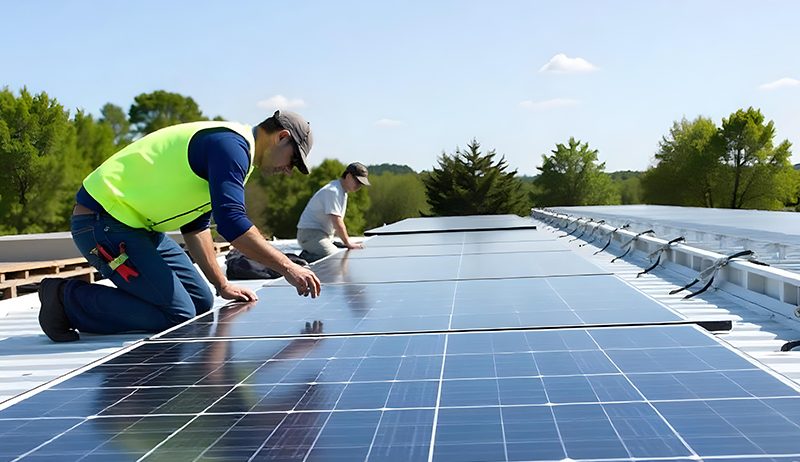
Commercial solar power uses solar photovoltaic (PV) technology, where solar panels are installed to turn sunlight into electricity.
This technology has become more popular recently because it helps businesses lower their energy bills and reduce their environmental impact. Commercial solar systems are usually bigger than home systems and can produce more energy.
For example, a typical home solar system in 2024 is about 6.6 kW with around 18 panels, while commercial systems are much larger and come in three main sizes:
- Systems under 30 kW (up to about 100 panels)
- Systems between 39 kW and 60 kW
Since these systems are bigger in size and number, they can have more panels and make more electricity, which is helpful for businesses with high energy needs or large rooftops.
However, commercial systems cost more to install and need more advanced engineering, mainly because connecting them to the power grid is more complicated. Special safety units are also required if the system exceeds 30 kW.
Recent improvements in solar technology have made commercial solar panels much more efficient.
For example, Australian companies have developed some of the world’s most efficient solar cells, reaching efficiency rates of 22% to 25% over the last decade. This allows businesses to produce even more power from their solar panels.
To understand commercial solar power, it’s essential to know how solar PV technology works and the key differences between home and commercial systems.
By considering factors like system size, energy production, and improvements in solar cell efficiency, businesses can make smart decisions about using solar energy to meet their sustainability goals and save money.
Commercial solar power offers many benefits, such as cutting energy costs, reducing environmental impact, and potentially increasing the property’s value, leading to a long-term return on investment.
Choosing the right equipment and working with a trusted solar installer is crucial to ensure the system is durable and works well over time.