Climate Change
Ugandan farmers launch UK court case against East African oil pipeline
Four Ugandan farmers filed a case with London’s High Court on Tuesday, aiming to stop the East African Crude Oil Pipeline (EACOP) from starting to operate by asking the court to apply Uganda’s laws against the project’s UK-registered company.
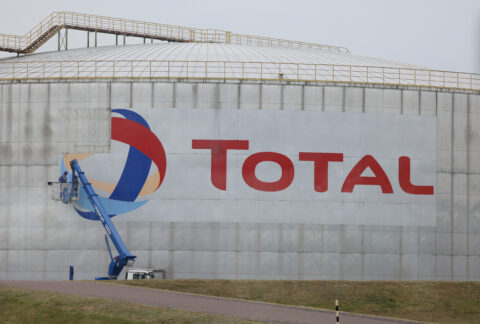
The controversial 1,443-kilometre (897-mile) pipeline, majority-owned by French energy company TotalEnergies, aims to carry crude from Ugandan fields for export through neighbouring Tanzania. About 80% has been built so far, according to its developers.
The pipeline’s first oil exports are expected as soon as October, according to its developers, and the campaign group Avaaz, which is backing the farmers’ crowdfunded lawsuit, called it “one final chance to stop one of the worst oil pipelines on the planet”.
The claim, filed by London law firm Leigh Day, argues that EACOP Ltd’s role in developing and operating the pipeline breaches Ugandan laws that protect citizens’ right to a clean and healthy environment.
-
Ugandan farmers use British court to try to stop East Africa oil pipeline
The farmers and their lawyers will argue that a UK-based entity linked to the East African Crude Oil Pipeline has breached Ugandan law and construction should halt -
French court rules Total must revise climate plan to account for all emissions
Oil and gas giant TotalEnergies has been given six months by a court to publish a more robust climate plan -
Uganda cites contentious IEA fossil fuel scenario backed by Trump administration
Critics of the African nation’s oil ambitions say referencing the International Energy Agency’s most pessimistic scenario for climate action is a risky policy

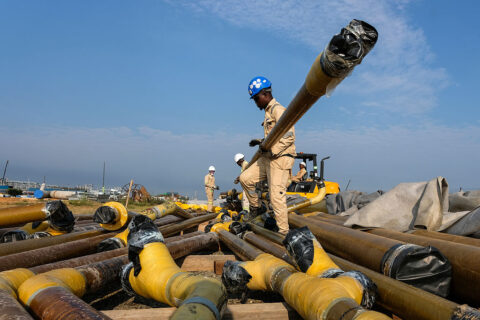



One of the claimants, Racheal Tugume, told a press conference she had been displaced from her land due to the pipeline’s construction, which she said had damaged local rivers, wildlife and ecosystems that communities depend on for their livelihoods just as erratic weather linked to climate change takes an increasing toll.
“I am very happy that there are people in countries like the UK who are listening to us, who are behind us and who have come to support us,” Tugume said, adding that she hoped the case would bring justice to communities affected by the pipeline.
Ugandan law in UK court
While the pipeline is a joint venture led by TotalEnergies, with smaller stakes owned by Ugandan, Tanzanian and Chinese national oil firms, it is operated by EACOP Ltd, a company registered to an office in London’s Canary Wharf financial district.
EACOP Ltd did not respond to a request for comment.
The claim appears to be the first attempt to have Uganda’s climate and environmental protections enforced in a foreign court, partly reflecting concerns over whether cases challenging the multibillion-dollar pipeline would get a fair trial in Uganda.
Ugandans living near new oil pipeline let down by compensation programmes
Concerns about access to a fair hearing are among the issues the court will consider when deciding if it should take on the case, said Matthew Renshaw, partner at Leigh Day.
Renshaw said that precedents including the Nigerian oil pollution case against Shell have shown that claims against British-registered companies for harms overseas can be successfully fought in UK courts.
“We are proud to represent the four brave principled individuals,” Renshaw said.
Constitutional protections
The pipeline project has already been subject to repeated lawsuits in several countries, none of which have succeeded. A climate lawsuit filed in Uganda more than a decade ago by a group of young people has yet to conclude. Another at the East African Court of Justice, brought by campaign groups against Uganda and Tanzania, was rejected on procedural grounds last November.
A separate ongoing lawsuit in TotalEnergies’ home country of France – a refiled version of an earlier failed claim – cannot stop EACOP going ahead, but it does seek damages from TotalEnergies for affected communities.
With the newly launched case, Leigh Day’s legal adviser Marc Willers said the claim draws on specific Ugandan laws in a bid to stop EACOP’s operations.
Uganda may see lower oil revenues than expected as costs rise and demand falls
These include the Ugandan constitution, a 2019 environmental law and the National Climate Change Act 2021, which gives Ugandans the right to bring a case before a court in circumstances where anyone or any entity threatens the country’s ability to mitigate climate change.
Stopping a “carbon bomb”
The pipeline, which will link Uganda’s Lake Albert oil fields to Africa’s east coast in Tanzania, has already displaced thousands of people and cuts through the Lake Victoria basin, one of East Africa’s major freshwater systems and a critical water source for around 40 million people.
According to the BankTrack non-profit, when the pipeline is at peak production, it will carry 216,000 barrels of crude oil per day and release over 33 million tonnes of carbon emissions each year. Over its full lifetime of 25 years, it is estimated to release about 379 million tonnes of greenhouse gas emissions across its value chain including construction, refining and product use.
A May 2026 report from Earth Insight also warns that the pipeline and related infrastructure could affect 158 wetlands in Uganda, 11 rivers, 44 protected areas and seven key biodiversity areas while disrupting about 2,000 square km of protected wildlife habitats.
This is why the primary focus of the UK court case is to stop the operation of the pipeline in its tracks, Leigh Day’s Willers said, calling it a “carbon bomb” that would worsen the world’s climate crisis.
Long wait for first hearing
While the purpose of the case is to stop the pipeline from launching operations, Renshaw said it could take about 12 months before the case gets a first hearing and about 18 months before it goes to trial.
Billions unlocked as Green Climate Fund agrees to spend more and save less
The farmers are, however, seeking an injunction to stop EACOP Ltd from proceeding with operations. In the event that shipments begin, the lawsuit will still seek to stop the pipeline from then on, Renshaw said.
“We will be doing what we can to expedite matters but it is possible that EACOP will have started operating the pipeline before the claim is heard. If that is the case, the claim would intend to halt operations from that point. For example, the pipeline may operate for just one year rather than 30-plus, resulting in far less harm,” he said.
The post Ugandan farmers launch UK court case against East African oil pipeline appeared first on Climate Home News.
Ugandan farmers launch UK court case against East African oil pipeline