Carbon Footprint
Trump Admin Pays TotalEnegries $1B to Scrap Wind Projects, Putting a Hold on America’s Clean Energy Plans

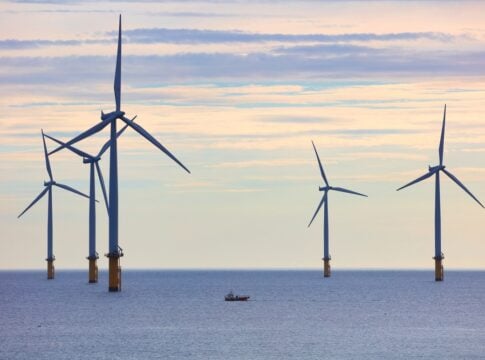

The U.S. government has agreed to pay nearly $1 billion to the French energy company TotalEnergies to cancel major offshore wind projects planned on the East Coast. The deal was announced by the Department of the Interior and represents a major shift in federal energy policy.
TotalEnergies will give up its lease holdings and invest in fossil fuel development instead. Meanwhile, the U.S. will reimburse the company for lease fees it has already paid.
This move comes as offshore wind was expected to become a key part of America’s renewable energy future. Now, it raises new questions about the future of offshore wind, the role of the federal government, and broader energy and climate strategies.
The Deal: What Happened and What It Means
Officials from the Department of the Interior and TotalEnergies announced that the company will abandon two planned offshore wind projects. These leases were located off the coasts of New York and North Carolina.
TotalEnergies will get back up to $928 million. This amount covers the money it spent on lease rights.
In return, the energy giant plans to redirect that capital toward fossil fuel development. This includes investing in liquefied natural gas (LNG) infrastructure in Texas. It also covers expanded oil and gas activities in the Gulf of Mexico and U.S. shale regions.
TotalEnergies Chair and CEO Patrick Pouyanné said:
“TotalEnergies is pleased to sign these settlement agreements with the DOI and to support the Administration’s Energy Policy. Considering that the development of offshore wind projects is not in the country’s interest, we have decided to renounce offshore wind development in the United States, in exchange for the reimbursement of the lease fees.”
The government framed the deal as a way to reduce federal exposure to expensive and “unreliable” offshore wind projects. The Interior Department described the agreement as an efficient way to shift resources toward energy sources they view as more cost‑effective.
US Interior Secretary Doug Burgum noted:
“We welcome TotalEnergies’ commitment to developing projects that produce dependable, affordable power to lower Americans’ monthly bills while providing secure US baseload power today—and in the future.”
On Hold: Offshore Wind’s Place in U.S. Energy Plans
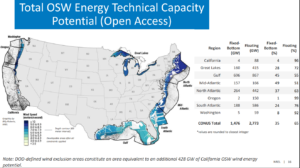
Offshore wind power has been part of U.S. climate and energy planning for years. The National Renewable Energy Laboratory (NREL) has estimated that the United States has a technical potential of:
- 1,476 GW of fixed‑bottom offshore wind resources
- 2,773 GW of floating offshore wind resources
These resources could be developed off the coasts of the Atlantic, Pacific, and Gulf of Mexico.
Despite this potential, the industry is still in its early stages. As of early 2025, the U.S. had just 174 megawatts (MW) of installed offshore wind capacity.

Several major projects were in development and construction before the recent policy shift. These included:
- Vineyard Wind 1, near Massachusetts
- Empire Wind 1, near New York
- Coastal Virginia Offshore Wind (CVOW)
- Revolution Wind
- Sunrise Wind
These projects were expected to add several gigawatts of clean energy to U.S. grids in the coming years. The federal government considered this one way to help meet broader climate goals. This was part of U.S. commitments under the Inflation Reduction Act and other climate legislation.
Now, the cancellation of TotalEnergies’ projects marks a notable change in that trajectory.
Costs, Risks, and Market Headwinds
Offshore wind is capital‑intensive and technically complex. The industry has faced cost pressures in recent years. Offshore wind development in the U.S. has high costs. Often, these expenses are several times greater than those for onshore wind installations.

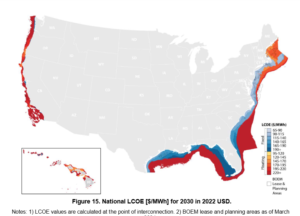
In a 2025 study, fixed-bottom projects cost about $72 to $140 per MWh, while floating wind often exceeds $150 per MWh. Capital costs range from $3,000 to $6,000 per kW, with early floating projects higher. Over time, costs may fall to $50 to $100 per MWh by 2050.
In addition to costs, developers have faced supply chain issues, regulatory delays, and scaling challenges. These factors have slowed project timelines and increased financial risk.
However, offshore wind has continued to be a key part of long‑term clean energy forecasts. A 2023 U.S. Department of Energy outlook estimates up to 30 GW of offshore wind capacity by 2030. By 2050, this could reach 110 GW if policies support growth.

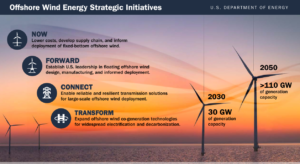
These capacity levels would help support decarbonization efforts in the power sector and contribute to electricity market diversification. Offshore wind resources are generally strongest and most consistent offshore, offering high capacity factors compared to some onshore renewables. But now that wind projects are cancelled, these clean energy goals are under strain.
Is This a Fossil Fuel Pivot?
Offshore wind is just one piece of a larger clean energy landscape. The U.S. has significantly expanded onshore wind and solar capacity in recent years, driven by federal tax incentives in the Inflation Reduction Act.
Offshore wind infrastructure includes large turbine components, subsea cabling, and port facilities. These elements have economic multipliers that can support regional supply chains and workforce development.
At the same time, fossil fuels remain a significant part of the U.S. energy mix. The Trump administration’s deal with TotalEnergies reflects federal policy that prioritizes traditional energy sources, such as natural gas and oil, alongside efforts to support domestic energy security.
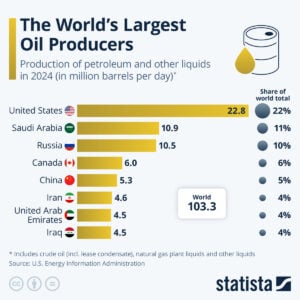

U.S. fossil fuel production remains high. In 2025, the U.S. was the world’s largest producer of crude oil and natural gas liquids combined. The country’s energy exports, including LNG, also rose sharply in recent years as global markets shifted.
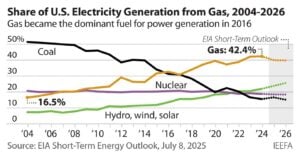
Natural gas accounts for a large share of U.S. electricity generation, usually around 40% of net generation, providing a flexible baseload power source for grids.

Global Offshore Wind Snapshot
Offshore wind development continues globally, particularly in Europe and Asia. Countries such as the United Kingdom, Germany, China, and Taiwan have deployed substantial offshore wind capacity.
Europe, for example, exceeded 30 GW of installed offshore wind capacity by the end of 2025, with continual growth projected. The global pipeline includes tens of gigawatts under development, driven by policy support and falling technology costs.
Cost reductions in turbine technology, floating wind platforms, and installation methods are expected to continue. Global forecasts project offshore wind capacity reaching 234 GW by 2030 and 2,000 GW by 2050 under the 1.5°C scenario.

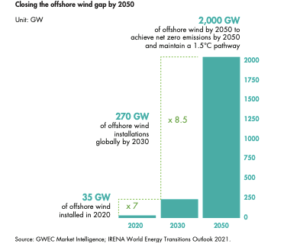
These figures indicate that offshore wind could play a major role in the energy transition worldwide — even as policies vary by region.
America’s Clean Energy Goals in Flux
The TotalEnergies deal marks a clear shift in federal energy policy. It reflects a calculated decision by the current administration to redirect capital and incentives away from offshore wind.
This decision could affect investor confidence, supply chains, and future project pipelines. Offshore wind developers have warned that a lack of federal support and policy uncertainty may hinder industry growth.
Elizabeth Klein, former director of the Department of the Interior’s Bureau of Ocean Energy Management under the Biden administration, remarked in a CNN interview that the move:
“…will actually cause a further energy deficit in our country and increase the cost of energy certainly along the East Coast… For the current administration to be cutting that off makes no sense at all.”
For states with clean energy goals, reliance on offshore wind as part of a diversified renewable portfolio may now require adjustments.
The broader climate context remains focused on reducing emissions from the power sector. Renewable energy deployment, grid modernization, and clean energy innovation continue to be key strategies for long-term decarbonization.
As the energy landscape evolves, market participants and policymakers are watching closely. What unfolds next will shape not only the offshore wind sector but the broader clean energy transition in the United States.
The post Trump Admin Pays TotalEnegries $1B to Scrap Wind Projects, Putting a Hold on America’s Clean Energy Plans appeared first on Carbon Credits.