Climate Change
Tropical forest protection fund at risk after UK stalls on pledge
A new global rainforest fund, unveiled by Brazil at COP30, will likely struggle to meet its initial funding target this year, after the UK failed to announce an expected pledge during London Climate Action Week and other donors have been slow to come on board.
The Tropical Forest Forever Facility (TFFF) was launched on the sidelines of last November’s UN climate summit as an innovative mechanism to fund rainforest protection. Instead of relying on grants, it seeks to raise public and private money, invest it in financial markets, and then pay rainforest countries a share of the returns.
The facility has so far raised $6.8 billion but needs to mobilise at least $10 billion by the end of 2026, under conditions set by Norway to unlock its pledge. If the fund falls short of this goal, the Norwegian contribution of up to $3 billion in loans over 10 years will not be disbursed.
At a gathering of ministers from rainforest-rich countries at London’s Kew Botanic Gardens last Tuesday in searing heat, UK climate minister Katie White praised the TFFF and said she had held a “robust conversation in government over the last few weeks” about the importance of forests and climate action.
She had argued, she said, that “this is not a nice to have – this is absolutely vital for our security and our prosperity”. She told the small crowd of visiting ministers, officials and forest campaigners at Kew that the TFFF was an “innovative and impactful development”.

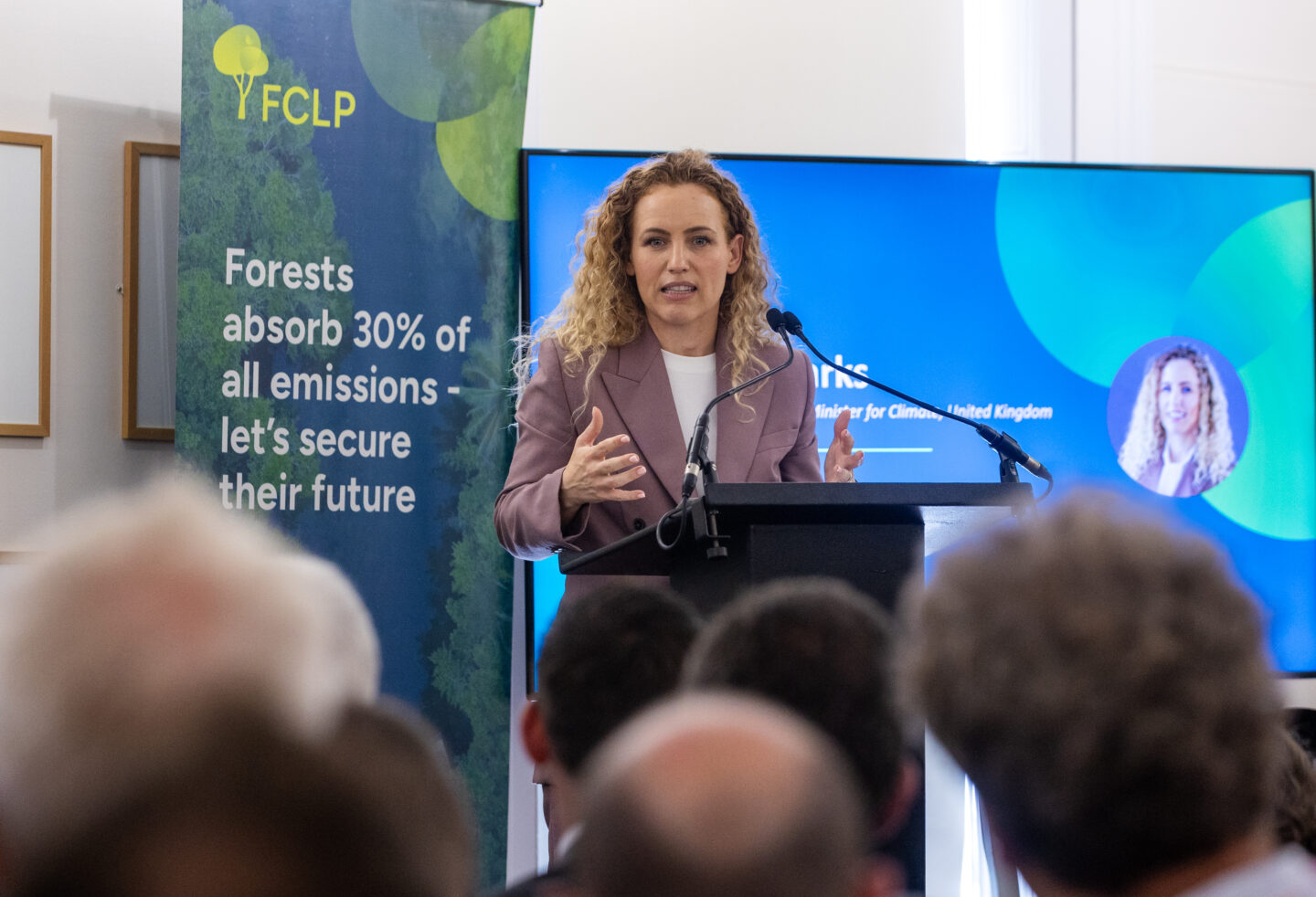
But despite climate campaigners’ hopes, the British minister did not follow Norway, Germany, France, Brazil, Indonesia and Luxembourg in pledging to the fund, whose aim is to use returns on the capital it invests in bond markets to financially reward countries who keep their tropical forests standing.
Ed Davey, UK lead for the World Resources Institute who was in the room for White’s speech, told Climate Home News afterwards that as the UK was involved in inventing the idea and the British public care about rainforests, it is “incredibly important” that the government invests in the TFFF “as soon as possible”.
“The TFFF is at a very important stage of its gestation, and if a few other critically important sovereign governments don’t come on board quite soon, there is a risk that the idea will lose momentum,” he said.
-
Explainer: Can a new climate fund help save the world’s rainforests?
Led by Brazil, the Tropical Forest Forever Facility (TFFF) is set to be launched at COP30. Here we take a look at how the fund aims to harness investment to fight deforestation -
French court rules Total must revise climate plan to account for all emissions
Oil and gas giant TotalEnergies has been given six months by a court to publish a more robust climate plan -
We need no-go mining zones for the energy transition to be just: Here’s how it could work
As rising demand for critical minerals is compounding threats to fragile ecosystems, NGOs have mapped out areas that should be off-limits to mining



Anders Haug Larsen, advocacy director for the Rainforest Foundation Norway, was also disappointed at the lack of a British pledge during London Climate Action Week (LCAW).
The UK government’s money and its power to mobilise private sector investment are crucial to the TFFF’s success, he said, adding that “saving tropical rainforest is a key component in solving climate change and preserving life on this planet”.
Political divisions?
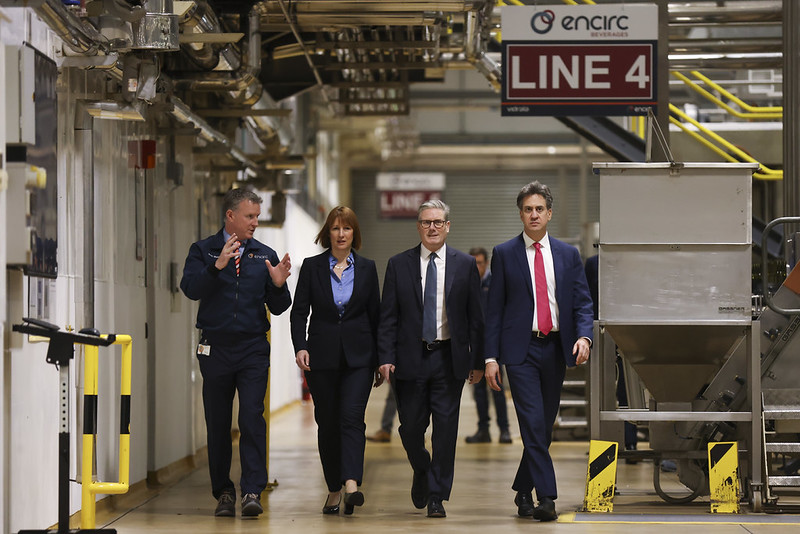
British newspaper The Times later reported that White’s boss – energy and climate minister Ed Miliband – had been poised to announce a £400-million ($528m) investment pledge to the TFFF but had been opposed by UK finance minister Rachel Reeves.
According to The Times, Reeves was concerned an announcement would be unpopular, as the government was being criticised by its former defence minister for not spending enough on the military, and had pushed for the announcement to be shelved.
Climate Home News understands, however, that the UK Treasury had given the climate ministry approval to tell Brazil and Norway it would invest in the TFFF, but the administrative procedures needed to make the pledge had not been completed in time to announce a contribution during LCAW.

The UK has been cutting the amount it spends on foreign aid, including on climate projects, in order to deliver what its foreign minister called “the biggest increase in defence spending since the Cold War”.
Projects affected include rainforest protection schemes like the Congo Basin Forest Action Programme, which has had its budget slashed by nearly 80%.
Despite these moves to shrink overseas assistance, defence secretary John Healey resigned a few weeks ago, calling for even more spending for his department.
Last Monday, the first day of LCAW, British Prime Minister Keir Starmer announced he would soon resign following bad local election results, with his fellow Labour parliamentarian Andy Burnham highly likely to replace him by the end of July. Reeves is looks set to be replaced as finance minister, with Miliband reportedly a leading candidate to succeed her.
Norwegian test looms
If the UK does not invest in the TFFF by the end of the year, along with other government donors, the initiative’s chances of reversing the destruction of tropical forests will be diminished, experts say.
With the US under Donald Trump unlikely to pledge and the two biggest European Union nations France and Germany already having done so, forest campaigners were hoping that the UK could fill some of the roughly $3.2 billion in new pledges needed to meet the minimum goal set by Norway.

Asked by Climate Home News if France would increase its $0.6 billion pledge, its minister for international partnerships Eleonore Caroit said last week, “I don’t have any specific information of any increase.” She added that France supports the TFFF but is also “focusing on other similar projects to achieve the same results”.
The Brazilian finance ministry has courted investments into the fund from Japan, South Korea and China. Last Friday, Brazilian finance minister Dario Durigan met Chinese finance minister Lan Fo’an and afterwards told Valor Econômico that he had raised the possibility of an investment in the TFFF.
“I think today, for the first time, China gave a stronger, firmer indication that it understands the TFFF model and is comfortable with it,” Durigan was quoted as saying. “There has been a positive signal,” he added. “Now we will work with his team to turn that into concrete commitments.”
Larsen of the Rainforest Foundation Norway said there is also hope that Middle Eastern countries, more European nations and the European Union could contribute. The UAE has expressed interest in the fund, and has provided technical assistance for its development.
Following a recent investor retreat in Rotterdam attended by government officials and private investors, a group of 12 financial institutions – including UK-based Ashmore Group and Dutch firm Robeco – endorsed the fund as an “opportunity to support the protection of up to a billion hectares of tropical forests”.
They added that the fund’s seed capital from governments is “building momentum” and that the TFFF has put in place a “robust institutional governance” that can deliver results in the long term.
Economic value for standing forests
Details of how the TFFF will work are being finalised in an attempt to encourage investment.
Earlier this month, it was announced that its investment arm (the Tropical Forest Investment Fund – TFIF) would be based in Luxembourg. The European financial hub said it will provide €50 million ($57m) to the TFIF through its Climate and Energy Fund between 2026 and 2030, after which it will “maintain a long-term annual contribution”.
The Norwegian government has tasked a veteran of its sovereign wealth fund, Knut N. Kjaer, with reviewing the TFFF’s financial model.
At Kew Gardens last week, the head of the Brazilian forest service Garo Batmanian said the TFFF and other measures are needed so that standing forests are economically valued and therefore protected.
“There is no chainsaw-wielding maniac out there cutting down trees out of pleasure,” he said. “He’s cutting down trees because he thinks he can get more money using the land for something else, so it’s not only about stopping deforestation but also promoting that the standing forest has value.”
The post Tropical forest protection fund at risk after UK stalls on pledge appeared first on Climate Home News.
Tropical forest protection fund at risk after UK stalls on pledge