Climate Change
There is hope for Venezuela’s future – and it isn’t based on oil

Alejandro Álvarez Iragorry is a Venezuelan ecologist and coordinator of Clima 21, an environmental NGO. Cat Rainsford is a transition minerals investigator for Global Witness and former Venezuela analyst for a Latin American think tank.
In 1975, former Venezuelan oil minister Juan Pablo Pérez Alfonzo gave a now infamous warning.
“Oil will bring us ruin,” he declared. “It is the devil’s excrement. We are drowning in the devil’s excrement.”
At the time, his words seemed excessively gloomy to many Venezuelans. The country was in a period of rapid modernisation, fuelled by its booming oil economy. Caracas was a thriving cultural hotspot. Everything seemed good. But history proved Pérez right.
Over the following decades, Venezuela’s oil dependence came to seem like a curse. After the 1980s oil price crash, political turmoil paved the way for the election of populist Hugo Chávez, who built a socialist state on oil money, only for falling prices and corruption to drive it into ruin.
-
What would Trump’s Venezuela oil plans mean for climate change?
While Trump’s aim of boosting oil production in Venezuela could worsen climate change, high costs and an oversupplied market might make investors think twice -
Explainer: What is the petrodollar and why is it under pressure?
As the US seeks to carve out a sphere of influence in the Western Hemisphere, questions grow about the dollar’s future as the lynchpin of the global economy -
The more Europe relies on the US for energy, the more it’s vulnerable to pressure by Trump
Risking energy security suicide through dependency on US gas, Europe’s leaders must instead reject resource colonialism

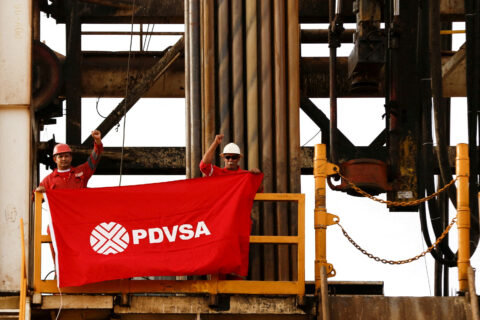


By 2025, poverty and growing repression under Chávez’s successor Nicolás Maduro had forced nearly 8 million Venezuelans to leave the country.
Venezuela is now at a crossroads. Since the US abducted Maduro on January 3 and seized control of the country’s oil revenues in a nakedly imperial act, all attention has been on getting the country’s dilapidated oil infrastructure pumping again.
But Venezuelans deserve more than plunder and fighting over a planet-wrecking resource that has fostered chronic instability and dispossession. Right now, 80% of Venezuelans live below the poverty line. Venezuelans are desperate for jobs, income and change.
Real change, though, won’t come through more oil dependency or profiteering by foreign elites. Instead, it is renewable energy that offers a pathway forward, towards sovereignty, stability and peace.
Guri Dam and Venezuela’s hydropower decline
Venezuela boasts some of the strongest potential for renewable energy generation in the region. Two-thirds of the country’s own electricity comes from hydropower, mostly from the massive Guri Dam in the southern state of Bolívar. This is one of the largest dams in Latin America with a capacity of over 10 gigawatts, even providing power to parts of Colombia and Brazil.
Guri has become another symbol of Venezuela’s mismanagement. Lack of diversification caused over-reliance on Guri for domestic power, making the system vulnerable to droughts. Poor maintenance reduced Guri’s capacity and planned supporting projects such as the Tocoma Dam were bled dry by corruption. The country was left plagued by blackouts and increasingly turned to dirty thermoelectric plants and petrol generators for power.
Today, industry analysis suggests that Venezuela is producing at about 30% of its hydropower capacity. Rehabilitating this neglected infrastructure could re-establish clean power as the backbone of domestic industry, while the country’s abundant river system offers numerous opportunities for smaller, sustainable hydro projects that promote rural electrification.

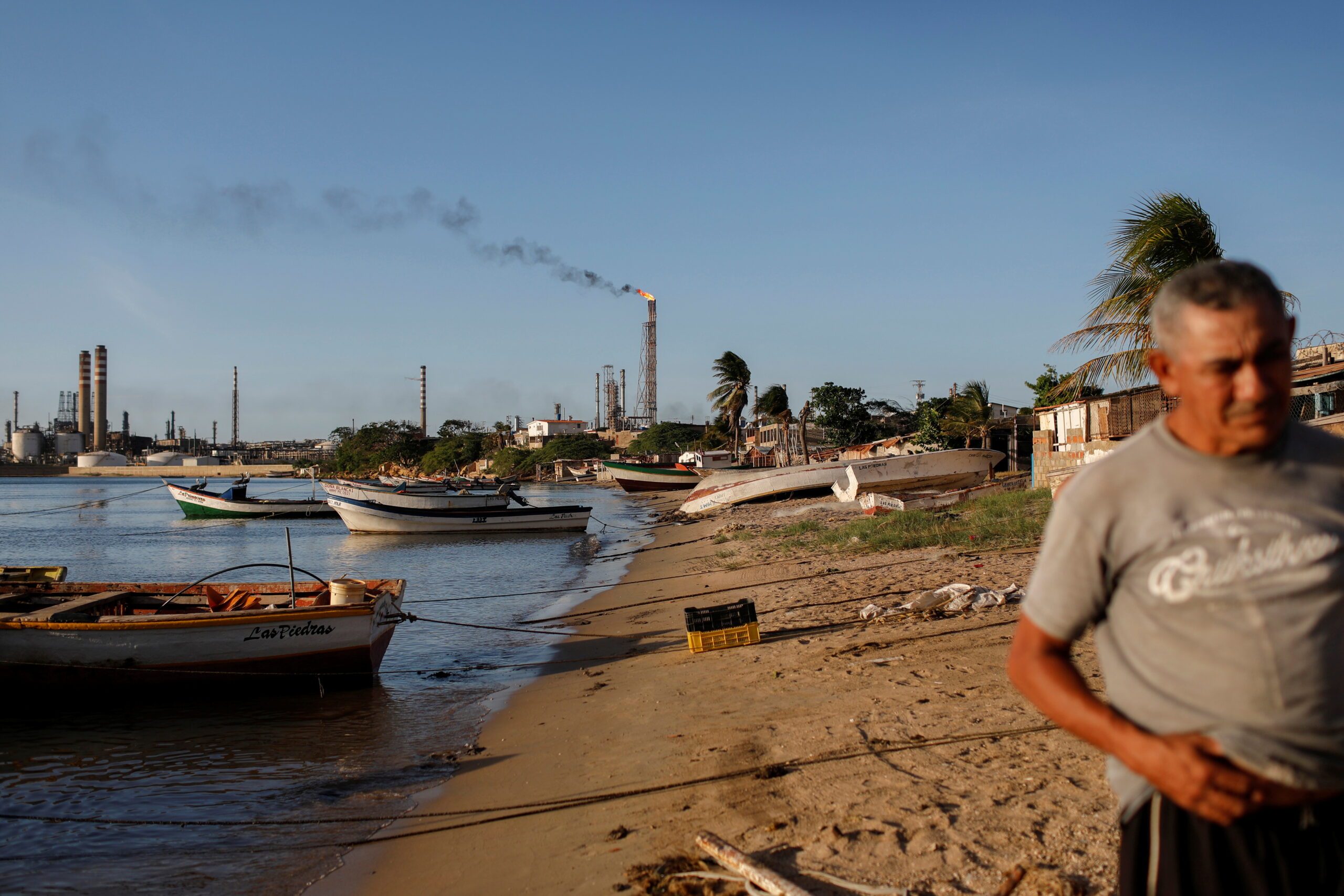
Venezuela also has huge, untapped promise in wind power that could provide vital diversification from hydropower. The coastal states of Zulia and Falcón boast wind speeds in the ideal range for electricity generation, with potential to add up to 12 gigawatts to the grid. Yet planned projects in both states have stalled, leaving abandoned turbines rusting in fields and millions of dollars unaccounted for.
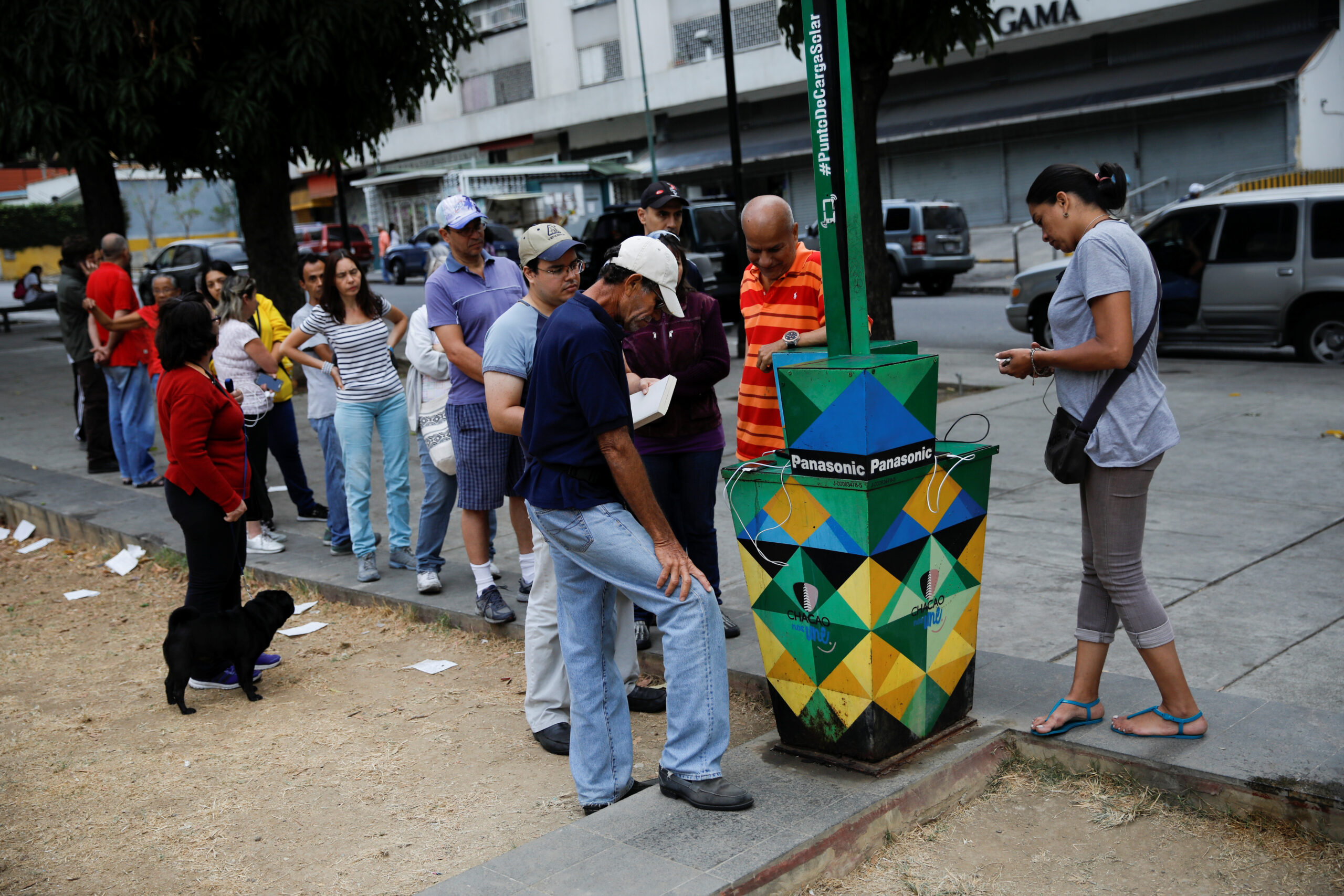
Solar power is more neglected. One announced solar plant on the island of Los Roques remains non-functional a decade later, and a Chávez-era programme to supply solar panels to rural households ground to a halt when oil prices fell. Yet nearly a fifth of the country receives levels of solar radiation that rival leading regions such as northern Chile.
Developing Venezuela’s renewables potential would be a massive undertaking. Investment would be needed, local concerns around a just and equitable transition would have to be navigated and infrastructure development carefully managed.
Rebuilding Venezuela with a climate-driven energy transition
A shift in political vision would be needed to ensure that Venezuela’s renewable energy was not used to simply free up more oil for export, as in the past, but to power a diversified domestic economy free from oil-driven cycles of boom and bust.
Ultimately, these decisions must be taken by democratically elected leaders. But to date, no timeline for elections has been set, and Venezuela’s future hangs in the balance. Supporting the country to make this shift is in all of our interests.
What’s clear is that Venezuela’s energy future should not lie in oil. Fossil fuel majors have not leapt to commit the estimated $100 billion needed to revitalise the sector, with ExxonMobil declaring Venezuela “uninvestable”. The issues are not only political. Venezuela’s heavy, sour crude is expensive to refine, making it dubious whether many projects would reach break-even margins.
Behind it all looms the spectre of climate change. The world must urgently move away from fossil fuels. Beyond environmental concerns, it’s simply good economics.
Recent analysis by the International Renewable Energy Agency finds that 91% of new renewable energy projects are now cheaper than their fossil fuel alternatives. China, the world’s leading oil buyer, is among the most rapid adopters.
Tethering Venezuela’s future to an outdated commodity leaves the country in a lose-lose situation. Either oil demand drops and Venezuela is left with nothing. Or climate change runs rampant, devastating vulnerable communities with coastal loss, flooding, fires and heatwaves. Meanwhile, Venezuela remains locked in the same destructive economic swings that once led to dictatorship and mass emigration. There is another way.
Venezuelans rightfully demand a political transition, with their own chosen leaders. But to ensure this transition is lasting and stable, Venezuela needs more – it needs an energy transition.
The post There is hope for Venezuela’s future – and it isn’t based on oil appeared first on Climate Home News.
There is hope for Venezuela’s future – and it isn’t based on oil