Ocean Acidification
The Strata that Matta
From Desert to Seafloor
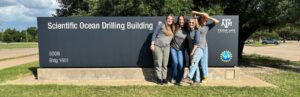

Fig. 1) team Strata That Matta: Victoria C., Maeghan D., Maddie B., Vale B. (from left to right)
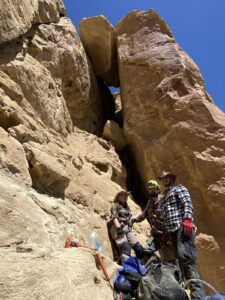

The months leading up to OCEAN CORE Academy were filled with another type of adventure for me, surveying the badlands of New Mexico in search of dinosaur bones. Yet, my work in the Gulf Coast Repository consisted of examining ocean cores using a microscope. Although these experiences couldn’t be any more different, the two were similar in that each attempted to answer the same question: what did Earth look like in the past?
I focus much of my research on vertebrate paleontological and geological fieldwork, such as prospecting for fossils, measuring strata, or describing ancient paleoenvironments and faunal assemblages. While I knew about microfossils, I had not fully grasped how much geological history is present in them.
Fig. 2) fieldwork, NM (May 2026)
History Through a Microscope
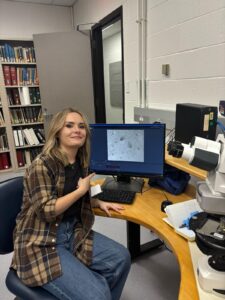

This leads me to one of the most memorable parts of OCEAN CORE Academy, learning to prepare smear slides and identify what existed within the ocean cores. Ocean sediments are fairly recent in that they have not yet been lithified, each layer represents tens to hundreds of years of depositions onto the seafloor. What I looked at was much deeper!
It was a momentous occasion when I first saw a radiolarian beneath the microscope! These tiny fossilized organisms provide surprisingly detailed insights into ancient environments. The conditions in which different groups of microfossils thrive vary, but by tracking how they fluctuate between layers, we can reconstruct climatic shifts over geologic time.
Team Strata That Matta correlated a transition from calcareous to siliceous ooze layers with a cooling climate!
Fig. 3) my first time seeing microfossils
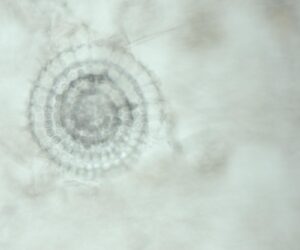
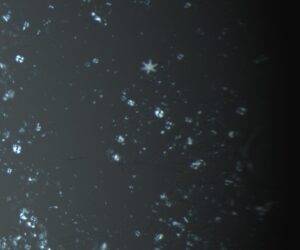
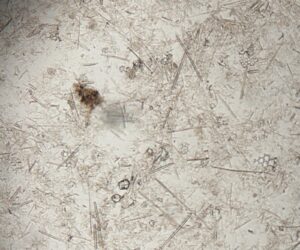

Fig. 4) radiolarian Fig. 5) coccolithophores Fig. 6) sponge spiccules
Bringing OCA Back to AZ
Upon my return to Arizona, I will carry this new perspective with me. As I move forward with future projects and field seasons in New Mexico, volunteer at the Arizona Museum of Natural History, and pursue my degree, the skills I developed here will prove to be invaluable for strengthening my own research.
Prior to attending OCEAN CORE Academy I viewed microfossils as existing, yet somewhat separate from my projects. This place has challenged that perspective. I came to understand that many of the most detailed records of Earth’s past are the microfossils hidden within a single grain of sediment!
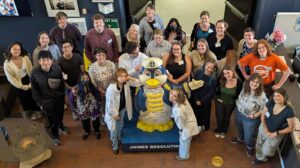

Fig. 7) class of OCA 2026
Written by OCA 2026 student, Maddie Baare