Ocean Acidification
Team Madeira – At least one of us is thinking

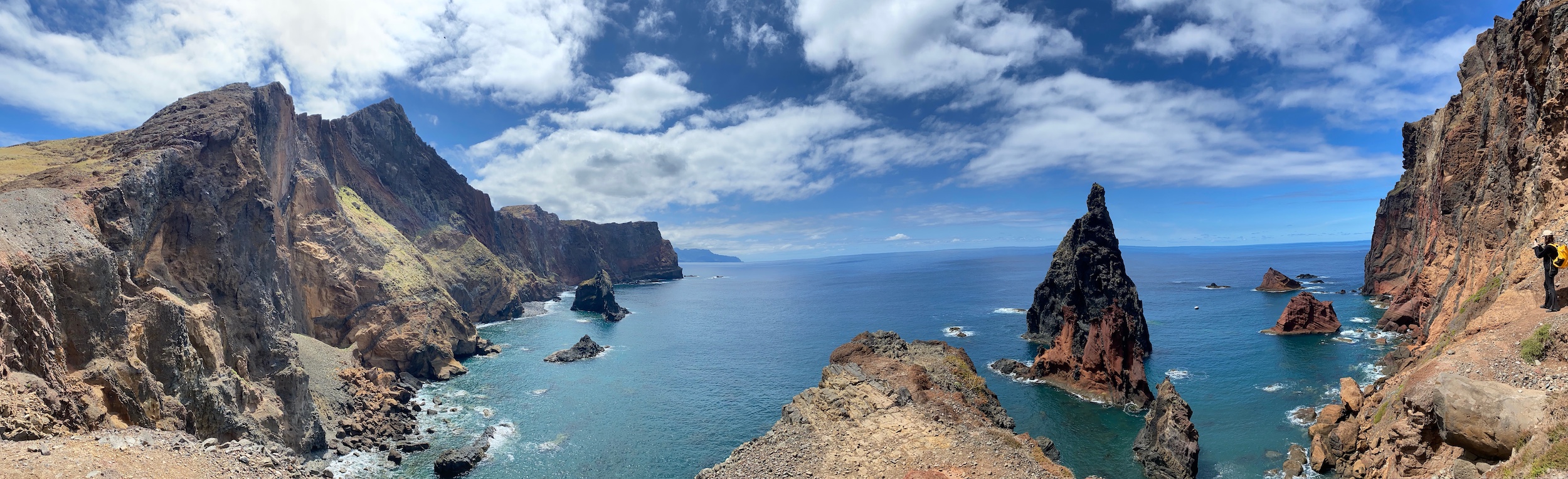
It all started with a bang – several million years ago. Beneath the Atlantic, successive eruptions raised an enormous volcanic mountain from the ocean floor, and its very tip now forms rugged cliffsides, deep red canyons and fertile ground for hotel chains. How land was formed here, in the middle of the ocean, is still plainly evident in the red and black banded mountainsides of Madeira, in pools of volcanic rock frozen mid-flow and in cliffs sculpted by magma, wind and water. Life clings to this volcanic ground with stubbornness: Cacti climb sheer ridges, while sage-green, brown and vibrant yellow shrubs crouch against the rugged terrain.
Today, Madeira is known as the Island of Flowers, an image that echoes across postcards, signs and souvenirs. Indeed, many of the winding mountain roads are lined by eucalyptus trees from Australia, tall white and lilac lilies from South Africa, and hydrangeas from Asia. Fitting for an island that lives from tourism, while also beginning to buckle under its strain.
Our own project looks, at least partly, at another, less visible invader: human-made sound. Beneath the ocean’s surface, boat engines add to the island’s natural underwater soundscape, and during the six months we spend here we want to find out whether sound changes where the larvae of marine sessile animals, such as bryozoans, tunicates or polychaetes, choose to settle. Those animals are sessile in their adult life, but as larvae they are free floating. In this stadium, they are influenced by a wide variety of environmental factors—including noise—while they seek out a suitable habitat in which they could settle and survive.
And with that “Óla” from Team Madeira. We are Elin and Jana, two German students who have come to Madeira for half a year to take part in this year’s GAME (Global Approach in Marine Ecology) project.
Jana studies biology at the Ruhr-University in Bochum. “I was always interested in marine biology and had already worked in this field for my bachelor’s thesis. When I decided that I didn’t want to move away from Bochum for my Masters, I was a little bit sad, deep down, thinking that I couldn’t continue to pursue marine biology. So, I was thrilled to return to the ocean and to fieldwork when I got accepted for GAME”.
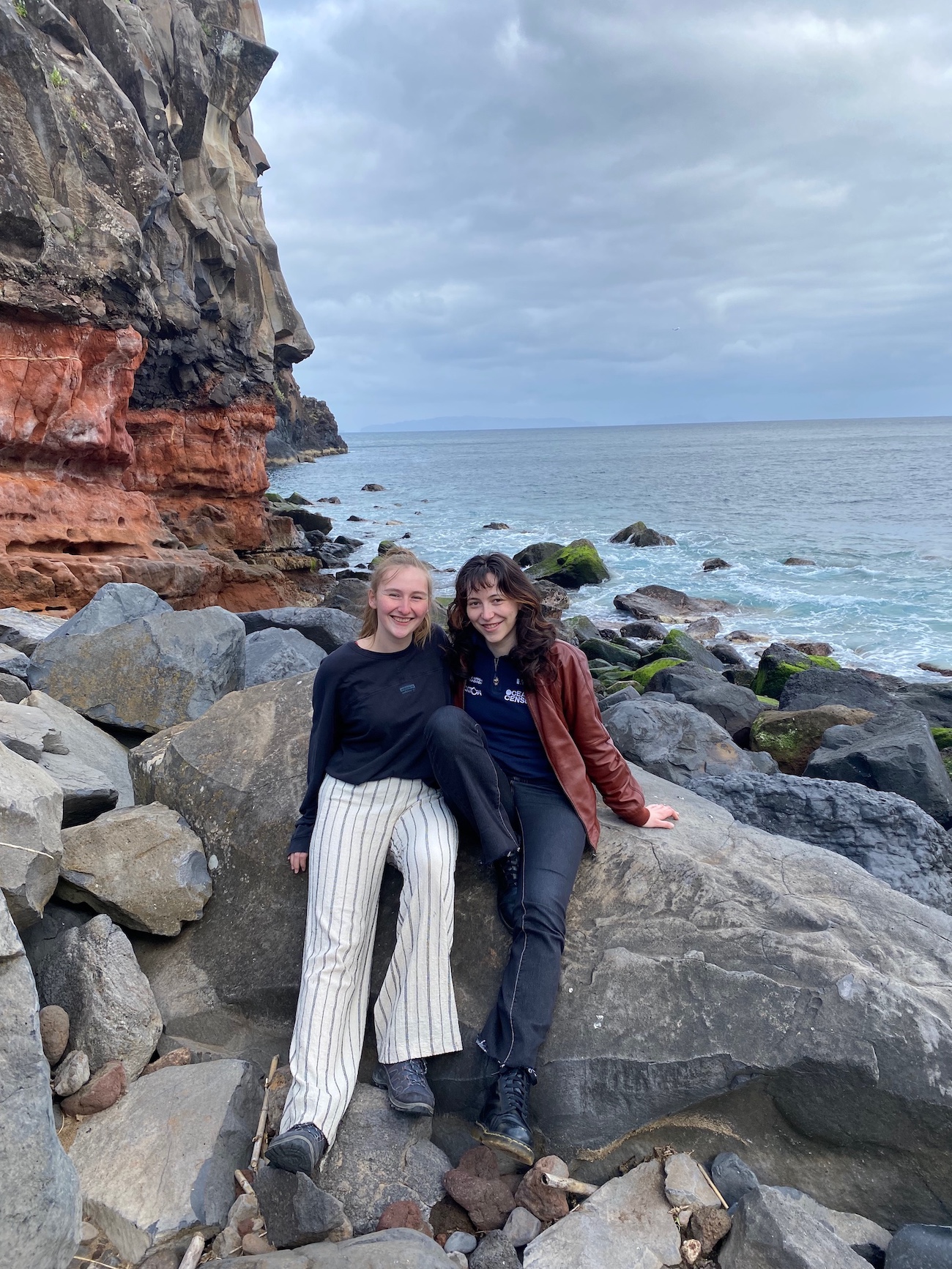
Elin studies biological oceanography in Kiel “This year’s GAME topic of The influence of soundscapes on hard bottom community colonization seemed made for me, since I had already written my bachelors thesis about the colonization of hard substrates and if I could’ve picked any field, sound would have been it.”
This year is the first time that GAMIEs are working with sound, which made the planning phase in Kiel in March extra exciting for us. We tested underwater microphones, so called hydrophones, tried out speakers and had many, many, many discussions about scientific literature and the experimental setup. In the end all teams agreed on one basic concept: One student in each country would analyze the effects of boat noise and the other the influence of natural soundscapes on the formation of invertebrate communities. Natural soundscapes will be captured by deploying thydrophones in underwater habitats that are typical for the marine region a team is working in. In Madeira, the underwater world is strongly shaped by the past volcanic activity, and features steeply sloping rock faces and rocky areas that are overgrown with algae and sessile animals. These form the most typical habitat of the region. Furthermore, here and there they give way to sandy bottoms at greater depths.
We are investigating the settlement under the influence of natural sounds, because more and more marine habitats have been destroyed by human activity. In the past, several studies have been conducted on marine mammals, fish, shellfish and coral species, which found that when sound was used to simulate healthy habitats in otherwise disturbed environments, it led to the successful re-establishment of populations. A concept that is known as acoustic restoration.
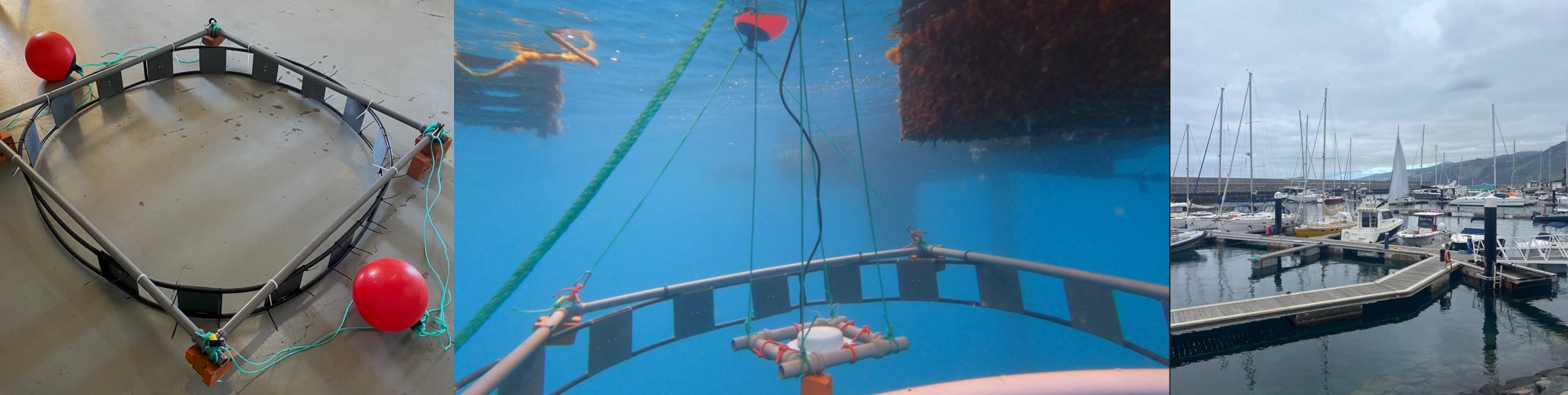
In our experiments, both, the natural sounds and the boat noise, will be played back from speakers and will be directed onto plastic plates hanging in the water, to which the larvae of sessile animals can attach.
So much for the theory.
After arriving on Madeira in early April, we got to work and realized quickly that reality is lots of planning, glue, trips to the hardware store and starting over. Luckily, we have kind and helpful supervisors at MARE, the research institute here in Madeira, many of which are former GAMIEs. They contributed their experience, advice and occasional emotional first aid. But most of the time we’re trying to do as much as we can on our own – with special support from Jana’s electronics-technician-husband, Niklas, who also came along to Madeira and is of great help with all the equipment. Even though we had many long and a few frustrating days, it was nice to plan and build everything on our own. Actually, it’s incredibly rewarding to see the finished results of our work running smoothly while the experiments are going on.
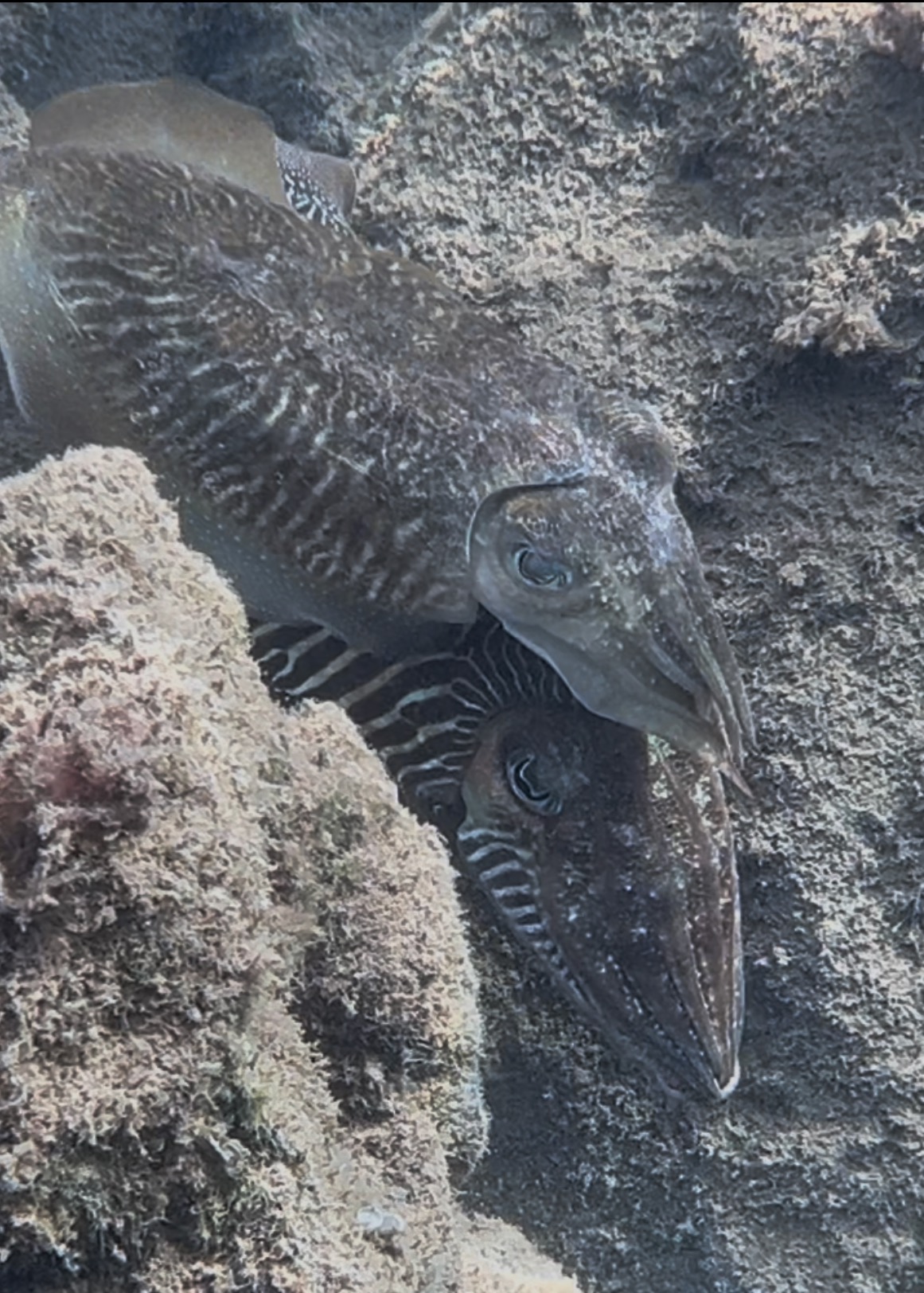
Our workplace here in Madeira is the marina in Quinta do Lorde, which is almost on the eastern tip of the island. It’s a beautiful workplace, because most days the water is calm and clear and we get to see sepias, triggerfishes and a school of barracudas swimming in the shallow waters. This makes it all the more frustrating that it is forbidden to go in, due to the ship traffic – you can imagine how hard it is for two marine scientists to follow this rule, and how often we stare into the water longingly.
The ideal way for us to run the two experiments was conducting them both at the same time. But of course, the playbacks of the natural soundscape and the boat noise shouldn’t mask or overlay each other. And they should not reach those panels that we have to study invertebrate settlement in the absence of any playbacks. This prerequisite is called acoustic isolation: whatever happens near one speaker shouldn’t affect the other settlement plates. Since sound can travel far under water, we choose the two opposite ends of the marina and two jetties in between for the deployment of the settlement panels.
Unfortunately, our workplace is in a busy marina and to check if the play-backed boat noise doesn’t affect the other locations where we placed settlement plates, we need silence throughout the entire area. So, we had to stop and redo the measurements many, many times, because of incoming and departing boats, loud wind, cracking noise from the jetties or technical difficulties with our hydrophones.
We had one truly frustrating Friday afternoon when we wanted to test acoustic isolation but couldn’t get even five minutes of silence without a boat engine in the background for hours! And then, shortly before we had to catch the last bus home, we finally managed to do the test- and it was perfect. We had recordings without any disturbances and we had acoustic isolation- which meant we could run both experiments in parallel.
Then the wind blew the hydrophone from the jetty into the water, while we were packing up. Jana was over it and ready to give up, but Elin declared it the best thing that had happened that day. She had in the morning naively predicted a short workday with plenty of time to go snorkeling. Instead, she got special permission to go into the marina just this once – and gleefully fished out the hydrophone. Everything was done just in time before the last bus came and we decided never to test acoustic isolation on a Friday afternoon again.

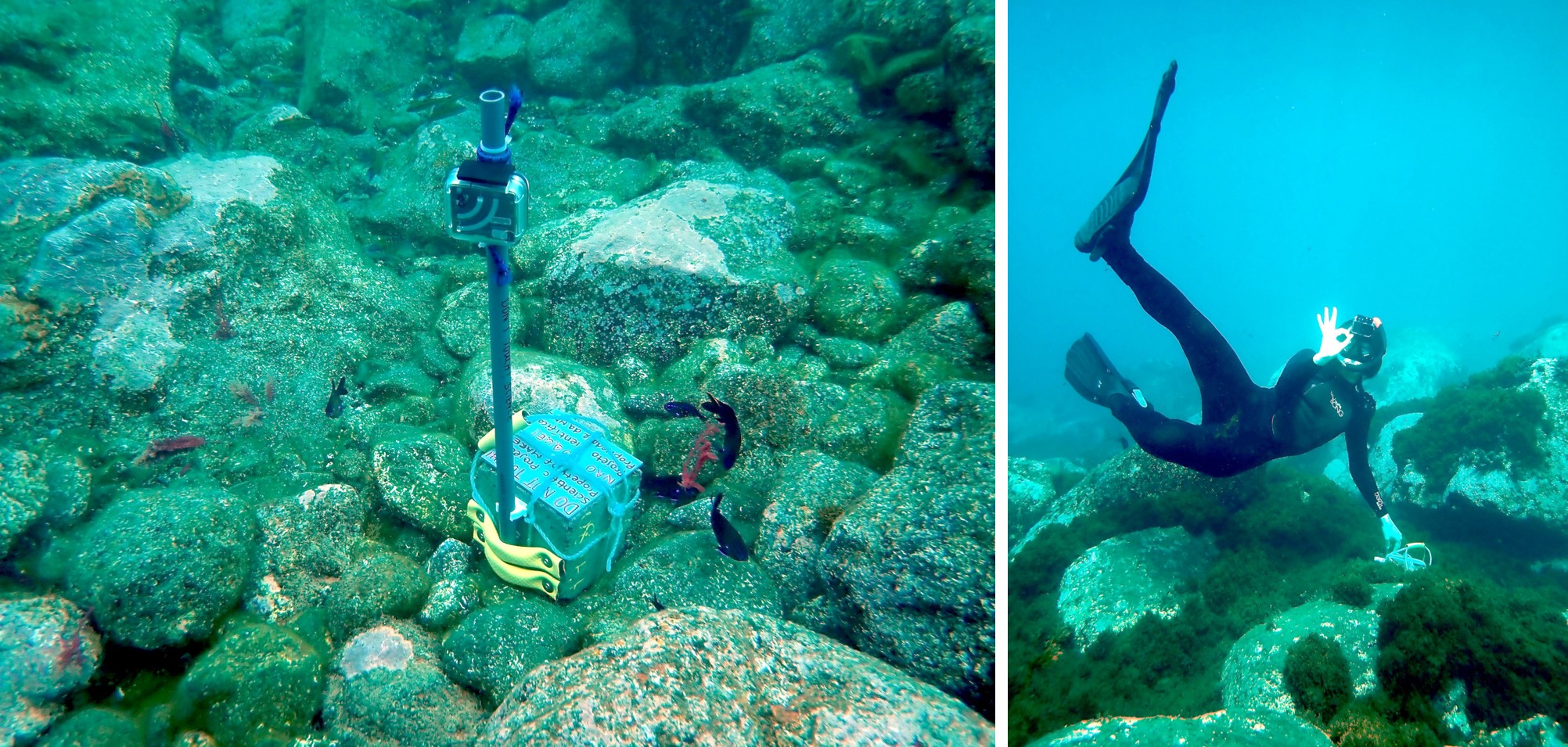
Since Jana studies the effects of natural soundscapes on larvae settlement, she needs to record the marine ecosystems of Madeira. The team at MARE helped her to choose a few promising locations, which best reflect Madeira’s rocky underwater landscape. They are in protected areas and have little boat traffic.We built six hydrophone stands, of which one was placed at each location with the help of a technical diver. The stands were constructed in a way that the hydrophone could be attached and detached by freediving from the surface, and this allows us to work independently of the diver. And, of course, to have the opportunity to go snorkeling for work :). For the first month it was just Elin who could hold her breath long enough to reach the hydrophone stand, which was in 5 to 8 meters water depth, because she had years of experience. But after training freediving while snorkeling in beautiful locations all over the island, first Niklas and then Jana figured it out and now we can divide this very popular task among the three of us.
Even when the project is running smoothly, there are always a million little things to think of, to plan and to organize. Our motto became ‘at least one of us is thinking’ – because of how often one of us forgot something or didn’t think ahead and the other one caught it just in time. And there is something to it. Even though we will write separate Master theses, we share the work and the responsibility, and it is amazing to work in a team in which you can truly rely on the fact that the other person cares just as much and is right there with you.
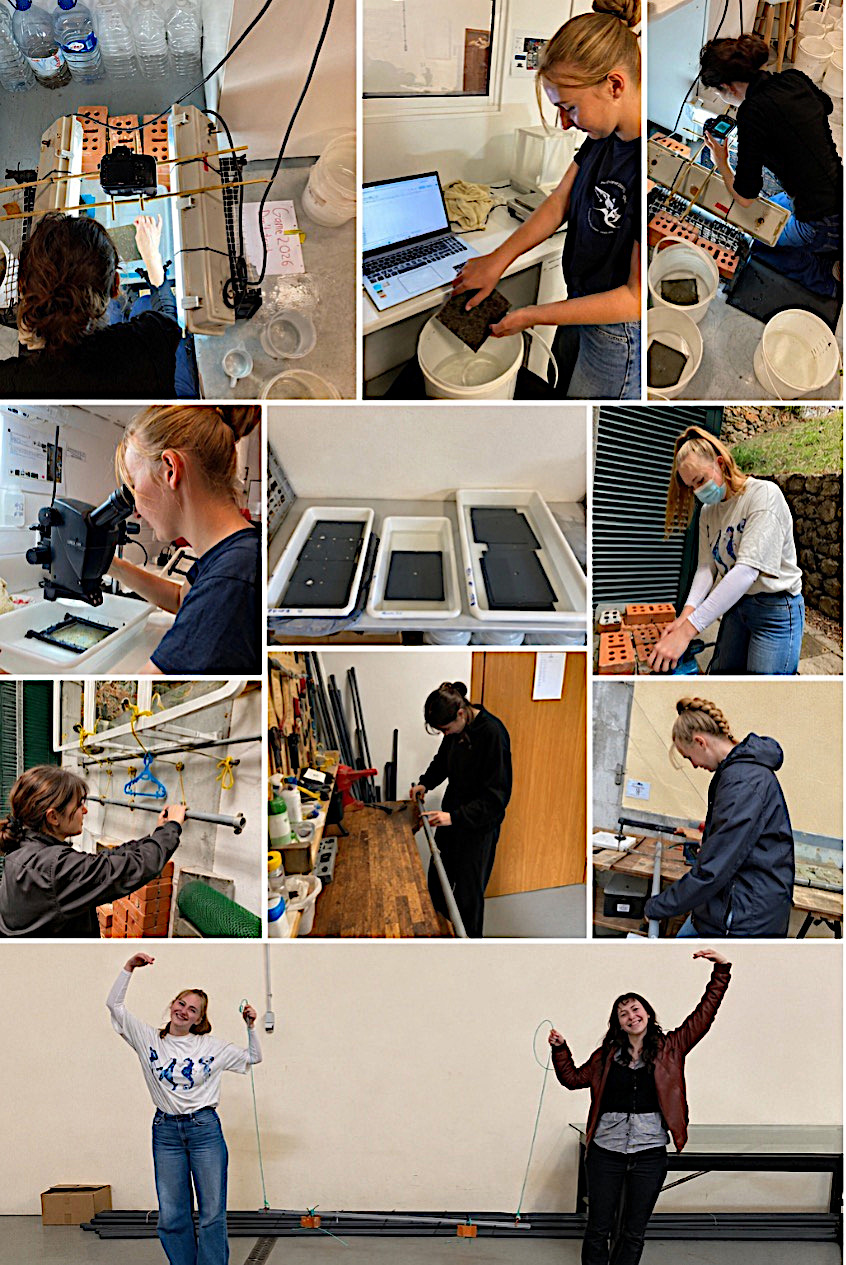
When we’re not in the workshop building our frames or glued to the binocular during long sampling days, we love to be in the water for snorkeling trips or go hiking in the beautiful mountains. The island’s nature is fascinatingly versatile, and after almost 5 months have passed now, we’re sure that we’ll never grow tired of the amazing views. There are so many Levada trails with waterfalls, hidden paths through the mountains and small towns to visit. Levadas are man-made irrigation channels on Madeira. They carry the water from the mountains from the north to the south. The network, which spans a total of 2,000 to 3,000 kilometers, is used today not only for agriculture but primarily as a world-famous hiking trail. We make a point to go exploring new places, but the joy of staying for half a year is that you get to find your favorites and come back to them.

We are really happy to have worked and lived here on Madeira, and we can’t believe that half a year has almost come to an end; we’d do it all over again in a heartbeat.