Climate Change
Tanzania pushed African nations to oppose fossil fuel transition at COP30
Tanzania, a fossil gas producer that led African nations at COP30, urged African ministers to position themselves against transitioning away from fossil fuels ahead of critical negotiations in the final week of the summit, according to a document seen by Climate Home News.
The recommendation was part of a four-page presentation dated November 15 – the halfway point of COP30 – and delivered by Tanzania’s lead negotiator during a briefing on the just transition work programme as calls for the inclusion of a fossil fuel roadmap in the conference’s main outcome were gathering speed.
The powerpoint advised African countries to maintain a position against transitioning away from fossil fuels, while also ensuring that a call for universal energy access was included in the text.
Richard Muyungi – who chaired the 54-strong African group of countries at COP30 – told Climate Home News on November 14 that the group had yet to coordinate their views on a potential fossil fuel transition roadmap, but would do so if developments at COP30 required it. He added that Africa should not be forced or pushed towards a trajectory that threatens to undermine its development agenda.
Nonetheless, two African countries publicly stated during COP30 that they supported a transition roadmap, suggesting that they did not agree with the approach proposed by the African Group. A formal group position was not declared openly during the summit.

“Pathetic” to tell Africa to transition
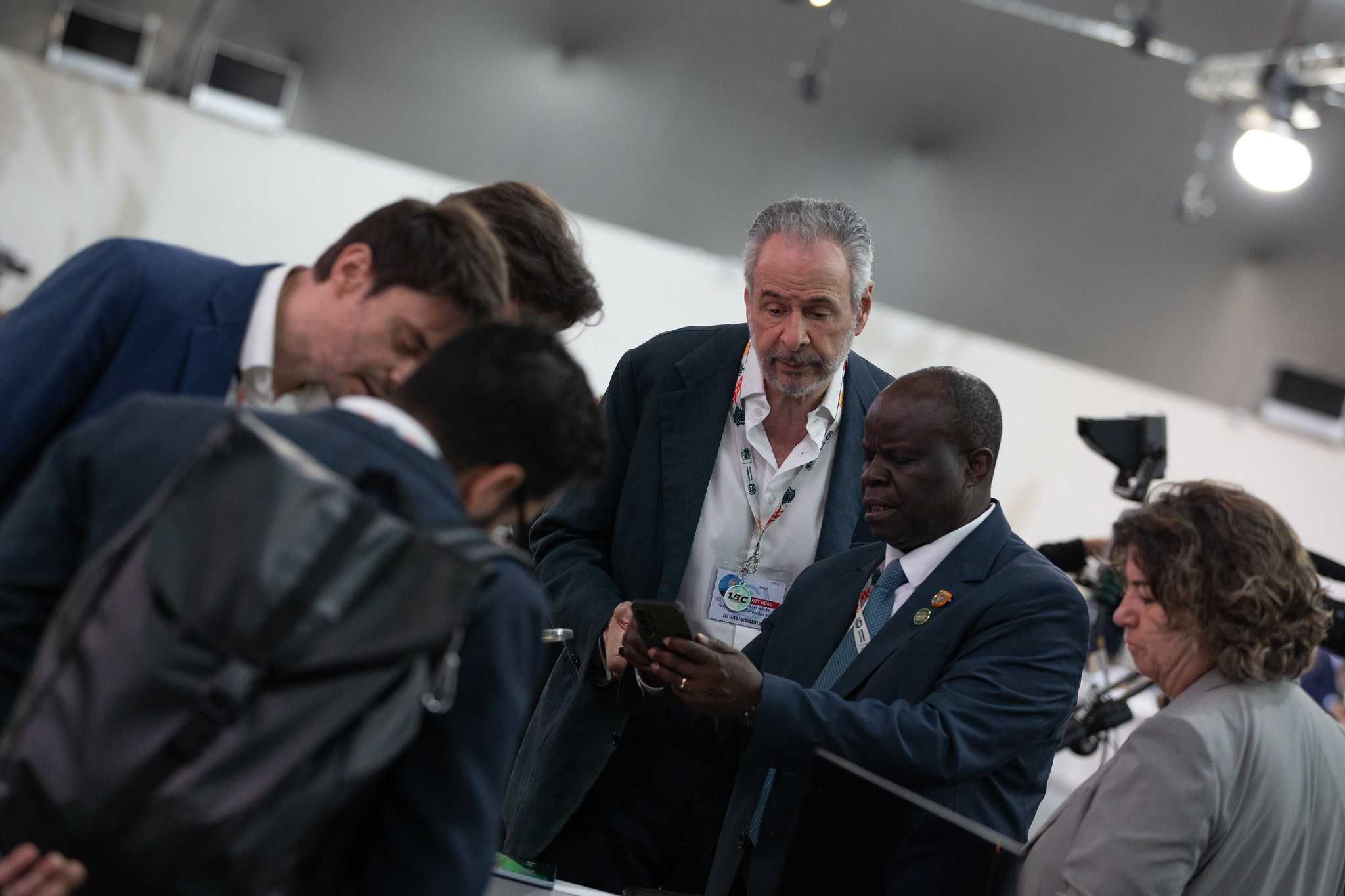
Explicit references to phasing out fossil fuels were axed from the final “Global Mutirão” decision in the Belém “political package”, following strong pushback from oil and gas-producing nations led by Gulf states. But questions remained over the role of African countries, with The Guardian suggesting that Tanzania’s Richard Muyungi, chair of the African Group of Negotiators (AGN), told a closed-door meeting that the continent’s 54 countries aligned with Arab Group nations on the issue.
Muyungi did not confirm this alignment publicly, telling Climate Home News that the AGN had not been consulted by the COP30 presidency on fossil fuels. He added that, as many African nations have only just started tapping their oil and gas reserves, “how do you tell them to transition away when they have just discovered it [fossil fuel]?”
The AGN chair stressed that what Africa needs is energy access for the over 600 million people who currently lack electricity and 900 million others without clean cooking. He added that it would “really be pathetic” if Africa were told by other countries to transition away from fossil fuels. “Ours is a transition away from wood and charcoal to electricity,” he said.
-
For blighted Niger Delta communities, oil spill clean-ups are another broken promise
Many local people are disappointed by efforts to repair the devastation left by foreign oil firms even as the Nigerian government plans to restart drilling -
Australia’s COP31 Co-President vows to fight alongside Pacific for a fossil fuel transition
Governments failed to agree on a roadmap to transition away from coal, oil and gas at COP30, but the COP31 Co-President says fight will continue


Tanzania boasts vast gas reserves, some of which are expected to be auctioned off in a long-awaited new licensing round, and relies on the fossil fuel for over two-thirds of its electricity. Tanzania is also involved in the controversial 1,443-kilometer East African Crude Oil Pipeline (EACOP), which aims to carry crude oil extracted from fields under development near Uganda’s Lake Albert to the Tanga port in Tanzania for export to international markets.
Muyungi said the continent could get cheap electricity from gas and “nobody can tell us to transition away from gas because this is our survival now”.
“Our economy will not move if somebody tells us to move away from gas because it is part of the fossil fuels – we cannot accept [that],” he told Climate Home News.
African nations split over fossil fuel roadmap
Before negotiations kicked off in Belém, some African leaders called for careful consideration of any attempt to transition away from fossil fuels. Ghana’s environment minister Emmanuel Armah-Kofi Buah said that “to deny Africa the strategic use of these [natural] resources is to deny our right to develop, to light our homes and to power industries”.
As the idea of a fossil fuel transition roadmap unexpectedly became a priority for the COP30 talks following strong calls by Brazil’s president and environment minister, the divergent positions of African nations started to surface, making it hard for them to form a common stance.
Kenya and Sierra Leone, which overwhelmingly rely on clean energy sources, publicly supported the roadmap, joining a group of more than 80 countries to call for its inclusion in the final Mutirao decision.


Speaking at a press conference two days before the close of COP30, Jiwoh Abdulai, Sierra Leone’s minister of environment and climate change, said moving away from fossil fuels is not just a climate issue but an economic issue.
“We need to treat this with urgency, moving away from fossil fuels that are driving the increase in temperature,” he said, adding that “it has to be just and equitable especially for countries in Africa”.
Nigeria, Africa’s largest oil producer, took a more critical stance, saying it would not support any process that would lead to its “sudden economic contraction and heightened social instability”. In a speech during the closing plenary, a Nigerian government official said “a successful transition cannot be imposed” but should be a deliberate process that is nationally determined and supported by international cooperation.
Missed opportunity for Africa
While the final Mutirao decision did not reference fossil fuel transition roadmaps in any form, the Brazilian presidency promised to create a voluntary one outside of the UN climate process over the next year. The process is expected to gain support from other countries such as Colombia, which will host the first conference on the issue in April.
“We know some of you had greater ambition for some of the issues at hand,” COP30 president André Corrêa do Lago told the COP30closing plenary. “I will try not to disappoint you.”
Experts said that, by not coming out in support of the fossil fuel roadmap, most African countries missed an opportunity to bring their energy access and finance demands into the centre of the talks.
Tengi George-Ikoli, Nigeria manager at the Natural Resource Governance Institute (NRGI), said that rather than seeing it as a risk, Africa could have leveraged the opportunity to shape how the transition unfolds and ensure it does not happen in a way “that could cause more economic instability”, but is made into “a global pathway that is equitable, inclusive, and just”.
But the lack of collaboration around a roadmap meant that Africa lost a chance “for that collective voice” to influence a pathway that considers energy access needs, market volatility, and the vulnerability of oil-dependent economies, she said.
Finance at the centre
The scepticism around the roadmap resulted from a lack of clarity, one observer who asked for anonymity told Climate Home News. He said African nations saw the roadmap as a Brazilian initiative that they first came across in Belém, so “there was limited understanding of what this roadmap was about”.
NRGI’s George-Ikoli said that, while it was not clear what the roadmap would entail, African countries became more fixated on that instead of recognising the opportunity. “We might have gone too far into thinking that this roadmap may not be good for us and interpreting it to mean a number of things, not recognising that there’s an opportunity we can leverage now if we’re keen at the start and demand strongly.”
Financial and technological support must be at the centre of this, Sierra Leonean minister Abdulai said. He noted that Africa still needs to grow its economies but also wants to be part of the climate solution because “to us, climate action and economic growth are not mutually exclusive”.
-
Colombia seeks to speed up a “just” fossil fuel phase-out with first global conference
The summit, co-hosted with the Netherlands, aims to help countries work out a fair path to stop using planet-heating oil, gas and coal – a sticking point at the COP30 talks in Brazil
The anonymous observer echoed the same, saying “any roadmap without finance will just remain a roadmap to nowhere”, adding that African countries also did not want to commit to something that they are not going to be able to afford to implement.
Seble Samuel, head of Africa campaigns and advocacy at the Fossil Fuel Non-Proliferation Treaty Initiative, said any roadmap needs to have clear accountability measures so that “it is not a smokescreen for continued failures on the means of implementation [finance]”. “That ultimately gaslights the Global South, especially those facing the biggest barriers to transition – like African nations,” she added.
George-Ikoli said Africa “can still leverage” the COP30 presidency roadmap to define, on their own terms, what a just transition must look like.
The coming year, she added, must be used to build a collective African position so the continent arrives at the next COP prepared and ready “to place its issues heightened on the agenda”.
The post Tanzania pushed African nations to oppose fossil fuel transition at COP30 appeared first on Climate Home News.
Tanzania pushed African nations to oppose fossil fuel transition at COP30