Renewable Energy
Sunrez Products Expand in Wind O&M

Weather Guard Lightning Tech
Sunrez Products Expand in Wind O&M

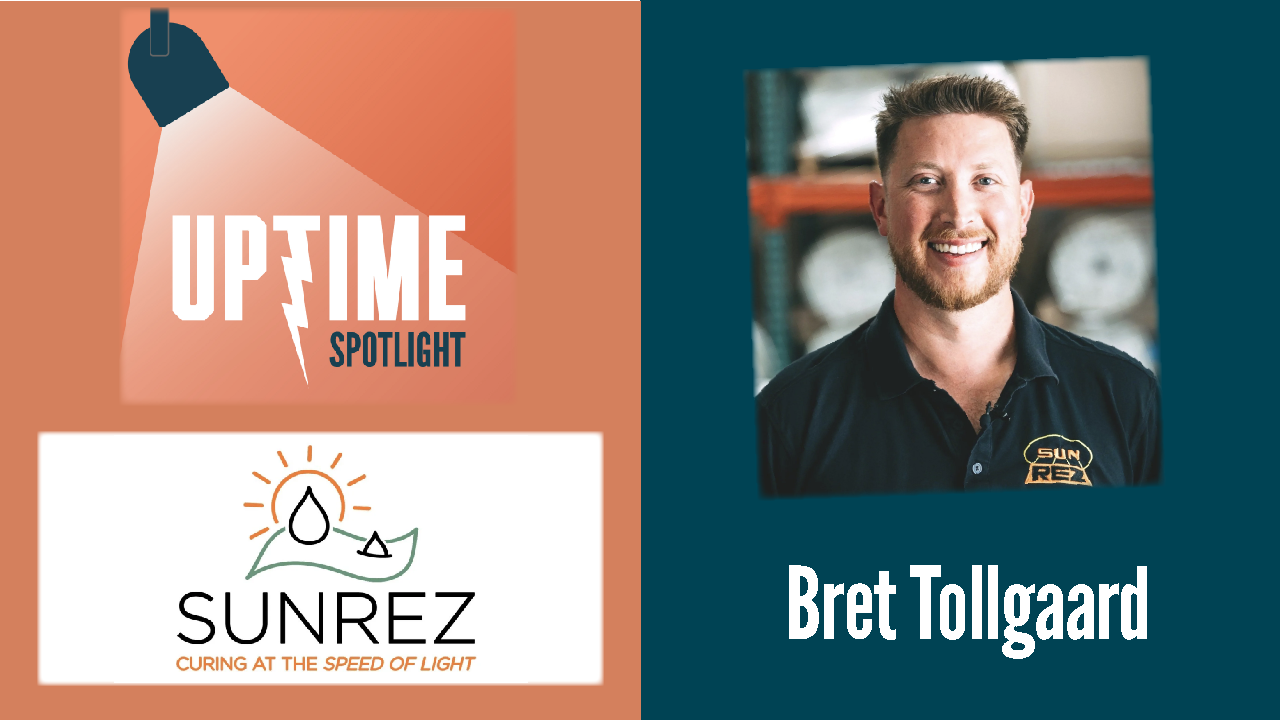
Bret Tollgaard, president at Sunrez, joins to discuss faster UV blade repairs, new leading edge materials, and growing OEM approvals. Reach out to sales@sunrez.com to learn more!
The Uptime Wind Energy Podcast is brought to you by Weather Guard Lightning Tech, creators of the StrikeTape Ultra LPS retrofit. Subscribe to Uptime’s Substack newsletter. And check out Rosemary’s “Engineering with Rosie” Youtube channel. Have a question we can answer on the show? Email us!
Welcome to Uptime Spotlight, shining light on wind energy’s brightest innovators. This is the progress powering tomorrow.
Allen Hall: Brent, welcome back to the program.
Bret Tollgaard: Appreciate you having me back on.
Allen Hall: There’s been so much happening in the world of UV prepregs and UV adhesives over the past year. Particularly on LinkedIn, I’ve seen numerous repairs which have used your material, SunRes material, to fix some pretty decent, uh, blade problems.
Are you seeing, just seeing a, a much wider adoption now that everybody has basically agreed that UV is the way to go?
Bret Tollgaard: I, I really do think that it’s starting to become one of the go-to standards for a variety of repairs in the wind market. And yeah, it’s great to see both our prepregs and lights being used all over LinkedIn, showing the [00:01:00] capabilities of the materials and how happy customers are to use and adopt the materials.
Allen Hall: Yeah. The UV materials are, are getting adopted by OEMs. A lot of ISPs, a, a lot of operators now have it as a standard practice to use UV cured materials just because of the speed and the time that is saved. Uh, it’s, it’s remarkable how much time you’re saving, because the, the real kicker right now if you’re trying to do a repair, even in the summer months, let’s just say it’s warm outside and the temperatures are right and it’s calm winds, you’re saving multiple hours per repair.
What generally… How much time are you generally saving on a kind of a, quote unquote, “standard blade repair”?
Bret Tollgaard: More and more time, actually, with each session. So we might be saving 50 upwards of 80% of the labor of a traditional epoxy repair. Um, what we’ve been training companies to do more and more frequently is to actually pre-consolidate the entire repair patch downtower, whether it’s in the trailer or inside the tower itself.
Um, and so you can pre-consolidate, get [00:02:00] all the air out in between your layers, have the primer pre-applied to the backside. That way, when you’re actually uptower, it’s simply peel, stick, roll, and then cure it out with our UV light. Sub 10 minutes, uh, will get you a fully cured part.
Allen Hall: Wow. That’s remarkable.
Yeah, when I see those LinkedIn posts from all kinds of operators all around the world using your material I also noticed that the weather conditions may not be pristine like you would have to do with epoxy. So there, there’s like a band of temperatures that epoxy systems generally work in. But with the UV material, I’m noticing, I’ve s- I s- especially over the wintertime, I saw some cold weather repairs going on.
Is there any limitation really to the UV cured patches and materials in temperatures?
Bret Tollgaard: There, there really aren’t for the temperature ranges that people will actually be out and installing these. Some of my favorite photos are when it’s negative five Celsius outside and everyone’s got the big gloves, the big [00:03:00] scarves, the big warmers and everything, and they’re applying our prepreg materials, uh, in below freezing conditions and still curing with the same 10-minute cycle time.
Uh, another big advantage of our UV prepregs is everything’s already pre-wet out, so you’re not uptower with your fiberglass and your resin kicking off an epoxy or even some other, uh, you know, materials out there where it’s really hard to impregnate and get that saturation and kick off with UV. And so our prepreg repair patches really lend themselves to efficiency in the field, uh, over a really broad variety of, uh, ambient temperatures.
So some of the negative five, negative 10 C installs all the way up to the hot ones in Texas and India and Australia, where you’ve got these people and it’s 100 Fahrenheit or, you know, 35 plus C, and you still cure with the same consistency, the same cure rate, the k- same cure speeds, um, really, really makes it a very versatile system.
Allen Hall: It just gets rid of the variation and, and [00:04:00] that’s one of the items when we look at repairs. So we’re on the lightning side of this business where lightning damage happens, so we see a lot of repairs happen. We also see a lot of repairs that don’t look great. They’re, I mean, the vast majority do look great, but you get these occasional ones where they’ve tried to use epoxy in the wintertime and use a heat blanket.
It, it’s difficult to do. It, it just is because of the material, it’s very difficult to do. I’m recommending more and more that they use a UV cure material if they’re gonna go off and do it, particularly as they, uh, do what I would consider to be a temporary patch until they get where they can do more in-depth work when it’s warmer outside.
But it, it does really change the game because the ability to buy the material quickly is amazing. Uh, b- there’s no hazardous me- chemi- chemicals in, uh, the Sunrise material at all, so it can be shipped anywhere, anytime, overnight, on a airplane, on a truck, doesn’t matter. Does that really open up the marketplaces for the [00:05:00] Sunrise UV cure materials?
Bret Tollgaard: 100%. And because of the long shelf life as well, um, we stock and store all of the common, um, materials used for wind. The prepreg, the putties, the surface primers. Fiberglass also does a great job of stocking and storing things. And yeah, because these can ship as unregulated materials, we get calls for next-day air shipping all the time, all over the world.
And so whether it’s out here domestically, it’s going up to Canada, Europe, uh, Asia, Australia, um, it’s really, really simplifies the whole process from start to finish.
Allen Hall: Are there any special tools you need to use when applying a, a UV cured prepreg patch to a blade, or is it just standard existing tools? Is there anything unique there?
Bret Tollgaard: No. It’s kind of as simple as it gets. There’s no vacuum bag required. There’s no heat blanket required. To truly install the materials, you’re gonna take off the back, uh, layer of, of the film on the backside of the [00:06:00] prepreg, re-stack and consolidate your materials. Uh, you’re gonna consolidate that with a basic three-inch or six-inch bubble buster hand roller.
Every technician’s gonna know exactly what that is. Uh, it’s a simple piece of little rolling metal that, uh, simply rolls out any air between the, the repair patches. And then after that, you’re gonna grab a paintbrush, and you’re gonna spread some of our surface primer over the backside of the prepreg. So you got a hand roller, and you got a paintbrush That’s all you’re gonna need to get the material up onto the wind blade.
And then of course, to cure the material, you need a UV light to do so. The sunshine, although it will cure the material, you never have consistent sun, light intensity, you’re on the shady side of the blade, et cetera. And so we’ve developed a variety of UV curing devices to help facilitate that. So our standard in the industry right now is what we call our Gen 2 LED lamp.
It’s about the size of an eight and a half by 11 sheet of paper. Um, but it’ll, it’ll cure several square feet at a time when you’re 14 to 20 inches or so away from that [00:07:00] surface. Uh, but in addition to that, we’re also working on a patent pending LED array system that is gonna be a broader… Right now, it’s about a half meter by one square meter surface area, and it’s gonna, um, emit a very, very uniform, uh, amount of light intensity across that entire surface all at once to make it even easier for the installers so they can just strap it to the blade, cure it for five minutes, and then move it over if they have a longer, uh, you know, one to two square meter repair.
Allen Hall: Wow, that’s remarkable. I, I have one of your lights, and I’m always shocked at how much light intensity there is because I’ve used other lights and seen other lights, and then they’re not nearly as bright or consistent across a, a piece of fabric, for example, where you just see uniformity.
Bret Tollgaard: That is certainly one of the challenges that we’ve actually encountered when people say, “Oh, well, I have a UV light.
I bought it on Amazon. I bought it from eBay. I bought it from somewhere where that 200 watt listed on that is not truly 200 watts, or the light intensity, [00:08:00] uh, that they, you know, claim to have. UV cure materials need the correct wavelength. They also need the correct light intensity on that surface to guarantee your depth of cure and to make sure that you’re truly bonding to the base substrate behind you.
The thicker you go, the more light intensity you’re going to need. So a lot of the knockoff materials really just don’t do it justice, um, and which is why we’ve, you know, intentionally built the LED curing systems that we have to cure with our prepregs, uh, and putties and adhesives. So they are all true one, uh, one single system.
Allen Hall: We’ve looked at different light systems here at Weather Guard, and I know we’re engineer- we’re an engineering group, right? So we’re gonna go look to see what these different lights are, and are they really truly putting out the frequency of light which is written down on the ad. It’s amazing, like, uh, the variation you get light to light.
It really depends on what the source is, but, uh, to test a light, just to test a light to make sure it’s putting out the right intensity at [00:09:00] the right frequency is super expensive. So you can buy a several thousand dollar sensor to check your hundred dollar light, or you could actually buy the right thing from SudRes and have the proper light because it does change the cure rate and what the result is.
So- Y- y- is it easy to tell, Brett, when I, if I have a light in the truck, do I know it’s the right frequency? How do I even tell that, uh, to know that I’m using the right stuff?
Bret Tollgaard: Well, if it says SunRes on the backside of that lamp, you have a guaranteed method of knowing exactly what that is. Um, we have the most broad industrial use UV lamp on the market, like, first and foremost.
There are several that cost four to five times what we do, but a lot of times they’re also a really small aperture, so they’re only curing a small footprint, which is why we’ve become the kind of gold standard for all UV cure repair solutions out there using a SunRes lamp. Um, we just make the best product, not to toot our own horn [00:10:00] too much.
Um, but it, it really serves the need of what these industrial customers in wind and other industries are looking for. Um, and I’m sure there are other systems out there. I’ve personally tried and tested dozens of different lamps out there to always see what’s on the market, and what we provide is just above and beyond performance-wise for the cost.
Allen Hall: And one of the, the questions that comes up with the light when we talk to operators, like, “Where do I get the light?” Well, you, you call Brett at SunRes and you buy yourself a light. The second question that happens is, has the OEM blessed this material? Have they validated the material? Has it been through material testing?
Has the OEM done structural loading on the material? Did I know that as a repair material, it’s actually gonna adhere to my polyester blade or my epoxy blade or whatever this thing is? Do I know that this is gonna work? Sunrise has been through a number of, uh, OEMs at this point. What’s the status of your OEM [00:11:00] relationships there?
Bret Tollgaard: Very, very solid, and constantly getting approved by more and more OEMs. Um, we’ve sold over 35,000 square meters of prepreg into the wind market alone. And with that has come a variety of, uh, you know, engineering approved jobs versus fully validated materials. We now have 20-year lifespans on a variety of different OEM, uh, wind parts.
And so our epoxy and polyester, we adhere phenomenal to both. And yeah, our prepregs are getting, uh, used more and more in every single application.
Allen Hall: I, I assume you can provide references if, if someone were to ask, like an ISP, “Can I talk to the OEM about this?”
Bret Tollgaard: Absolutely. Uh, and it, it’s, you know, no secret.
General Electric’s been one of the big pushers of UV cure materials now for a while, um, for both their epoxy and the LM polyester blades. Um, but there are several European OEMs that are actively, you know, certifying the materials as well.
Allen Hall: Oh, that’s a smart move on their part. [00:12:00] Uh, one of the considerations for using a UV material is training.
Uh, do I need to do special training for my technicians? Is it really different than epoxy? Do I have to do any training at all? What’s the level of skill that would be in- involved in using a, a UV prepreg?
Bret Tollgaard: The reality is, if you have any bit of experience of knowing what a resin and a fiberglass and wetting things out, UV just makes that job even simpler.
So all the repair technicians that have gone through repair academies, been trained on the, on site or on the job, that have gotten their hands dirty, as we like to call it, with making some, uh, composite repairs, UV is just gonna simplify the process even more. Um, in 2026 and 2027, we’re actually starting to work, uh, uh, more closely now with a variety of the blade repair groups or academies and training facilities to also get UV cure in people’s hands so they don’t experience, uh, for the first time when they’re out, you know, getting a job with one of these other [00:13:00] OEMs that are recommending use our material now instead of, uh, epoxy systems.
Allen Hall: Mm. And all the experience that’s happened at, at Sunrise, I, I don’t know if a lot of people realize that you’re a roughly 40-year-old company. You’ve been around a long time, although you’re nowhere near 40. But the company has been around a long time. What was the origin of SunRes? Uh, because it wasn’t necessarily in wind, right?
Wind is sort of an afterm- after-market kind of application where it kind of transferred over. But what, what was the core start of the business?
Bret Tollgaard: Yeah, no, we were founded in September of 1986. So in just a couple of weeks, we’ll actually hit our 40-year anniversary.
Allen Hall: Wow.
Bret Tollgaard: SunRes was originally founded, uh, in, uh, once again, the, the mid-’80s for just UV cure formulations in general.
Spent the first several decades, uh, of its life being primarily an R&D, uh, kind of based group, um, formulating specialty UV cure solutions for mostly thick wall fiber reinforced applications. So anything from [00:14:00] boat hulls to, uh, drones to, uh, you know, bathtub repair and saddle trees. Um, we’ve sold really the, a whole kind of gambit of very broad basic systems to incredibly advanced high precision, uh, you know, applications.
And so as we grew and evolved the, the formulas and the recipes to cert- uh, to solve certain needs, now we’re kind of elevating that to a more, uh, manufacturing based business and offering true repair solutions as opposed to just R&D and working on developing solutions to repair something.
Allen Hall: And that’s growing outside of just the pre-preg processing materials, packaging it up and shipping it.
And y- you’re now getting more into specific solutions in wind, which is really exciting. The leading edge erosion issue is plaguing a lot of turbine blades in the United States and, and globally. Australia has a big problem with it, and there’s a, some other places that I’ve seen some pretty [00:15:00] rough looking blades, India being another one.
Uh, the solution to go fix those blades has generally involved, uh, putting someone up on a rope, a- applying material, fiberglass back down, trying to repair holes in particular, and trying to cap that off. But now there’s some new materials that can speed up the process to at least get you back to a, a surface, a usable surface that you could then apply an LEP or whatever you decided to do there.
What do those new materials look like and, and how are they being used today?
Bret Tollgaard: Yeah, no, great question. So ultimately there are broad– uh, you know, a really, really broad, uh, array of challenges that wind in particular really kind of faces. And so developing UV cure solutions to fit more of those than just a small little repair patch or a crack has been something that we’ve been working on for a while with a variety of different groups.
Um, but leading edge in particular, not just protection, but also the rehabilitation of those leading [00:16:00] edges. So we’ve done that in a couple of different ways. Some have been some pre-consolidated repair patches that we’ve built, where a specific blade requires, um, you know, a, a design package to reinforce certain areas, whether it was, uh, too many ply drops in a certain zone or an area of high wear.
Uh, but the other ones kind of more recently are starting to build, I’ll call like a fiber reinforced type putty, where you’re actually filling gaps, filling holes, filling imperfections with a more structural repair solution before then coming over the top with an LEP for the protection of that blade long term.
And so being able to provide solutions for both, uh, hand, but then also robotics is something that we’ve been focusing on. So repair technicians can do it, but then also make sure that the, uh, robotics industry has the materials that they need to be able to do that in a fast and timely manner.
Allen Hall: So these new materials can be applied with a robot, I just heard.
How does that work? Is it a cartridge system or a liquid system? How– Is it sprayed on? [00:17:00] W- how does this thing work?
Bret Tollgaard: Ultimately, it’s whatever that robotics company says that they would like and need. And so we build, uh, certain things to meet different demands on both of those aspects. But some are spray, some are coated, some are troweled, uh, all of which though, uh, include applying a UV cure material, uh, and then curing it to then make sure that they get the correct, uh, you know, mechanical and thermal properties for that leading edge or that leading edge re- rehabilitation.
Allen Hall: That must be a huge time saver.
Bret Tollgaard: Phenomenally so. Uh, the robotics companies are, are pretty happy with the way that things are starting to unfold, and then same with the, uh, owner-operators. Like when you can go and you can have a robot Fix, sand, or sand, clean, fill that leading edge without a technician having to be up there.
Tremendous amount of time savings, and then also just liability and repeatability, um, which is always an important thing, is having extremely high quality throughout that entire process, uh, and then recording it and everything like [00:18:00] that too.
Allen Hall: Well, that’s the key to any leading edge repair that I’ve seen, is the repeatability and controlling the, uh, sometimes the uncontrollables, trying to add a little bit of restriction about what you’re doing, how you’re doing it to get the consistency in the product.
Because there’s a lot of products on the market right now, uh, that supposedly will do this thing But there’s– we have seen a variety of outcomes even for the same material. C- moving to something that’s a little more standard and, and particularly UV-based, where it’s stable, shelf-stable, right? I mean, th-there’s no expiration date necessarily.
You, you probably put a time limit on it, but it’s shelf-stable, so I have a, a barrel of it in the, in the pickup truck. I can probably still use it. But, uh, what am I thinking about when I start to make those decisions? Because this is all new to most of the industry. They haven’t seen this. What– some of the things should they be considering when they’re thinking about, “I got a leading edge repair.[00:19:00]
It’s kinda ugly. It’s probably cat three, maybe cat four. Where am I going here? Who am I talking to, and why am I thinking about UV?”
Bret Tollgaard: Yeah, I mean, ultimately it comes down to, you know, a variety of value that we provide the customers. Um, as you said, being shelf-stable is incredibly important. The reality is a lot of these repair materials aren’t being stored in a temperature-controlled warehouse.
It’s being stored in someone’s trailer, and they’re gonna use half of a cartridge, or they’re gonna use four prepregs, and they’re gonna have six more sitting on the shelf for two more months until they move to another job that they’re gonna go and do something else. And so the materials themselves need to have an incredibly long shelf life, but also be able to handle those varying temperatures.
Like if you’re out in the middle of Texas here in the United States, it can be 130, 140 degree Fahrenheit inside that trailer during the day, but at the same time at night, you can have temperatures below freezing in certain areas, and it needs to be able to withstand both of those extreme temperature environments.
Um, that being said, [00:20:00] you buy from a group like us or you buy it from Fibre Glast where it is stored properly, and it can be shipped next day to, to you on site. Uh, it simply, it, yeah, it simply helps, uh, everyone long term, uh, make sure that they have the materials that they need.
Allen Hall: I would be remiss not to talk about our Strike Tape Ultra product, which is a partnership between Weather Guard, Lightning Tech, and SunRez.
Uh, it’s a project that we’ve been working on for probably two years now, maybe a little bit longer. It, it’s been a tremendous amount of effort, engineering time and materials-wise, and learning about different, uh, performance of a, uh, particular resin system and trying to figure out what works. But, uh, there is now a solution, and SunRez is producing a lot of Strike Tape Ultra parts at the minute Really durable, based on Sunrise material, but you’re using not just our, our, our obviously our, our recent, uh, experiments and all the data, [00:21:00]but this goes back almost 40 years.
You’re, you’re bringing 40 years of knowledge to the table to come up with a solution for a really difficult environment.
Bret Tollgaard: Yeah, and we’ve had to certainly rely on the past experiences that we have learned along the way. Um, you know, part of the challenges of working for the last year or two years together on this was to truly make as robust and durable of a system as we can.
And so having this new 7303 vinyl ester-based system, uh, which we’re not only using for you but also using as the primary component for our LEP system, uh, it definitely has the durability and the longevity for, uh, your strike tapes, uh, in particular to be, uh, to withstand all the elements and all the abrasion and all the erosion that’s gonna come its way for years.
Allen Hall: Now, I, I’ve watched you at trade shows take a hammer to some of your prepreg materials and demonstrate you can cure it within a couple of minutes, and you’re hitting it with a hammer and it’s super tough. We’ve done that at Weather Guard with the Strike Tape Ultra. It’s [00:22:00] crazy durable, and I don’t understand the chemistry of what you guys do.
You’re experts in UV and all the chemicals and how to make this thing work, but it is truly remarkable how tough that material is and UV stable it is and how quick it is to cure and to get onto a blade in a couple of minutes. It’s quite remarkable, and the, the rain erosion performance of it has been crazy good.
Uh, it’s a real game changer.
Bret Tollgaard: We’re extremely proud of the way that, uh, this has all kind of unfolded, and it has been a long time to kinda work through and iterate through the different formulas. Um, but the combination of the extremely hard and durable system that we have as the overcoating combined with our UV cure adhesive, AKA surface primer, uh, to act as that really, um, gooey, high elongation, great stress distribution kinda medium, uh, to then get that into the blade, it’s the perfect one-two combo, [00:23:00] and being able to cure in just a couple of minutes is only, uh, icing on the cake.
Allen Hall: Yeah. It’s, it’s, it’s quite good. Uh, I know, uh, when people hear this podcast, you’re gonna get a lot of reach-out because we’re kinda getting near the end of the typical Northern Hemisphere season. It’s gonna get chilly here in about six to eight weeks since when we’re recording. How do people get ahold of you and start talking about repair patches and materials for this year, and also for next season?
Bret Tollgaard: The easiest way is gonna be reach out to us, uh, via email, info@sunrez.com, sales@sunrez.com. We’ll put you in touch with, uh, all the right people within Sunrez to make that happen for you. Um, and similarly too, groups like com- uh, Fibre Glast have been stocking and storing the material for years. They’re really, really great at tailoring the exact amount of material that you need for a given job site.
They’re willing to break it down to individual patches, single things of primer, putty. Uh, you come to us, you’re gonna have larger MOQs to be able to buy [00:24:00] boxes and rolls, uh, directly off the shelf. But at the same time too, we’re happy to get customers whatever products they need as quickly as they need, and put them in touch with the right people to do so.
Allen Hall: So you just Google Sunrez, S-U-N-R-E-Z, or just go to sunrez.com, and you’ll get to the Sunrez site, and you can learn a whole bunch about the materials of what is offered. But you need to, to call Brett and call the team at Sunrez, uh, to, to get the solution for you. And it is, uh, really great working with Sunrez.
It, it’s been a pleasure, honestly.
Bret Tollgaard: My, uh, my business development manager, Gerhard, will certainly have me say, “Let’s direct all that to Gerhard instead of Brett.” So he’ll be happy to get you all the info that you need. Um, but yeah, so ultimately, we’re an extremely customer-driven company, and we bend over backwards as often as necessary to get customers what they need in the time that they need it.
It’s something that we really pride ourselves on. Uh, it’s also how we developed all these new, uh, technologies and materials to, to make customers’ [00:25:00]lives easier in the field. And so even as all of our wind portfolios, you know, grow and expands for product line offerings, um, we’re certainly interested in learning about what your challenge in particular is, and how we can best help you solve that challenge.
Allen Hall: Yeah, so if you have a blade challenge right now, and most operators do, you better be checking out sunrez.com. Brett, it’s so great to have you back on the podcast. Love having you on, and we’ll speak again soon.
Bret Tollgaard: Looking forward to it. Thank you, Allen.
https://weatherguardwind.com/sunrez-wind-om/