Carbon Footprint
South Korea Mandates ISSB-Aligned Climate Reporting by 2028 for Corporate Giants


South Korea plans to require large companies to publish mandatory sustainability reports starting in 2028. The rule will apply first to major firms listed on the country’s main stock exchange.
Starting in 2028, KOSPI (the largest South Korean stocks) companies with at least 30 trillion won (around $22 billion) in assets will need to reveal their environmental, social, and governance (ESG) practices.
South Korea’s Sustainability Reporting Era Begins
The reporting requirement will expand in 2029 to companies with 10 trillion won or more in assets. The first phase will focus on about 58 of South Korea‘s largest listed companies. This is based on estimates from the Financial Services Commission (FSC).
Companies must publish clear details on climate risks, emissions, governance, and sustainability strategies. These disclosures will cover greenhouse gas emissions, climate financial risks, and plans to achieve climate goals.
The government says the policy will improve transparency for investors and strengthen confidence in Korea’s financial markets. It will also help the country align with global ESG reporting standards that investors increasingly expect.
South Korea has big industrial companies operating in electronics, cars, steel, and shipbuilding. These industries play a major role in global supply chains. Clear sustainability reporting could help these companies maintain access to international capital and markets.
A Gradual Rollout to Ease Corporate Burden
In 2026, South Korea’s Financial Services Commission released a roadmap for ESG disclosure. The policy forms part of the government’s broader strategy to support the country’s green transition.

Officials decided on a phased rollout to give companies enough time to prepare. Key elements of the plan include:
- Mandatory ESG reporting for large KOSPI companies starting in 2028.
- Expansion to additional companies in 2029.
- Full adoption of supply-chain emissions reporting by 2031.
Companies will receive a three-year grace period before they must disclose Scope 3 emissions. These emissions include indirect emissions across a company’s value chain. These can come from suppliers, transportation, product use, and waste.
For many firms, Scope 3 emissions represent the largest share of total emissions. The Carbon Disclosure Project (CDP) states that Scope 3 emissions can be over 11 times greater than direct operational emissions for many companies.
Regulators gave companies more time to create systems for measuring these emissions due to the complexity involved.
Initially, the rules will operate through stock exchange disclosure requirements. Over time, the government plans to convert them into formal legal reporting obligations.
How Climate Finance Powers Korea’s Green Shift
The new reporting framework supports South Korea’s broader climate policy and energy transition. The government aims to raise about 790 trillion won (around $590 billion) by 2032.
The funding will support climate-related investments and help industries modernize and reduce emissions. Priority sectors include renewable energy, hydrogen technologies, green infrastructure, low-carbon manufacturing, and energy efficiency upgrades.
Heavy industries are a key focus of these efforts. South Korea is a top producer of steel, petrochemicals, and semiconductors, which need a lot of energy. The country generates 33% of its electricity from coal, per International Energy Agency data.
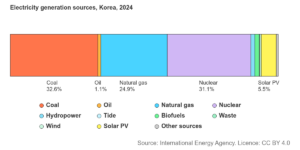

The IEA says South Korea was one of the top ten energy consumers in 2024. Industry made up a large part of the electricity demand. The government will introduce transition finance frameworks. These will help high-emission industries get funding for cleaner technologies.
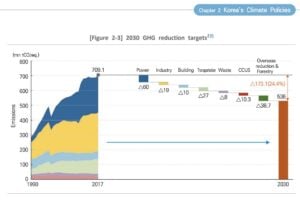

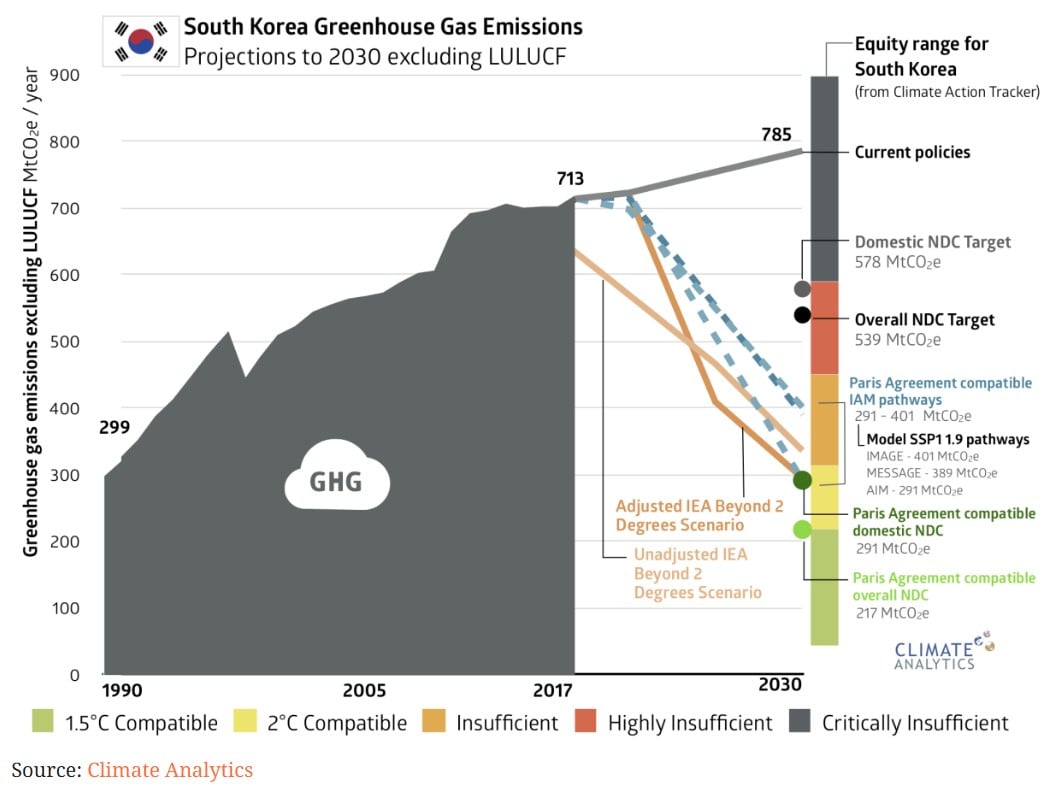
South Korea has pledged to reach carbon neutrality by 2050. The country also aims to reduce greenhouse gas emissions 40% below 2018 levels by 2030 under its updated climate plan. Stronger ESG reporting will help investors measure corporate progress toward these goals.

Why Mandatory ESG Reporting Is Going Global
South Korea’s policy reflects a global shift toward mandatory sustainability reporting. Governments and regulators increasingly require companies to disclose climate risks and emissions data. These rules show how climate change and energy policies can impact businesses.
The EU’s Corporate Sustainability Reporting Directive (CSRD) is a major reporting framework. The rule will eventually apply to around 50,000 companies operating in Europe, according to the European Commission.
Global standards are also emerging. The International Sustainability Standards Board (ISSB) released two key disclosure standards in 2023:
- IFRS S1, covering general sustainability disclosures
- IFRS S2, covering climate-related disclosures
More than 20 jurisdictions representing over half of global GDP have announced plans to adopt or align with ISSB standards. South Korea’s reporting framework follows these international guidelines.
The country set up the Korea Sustainability Standards Board (KSSB). Its job is to create national reporting standards that match the ISSB framework.
Companies will be required to disclose:
- climate risks and opportunities,
- governance structures for sustainability oversight,
- emissions data and reduction targets, and
- strategy and risk management practices.
This alignment helps investors compare companies across different markets using similar data.
Korean Corporations Step Up Sustainability Disclosures
Corporate sustainability reporting has already expanded in South Korea. By 2024, about 203 Korean companies will publish voluntary sustainability reports. This comes from ESG research groups that track disclosure trends.
Large Korean firms have increasingly adopted global reporting frameworks such as:
- Task Force on Climate-related Financial Disclosures (TCFD)
- Global Reporting Initiative (GRI)
- Sustainability Accounting Standards Board (SASB)
However, many companies asked regulators to delay mandatory reporting requirements. Businesses said they need more time to create reliable emissions measurement systems and reporting processes.
The government responded by pushing the start date to 2028. The extra time helps companies create internal ESG management systems and enhance data collection. Financial institutions strongly support stronger sustainability disclosure.
Investors increasingly use ESG data when evaluating risk and long-term performance. According to the Global Sustainable Investment Alliance, sustainable investment assets reached over $30 trillion globally in recent years. Analysts forecast it to reach $40 trillion by 2030.
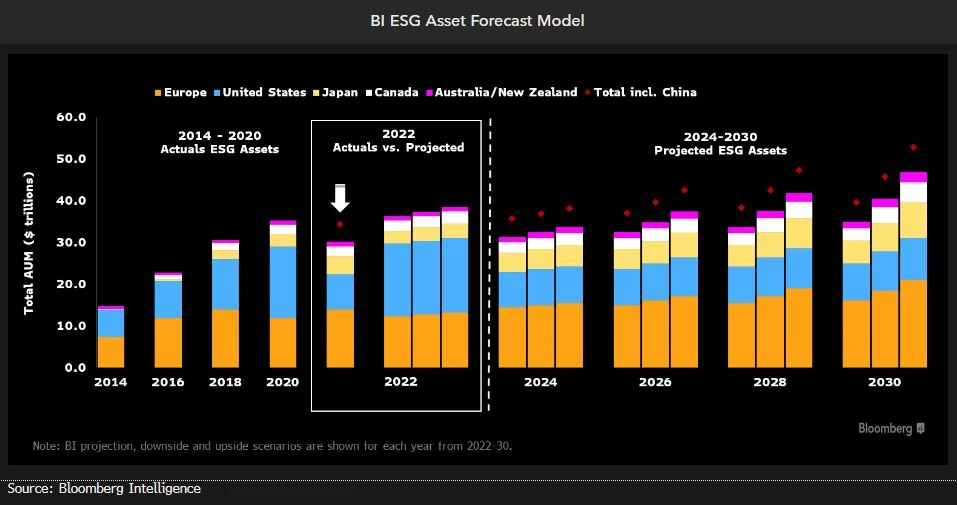

Transparent ESG reporting helps companies attract capital from these investors. It also helps banks and asset managers assess climate risks across their portfolios.
The Future of ESG Disclosure in Asia
South Korea’s new rules could influence ESG reporting across Asia. Several financial centers in the region are strengthening climate reporting policies.
For instance, Japan plans to expand sustainability disclosure rules for major companies beginning around 2027. The country now requires climate risk disclosures for companies on its Prime Market. These disclosures must follow the TCFD framework.
Singapore and Hong Kong are both starting mandatory climate reporting that will follow ISSB standards. China is also expanding its climate disclosure rules to other major sectors.
- SEE MORE: China Expands Carbon Reporting to Airlines and Heavy Industry in Major Climate Disclosure Shift
These developments reflect growing pressure from global investors. Many asset managers now need detailed climate data from companies. They use this information before deciding on investments.
Consistent reporting frameworks also help multinational companies operate across multiple markets. Large corporations often face different disclosure rules in different countries. Aligning with global standards can reduce compliance costs and improve transparency.
As more countries adopt ESG reporting rules, sustainability reporting may become as common as financial reporting.
Transparency as the New Standard in Global Markets
South Korea’s plan to introduce mandatory sustainability reporting in 2028 marks a major step in the country’s climate and financial policy. The phased rollout will start with the largest listed companies and later expand to more firms. Companies will need to disclose detailed data on emissions, climate risks, and sustainability strategies.
The policy aims to improve transparency for investors and align South Korea with global ESG reporting standards. As sustainability disclosure becomes more common worldwide, companies with strong climate strategies and clear reporting systems may gain an advantage in global capital markets.
The post South Korea Mandates ISSB-Aligned Climate Reporting by 2028 for Corporate Giants appeared first on Carbon Credits.