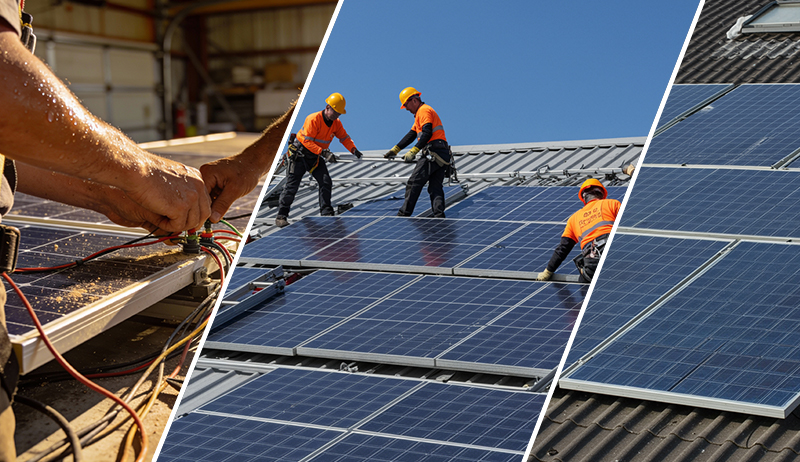
While planning an energy upgrade, safety isn’t just a legal requirement; it protects lives and assets.
So let’s see what the safety rules are for the installation of solar PV systems in Australia:
Electrical & Fire Safety
Solar systems involve high voltages, batteries, and sometimes complex inverter setups. That’s why:
- Installers must manage risks in accordance with Australian electrical safety and work health and safety (WHS) rules.
- Battery installations have specific safety requirements, including proper ventilation and fire safety measures.
After installation, your electrician must also provide a Certificate of Compliance for Electrical Work to confirm that the system meets all electrical safety standards and is properly connected.
What are the Other Safety Measures?
Accreditation: Use CEC-accredited designers and installers.
Wiring: Maintain separation between AC and DC cables; protect all wiring from any physical damage.
Inverter Placement: Install your inverters in shaded, well-ventilated areas.
Panel Handling: Cover unpacked panels with opaque material to stop power generation. Also, wear insulated gloves.
Structural Integrity: Ensure proper mounting to withstand weather and prevent roof leaks.
Earthing: Essential for preventing shocks and managing fault currents.
Electrical Isolation: Isolate all power at the main switchboard before work begins.
Maintenance: Regular inspections by a licensed electrician can prevent failures.
Working at Heights: Take extreme care, especially near power lines; wear appropriate PPE, including a respirator, goggles, and gloves.
Documentation & Compliance Paperwork
If you are planning to install solar panels, don’t underestimate paperwork. Thorough documentation helps you:
- Claim rebates,
- Demonstrate compliance during inspections,
- Protect your business in case of disputes.