Climate Change
REPORT: Where the Ocean leads us, A Pacific way to a fossil fuel free future
A new report from Greenpeace Australia Pacific advocates for a Pasifika-led transition toward a future free from coal, oil, and gas. It emphasises that while Pacific island nations contribute minimally to global emissions, they face existential threats from rising sea levels and coral reef destruction.

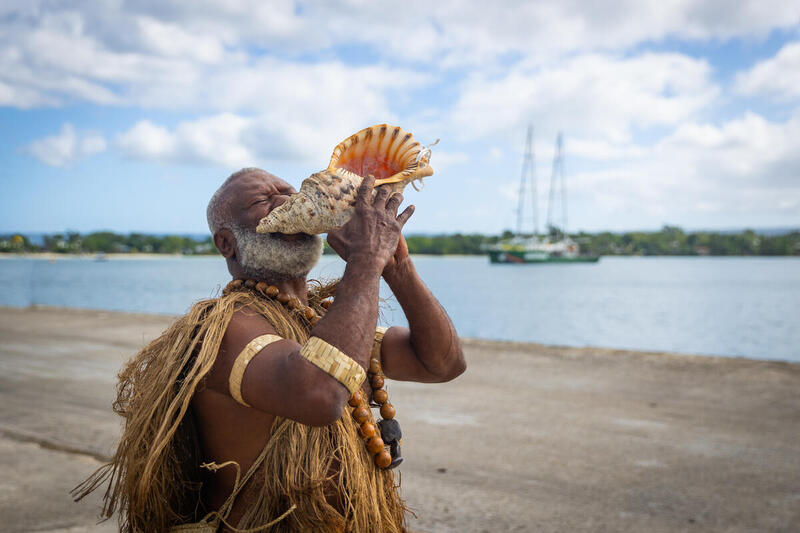

Leadership from the frontlines
Three decades ago, the world united to confront the greatest challenge of our age: climate change and transitioning away from fossil fuels.
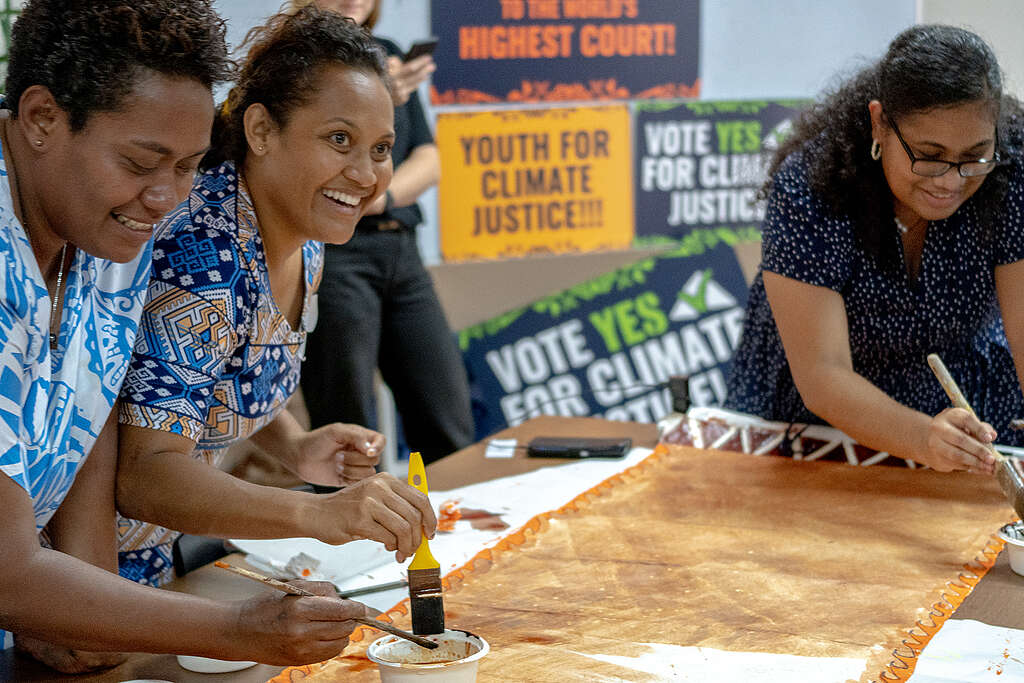
The Pacific has been there at every step, playing a central role in shaping the global climate regime. We have defended science, been a voice for ambition and justice, and delivered successive breakthroughs — from securing the 1.5°C goal in the Paris Agreement to taking the world’s biggest problem to the world’s highest court. Today, we are spearheading efforts — both inside and outside the formal process of UN climate negotiations — towards a just and equitable transition away from fossil fuels.

Timeline
| 1980s | Pacific island countries first warn of the threats to physical and cultural survival from climate change. |
| 1990 | Together with island nations of the Caribbean and the Indian Ocean, the Pacific forms the Alliance of Small Island States (AOSIS). |
| 1991 | Vanuatu makes the first proposal for what we now call loss and damage finance. |
| 1994 | Nauru puts forward the first draft of what became the Kyoto Protocol. |
| 2009 | Pacific island countries press for a binding agreement that would limit warming to 1.5°C, with Tuvalu and AOSIS offering text for a new legal protocol. |
| 2015 | The Pacific plays a pivotal role in securing the Paris Agreement — including the all-important goal of limiting warming to 1.5°C, and a stand-alone article on addressing loss and damage from climate change. |
| 2022 | Vanuatu is the first country in the world to support a Fossil Fuel Treaty, followed shortly by Tuvalu. |
| 2023 | Pacific island countries help secure the first ever reference to fossil fuels in a UN climate decision, with COP28 calling on countries to “transition away from fossil fuels”. The Fund for Responding to Loss and Damage becomes operational. |
| 2024 | Following a request by Pacific and Caribbean island countries, the International Tribunal for the Law of the Sea clarified states’ obligations to protect the world’s oceans from the impacts of climate change. |
| 2025 | Following a campaign led by Pacific island students, a historic ruling from the International Court of Justice affirms that countries are legally obliged to limit warming to 1.5°C, and that continuing down the path of fossil fuels may be an internationally wrongful act. |
| 2026 | Pacific Ministers and civil society gather in Vanuatu to set the ongoing course of Pacific leadership towards a fossil fuel free future. The Tassiriki Call reaffirms the vision of a Fossil Fuel Free Pacific and agrees to establish an Inter-Governmental Taskforce. |

1.5°C and the transition away from fossil fuels
By the 2000s, it was clear that warming beyond 1.5°C posed a profound threat to communities in the Pacific and worldwide.
Rising seas, destructive storms, extreme heat, shifting rainfall patterns, ocean acidification… no level of warming is ‘safe’. Every fraction of a degree increases the risks to our food and water supply, our physical and mental wellbeing, our cultures, and our sovereignty.
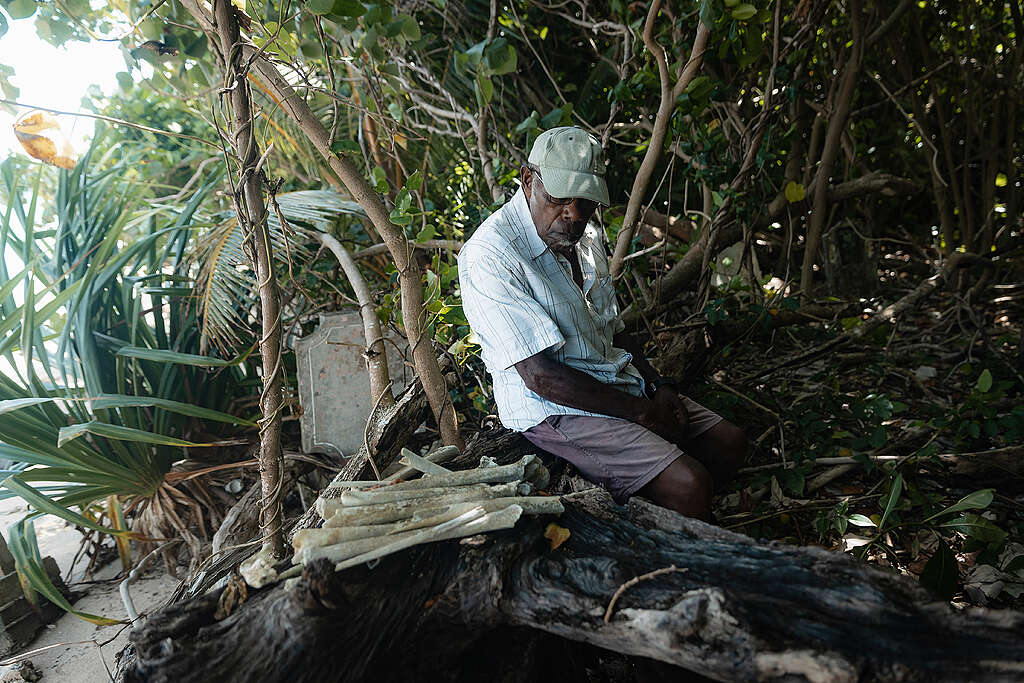
Only when you have seen sacred land swallowed by the rising ocean and the graves of your ancestors washed out to sea, cared for elders suffering through extreme heat, watched the familiar rhythm of the seasons change before your eyes, or lied awake at night worried whether your children will still have a nation to call home, do you truly understand what is at stake. For some people and communities, 1.5°C is a point of no return.
In Paris, we held the line, and refused to negotiate away our futures. The result — a universal agreement to strive to limit warming to 1.5°C — became a lifeline for Pacific communities, and a gift to the entire world.
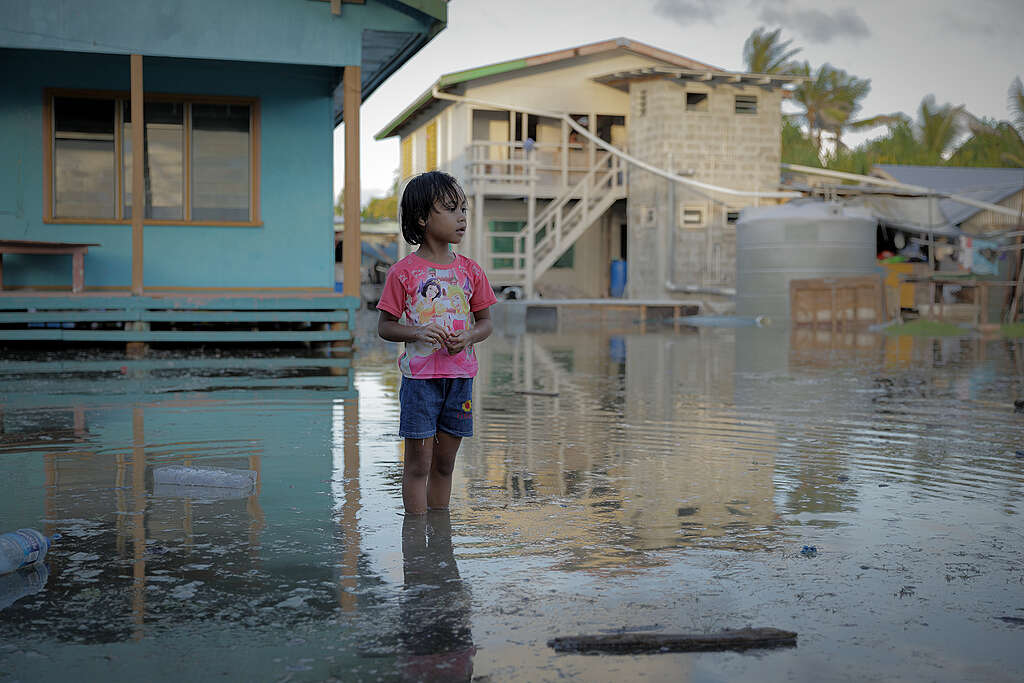
In the decade since Paris, the case for limiting warming to 1.5°C has only grown stronger. Beyond 1.5°C, the risks grow from highly destructive to truly existential. How? The impacts of climate change do not merely increase in a linear fashion as the global temperature climbs. At a certain point we start to trigger far more severe and abrupt changes — such as the destabilisation of polar ice sheets, committing the world to much faster sea level rise, or the mass death of critical ecosystems we depend on for our sustenance.
Cross these ‘tipping points’ and we will set in motion changes at a pace to which it may be impossible to adapt, and which will continue to play out for millenia. We will have left behind the relatively stable climate of the last 11,000 years, in which today’s modern civilisations evolved, and which is the only Earth they have known. We will have tipped our Earth into a far more chaotic state, and our survival as a species will be by no means assured.
“The salt spray of the Pacific Ocean is in my blood; I grew up watching the tides shape the shores of the islands of Tuvalu. But now, those tides are rising relentlessly, eroding lands, swallowing homes, decimating livelihoods and washing away the futures of communities.
— Dr Maina Talia, Minister for Home Affairs, Climate Change and Environment, Tuvalu
We now know that even at today’s level of global warming, of just below 1.5°C, we may have crossed tipping points for the tropical coral reefs upon which millions of people in the Pacific and worldwide depend for their food and livelihoods, and for some of the world’s major ice sheets. At warming of beyond 1.5°C, crossing these and many other tipping points becomes not merely possible but a greater and greater certainty.
Let us make this urgent reality even clearer by speaking more about the ocean — the big blue beating heart of our planet. Like the blood in our veins, ocean currents distribute nutrients, oxygen and heat around the planet. Without this planetary pulse, life simply would not exist. As the world warms, these ocean currents are slowing. The planet’s pulse is becoming fainter. Ignore these planetary health warnings, and push our ocean currents beyond a tipping point, and that pulse may stop — unable to be resuscitated — with consequences for all life connected to the ocean, including our own. The ocean that raised us is now carrying a stark warning.
We are already deep in the danger zone, and it is going to take all of us pulling in the same canoe to get back to safer shores.
Course correction
Our world is changing rapidly. Around the globe, solar panels now adorn millions of roofs and windfarms dot the landscape. Growth in renewable energy has outstripped all projections.
But here’s the rub: despite remarkable progress with renewable energy, we have seen no slowdown in the burning of coal, oil and gas. Globally, our hunger for energy has been growing fast, and with it our consumption of fossil fuels, even as renewable energy has grown alongside. We are on track to be producing double the amount of fossil fuels in 2030 than would be consistent with limiting warming to 1.5°C.
The lesson? We need, as a global community, to be far more proactive about transitioning away from fossil fuels. Merely betting on growing renewable energy is not going to save us. It is like trying to mop up a flooded floor while leaving the tap running — unless we turn down fossil fuel production, the flood only rises. In the decade since Paris, and in the three years since the world agreed explicitly to transition away from fossil fuels, consumption has reached dangerous new highs, bringing us to the brink of all-out climate catastrophe.
We need roadmaps that help us remove the barriers to action, overcome technical obstacles, and help us finally break away from fossil fuels.
But we must also ask ourselves what we truly value. Today, so much growth in energy demand is coming not from meeting our basic needs, but from material excesses and overconsumption of energy among wealthy nations and corporations, or powering artificial intelligence and technologies that only separate us further from each other and the land and oceans that sustain us. Is this really the world we want?
The Pacific has much to remind the world about what truly matters — family, connection, reciprocity, and living in harmony with our shared home.

The course ahead
The Paris Agreement, its underlying Convention, and the ongoing process of negotiations on its implementation, provide legitimacy, universality and accountability. They offer the only forums where every country has a seat at the table. They provide the legally binding framework for our common but differentiated responsibilities, and the obligation of advanced economies, whose wealth was built off the back of fossil fuels, to support the majority world in transitioning to renewable energy, adapting to the impacts of climate change, and addressing loss and damage from climate change.
But we now know that this is not enough. The greatest strength of this all-in process is also its weakness. The process of consensus decision-making provides legitimacy and durability, but also puts a brake on ambition. At best, it offers the lowest common denominator. At worst, it allows the process to be held hostage by one or more regressive forces.
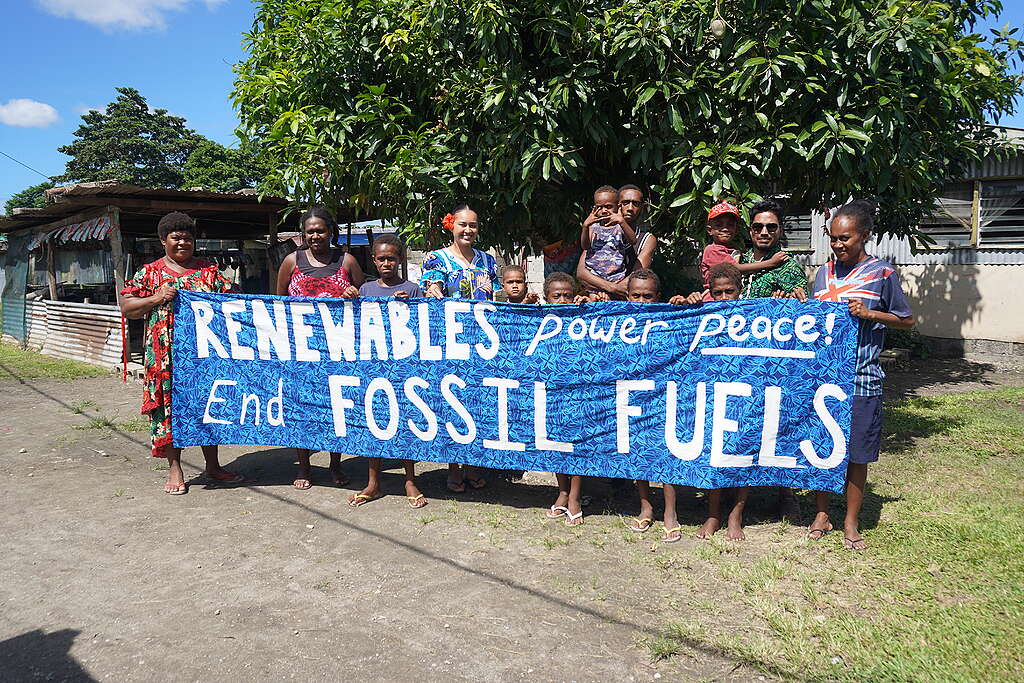
Alongside the formal process of UN climate negotiations, we must continue to grow and strengthen the coalition of committed nations already getting on with the work of building a vibrant future beyond fossil fuels. We must carry forward the momentum generated by the landmark conference on transitioning away from fossil fuels in Santa Marta, as we voyage towards the second conference in Tuvalu next year. We will build a fossil fuel free Pacific, shaped by Pacific values. We will continue to be a voice of science, ambition and conscience, and we will seek justice and accountability through the full implementation of the historic ruling from the International Court of Justice.
Recommendations
1.5°C as our guiding star
The transition away from fossil fuels must be anchored to the fundamental scientific, moral and legal imperative of limiting warming to 1.5°C. This means timelines, targets and trajectories that minimise the duration and extent of any overshoot, and return the long-term average temperature rise to 1.5°C as soon as possible.
Strengthening global cooperation
The COP31 Presidency of Negotiations, to be held by Australia, must be a meaningful partnership with the Pacific. This means elevating the voices of our leaders, backing Pacific-led solutions, and maximising the opportunity of the Pacific pre-COP to ensure the 1.5°C imperative and the transition away from fossil fuels are central to the agenda at COP31 in Antalya.
COP31 must operationalise and accelerate the commitment to transition away from fossil fuels, building on the momentum from COP30 and the Santa Marta conference.
Alongside and complementary to the UN climate negotiations, willing countries should work to accelerate implementation through parallel initiatives such as the Brazilian COP30 Presidency-led roadmap, the follow-up to the Santa Marta conference, bilateral and regional collaborations, and implementation of the advisory opinion from the International Court of Justice.
National roadmaps that promote justice
All governments should develop national roadmaps for a just transition away from fossil fuels, aligned with their fair share of the global action needed to limit warming to 1.5°C, and identify needs for international support.
National roadmaps should include an immediate commitment to no new fossil fuel expansion, rule out false solutions, set timelines to phase out production and consumption — with developed countries moving fastest — and maximising the opportunities for increasing energy sovereignty, access and security.
From extraction to regeneration
The transition away from fossil fuels must also aim to reduce future energy use and demand for transition minerals. This means focussing on energy efficiency, a return to regenerative approaches, and reorienting our energy, transport, food systems and built environments away from material excesses and over-consumption, aligning instead with the values, wellbeing and long-term interests of our communities.
The transition must not lead to new industries that harm our environment and communities, and that repeat and compound the injustices of past extractive models. In particular, governments should put a permanent ban on deep sea mining.
Funding
Developed countries must provide adequate and accessible finance for transitioning away from fossil fuels, adapting to the impacts of climate change, and addressing loss and damage. This should include an increase in grants and direct budget support, be accompanied by debt relief, and be enabled through taxing polluters and ending fossil fuel subsidies.
Authored by the Pacific team at Greenpeace Australia Pacific. Words by Simon Bradshaw, Shiva Gounden, Moemoana Schwenke. Edited by Kate O’Callaghan.
Photos curated by Olivia Louella.
REPORT: Where the Ocean leads us, A Pacific way to a fossil fuel free future