Climate Change
Recent COP hosts Brazil and Azerbaijan linked to “super-emitting” methane plumes
As countries come under growing pressure to tackle planet-heating methane emissions from the fossil fuel sector, oil and gas producers in COP host nations Brazil and Azerbaijan are struggling to prevent large leaks of methane, data shared with Climate Home News shows.
Satellite observations detected “super-emitting” methane plumes in the two countries this year that were visible from space and linked to state oil companies in both cases. Brazil presided over this year’s COP30 climate talks, while COP29 was in Azerbaijan.
Methane is a greenhouse gas that traps about 80 times more heat in the atmosphere than carbon dioxide but has a shorter life span. If global warming is to stay below 1.5C, the International Energy Agency (IEA) estimates that methane emissions from fossil fuels would need to fall by 75% by 2030.
At COP26 in 2021, a group of more than 100 countries announced their intention to cut methane emissions across all sectors by 30% from 2020 levels by the end of this decade. But a UN Environment Programme (UNEP) assessment shows they are instead set to rise 5% by 2030.
At COP30 this November, Brazil’s Environment Minister Marina Silva said that reducing methane emissions “gives us an opportunity to keep the planet’s average temperature [rise] within 1.5C, decreasing the frequency, intensity and impact of extreme weather events and protecting lives”.
And last year, Rovshan Najaf, president of Azerbaijan’s state oil company SOCAR, promised that the firm would achieve near-zero methane emissions in its oil and gas production by 2035.
-
“House of cards”: Verra used junk carbon credits to fix Shell’s offsetting scandal
The registry used nearly one million bogus carbon credits to compensate for failed Shell-linked China rice offsets, raising concerns over its rules -
Indonesia and Vietnam set for surge in coal use this decade despite transition deals
Rising demand in Southeast Asia and India is expected to prevent coal use from falling significantly this decade, the International Energy Agency predicts -
UN adopts first-ever resolution on AI and environment, but omits lifecycle
The UN Environment Assembly in Nairobi gavelled the resolution on artificial intelligence and environment, but removed mentions to AI’s water and power use



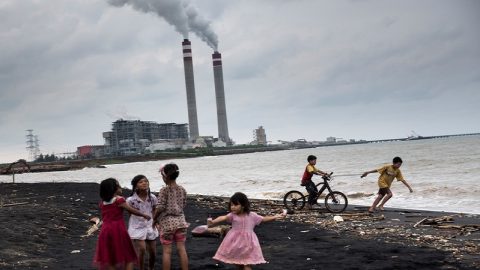


However, the latest data available from Azerbaijan’s SOCAR shows that the company’s methane emissions more than tripled from 2023 to 2024, when the country hosted COP29. SOCAR identified about 200,000 tonnes of methane emissions from its business activities in 2024.
Brazilian state-oil company Petrobras, meanwhile, did manage to reduce its methane emissions by more than half between 2015 and 2022, but they have since stayed stagnant, at about a million tonnes of CO2-equivalent emitted per year, the company’s annual sustainability data shows.
“Reducing methane has significant impacts on a country’s ability to meet its climate commitments,” said Tengi George-Ikoli, a methane expert with the National Resource Governance Institute (NRGI).
“Countries like Brazil and Azerbaijan, who have hosted COPs, should be seen to commit to those efforts more so than others,” she emphasised.
In 2025, UNEP’s International Methane Emissions Observatory (IMEO) alerted countries globally – including Brazil and Azerbaijan – to around 2,200 instances linking their oil and gas production to super-emitting events.
Both Brazil and Azerbaijan have focal points that receive these IMEO alerts. But a recent report shows that 90% of the notifications did not even receive a response, and neither Brazil nor Azerbaijan are listed in the 25 successful cases that managed to reduce emissions thanks to this system.
Big plumes in Azerbaijan’s southern oil & gas hub
In Azerbaijan, persistent large-scale methane emissions have been detected over its southern coast – a hub for its oil and gas industry – during the past two years, according to satellite data from online monitoring platform Carbon Mapper.
When satellites passed over the region in mid-2024, as Azerbaijan prepared to host the COP29 climate summit, they spotted a handful of massive methane plumes, each releasing between 2,000 and 4,000 kilogrammes of methane per hour, dozens of times above the threshold for a “super-emitting” event.
According to Carbon Mapper’s data, methane emissions from the same locations still persisted a year later at comparable or even higher levels.


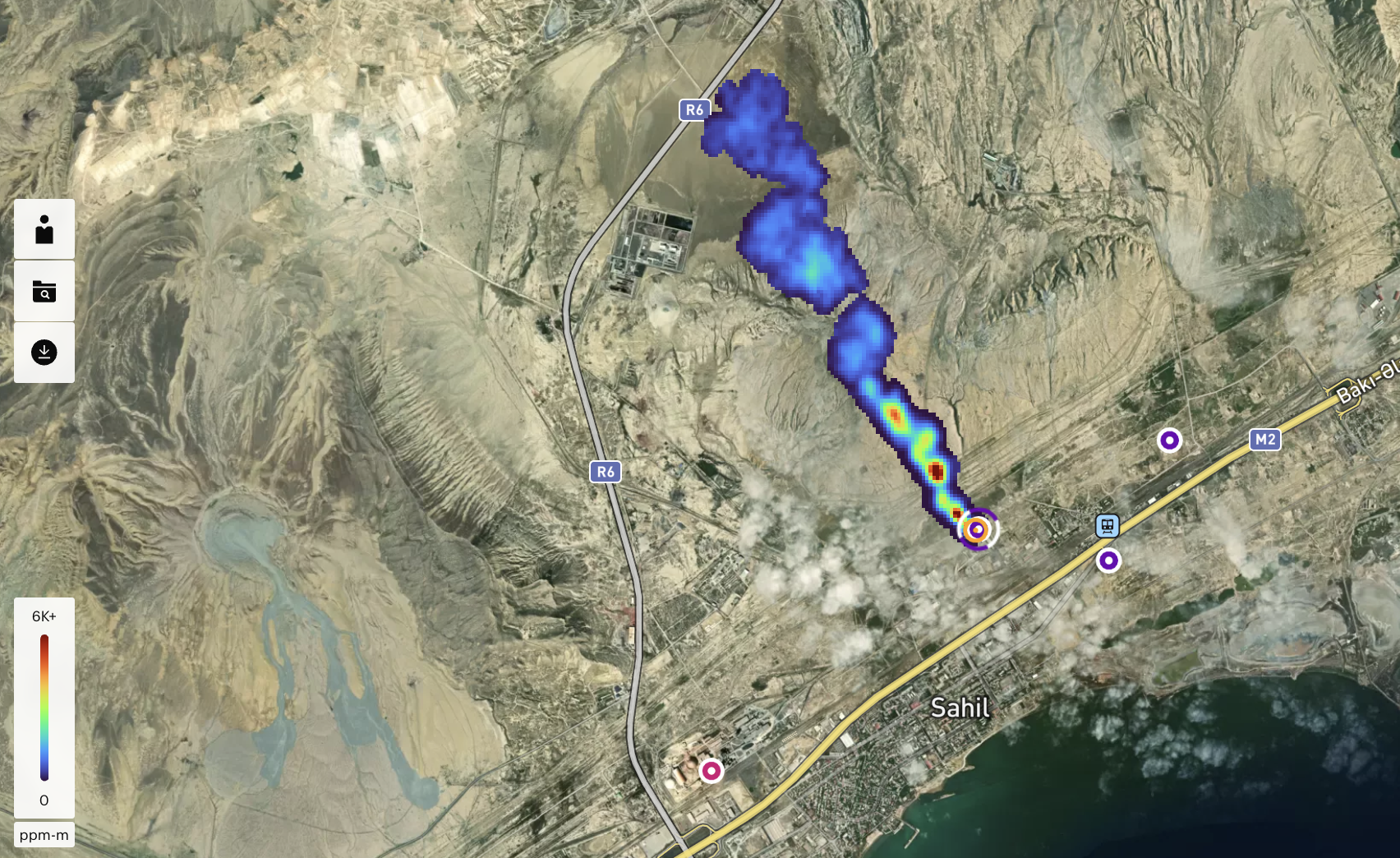
It is impossible to pinpoint precisely the source of those emissions without ground-level monitoring. But satellite data suggests that methane was released both from pipelines – which may be leaking – and compressor stations, which are facilities that help keep fossil gas flowing by boosting its pressure.
Throughout this year, large methane plumes have been observed by satellites emanating from a facility run by SOCAR in one of the world’s oldest oil fields, located just a few miles from Baku’s swanky waterfront boulevard.
In its 2025 sustainability report, SOCAR said it had expanded its methane emissions monitoring by using “leak detection AI tools”, drones and satellite technologies that “enabled more targeted, data-driven responses and supported the development of effective mitigation measures across operational sites”.
State oil firm in COP30 host nation linked to leaks
In Brazil, state-oil company Petrobras has been linked to three methane “super-emitting events” detected by satellites this year, which raises questions about emissions from its offshore oil and gas production facilities.
Three large methane plumes were detected in the Santos basin off the coast of Rio de Janeiro – which holds several of Brazil’s largest oil and gas fields – by Carbon Mapper on April 23.
Further analysis by environmental nonprofit SkyTruth, which specialises in satellite observations, revealed the plumes came from vessels in the Tupi field, which is majority-owned by Petrobras. Two of the vessels are operated by Dutch company SBM and the other by Petrobras.
The plumes in the Santos basin were large enough to be considered “super-emitting” methane events, on a scale similar to leaks in the same category detected in other parts of the world.
The US Environmental Protection Agency defines these as events with a rate of emissions of 100 kg of methane per hour. Two of the plumes detected in Brazil were above 300 and one was above 700 kg of methane per hour.
The events in Brazil are “particularly stunning” and could point to a more persistent issue, SkyTruth’s CEO John Amos told Climate Home, because the three plumes were detected during just one observation by a satellite orbiting the area.
“For one attempt to produce three positive plumes suggests that this could be a systematic problem offshore,” he said.
Petrobras says mitigation measures in place
Asked about these cases, Petrobras told Climate Home in a statement that the company is committed to reducing methane emissions as part of its decarbonisation strategy. It added that, because the plumes were detected by a single satellite observation, “the ability to draw broader conclusions about the consistency and magnitude of emissions over time is limited”.
The company also highlighted that its assets in the Santos basin perform “within the industry’s first quartile” for emissions per barrel of oil and noted that “initiatives such as recovering flare gas and performing leak detection and repair campaigns have helped to mitigate methane emissions”.
Petrobras also said that “during the period in question, operational conditions were under normal circumstances”.
Amos argued that if the sector considers such super-emitter plumes of methane – observable from space – “to be a consequence of ‘normal operating conditions’, then the offshore methane problem may be far worse than we anticipated”.
Just days before COP30, Petrobras executives co-chaired an offshore oil and gas conference in Rio de Janeiro. The discussions, the organisers wrote in a welcome letter, would focus on “traditional oil and gas technologies while highlighting the innovations essential for a more sustainable future” and would be “strategically positioned amid the ongoing energy transition”.
-
Mottley’s “legally binding” methane pact faces barriers, but smaller steps possible
A group of countries acting nationally on methane is more likely than a global Montreal Protocol-style deal as proposed by Barbados’ leader – at least to start -
Oil giant Pemex fails to control methane emissions, threatening Mexico’s net zero goal
A Climate Home investigation shows Mexico’s state oil firm has struggled to cut its methane emissions as promised, risking the country’s net zero ambitions


Barbados PM proposes binding methane pact
As global greenhouse gas emissions have continued to rise, with the United Nations admitting in November that an overshoot of the 1.5C warming limit is now inevitable, action on methane garnered growing attention at COP30.
New initiatives were launched at the climate summit in Belém to tackle methane emissions from the production of fossil fuels, which accounts for about a third of global emissions from this “super pollutant”, with other key sources being agriculture and waste management.
The UK launched a declaration to “drastically reduce” methane from the fossil fuel sector, which was endorsed by 11 countries including major oil and gas producers Canada, Norway and Kazakhstan. The actions it supports include more transparent monitoring, eliminating routine flaring and venting, and tracking progress towards near-zero methane emissions per unit of production.
The UK and Brazil also launched a three-year $25-million funding package to help developing countries tackle methane, among other “super pollutant” gases, which will benefit a first cohort of mostly fossil fuel-producing countries – among them Brazil, Kazakhstan, Mexico and Nigeria.
At last year’s COP29, the European Union championed an initiative that encouraged fossil fuel-producing countries to create roadmaps towards abating methane emissions from coal, oil and gas, including timelines, investment needs and the amount of emissions to be abated.

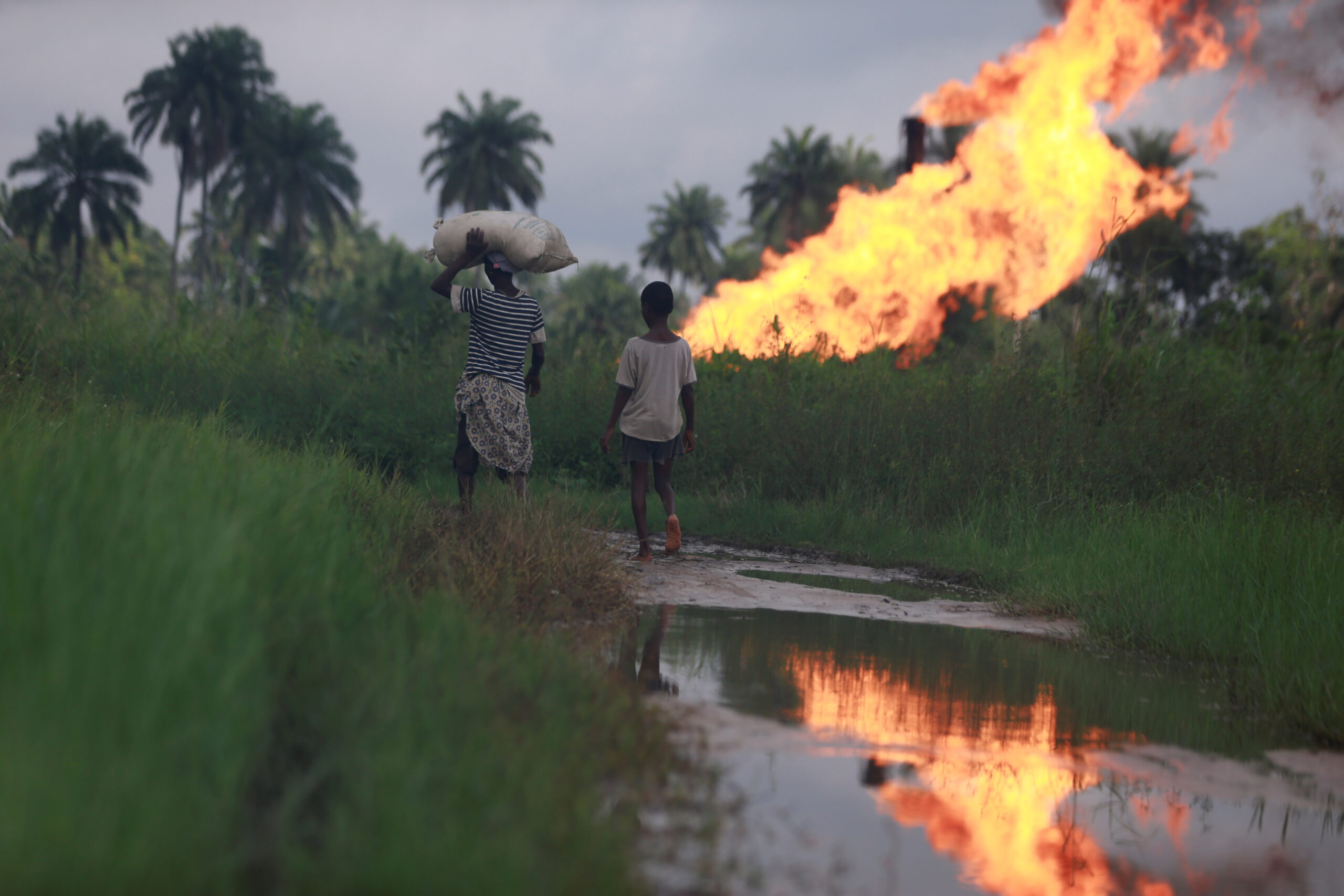
But, as a growing clutch of voluntary initiatives has failed to produce results at the scale and speed needed to rein in global warming in the short term, pressure is rising for a more accountable and comprehensive approach to the problem.
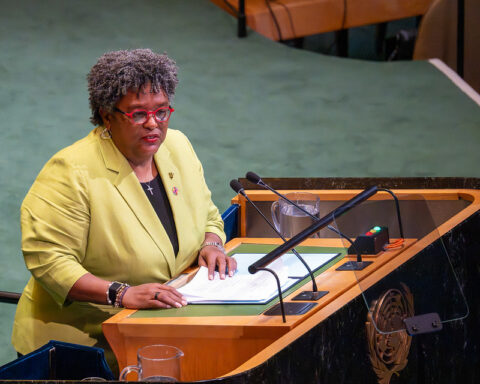
At COP30, Barbados’ Prime Minister Mia Mottley renewed her call for a legally binding methane pact to “pull the methane emergency brake” and “buy us some time”, starting with actions in the oil and gas industry.
NRGI’s George-Ikoli said the oil and gas sector could lead on cutting methane emissions because measures like zero flaring and venting, and eliminating leaks could bring in revenues for companies by enabling them to use or sell currently wasted gas.
Mottley wrote in an op-ed for The Guardian this month that the next step would be to convene heads of state from willing nations to develop “a roadmap in 2026 for binding measures for the oil and gas industry”. Negotiations could start by 2027, with a deal adopted “as soon as possible thereafter”, she proposed.
The post Recent COP hosts Brazil and Azerbaijan linked to “super-emitting” methane plumes appeared first on Climate Home News.
Recent COP hosts Brazil and Azerbaijan linked to “super-emitting” methane plumes