Climate Change
Planned offshore oil and gas expansion threatens key marine ecosystems, report
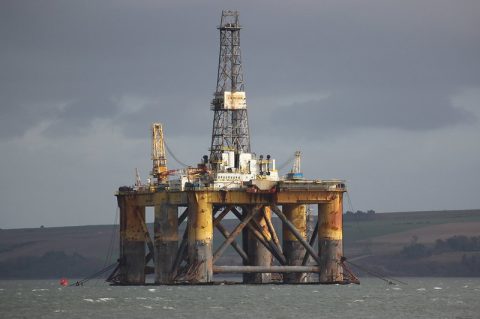
Ocean and coastal creatures are being put at risk by the spills, noise, dredging and shipping associated with new offshore oil and gas infrastructure, says a new report by a group of environmental NGOs.
The report by a group of twelve environmental groups analysed planned new offshore oil and gas blocks covering 430,000 square kilometres – an area the size of Sweden – in 11 countries.
Blocks in countries such as Kenya, Indonesia and Australia overlap with some of the planet’s hotspots for marine biodiversity, home to mangroves, coral reefs, sea turtles, sharks and whales.
Oil and gas expansion is advancing in spite of the legal protections already in place, the report says, with a third of the area being licensed overlapping with marine and coastal protected areas.
-
China’s carbon emissions rise again as more clean power is wasted
The economic powerhouse burned more coal and gas in the first quarter of 2026, despite record wind and solar build-out -
Investor climate group closes down, blaming “limits” of shareholder activism
Canadian campaign group Investors for Paris Compliance shut in May, saying efforts to push companies to tackle climate change have become less effective -
Santa Marta process can confront trade protection for fossil fuels, experts say
Academics at the first fossil fuel phase-out summit urged governments to recognise investor protection treaties as a barrier to the energy transition



“It is alarming to see the research findings and the sheer scale of fossil fuel expansion trajectories threatening the health and future of our shared ocean,” said Tyson Miller, Executive Director of Earth Insight, one of the environmental NGOs involved in the report.
At the first conference on Transitioning Away from Fossil Fuels in Santa Marta, around 60 countries floated the idea of creating “fossil-fuel-free zones”, which would seek to place limits on coal, oil and gas in areas where development would lead to severe social and environmental harm.
As part of the landmark Kunming-Montreal biodiversity deal, governments have also pledged to protect 30% of the planet’s land and marine ecosystems by 2030. This could be used as an opportunity to limit oil and gas expansion in sensitive areas, Miller said.
The report says the findings “reinforce the need for governments, financial institutions and companies to stop funding and supporting offshore oil and gas expansion”, and calls for the creation of fossil-fuel-free zones in “high-value marine and coastal areas”.
Oil bidding in biodiversity hotspots
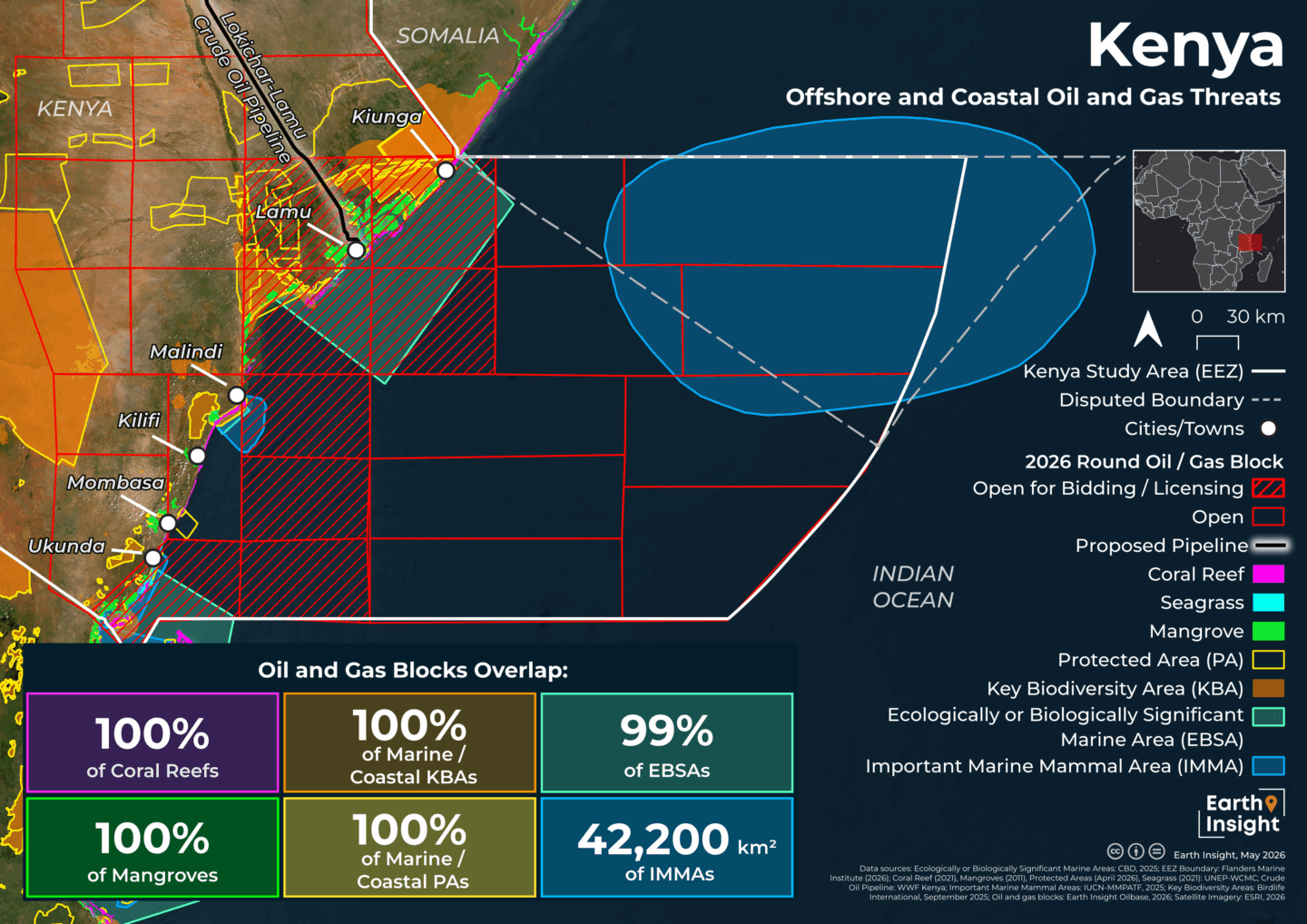
As one of the case studies, Kenya — which is set to host the Our Ocean Conference in Mombasa later this month — has opened 50 offshore oil and gas blocks for bidding in the Lamu Basin, one of East Africa’s marine biodiversity hotspots.
These blocks overlap with all the region’s mangroves and coral reefs, the report says, which provide nursery habitats for fish, sea turtles and the vulnerable dugong.
These ecosystems are already under severe stress from climate change-related ocean heating and increased water acidity and could now face seismic surveys, offshore drilling, dredging, increased shipping traffic, oil spills, chemical discharge and underwater noise pollution.
The government estimates that oil production will start by 2026, aligning with “global best practices”, and has said the Lamu basin has vast “untapped potential”. The country is expected to open bidding for the first 10 blocks by September.

Muturi wa Kamau, network coordinator for the Kenya Oil and Gas Working Group, said in a statement that the country “is preparing to open ecologically sensitive areas for fossil fuel exploration” while positioning itself as a leader in ocean diplomacy.
“The question is: at what cost are we willing to risk these fragile ecosystems and the livelihoods of coastal communities who have depended on them for generations?” Kamau said.
Australia’s Otway Basin
After a four-year pause, Australia — which will act as co-presidency of the COP31 climate summit — resumed offshore exploration in the Otway basin last year, with American energy firm ConocoPhillips among the operators approved for exploratory drilling off the country’s southern coast.
The sites under exploration are as close as one kilometre from a series of marine reserves known as sanctuaries for pygmy blue whales, who travel thousands of kilometres to reproduce in those waters. Orange roughy, a deep-sea fish that can live for over 140 years, may also be harmed.
In total, the report analysed new LNG export projects in Argentina, Alaska, Mexico and Tanzania, as well as expanded offshore oil and gas licensing in Australia, Cameroon, Indonesia, Jamaica, Kenya, Norway, and Trinidad and Tobago.
The post Planned offshore oil and gas expansion threatens key marine ecosystems, report appeared first on Climate Home News.
Planned offshore oil and gas expansion threatens key marine ecosystems, report