Renewable Energy
OWGP Drives UK Offshore Wind Manufacturing Growth

Weather Guard Lightning Tech
OWGP Drives UK Offshore Wind Manufacturing Growth

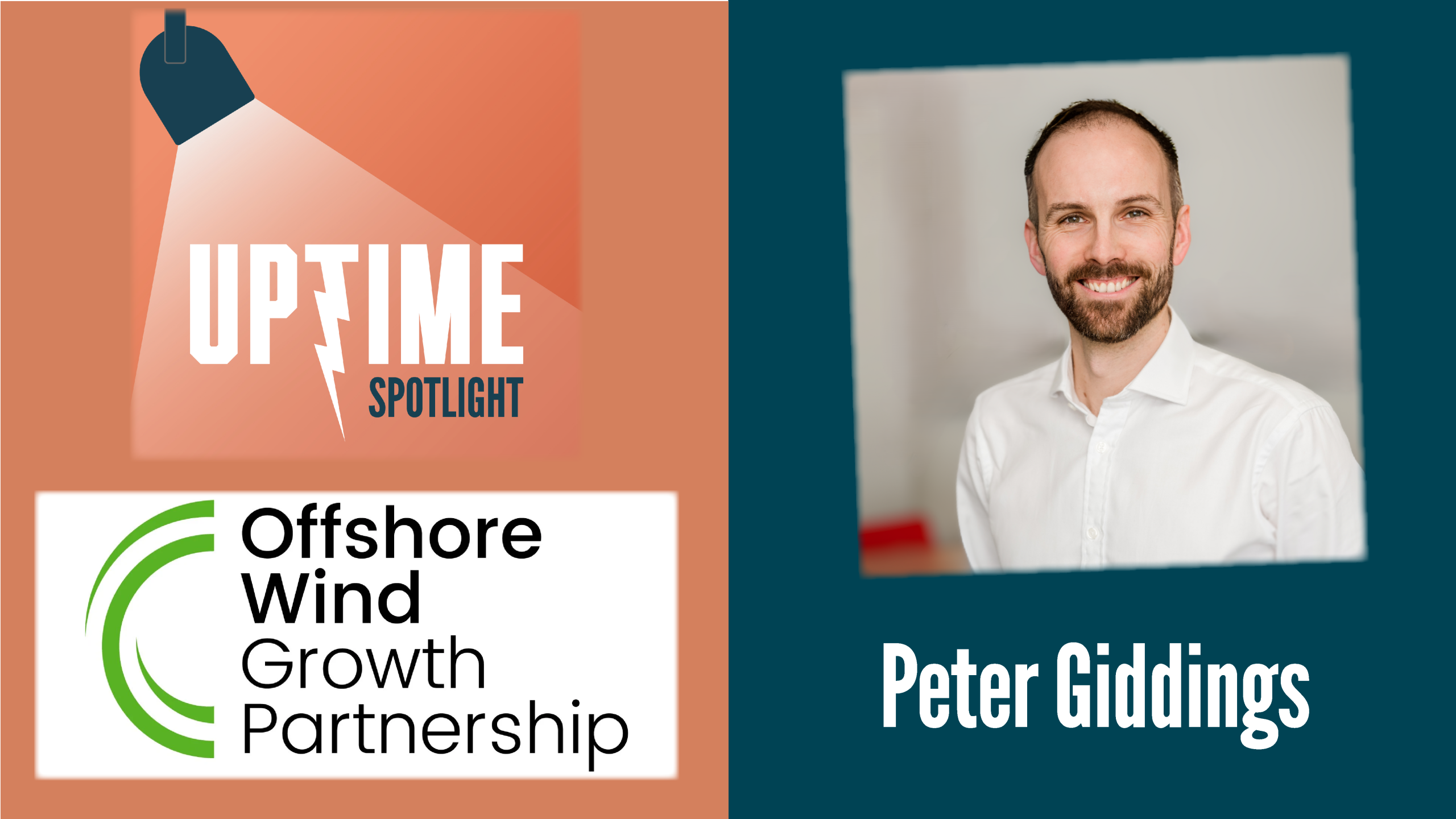
Peter Giddings of the Offshore Wind Growth Partnership joins to discuss the UK’s industrial growth plan for offshore wind, the five priority supply chain areas being targeted, and how OWGP helps businesses scale from small suppliers into globally competitive manufacturers.
Sign up now for Uptime Tech News, our weekly newsletter on all things wind technology. This episode is sponsored by Weather Guard Lightning Tech. Learn more about Weather Guard’s StrikeTape Wind Turbine LPS retrofit. Follow the show on YouTube, Linkedin and visit Weather Guard on the web. And subscribe to Rosemary’s “Engineering with Rosie” YouTube channel here. Have a question we can answer on the show? Email us!
Welcome to Uptime Spotlight, shining Light on Wind. Energy’s brightest innovators. This is the Progress Powering Tomorrow.
Allen Hall: Peter, welcome to the program.
Peter Giddings: Thanks for having me out.
Allen Hall: The UK right now is just a global leader in offshore wind, which I think a, a lot of us in the United States don’t even realize that, but the UK is a. Giant leader in offshore wind. Uh, but we keep hearing about the supply chain constraints that are threatening some of the timelines here.
What are some of the fundamental problems that the UK offshore wind supply chain has today?
Peter Giddings: We are in a great situation for supply chain, but the 2000 companies, some of them with 25 years experience. At the scale where we can deliver the four gigawatts a year for the next five years that we need to hit our 2030 deployment targets and to keep that deployment rolling.
So we are [00:01:00] brilliant at the UK of planning, developing and deploying wind farms. We have a really strong maintenance base. We do some great supply chain work, and IWGP Offshore Wind Growth Partnership has helped those businesses grow, but we don’t have as much capacity as we would like. For the major items.
So we have a great set of facilities making blades. We have good facilities, uh, great facilities in JDR making cables, but we don’t capture as much of the manufacturing value of our deployment as we would like. That means we create fewer jobs, we create less economic benefit, and those developers are exposed to more supply chain risk.
Specifically, we want to build globally competitive supply chain capacity. We, we we’re, we’re not a charity. We are building businesses that can win contracts. They are attractive to the procurement teams and they’re sustainable, they grow, right? Competitive capacity is what we’re after. Um, and that’s, that’s really what [00:02:00] we’re after.
Allen Hall: And if the UK doesn’t really address these problems now, what does that look like for the supply chain? Because you’re talking about moving from roughly 16. Gigawatts in the water to approximately 50 gigawatts, 45, 50 gigawatts by 2030 and beyond. So that’s, you know, it’s roughly a tripling of the amount of capacity in the water supply chain becomes then really critical to that and in order to feed that.
But what happens here, if the supply chain has not grown locally,
Peter Giddings: it’s a missed opportunity. I mean, the businesses that are here today would be an incremental growth. And that’s not bad. That’s an okay outcome. But if your deployment is a huge opportunity and you get an okay outcome, that’s not acceptable.
That’s not a way to run an industry, right? We have this massive opportunity in front of us. There’s a huge amount that we could do that the UK is great at that the opportunity is to stretch [00:03:00] and help communities all around the coast have. Hundreds, thousands of jobs that are there. They’re stable, they’re good quality, and they are prosperous.
It’s a real community initiative. Those towns, which are probably seeing a decline in oil and gas revenue or are strapped to tourism or kind of don’t have an industry, those towns, those people as humans are gonna have a much better future. There’s a, actually a really nice exemplar, um, it’s not. The biggest component, but Cable protection Systems is something that the UK is already globally renowned for.
If you open up a tender pack, if you’re allowed to in other markets kind of anywhere, and you look to the CPS package, you would more than likely see a couple of, if not all four of CRP techmark, sub C and Balmoral, right? They, they serve the UK market real well, but they are globally renowned. [00:04:00]That’s, that’s one example.
We are looking to do that for the priority sections of the industrial growth plan. You know, we’re going to pick and are picking the areas of the supply chain where we think the UK can be genuinely competitive and we have something to offer. A developer is not gonna choose a substandard product that’s a bit more expensive, but we can build up supply chains that offer fantastic products.
Cable protection systems, and we can capture big market share there. Develop a product that can be exported, or if it’s a bit too far to ship, develop a business which can open up a new base. You know, so we, we get that, um, combination of local demand being served. And when I say local, I mean like the North Sea in Baltic and that global opportunity.
So it’s, but it’s not gonna be everything. You know, people might. I might get a little bit heat for this, but [00:05:00] if you spread the jam too thin, it doesn’t taste very good. You haven’t committed to win a few things rather than come second and third everywhere. We have to choose what we win at.
Allen Hall: Let’s get into the industrial growth plan, ’cause I wanna understand that a little bit better and how OWGP.
Fits in that as the delivery body. Right? So you have this industrial growth plan, OWGP is, is sort of administering it and, and taking action on it. How does this system work and, and why is it different than other attempts at supply chain development?
Peter Giddings: Uh, a couple of years ago, 2023, um, most of the major institutional stakeholders came together and said, oh, that we see this big opportunity coming.
We want to make sure that the UK benefits from having all that deployment. So if you’ve got a bunch of demand and you [00:06:00] don’t have much supply, you don’t have as much supply as you want, that’s an obvious gap to fill. And the Crown of State, the Crown of State Scotland, the departments from government, the Offshore Wind Industry Council, a consortium of developers in the uk, uh, came together.
Um. And funded a piece of work that allowed, um, a team to bring in lots of industry input. Look at what the big opportunities were in the market. So where is there substantial value? Where is there substantial demand? And match that up to where does the UK have capability and where could we grow a competitive advantage?
So. What prizes are worth winning? What prizes can we win? And we’ve matched those up and there’s kind of five priority areas that we’ve selected. Um, it’s kind of the first things we’re gonna go after. Um, [00:07:00] they’re, they’re quite broad, those five. It’s advanced turbine technologies, deep water foundations, cable and electrical systems, uh, smart environmental services, and, uh, smart operations and maintenance.
If you kind of open those boxes up, there are some very specific supply chains that are prioritized. So I’ll take the one that, uh, is the first one that we’re looking at. Advanced turbine technology. Uh, we talked just before we started recording, um, that the UK has real strength in blades. Blades is a big opportunity.
We have a really well established composite industry. We have a great facility up in Hull. We have an r and d base and an onshore, um, factory on the isle of White with Vestas. And I think the thing we don’t really say is we have chief engineer for blades of Vestas in the UK structures lead. The r and d team is 140 strong down on the island [00:08:00] and we have a really productive facility in Hull.
Um. That is putting product out, has been making, um, recyclable blades, is making the one 15. We have depth, so it’s a good opportunity. We have strength, we have a massive innovation ecosystem, so that’s a really obvious win. And we’ve been through the rest of the supply chain taking cables, good capacity, excellent experience from oil and gas, and so that’s a priority area.
Okay. Going through those supply chains, finding big opportunities that the UK has, the ability to win contracts in, and then mapping out what do you need to do to make that capacity happen? How much capacity, at what cost, with what performance? And that’s, that’s kind of the OWGP role is owning that plan, bringing input from industry, [00:09:00] bringing input from experts.
Turning the ambition of we want to have the ability to supply 50% of UK demand and export into a tangible plan of, cool, these businesses need this investment by this time to stand up a facility so they’re ready. It’s not just a blade factory. Right. That’s, um, that’s important. It’s the 20 businesses that sell product, that sell services into that.
We talk about pyramids, right? You’ve got one facility at the top and a big wide base with lots of people who are employed in that big wide base. And I think, you know, it’s natural. Everybody looks to the top of the mountain. We’re looking to build the whole thing, and that’s a really powerful reason for industries to stay for the long term.
So I think tracking back to your [00:10:00] question. What’s our role? We own that plan. We bring together the expertise and convert it into a set of measurable steps really. And that kind of second part is coordinate. Everybody needs to be playing the same game, aiming at the same targets. And that’s a really important part.
Allen Hall: Well, I think for a lot of people outside the UK, it’s hard to envision the amount of industry that exists. In the UK you’re about 70 million people, so you’re roughly maybe a quarter of the population size of the United States roughly. But you’re, you, you have internal industries there and other areas that have that supply chain growth.
So you’ve watched it in aerospace, which is one I’m familiar with, but in other industries, you, automobiles and a number of other areas, uh, you have that supply chain. So you know how to, the UK knows how to do that, but, but that hasn’t really necessarily happened in offshore wind, which I think is where the [00:11:00] opportunity is because I think watching.
Being around this industry for as long as I have. One of the key elements is that, uh, the, the smaller businesses are sort of tier twos or tier threes that make the tier ones possible are kind of forgotten about. But the UK historically has looked at tier two and tier three as being the fundamentals to a successful product delivery and, and a, a global marketplace.
Is, is that where the initial focus is? Because just listening to. And going to your website, uh, which I encourage everybody to do, you see where there’s smart decisions being made to create that base and what does that look like? And when you’re trying to attack that base on offshore wind, obviously cables and turbine technology, anything to do basically with being in the water, which the UK is great at.
Do you see that being a relatively quick exercise because the UK has done it before in other industries? Or [00:12:00] is this problem just a little bit different because of the scale of it?
Peter Giddings: It’s really similar to, uh, the way supply chain’s been supported in aerospace, for example. Um, the Airbus has a deep supply chain in the UK and has a very strong voice into government.
Their supply chain is supported. They’ve built that base. Um, and so from the outcome, that’s gonna be pretty similar? I think so. We, we have a template. I’ve worked in aerospace, many colleagues, um, that we’re, we’re calling on have, um, I guess the difference is, uh, maturity of industry. So the developers are very mature businesses.
They’re global. They have been big for time. They know how to do supply chain development from oil and gas, where you build enormous unicorns. Exactly. Once, [00:13:00] then move on. You know, an oil and gas project is, is a one time deal. It’s tremendous, but you don’t have to make a hundred of them and it’s slightly different.
So you end up with a, a single point, and if you are. Experience and your, um, relationship with government sits with developers that can create some really, um, it, it takes time to build up your supply chain so that they have the same experience of running, um, large development programs. They have the stability as businesses to kind of build through.
It’s really important to remember that turbine OEMs and the tier ones haven’t had 30 years of stable business modeling wind. Because 30 years ago, wind wasn’t really a big industry, right? They have had plenty of success scaling their business, and we’re just entering the phase now where you can, um, pretty credibly say that wind is [00:14:00] a global business with a long-term future.
And it needs to find the right way for those OEMs, those big tier one manufacturing businesses to support their business in the long term. That is, I would say quite new. Um, hopefully I don’t get pilled for saying that, but Airbus, spin Airbus for 2, 3, 4 generations. Right. So they know their game. Same with roles, same with, you know, Nissan and Toyota.
It’s, it’s gonna take a little minute for the manufacturing part of the wind industry to settle and learn what works. We think OWGP and our partners, GB Energy, crown State, we think. We have a good starter for 10. You know, it’s modeled off what we’ve done in other industries. It provides stability, provides capital and a plan.
I think that’s a really good mix. Um, [00:15:00] and I think it’ll just take a bit of time to mature those relationships and get everybody comfortable. Um, the developers have been really supportive. The OWGP money comes from. A developer contribution. So they are playing their part. Absolutely they are. We need to find the right way for manufacturing businesses to scale and then start pumping in innovations into that capacity so it stays competitive.
You know, it’s a build capacity that’s competitive today. Feed it with innovation so it stays competitive and gets better and better and better.
Allen Hall: How far off the technology chain do you want them to be before you consider them to be part of the supply chain
Peter Giddings: today? Uh, 21st of January, 2026. There is good money for people that are within about a year of getting their technology to market.
So that’s the, the approximate. Um, you’ll notice I dodge TRLI don’t think it’s super helpful. Um, time to market is, uh, is, is [00:16:00] really a good indicator. Yeah. Alan’s, give me the thumbs up of someone that’s done a TRL assessment or two. Um, we, we are looking for businesses that are commercially. Viable. They have relationships with customers.
Um, they’re trading the earliest currently, and it’s currently, um, is like a year, maybe two years to market at the outside and up, um, we’re working with. And so that’s not just OWGP, that’s across the funding streams that are available. Um, and there are many we are working with and hopeful in the next week or two to have, um.
A positive result from the UK government on earlier stage innovation funding so that we can align the early stage innovation at the problems that really count for making businesses competitive. You know, to be super clear, that’s not gonna be OWGP Cash. Our hope is that it’s OWGP derived questions [00:17:00] delivered by the innovation institute’s offshore renewable energy catapult, the high value manufacturing catapults.
Academia, innovative businesses. Those guys do the innovation and we work together with them and with industry to really find the questions that count and we can focus our attention on commercializing that and scaling up the things that are commercial.
Allen Hall: Peter, walk us through how a UK supply chain company actually engages with OWGP.
Uh, what does that. Uh, look like. And what are the, sort of the different options to, to engage with OWGP?
Peter Giddings: So I, I think the first thing to say is you, you don’t have to be UK today. We would love to attract businesses from overseas. Um, you can start a UK entity quite quickly. The first people, first place people tend to engage is in our, um, business, uh, support services.
So we help, uh, businesses orientate themselves commercially. Understand how the contracting works, understand who [00:18:00] their, their pot potential customers are. Um, and that’s, yeah, it’s on our website. It’s Business Transformation Services, the West Program, wind Expert Services. There’s a t in there, there’s something else.
Um, but that’s really the entry point for businesses that need to orientate themselves in the UK market. And we, and that. Intensity and the, the depth of the commercial support kind of ramps up through base and up to sig sharing in growth. Um, and you’ll also see us in the next year or two, um, take a, a more proactive approach to supporting businesses commercially.
Um, I’m actually down with a, a fantastic business in the blade supply chain, um, composite integration in Saltash, helping them build a strategic, um, business plan. So a little more than just going, oh, this is where you get your contract. Actually helping them model what a future bigger business would look like and what they will need to do to, to reach it.
You know, commercial support is growing for us. I think it could be really important, right? It’s [00:19:00] new for us, so, you know, we’ll learn. But the first point of call, go to the website, get in touch with the team, um, and often people choose that commercial support, the business transformation. We also run grant funding.
Um, we have innovation calls. Um, we have a whole range of different calls going from innovation up to development into Dev X. So manufacturing, um, facility support program, they’re all grant. You can choose to pay them back. You do need to be UK entity, but you need to be quite close to market that one to two year zone with commercial traction.
Um, and again, information is available. There is a team of people. Who are really great at taking those triaging, figuring out what’s right for you, what’s not, and if it’s not something from us, we do and we are delighted to pass you on to other people. You know, if you talk to us, we will make sure you find a home.[00:20:00]
I think that’s really important to say.
Allen Hall: I think that’s very critical and one of the more difficult. Periods for, uh, it’s a smaller company to become bigger and be part of this massive supply chain, is that sort of 1 million pound, the 5 million pound kind of business, which has a technology which has proven itself and is delivering something or very close to delivering something.
That transition is incredibly hard and getting some help there and some advice even would make the transition so much shorter and more efficient than what it typically is. That’s what OWGP does. So it’s not just the money. Obviously money helps everything generally. It’s the context, it’s the advice, it’s the knowledge that, uh, OWGP brings to the table that helps you grow your technology, your small business, into that mid-tier business and takes that mid-tier business into that gigantic world leader business.
Those are the things that are, [00:21:00] are so hard to quantify, to put some, uh, some people in place. Boy, OWGP can really ramp up and has, the UK in general has done this many, many times. So I, I, I just encourage everybody who’s listening to this podcast to think about OWGP as a contact point and reach out. And Peter, how can they do that?
What are the first steps to contact OWGP?
Peter Giddings: It’s always best to come in through our website. So my contact details will be in the, um, in the show notes, but you, you can look at the different programs there are contact US buttons all over it. Um, it also gives you sight of the industrial growth plan, um, and the priority areas.
We are trying where we can to focus our efforts on those priority areas, and we would absolutely be delighted to hear from businesses active in the IGB priorities. Um, if you are, if you are not in one of those, you’re not excluded, come talk to us and we, we are supporting ambitious [00:22:00] businesses. We’re just focusing most of our efforts on the ones that are aligned to priority.
We’re, we’re on your team. We would like to hear from you. Um, yeah, do, do start with the website. Hit one of the contact buttons you’ll come into to one of the team and we will connect you in. Um, I think that’s probably the, the best way
Allen Hall: and the website is ow gp.org.uk. Very easy to get to. You can just Google it and it’ll come right up.
There’s a ton of information on that website. Peter, thank you so much for being on the podcast. I really appreciate this. Learned a lot and very excited for what the UK is about to do.
Peter Giddings: I’m looking forward to talking to you again.