Climate Change
Ocean summit stays silent on new wave of offshore oil and gas expansion

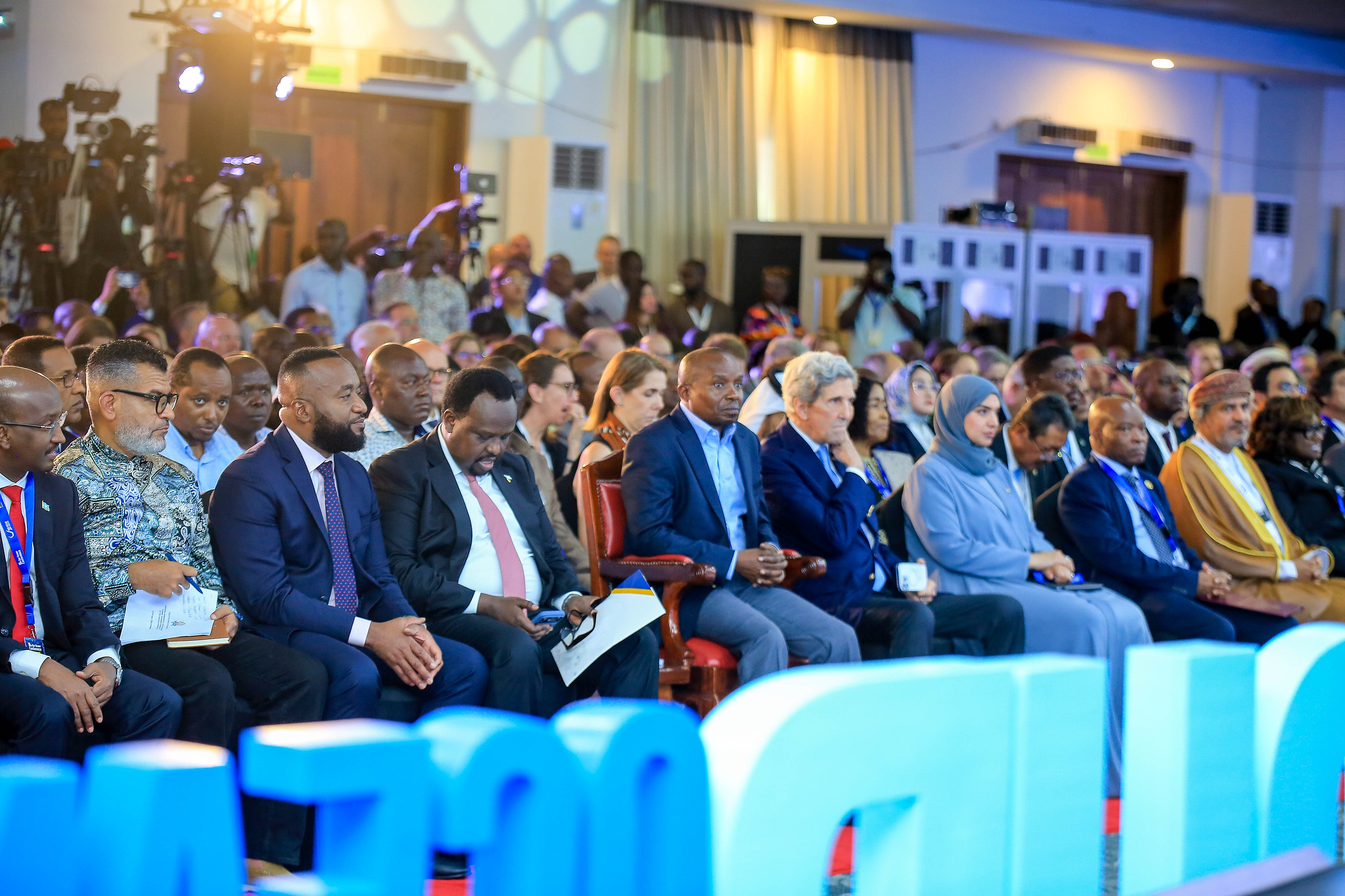
As governments gathered at the Our Ocean Conference in Kenya’s coastal city of Mombasa this month, pledging over $6 billion for marine protection, sustainable fisheries and offshore wind, one issue remained largely absent from the main stage: the continued expansion of offshore oil and gas.
From Norway, Brazil and Guyana to South Africa, Angola and Kenya, countries are pushing ahead with offshore oil and gas projects even as they promise to protect marine ecosystems and tackle the climate change that is heating the ocean, raising sea levels and damaging coastal livelihoods.
Governments argue that offshore oil and gas production is needed for energy security, public revenues and economic growth, but environmental groups say new drilling risks locking countries into decades of fossil fuel production just as they are promising to build a sustainable blue economy.
Inia Seruiratu, Fijian parliamentarian and the Pacific COP31 Envoy for the Ocean, said the contradiction is becoming harder to ignore.
“For too long, two conversations – climate mitigation and ocean protection – have run on separate tracks, in separate rooms, with separate experts,” Seruiratu told delegates at a side event during the Mombasa conference held on the shores on the Indian Ocean.
-
West African nations target Eastern Atlantic for early high seas protection
At the 11th Our Ocean Conference, African governments launched a bid to have the zone classified as one of the first high-seas protected areas -
Offshore oil and gas expansion threatens key marine ecosystems, report warns
Sea life in countries like Kenya is under threat from planned new oil and gas production, analysis by environmental groups has found


“We talk about emissions reductions in one hall, and coral bleaching in the other, as if they were unrelated phenomena rather than cause and effect. As we commit to new marine protected areas, new ocean financing and fisheries action, we cannot continue to treat the symptoms while funding the disease,” he added.
In Mombasa, only one side event out of the dozens of panels was dedicated to the threats posed by the expansion of offshore oil and gas. That event was organised by civil society rather than governments.

New wave of offshore projects
One-third of the world’s global production of oil and gas comes from offshore projects. They harm oceans in part through the greenhouse gas emissions generated by the fuels they produce, with climate change already driving record sea temperatures, coral bleaching and sea-level rise.
Offshore exploration and production also affect marine life through seismic surveys, underwater noise, vessel traffic and the risk of oil spills, threatening sensitive habitats such as coral reefs, mangroves and seagrass meadows that support fisheries, biodiversity and coastal protection.
Now, as onshore reserves mature, a new wave of offshore oil and gas development is advancing across the world.
Offshore oil and gas expansion threatens key marine ecosystems, report warns
A May report by Earth Insight found that 85% of all hydrocarbon discoveries made in 2024 were offshore, with new projects advancing from Norway and Brazil to Guyana, Namibia and East Africa.
In Africa, countries such as Namibia, Tanzania and Kenya say exploiting fossil fuel resources could help finance development, support economic growth and lift millions out of poverty, particularly at a time when many face high debt levels and limited access to climate finance.
Kenya’s conundrum
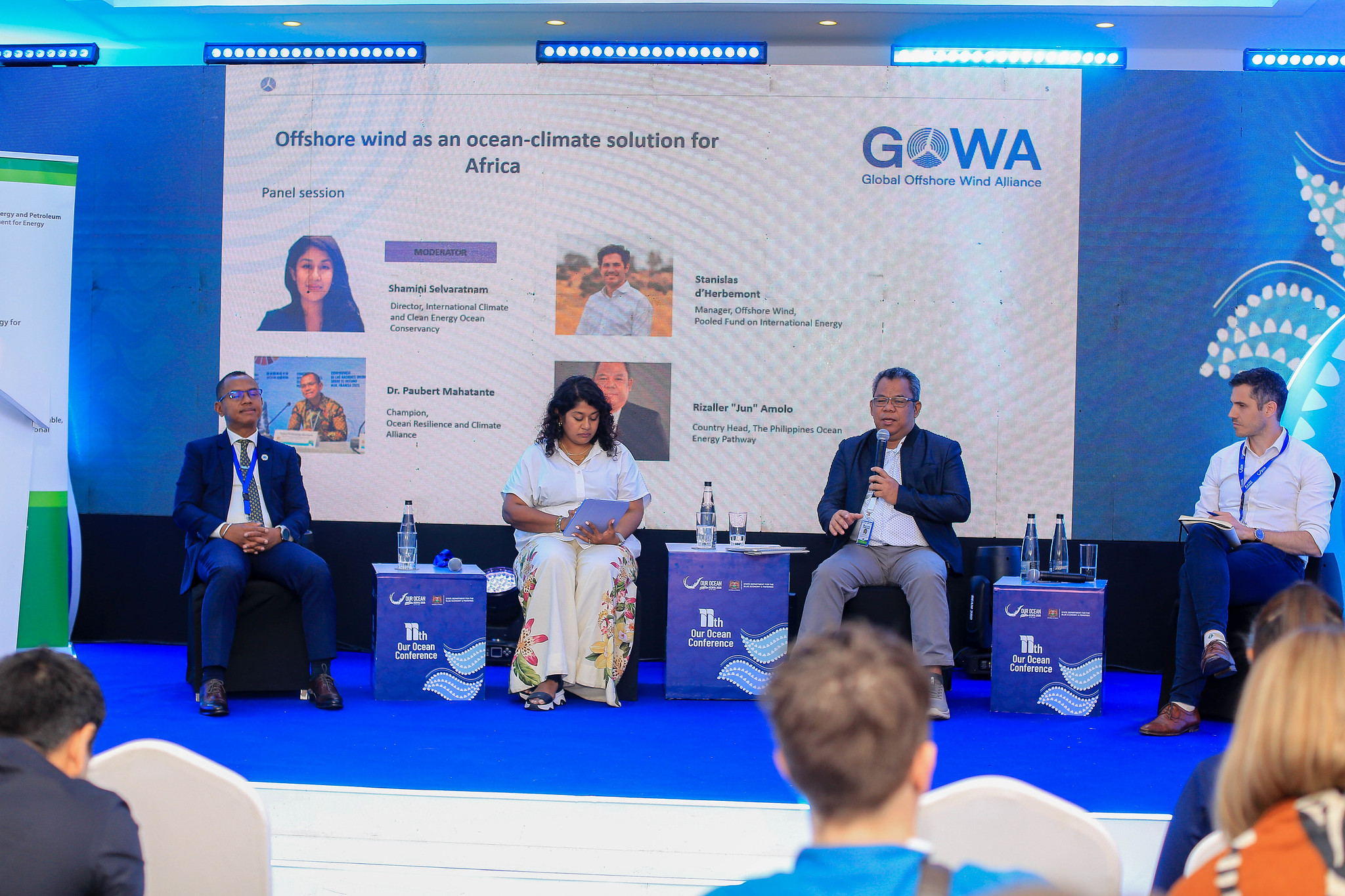
The debate was on display at the Mombasa conference, where host Kenya announced it was joining the Global Offshore Wind Alliance (GOWA), while also defending plans to explore for oil and gas in the Lamu Basin, a biodiverse coastal region.
“The energy transition is a journey. It is not a one-stop shop,” Alex Wachira, principal secretary for Kenya’s Department of Energy, told Climate Home News. “Therefore, we must explore the transition and bring on as many options as possible while exploiting the resources we have. At some point, the entire sector will transition to 100% renewable,” he added.
Wachira said Kenya’s low contribution to global emissions and its continued development needs justify pursuing offshore oil and gas alongside renewables, adding that the country still has “the industrial revolution” to achieve.
“Kenya needs to have a piece of the pie … our emissions today are the least, but we have suffered the most,” said Wachira.
How Shell is still benefiting from offloaded Niger Delta oil assets
The East African nation is seen as a world leader in renewable energy, with about 90% of its electricity generated from geothermal, hydropower, wind and solar.
Omar Elmawi, a Kenyan climate activist and member of the Fossil Free Ocean Initiative, said Kenya should focus on expanding renewable energy, adding that new fossil fuel projects could result in financial losses as countries move to cut planet-heating emissions and shift to cleaner energy.
“We know we cannot have a future dependent on fossil fuels. The rest of the world is talking about how to move beyond them,” Elmawi told Climate Home News.
“If we invest heavily in fossil fuels within our oceans, we’ll end up with stranded assets and a huge debt that taxpayers will have to pay,” he added.
Offshore wind as a solution
Many environmental groups argue that offshore wind is a promising alternative, as it can deliver similar economic benefits from energy production without worsening climate change.
A study unveiled at the Mombasa conference by Zero Carbon Analytics, Ocean Conservancy and GOWA found that Africa’s offshore wind potential is vast, yet largely untapped.
The continent could install around 6,750 gigawatts of offshore wind capacity – roughly 28 times its current power generation capacity.
Developing just 5% of that potential could create an estimated 5.9 million jobs and generate more than $1 trillion in economic benefits, while producing enough electricity to meet all projected growth in power demand through 2040, the study found.
Campaigners say this could strengthen energy security, reduce dependence on imported fossil fuels and help build new industries around ports, manufacturing and maritime services.
According to a 2025 World Bank report, every $1 million invested in offshore wind creates around 25 jobs – five times more than fossil fuels.
Robust marine protection needed
Bruna Campos, senior campaigner for the Climate and Energy Program at the Center for International Environmental Law (CIEL), said offshore wind offers a cleaner alternative to offshore oil and gas, but warned that poorly planned projects can also cause harm.
She called for robust marine spatial planning, environmental assessments and early community involvement to ensure the industry does not repeat mistakes associated with fossil fuel development.
“You need to understand what are the impacts that offshore wind will have on sensitive ecosystems and communities,” Campos told Climate Home News.
West African nations target Eastern Atlantic for early high seas protection
A 2024 UN study found that offshore wind farms can disturb whales, seals, porpoises and migratory fish, particularly during construction, when underwater noise and seabed disruption are greatest. At the same time, turbine foundations can act as artificial reefs, creating habitat for some species and boosting local fish populations.
Pacific COP31 Envoy for the Ocean Seruiratu said that while investing in renewables is crucial, it is also important to keep pushing for fossil fuels to be phased out.
He said his own country, Fiji, is among a growing block of nations calling for “a binding international mechanism for an orderly and equitable phase-out of fossil fuels”.
“Every offshore drilling decision, every new exploration site, every delayed phase-out is a decision made against the common good,” he added.
The post Ocean summit stays silent on new wave of offshore oil and gas expansion appeared first on Climate Home News.
Ocean summit stays silent on new wave of offshore oil and gas expansion