Climate Change
Most “zombie credits” locked out of new UN carbon market after China and India snub

China and India have declined to back any of their old United Nations carbon credit projects seeking to sell offsets under the new UN market, driving a cull of nearly three-quarters of applicants, analysis of official data shows.
Only 415 out of more than 1,500 projects and programmes hoping to move from the Clean Development Mechanism (CDM) to the new carbon market set up under Article 6.4 of the Paris Agreement won the approval of their host governments by the 30 June deadline – a crucial step in transitioning them.
The two Asian giants, home to two-thirds of all applicants, account for the bulk of the exclusions. Brazil, the other heavyweight of the CDM era, took the opposite path, approving nearly all of its projects in a last-minute rush that leaves it with the largest number of activities still in the running to sell credits under the new mechanism.
Carbon market watchers have long regarded the CDM, set up under the Kyoto Protocol which has now been largely replaced by the Paris Agreement, as largely discredited for failing to drive real emission cuts. They also warned that letting its projects live on could dent confidence in the mechanism’s successor.
-
EU carbon credits could supercharge world’s clean cooking push, France says
The country’s top climate envoy says he discussed using cookstove carbon credits with TotalEnergies, which is working to expand the use of LPG cooking in Africa

If all projects seeking transition had been successful, they could have flooded the market with up to more than 900 million credits generated with largely outdated rules, according to UN estimates. One credit is equivalent to one tonne of carbon dioxide (CO2) and 900 million tonnes is similar to Japan’s annual emissions.
‘New era’
Injy Johnstone, senior research fellow at the Munich-based Max Planck Institute, said the failure of most projects to clear the hurdle sent a significant signal that carbon trading had entered a new era. “The system is trying to remove some of the hot air that had inflated it in the past,” she told Climate Home News.
“The lack of transition is the biggest contribution that Article 6 has made to climate yet,” she added, arguing that leaving “zombie credits” in the market creates confusion, especially for buyers that might not realise these units have lost their value.
Among the schemes that failed to win government approval are nine programmes promoted by fossil fuel companies over a decade ago to subsidise the construction of gas plants in the Global South, which Climate Home News has previously reported on.
Fossil fuel firms seek UN carbon market cash for old gas plants
But one of them, supporting the Ressano Garcia gas plant in Mozambique, could still profit from the new market after the country’s government granted its approval on deadline day itself.
Brazil leads projects transition
Established in 1997 under the Kyoto Protocol, the CDM allowed rich countries to meet part of their climate obligations by financing emission-cutting projects in poorer ones. It drew widespread criticism over its patchy human rights record and for failing to deliver promised climate benefits. Backers of the Article 6.4 market say it is a higher-integrity successor.
CDM projects were given a route back into the new mechanism under certain conditions at COP26 in Glasgow in November 2021, when governments agreed the rules for the Paris Agreement market.
Project developers had until the end of 2023 to apply and host governments were originally given until the end of 2025 to grant approval. But, after requests from many developing countries for an extension, at COP30 in Belém countries agreed to push the deadline back six months to the end of June.
Brazil was the single largest beneficiary of the decision, with all of its 92 approvals coming during the extension window. Hydropower plants, landfill gas schemes and wind farms make up the bulk of the South American country’s surviving portfolio, and hydro is the single most common project type in the global transition pipeline.

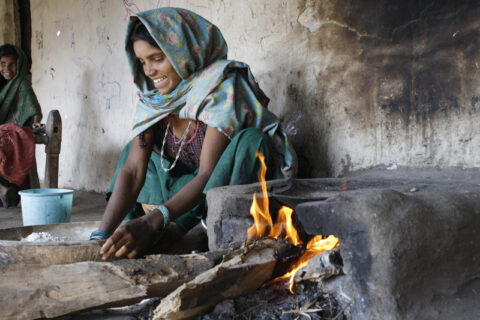
Peru greenlit the move of nearly a dozen hydropower plants, Thailand backed a batch of biogas and waste-to-energy schemes, and Mexico squeezed all of its approvals – including a controversial industrial gas project – into the final week. African nations including Zambia, Malawi and Ethiopia backed programmes aiming to switch households to cleaner cooking stoves, which have the potential to generate millions of offsets and are set to be the biggest source of credits among the surviving projects.
Long way from selling credits
Securing government support does not mean a scheme can now automatically sell credits under the Article 6 mechanism. Developers are required to submit additional documentation by the end of 2026 demonstrating that their programmes respect the mechanism’s stricter rules on environmental and social safeguards and on the risk of emission cuts being reversed. The Article 6.4 Supervisory Body, the mechanism’s regulator, has the final say on which projects are allowed into the market.
Those that make it through can sell credits for emission reductions achieved between 2021 and 2025 under the old CDM methodologies, with some adjustments aimed at preventing the creation of excess credits not backed by real emission cuts. For reductions achieved from 2026 onwards, projects will need to switch to new methodologies, which the regulator is currently developing.

So far, 30 programmes have completed the process, and only two cookstove projects in Myanmar have been formally approved to issue credits.
Civil society groups have called for an investigation into the activities in Myanmar over its ties to Myanmar’s military junta – which the UN says is guilty of human rights abuses – and allegations of “massively” overstating its climate impact.
The company behind the scheme said its engagement with authorities “should not be interpreted as political endorsement” of the junta, while disputing the calculations underpinning the claim that too many credits had been issued.
The post Most “zombie credits” locked out of new UN carbon market after China and India snub appeared first on Climate Home News.
Most “zombie credits” locked out of new UN carbon market after China and India snub