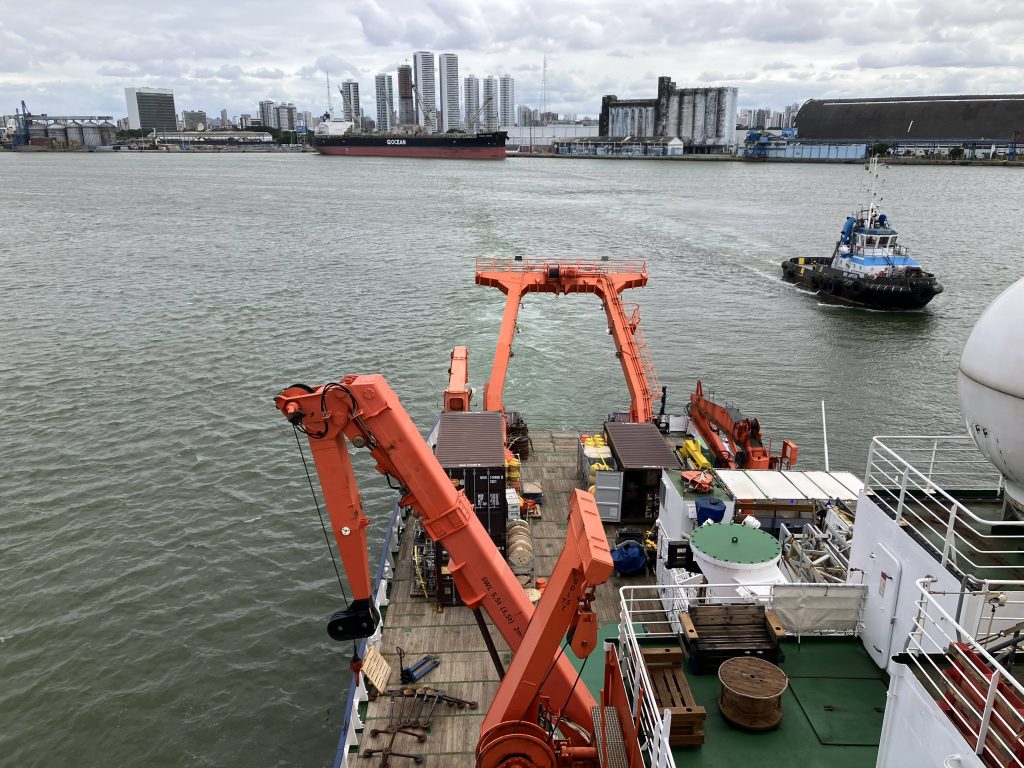
Ocean Acidification
METEOR Sets Sail on Its Final Voyage

Welcome to the M219 ocean blog!
Here, we will share updates and stories about the scientific work taking place during this research expedition. We also hope to offer a glimpse into daily life and work at sea.
For many members of the scientific party, this is their first time aboard METEOR. It will also be their last, as METEOR is embarking on its final voyage before retiring from service as a German research vessel after more than 40 years at sea. Over the course of its distinguished career, METEOR has travelled more than 1.7 million nautical miles, which is equivalent to more than 8 times the distance between the Earth and the Moon. Throughout those decades the vessel has supported countless scientific discoveries and generations of marine scientists. We are very grateful and honored to be part of the final chapter of this remarkable ship’s history and to accompany her on the last few thousand miles of her legendary journey.

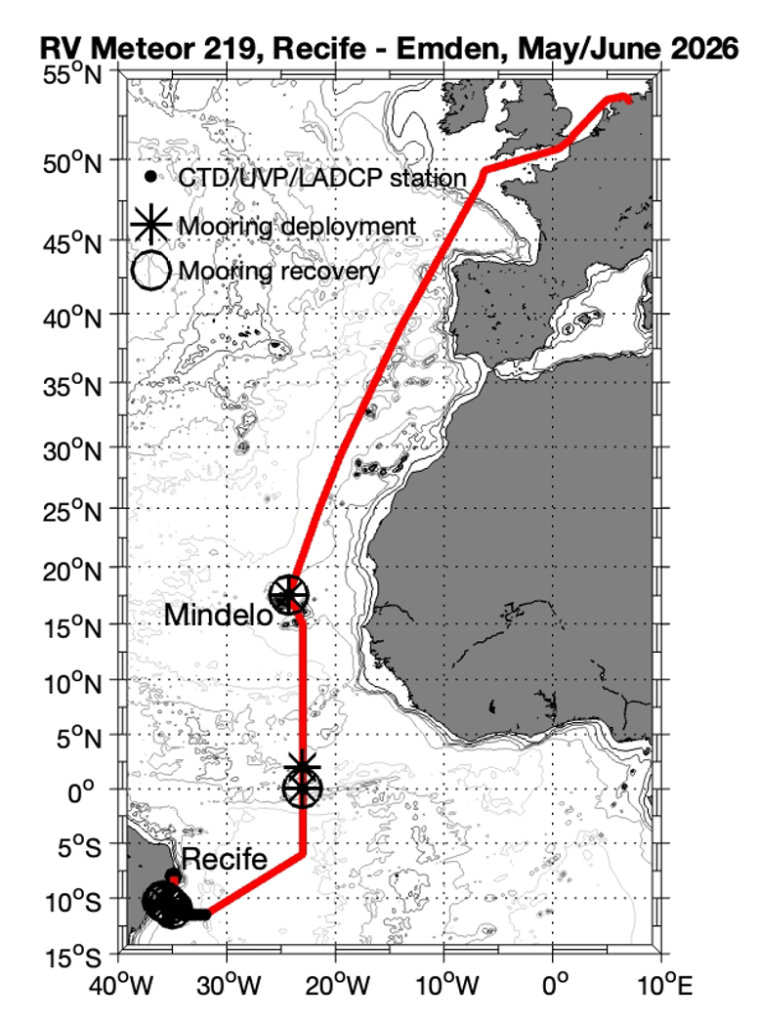
The scientific program of this cruise focuses on long-term observations of ocean currents off the coast of Brazil and at the equator, as well as interdisciplinary measurements near the Cape Verde Islands. At all these sites, GEOMAR has maintained observational programs for the past 10 to 20 years. Over the next four weeks, we will introduce these regions and the measurements carried out there in more detail. But first, let’s look at what happened in Brazil before the cruise began.
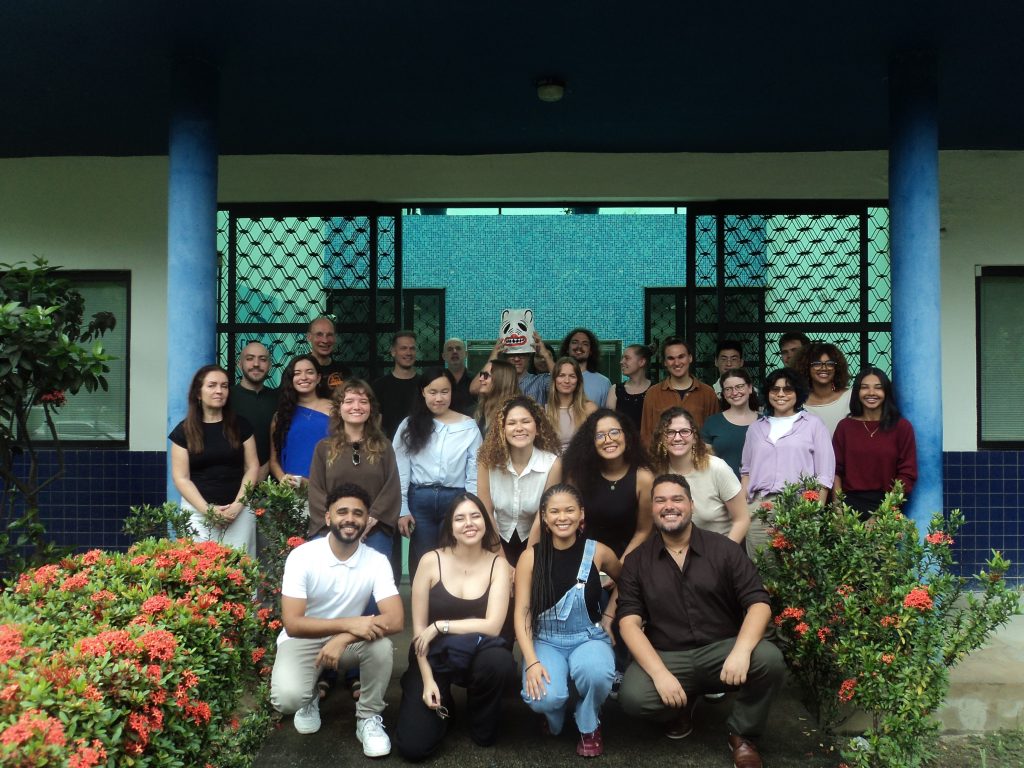
On Thursday, May 28, many of the scientists and students left the hotel early in the morning to attend a seminar at the Universidade Federal de Pernambuco (UFPE), celebrating the long-standing scientific collaboration between Brazil and Germany.
The seminar was opened by Prof. Dr. Marius Müller, a former student at GEOMAR and now a professor for biological oceanography at UFPE. These meetings have become a valued tradition, having been organized for more than 20 years by now. This year marked the 9th edition of the seminar since its inception over 20 years ago.
A total of 8 scientists and students from Brazil, Germany, and the U.S. presented their research on various aspects of the tropical Atlantic Ocean. We would like to thank Marius Müller, Doris Veleda and all the Brazilian scientists and students who helped organize the seminar and provided such a warm welcome. We greatly enjoyed the exchange of ideas and look forward to celebrating the 10th seminar in the years to come.

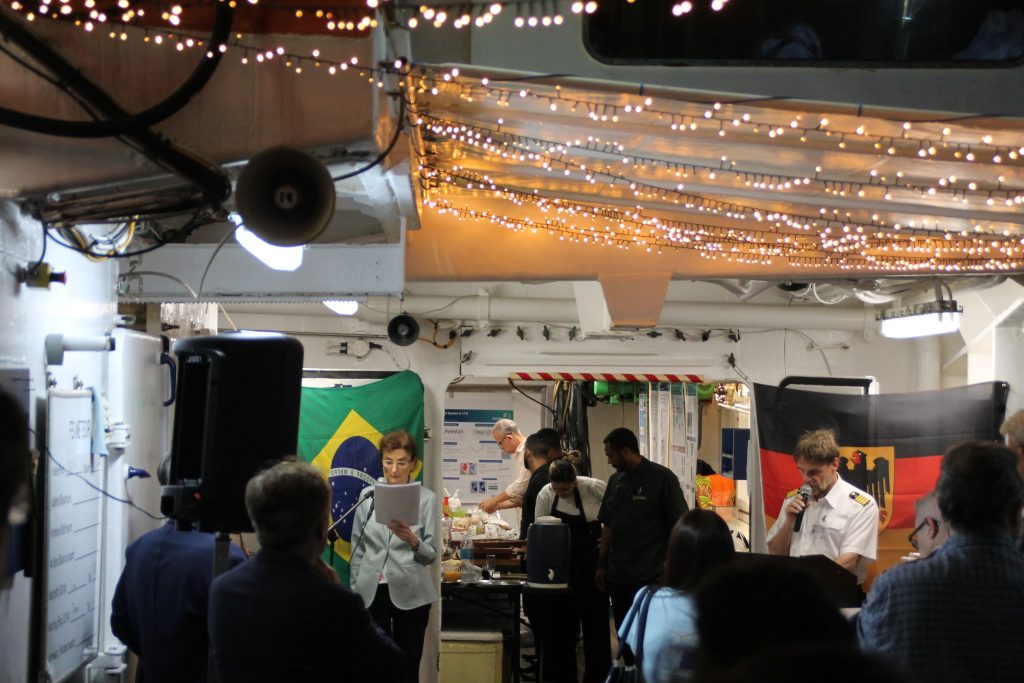
After the seminar we returned to the hotel, but there was little time to rest. Later that same day, the captain of METEOR and the German Consul General in Recife hosted a reception aboard METEOR in the Port of Recife.
The event brought together members of the scientific party, representatives of local institutions, and guests from the Brazilian and German scientific communities. It provided an excellent opportunity to celebrate the long-standing partnership between the two countries.

On Friday, May 29, the scientific party finally boarded METEOR. There was little time to settle into our cabins and workspaces, as preparations for departure were already in full swing. We left the Port of Recife as soon as possible and at around 1pm METEOR set sail and began the final voyage of her remarkable career.
About 12 hours after leaving port, we arrived at our first station. Thanks to the dedicated efforts of technical and scientific teams, all instruments had been installed and prepared in time for the start of operations. This station marked the beginning of our observational program off the coast of Brazil, which includes the deployment and recovery of tall moorings as well as CTD measurements. An intensive first week lies ahead, with a demanding schedule of measurements and mooring operations. After months of planning and preparation, everyone is excited to finally begin the scientific work and make the most of the final weeks aboard METEOR.