Climate Change
Loss and damage fund delays first project approvals as needs dwarf resources

The board of the UN’s fledgling Fund for Responding to Loss and Damage (FRLD) has decided to consider its first package of projects for support at its next meeting in December, confounding expectations that it might back an initial set of four proposals this week.
The fund faces a substantial dilemma about how to select projects to receive its limited resources after its first call for proposals saw nearly 180 submissions requiring around $2.8 billion. It currently has only $250 million available to allocate, although the board agreed on Friday to release $100 million more in the face of overwhelming demand.
Much of the three-day board meeting in Manila was held behind closed doors, making it difficult for civil society experts present to know what was happening. Draft decisions were projected on a screen and finalised at the end of the meeting before being adopted on Friday.
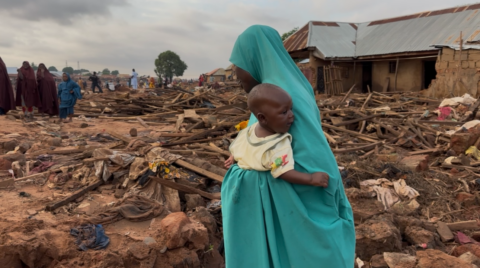
During the closing session, government board members and observers alike expressed frustration at the huge gap between the growing needs of communities struggling with worsening climate change disasters and the paltry amounts on offer to help them recover.
-
As Nigeria rails at loss and damage “mirage”, fund boss assures money is coming
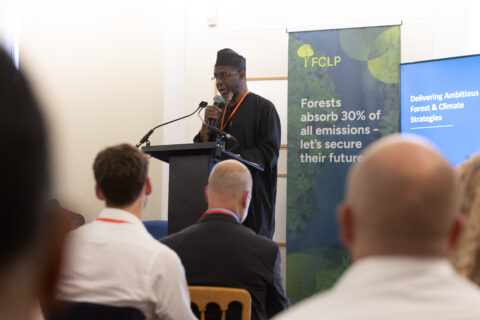
Ibrahima Cheikh Diong, CEO of the loss and damage fund, said he hopes to start spending this year, as pressure mounts for disbursements -
New loss and damage fund could run out of money next year
Unless there are more donations, the Fund for Responding to Loss and Damage could give out all its money by the end of 2027


At an initial pledging session at COP28 in 2023, wealthy governments offered around $820 million to the fund, of which only 55% has been delivered into its coffers.
“Every proposal represents real people,” who are expecting in good faith to receive resources from the fund, said Milagro Matus from Belize, calling for its ambition to be strengthened.
Mismatch between needs and contributions
Several other board members, especially from developing countries, as well as climate justice advocates expressed disappointment over the fact that the fund has so little to spend and called for efforts to increase contributions from rich nations.
The fund will consider how to mobilise more resources in the short term, as well as a longer-term replenishment process, at its December meeting.
Richard Sherman of South Africa, the board’s former co-chair and now a board member, had proposed a high-level pledging session for the FRLD to take place before the COP31 climate summit in November but this now seems unlikely to happen as it was not included in Friday’s decisions.
Adao Soares Barbosa of Timor-Leste said this week’s board meeting – its ninth – should show the world that more financial contributions are required as collective needs to tackle loss and damage are far higher.
Iran war fuel shocks threaten Africa’s clean cooking push, IEA says
He called for enough extra money to be found so that at least one project can be approved for each least-developed country and small island developing state, which have so far submitted 72 proposals between them. Half of the fund’s resources are meant to be reserved for those two groups of especially vulnerable nations.
Brandon Wu, ActionAid USA’s director of policy and campaigns, said the board’s decision not to opt for quick approval of the first four projects presented “is the most obvious example of how developed countries’ failure to adequately resource the FRLD is constraining a fund that was meant to be the central flagship institution responding to climate impacts across the Global South”.
More time to consider proposals
Other board members spoke about the uncomfortable situation the fund faces in having to select projects from such a huge number, introducing “unhelpful competition” into the process. Isaac Glassie-Ryan of the Cook Islands said he was concerned that the approval process pits “the vulnerable against the vulnerable” and argued that each project should have “a fair shot at equal treatment”.
The FRLD’s secretariat checks project documentation and ensures they qualify for funding, but it remains unclear exactly how projects will then be chosen for the board to approve and in what order. The next meeting has been postponed from October to mid-December to allow more time for a first set of proposals to be prepared for the board to examine.
The extent of FRLD resources available means that only around 15-20 projects are likely to be approved at that meeting, as there is a limit of $20 million per proposal.
Friday’s decision noted the “need for the fair and equal treatment of all funding requests” under review by the secretariat and requested that the initial set of projects backed by the FRLD should test diverse approaches and ways of providing its money.
Civil society frustration
At the end of the Manila meeting, civil society observers said they were dissatisfied with both the slow speed of approvals and their exclusion from a large part of the discussions. Harjeet Singh, global convenor of the Fill the Fund campaign and founding director of India’s Satat Sampada Climate Foundation, called the meeting “deeply disappointing and frustrating”, saying it had been non-transparent and non-inclusive.
A number of board members supported that complaint, saying the issue needed to be addressed and a policy for civil society participation in board meetings agreed.
As blue economy gathers pace, communities must benefit from ocean boom, activists say
Board co-chair Camila Rodríguez Tavárez said the issue would be considered. She described the meeting as “productive” yet “challenging”, adding that a lot of progress had been made and the board had been able to arrive at “a balanced set of decisions”.
Singh nonetheless lamented that the FRLD has not yet “been able to provide a single penny to people who are suffering right now”.
The post Loss and damage fund delays first project approvals as needs dwarf resources appeared first on Climate Home News.
Loss and damage fund delays first project approvals as needs dwarf resources