Carbon Footprint
JPMorgan’s Carbon Bet Marks a Turning Point for the Removal Market


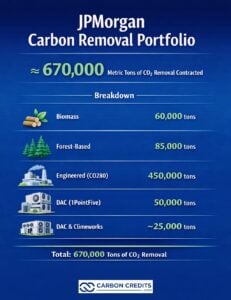
JPMorgan Chase has signed two major carbon removal agreements this month. The first one involves a purchase of 60,000 metric tons of durable carbon dioxide removal (CDR) over ten years from climate startup Graphyte. The deal uses biomass-based technology that converts agricultural and timber waste into stable carbon blocks stored underground.
In parallel, JPMorgan has also secured 85,000 tons of forest-based carbon removal credits through improved forest management projects. These credits, marketed by Anew Climate, come from U.S. forest projects managed by Aurora Sustainable Lands.
They aim to extend harvest cycles, boost forest health, and enhance long-term carbon storage. The approach helps maintain higher carbon stocks in working forests while supporting biodiversity and sustainable timber production.
Taylor Wright, Head of Operational Sustainability at JPMorgan Chase, noted:
“We were excited to add credits from the Little Bear Forestry Project to our carbon removal portfolio. The dynamic baselining provides meaningful evidence that these credits meet a high threshold for quality, supporting our interests as both a buyer and as a steward of market integrity.”
Carbon Removal Still Small, But Growing Fast
The agreements are part of a broader push by the bank to expand its carbon removal portfolio. While the total volume is small compared to global emissions, the deals highlight a shift in corporate climate strategies.
Companies are now focusing more on durable carbon removal, not just emission reductions. JPMorgan’s mix of engineered and nature-based solutions also reflects a growing trend toward portfolio diversification in carbon removal sourcing.
Carbon removal remains a small but critical part of climate action. The United States emits about 5 billion tons of CO₂ per year, showing how limited current removal volumes still are.
However, long-term demand is expected to grow sharply. The Intergovernmental Panel on Climate Change estimates that by 2100, the world might need to remove 100 to 1,000 gigatons of CO₂. By mid-century, annual removal should reach about 10 gigatons per year.
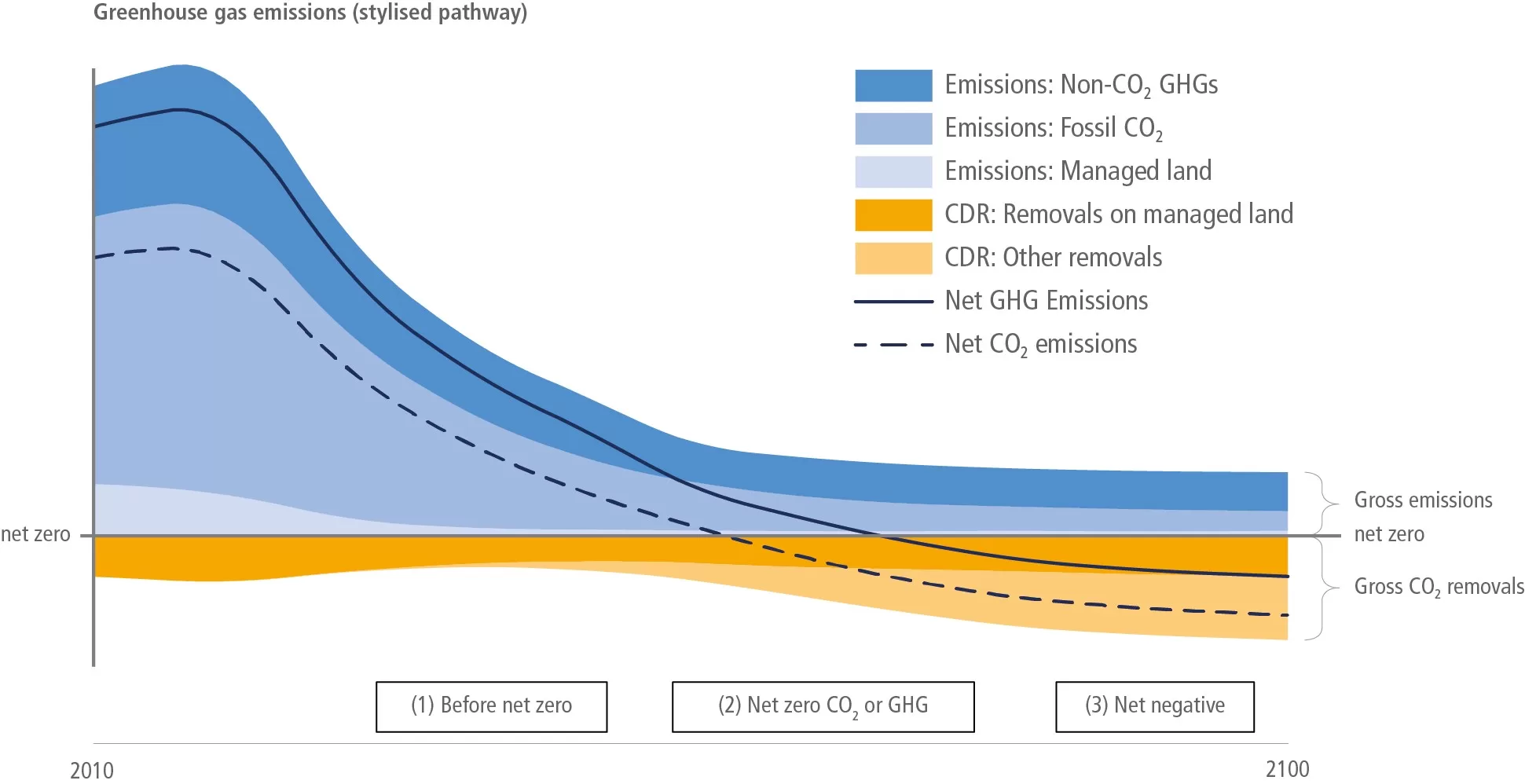

Today’s market is far from that scale. Most carbon removal deals are measured in thousands or hundreds of thousands of tons. But these early contracts are seen as critical. They help build supply, reduce costs, and attract investment into new technologies.
JPMorgan’s latest deals fit this pattern. Together, the 60,000-ton biomass contract and 85,000-ton forest-based agreement provide long-term demand signals across different removal pathways. This helps scale both emerging engineered solutions and more established nature-based approaches.
Turning Waste Into Permanent Carbon Storage
Graphyte’s process, known as “carbon casting,” uses natural carbon capture through plants. Biomass absorbs CO₂ through photosynthesis. The material is then dried, compressed, and sealed to prevent decomposition. This allows the carbon to remain stored for long periods.
The company uses waste materials such as crop residues and timber byproducts. This reduces the need for new land use and lowers overall costs. The process also uses relatively low energy compared to other removal methods.
Projects linked to the JPMorgan deal include facilities in Arkansas and Arizona. These projects also provide added benefits. For example, using forest thinning residues can help reduce wildfire risk and support land restoration.
This reflects a broader trend in carbon markets. Buyers are increasingly looking for projects that deliver both carbon removal and environmental co-benefits. The bank’s forest-based deal reinforces this trend by supporting improved forest management practices that enhance carbon storage while maintaining productive landscapes.
JPMorgan’s $1 Trillion Net Zero Strategy and Climate Finance Push
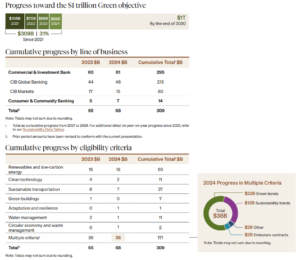
JPMorgan’s carbon removal investments are part of a wider climate strategy. The bank has committed to facilitating $1 trillion in climate and sustainable development financing by 2030. It has already deployed about $309 billion between 2021 and 2024 toward this goal.

In addition to financing, the bank is building a diversified carbon removal portfolio. Since 2023, it has signed deals to cut hundreds of thousands of tons of CO₂. This includes a plan for up to 800,000 tons of carbon removal through long-term contracts.
The company aims to match its unabated operational emissions with durable carbon removal by 2030.
JPMorgan is also investing in a range of technologies. These include direct air capture, bio-oil sequestration, biomass storage, and forest-based removal. Its latest forest deal shows a continued commitment to high-quality, nature-based removals that meet stricter standards for durability and verification.

This diversified approach helps reduce risk while supporting different pathways to scale. Compared to many financial institutions, JPMorgan remains an early mover. Most large buyers in carbon removal are still technology companies, particularly Microsoft.
Microsoft Pullback Shakes Market Confidence
However, Microsoft, the largest buyer of carbon removal credits, has reportedly paused new purchases.
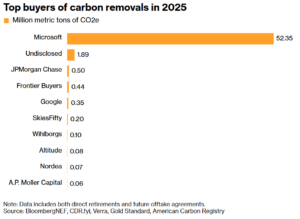
The tech giant has played a dominant role in the market. It accounts for up to 90% of global carbon removal purchases and has contracted more than 45 million tons of CO₂ removal to date. In 2025 alone, the company signed agreements for 45 million tons, doubling its 2024 volume and far exceeding any other buyer.
However, reports suggest the company may be adjusting the pace of new deals. This shift does not mean the end of carbon removal demand, but it signals a transition.
The market can no longer rely on a single dominant buyer. In this context, JPMorgan’s continued activity—across both engineered and nature-based deals—shows how new buyers are stepping in to support market stability.

Market Trends: From Cheap Offsets to High-Durability Carbon Credits
The carbon market is evolving quickly. Traditional carbon credits often focus on avoiding emissions, such as protecting forests. However, there is growing demand for removal-based credits that physically take CO₂ out of the atmosphere.
Corporate net-zero goals drive this shift. Many companies now face limits on how much they can reduce emissions directly. Carbon removal is becoming necessary to address remaining emissions.
At the same time, supply remains limited. High-quality removal credits are scarce. This keeps carbon prices high, especially for engineered solutions.
Early buyers like JPMorgan are helping shape the market. Long-term contracts provide price signals and encourage project development. They also help define standards for quality and verification.
Another key trend is the focus on durability. Buyers prefer solutions that store carbon for decades or centuries, rather than short-term offsets.
Early-Stage Market, High-Stakes Growth
Despite growing momentum, carbon removal is still in its early stages. Current volumes are small compared to global needs. Policy support is also limited in many regions.
However, corporate demand is rising. Deals like JPMorgan’s show how private sector investment is driving the market forward.
The combination of long-term contracts, new technologies, and climate finance is expected to accelerate growth. Over time, this could help bring down costs and expand supply.
For now, the focus remains on building scale. Each new agreement adds to a growing pipeline of projects. These projects will play a key role in meeting long-term climate targets.
JPMorgan’s latest purchases may be modest in size. But together, they reflect a larger shift. Carbon removal is moving from early experimentation to a more structured and investable market, supported by a broader mix of buyers and solutions.
The post JPMorgan’s Carbon Bet Marks a Turning Point for the Removal Market appeared first on Carbon Credits.