Climate Change
Iran war could boost fossil fuel phase-out push, says Colombian minister
The global energy shock triggered by the Iran war could give countries the chance to build a “new geopolitical balance” by forging a coalition committed to phasing out fossil fuels, Colombian Environment Minister Irene Vélez Torres said.
Delegates from about 45 nations are set to meet next month in Colombia’s Caribbean city of Santa Marta for the first conference on the transition away from fossil fuels, after a drive by 80 countries at COP30 failed to deliver a roadmap to phase out planet-heating coal, oil and gas.
Vélez Torres told an online press briefing her “maximum aspiration” for the summit was to “incline geopolitics towards a coalition of countries willing to eliminate fossil fuels” that can start taking action without having to negotiate agreements by consensus at UN talks.
“Ever since COP30 there has been growing momentum. The current crisis only gives us more relevance. We have a possibility to materialise a new geopolitical balance,” she said.
She added “it’s not the moment” to formalise this coalition or give it a name, but said that “as conversations move forward, and we can meet at a second conference to consolidate shared visions, something more formal can be created”.
-
Pressure builds for fossil fuel transition plan at COP30
More than 80 countries issue a call for the summit outcome to include a commitment to develop a roadmap for the world to shift away from oil, gas and coal -
New summit in Colombia seeks to revive stalled UN talks on fossil fuel transition
Colombia will host the first conference on transitioning away from fossil fuels, after more than 80 countries pushed at COP30 for an end to coal, oil and gas -
Colombia aims to launch fossil fuel transition platform at first global conference
The landmark summit aims to build the political and economic foundations to fast-track the shift away from coal, oil and gas, one of its organisers said

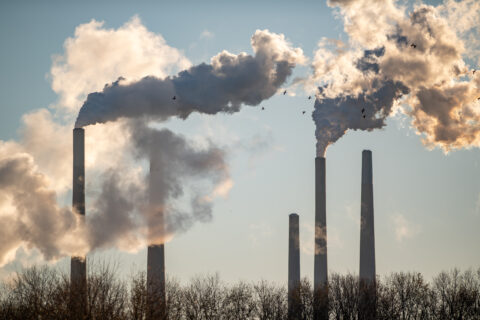


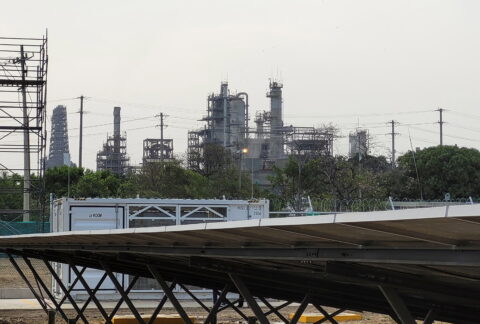
The conflict in the Middle East has disrupted about a fifth of the world’s gas passing through the Strait of Hormuz, particularly heading towards Asia. This has led to growing calls for investment in renewables as a way to strengthen energy security and economic stability, as oil and gas prices skyrocket.
COP30 president André Corrêa do Lago, Brazil’s top climate diplomat, told the online briefing that building a parallel process on phasing out fossil fuels outside the UN climate regime – which requires slow negotiations with oil and gas producers to reach consensus – can be “extremely useful”.
COP30 new roadmap proposal
After governments failed to kickstart the creation of a roadmap away from fossil fuels at COP30, Corrêa do Lago proposed to draft a voluntary proposal instead, which he said would be launched towards the second half of the year.
He added that, because it is not a formal document under the UN process, the voluntary roadmap was not meant to be adopted by countries at COP31 later this year, but to contribute to continued debate.
“The more that we create a document that incorporates the positions, figures and concerns of various countries, the more influence it will have on debates at the UNFCCC and the Paris Agreement,” he said.
UN head calls for platform for “honest dialogue” on fossil fuel transition
Countries have been asked to submit inputs to the Brazil-led roadmap. Meanwhile, the Australian COP31 “president of negotiations” Chris Bowen has vowed to continue debates on the fossil fuel transition, while Turkish COP president Murat Kurum rejected it as a major focus and said he will “safeguard the development priorities of the countries”.
Vélez Torres added that both the Santa Marta conference and Brazil’s roadmap were “deeply complementary”, with the summit focusing more on channelling technical support, finance and “creating an honest space where we can put all the cards on the table”.
Carlos Nobre, a veteran Brazilian climate scientist, said the push for a transition away from fossil fuels was “essential”, and added that countries must focus on accelerating a “super-rapid” energy transition at COP31 to prevent global temperatures from crossing dangerous climate tipping points such as melting permafrost or the collapse of the Amazon rainforest.
Colombia and Brazil head to polls
While both Colombia and Brazil have led the push for a global phase-out of fossil fuels, the two South American countries are heading to the polls later this year. Both countries face anti-climate movements promising to change course if elected.
Vélez Torres warned of “great political risks of a relapse”, referring to a potential new government reversing the current government’s halt on all new coal, oil and gas exploration. Far-right candidate Abelardo de la Espriella has proposed to resume production, particularly venturing into shale gas fracking.
“However, we think we are building a bloc that is bigger than a country. The sense of continuity and sense of progress that we are giving to this discussion, I think are going to be difficult to relapse,” she said.
Corrêa do Lago said “this year we have to show the world what alternatives are viable”.
“We have to work together and not let that those who are betting on a general disaster divide those who are searching for solutions,” he added.
The post Iran war could boost fossil fuel phase-out push, says Colombian minister appeared first on Climate Home News.
Iran war could boost fossil fuel phase-out push, says Colombian minister