Climate Change
International trade linked to 20% of global emissions – but imports ignored
A fifth of the world’s greenhouse gas emissions are linked to international trade in goods and services, a new tracker shows, spotlighting a little-studied issue that researchers say should be tackled by the UN climate process.
Currently, as part of the Paris Agreement, every country is responsible for counting and reducing the planet-heating emissions that are produced within its territory. Manufacturing countries, for example, may have high emissions even if what they make is exported for consumption elsewhere.
But new analysis from the European Climate Foundation (ECF) and climate consultancy Matière, based on the tracker’s data, shows that some countries have a high footprint of “imported emissions” from goods and services they ship in. These emissions are often ignored in the places where the products are consumed because they are not formally counted under greenhouse gas inventories.
In the European Union, for example, while domestic emissions have declined since 2015, imported emissions have remained unchanged, the analysis shows. In some countries, like Austria or Sweden, they are as high as the country’s entire annual carbon footprint.
-
Türkiye says it has “final decision” at COP31 despite Australia running negotiations
COP31 President-Designate Murat Kurum told journalists that, while the two countries have been working well together, Türkiye has the final say over the Antalya summit -
As science comes under attack at UN talks, climate movement splits over how to respond
A rift over how IPCC messages are produced and turned into policy is creating tensions in the world’s most influential coalition of climate NGOs



Former EU lead climate negotiator Jacob Werksman said that under the Paris Agreement, these traded emissions are accounted for in the countries where they are originally produced, but importing countries can also take responsibility for their consumption.
“It starts with a wide recognition by many jurisdictions around the world that we need to know the carbon content of these products, and we then need to agree what is a fair, effective, transparent and relatively easy-to-implement way of measuring that carbon in traded products,” he told a launch event for the trade emissions tracker, which contains data for different countries, sectors and gases.
Trade and its role in addressing climate change has become a higher priority at UN climate talks after a push led by emerging economies including China, India and South Africa led to the first trade and climate change dialogue held this year at the mid-year session in Bonn.
At the upcoming COP31 UN summit in Antalya, some voluntary initiatives like the Brazil-led Integrated Forum on Climate Change and Trade are expected to continue, but the issue does not feature in Türkiye’s Action Agenda of climate initiatives and formal negotiations are not scheduled on the topic.
China: the world’s top emissions exporter
As a manufacturing powerhouse, China ranks first in the new tracker as the world’s top-emitting country, but the data shows that a large chunk of the country’s carbon emissions – an amount larger than Brazil’s entire annual carbon footprint – are linked to products that are exported and consumed abroad.
Russia, Brazil, the US and the EU rank as the top destinations for Chinese trade-related emissions, which are mostly linked to components for power generation, basic metals like copper and lead, and non-metallic minerals like graphite and phosphorus.
Yet China is also the world’s top emissions importer, related mostly to agricultural products, fossil fuels and minerals brought from the US, the EU, Japan and India, among others. The US ranks second by a close margin, with both countries importing about 1.6 billion tonnes of CO2 equivalent.
China’s industrial engine starts to break its fossil fuel habit
Richard Baron, ECF’s industrial policy and trade director, said Chinese clean energy products are key for reducing emissions around the world, adding that Europe is “not able to do without those technologies” for its energy transition.
“China has an emissions trading system that counts CO2 differently there. But if China and the EU were to agree on some kind of translation mechanism to say ‘this is how we measure it’, and companies can understand the protocol to navigate both markets, that would set the tone for a lot of other conversations,” he said at the platform’s launch event last week.
The analysis suggests that if the EU and China aligned their climate requirements for products, the resulting standards could influence trade flows representing about 7% of global emissions.
Baron said there’s “a plethora” of multilateral spaces to hold these discussions, including the climate and trade dialogue at the UN climate talks or the Climate Club at the Organisation for Economic Co-operation and Development (OECD), which seeks to cut industrial emissions.
Trade breaks into agenda of UN climate talks – but will it have teeth?
Controversial trade measures
Instruments like the Europe’s Carbon Border Adjustment Mechanism (CBAM) – a recent piece of legislation that penalises emissions-heavy imported products – are one tool that could be used to address trade-related emissions, said Antoine Oger, executive director at the Institute for European Environmental Policy.
He said a significant portion of imported emissions in Europe are already covered by CBAM, as it includes sectors like cement, iron and steel, fertilisers and aluminium. This then allows the EU “to engage in constructive dialogue with our trade partners”, he added.

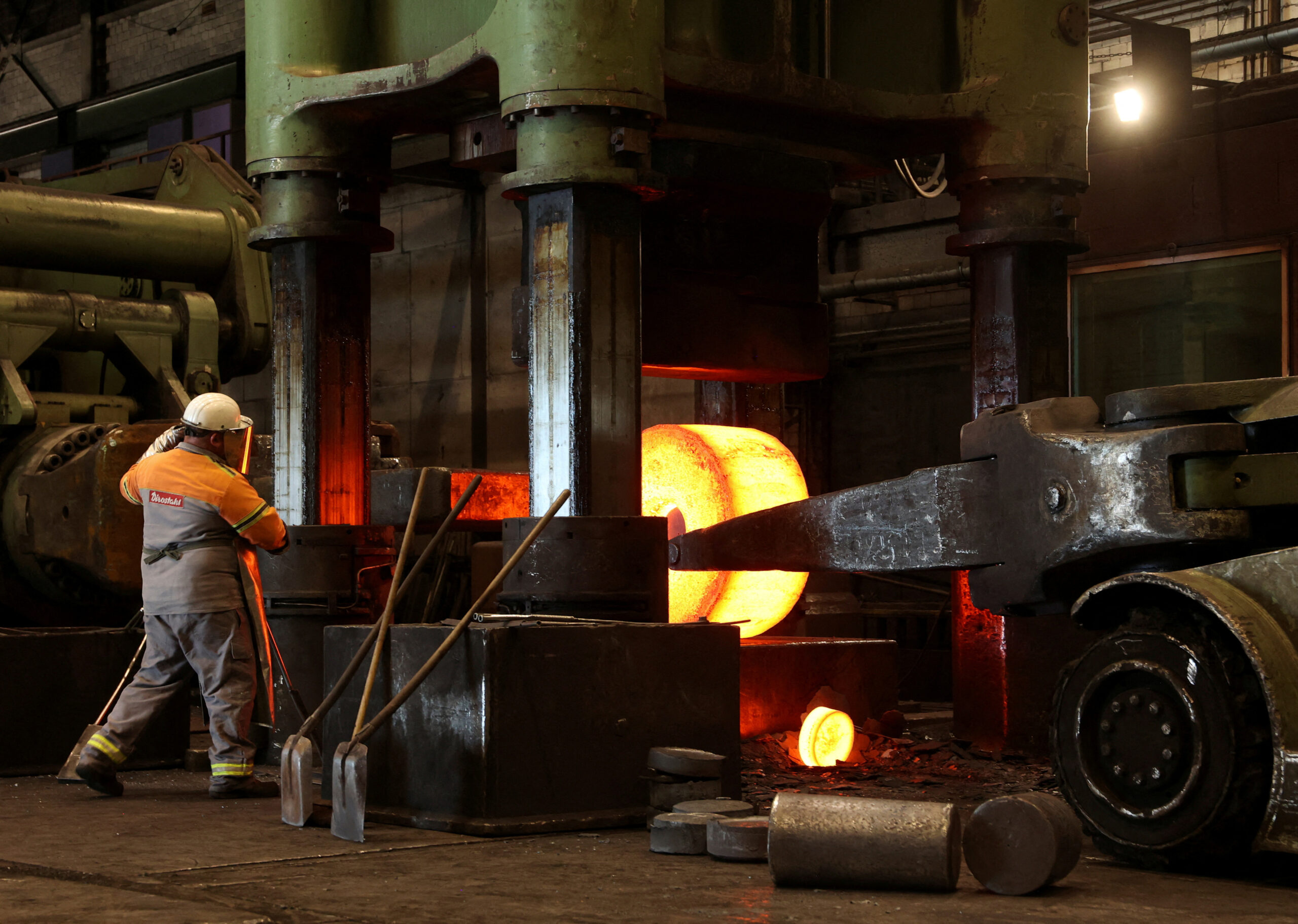
But across diplomatic summits, including at UN climate talks, emerging economies have pushed back heavily against the CBAM and other trade measures. The most recent BRICS declaration adopted on Saturday by 11 such countries – including China, India and Russia – condemns “protectionism under the guise of environmental objectives”.
The declaration calls for the “elimination of such unlawful measures”, which they argue have “far-reaching negative implications for the human rights, including the rights to development, health and food security” of vulnerable communities.
“The question of responsibility is a political question,” Oger said. “These emissions exist – they are emitted somewhere to make a product that will be consumed elsewhere. So you can debate responsibility but the idea is for the two parts to recognise there’s a problem.”
The aim, he added “is not to point fingers, but to accept this is a reality of our emissions profiles and ask what we can do about it”.
The post International trade linked to 20% of global emissions – but imports ignored appeared first on Climate Home News.
International trade linked to 20% of global emissions – but imports ignored