Climate Change
India builds deep-sea capacity in bet on critical minerals future

At India’s ocean technology institute in Chennai, scientists have been developing a range of hi-tech mining equipment that can operate 5 or 6 kilometres underwater – from a remote-control submarine to a seabed soil tester and slurry pump.
Their task: to ensure that India is ready if deep-sea mining takes off by building the technology and knowledge about how – and where – critical minerals can be extracted from the depths of the ocean, even as dozens of nations call for a moratorium on this activity.
After a series of successful deep-water equipment tests in recent years, government officials say big strides have been made.
“(India) has made significant progress in building the scientific and technological foundations for deep-sea mining,” a spokesperson for the Ministry of Earth Sciences, which oversees the institute, told Climate Home News.
Deep-sea ambitions
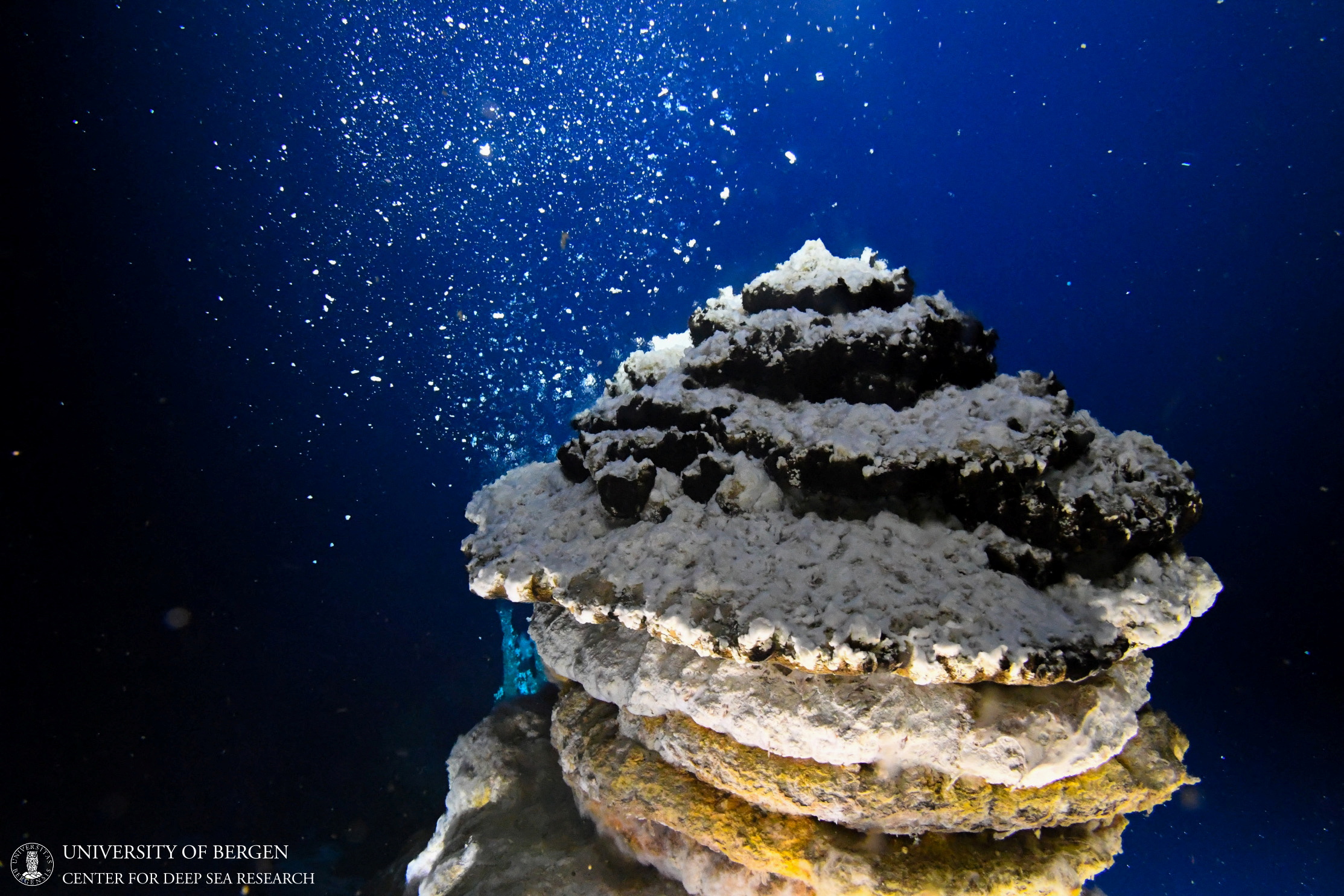
Highlighting the country’s ambitions, it signed a second contract last year with the International Seabed Authority (ISA), the UN body that regulates the deep ocean floor, to explore polymetallic sulphides, which contain minerals such as copper and zinc – key ingredients in clean energy technologies such as wind turbines and storage batteries.
Besides the two polymetallic sulphide contracts, it holds an ISA exploration contract for polymetallic nodules in the Central Indian Ocean Basin. China and South Korea are the only other countries with three ISA exploration contracts directly under government control.

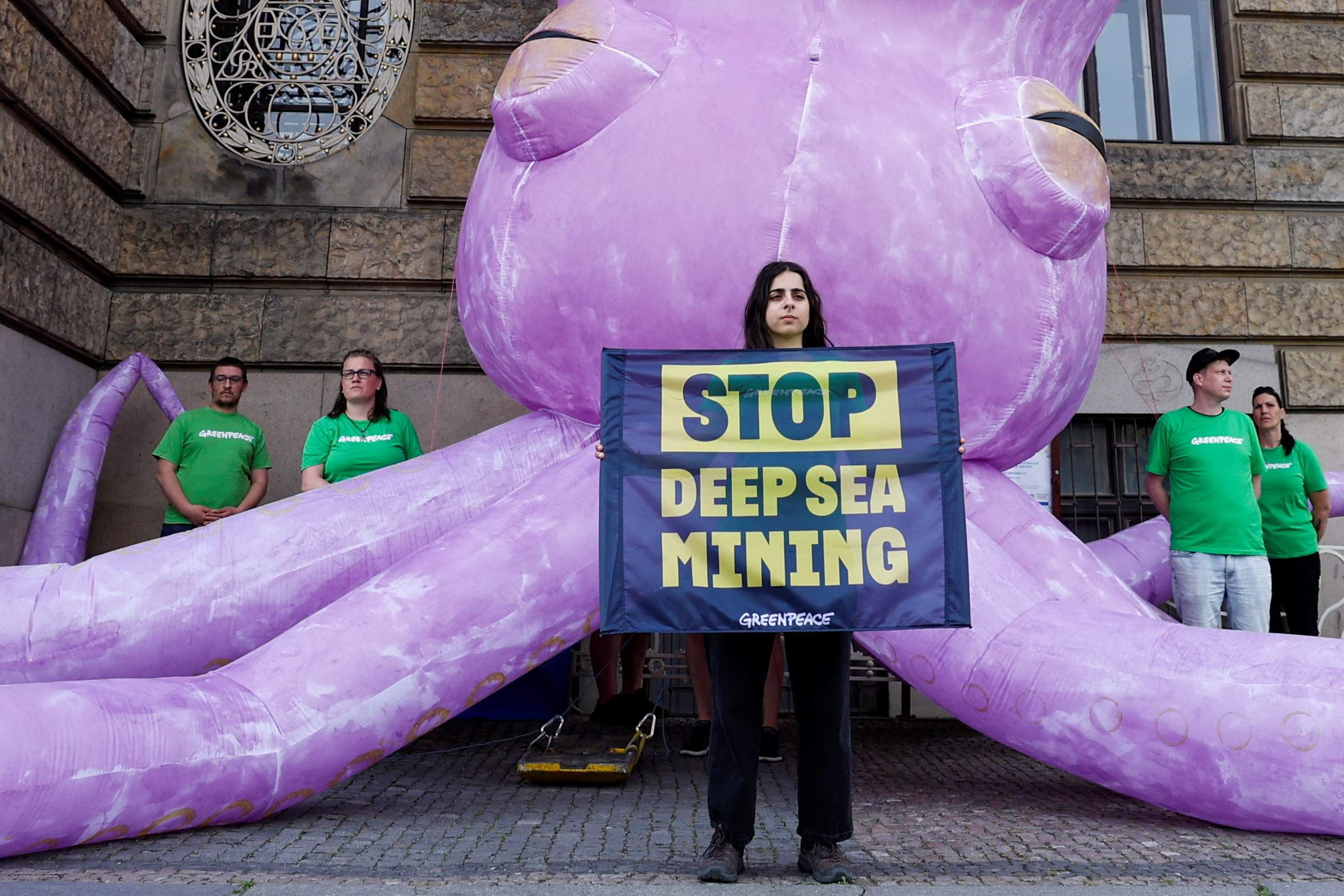
Yet deep-sea mining is controversial for its potential impacts on the ocean floor, a little-studied, undisturbed ecosystem that should be protected by a precautionary pause on the activity, marine scientists say.
A coalition of 46 countries is pushing for a moratorium on deep-sea mining, until enough scientific evidence shows the ecosystem impacts can be reduced.
Despite this push, ISA contract-holders are still racing to develop the technical capabilities to mine the ocean floor, betting that commercial-scale operations will eventually be permitted and prove economically viable. India, an emerging clean-tech powerhouse, does not want to fall behind competitors, government officials told Climate Home News.
-
Race to host High Seas Treaty HQ heats up as Chile reaffirms bid
Chile’s ocean protection record and concerns over a rival Chinese bid keep it in play, despite questions over the Kast government’s environmental policies -
As marine heat breaks records, countries seek ocean roadmap at COP31
Africa and the EU are leading a push for COP31 to deliver a roadmap that lays out measures to protect fast-warming oceans -
Governments weigh response to US going alone on deep-sea mining
At annual talks in Kingston, the International Seabed Authority (ISA) launched legal processes to challenge a unilateral US push for deep-sea mining






Since India obtained its first ISA exploration contract more than two decades ago, extensive survey work has been undertaken in the 75,000-square-km contract area in the Central Indian Ocean Basin, which is estimated to hold hundreds of millions of tonnes of polymetallic nodule resources, according to the Indian government.
More recently, survey work has identified several potential locations in the polymetallic sulphide areas.
The seabed survey work and the deep-sea mining tools being developed in Chennai put India among only a small group of countries to have made such progress. China is another leader in mapping the ocean floor for potential mineral resources that could one day be extracted.
At a meeting in Jamaica in July, the ISA continued negotiations on rules for commercial deep-sea mining but failed to adopt the Mining Code. Delegates agreed that further work had to be carried out to resolve outstanding issues, with the ISA tasked with devising a roadmap towards hopeful adoption.

Technical and regulatory hurdles
Even if a regulatory framework is established, commercial development remains a distant prospect in the exploration contract areas awarded to India by the ISA, government officials and experts say.
“There is still quite a distance to be covered to convert the resource to reserves,” the ministry spokesperson said.
Pradeep Singh, an ocean governance expert at the Oceano Azul Foundation, a Portugal-based international nonprofit, described India’s deep-sea mining programme as being firmly in “an exploratory phase”.
“There is still a lot more work left to be done in order to achieve sustained extraction technology, address operational hurdles (such as shipboard processing and trans-shipment), and develop onshore refining,” Singh told Climate Home News.
“It would also appear, from publicly available information, that none of the programmes will be ready to move into the exploitation phase anytime soon,” Singh added.
Deep-sea real estate
Instead, the government’s longer-term vision for India’s ISA contracts is centred on “a combination of mineral/resource security, indigenous technology development, scientific capability and eventual industrial readiness”, the ministry spokesperson said.
But for as long as deep-sea mining remains commercially unviable, Singh said securing exploratory licences may be more about “real estate and as a projection of dominance”.
“The competition at the moment – if any – is more about investing in deep-sea operational capabilities rather than mineral resource extraction itself (which is currently not competitive),” Singh said.
Threat to ocean biodiversity
In tandem with India’s deep-sea mineral survey work, years of research by government environmental scientist Dr. Rengaiyan Periasamy on Indian Ocean ridges highlight the risks that future deep-sea mining poses to ocean biodiversity.
“Our studies have led to the discovery of more than 10 new species,” Periasamy told Climate Home News from the Kochi-based Centre for Marine Living Resources & Ecology, which also operates under the Ministry of Earth Sciences.
They warn that deep-sea mining could cause habitat destruction, persistent sediment plumes and disruption of ecosystem processes throughout the water column, with potentially irreversible impacts occurring before many species and ecosystems are fully understood.

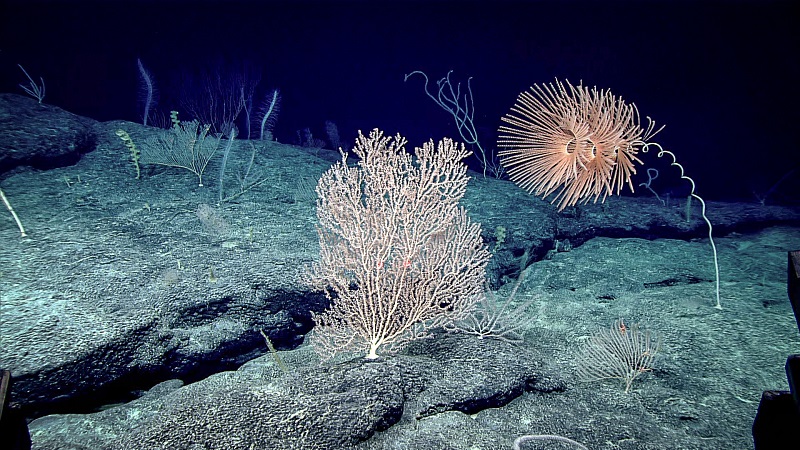
Major fisheries could also be severely impacted, according to campaigners.
“No country has conducted enough scientific research to capture the full scope of environmental impacts of deep-sea mining,” said a spokesperson for the Deep-Sea Conservation Coalition, an international environmental advocacy group focused on protecting deep-ocean ecosystems.
“We know more about the surface of the moon than we do about any deep-sea environment,” the spokesperson added.
The post India builds deep-sea capacity in bet on critical minerals future appeared first on Climate Home News.
India builds deep-sea capacity in bet on critical minerals future