Carbon Footprint
IEA Sounds Alarm as War Disrupts Energy Markets, Boosting Australia’s Uranium Demand


The global energy system is under pressure again. This time, the shock is not just about oil and gas. It is also about minerals that power clean energy and nuclear technologies. Media reports revealed that, according to International Energy Agency chief Fatih Birol, the current crisis could soon look small compared to what lies ahead in critical minerals.
Speaking at a major industry event in Canberra, Birol warned that supply risks in minerals like uranium, copper, and battery metals could reshape global energy security. His message was clear: countries must diversify supply chains now or face deeper disruptions later.
A New Energy Shock Unfolds
The world is already dealing with a massive energy disruption. The ongoing conflict involving the United States, Israel, and Iran has removed the equivalent of around 10 million barrels of oil per day from global markets, according to the IEA. This supply gap has pushed countries to rethink energy security. Oil prices remain volatile, and supply routes are under strain. However, Birol stressed that the bigger challenge may not be oil at all.
Instead, the future risk lies in critical minerals. These materials are essential for clean energy systems, electric vehicles (EVs), and nuclear power. Without stable access to them, the global energy transition could slow down sharply.
The problem is concentration. Today, one country dominates the refining and processing of many key minerals. China controls more than 80% of global refining capacity for several critical materials, according to IEA estimates. This creates a major bottleneck in supply chains.
To sum up, without urgent diversification, countries could face even greater risks than today’s energy shock.
Amid these concerns, Australia is emerging as a key player. The country holds vast reserves of critical minerals and energy resources. This includes uranium, lithium, copper, and natural gas.
Australia has the world’s largest uranium reserves. It accounts for roughly one-third of the known global resources, according to data from the Minerals Council of Australia. At the same time, it ranks among the top global uranium producers, alongside Kazakhstan, Canada, and Namibia.


This puts the nation in a strong position as nuclear energy gains traction again worldwide. IEA highlighted that Australia is a reliable supplier that does not use energy exports as a geopolitical tool. This reliability is becoming more valuable as global tensions rise.
At the same time, Australia is also rich in battery minerals. It is the world’s largest producer of lithium and a major supplier of nickel and cobalt. These materials are critical for EV batteries and renewable energy storage.
The IEA expects global nuclear capacity to grow strongly through 2035. In its latest outlook, nuclear generation could rise by nearly 50% by 2040 under net-zero scenarios. This shift will significantly increase demand for uranium. According to the World Nuclear Association, uranium demand could double by 2040 if new reactors and SMRs scale up as expected.
For Australia, this presents a major export opportunity. Even though the country does not use nuclear power domestically, it plays a crucial role in supplying fuel to the global market.
One of the biggest shifts expected from this crisis is the revival of nuclear energy. Governments are now looking for stable, low-carbon energy sources that can reduce reliance on volatile fossil fuel markets.
As per WNA, in 2022, Australia produced 4087 tU of uranium, 8% of global production. Uranium comprises about 17% of the country’s energy exports in thermal terms.
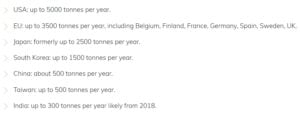
Contracted Imports of Australian Uranium Oxide Concentrate – U3O8

LNG Demand Set to Rise
The current crisis is also boosting demand for liquefied natural gas (LNG). Damage to energy infrastructure in the Middle East has disrupted supply flows, forcing countries to seek alternatives.
Australia is already one of the world’s largest LNG exporters. Projects in Western Australia and Queensland supply key markets across Asia, including Japan, South Korea, and China.
Birol said demand for Australian LNG is expected to grow further as countries look for stable suppliers. This could strengthen Australia’s role in global gas markets in the short to medium term. Similarly, Wood Mac had also projected earlier that the nation’s exports would remain steady throughout this year,

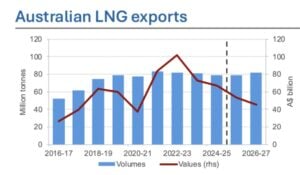
According to the International Energy Agency, global LNG demand is projected to rise by around 3–4% annually through 2030, driven by Asia’s energy needs and coal-to-gas switching.
- READ MORE: War Could Boost Carbon Credit Demand: How Middle East Energy Crisis May Reshape Climate Markets
EV Growth Drives Copper and Battery Metals
Beyond nuclear and gas, electrification is another major trend shaping demand. The global shift to EVs and renewable energy systems is accelerating the need for metals like copper, lithium, and nickel.
Copper is especially important. It is used in power grids, EV motors, and renewable energy systems. Birol emphasized that expanding electricity grids worldwide will require massive amounts of copper.
The IEA estimates that clean energy technologies could double global copper demand by 2040. Similarly, lithium demand could grow more than 40 times under aggressive climate scenarios.
As said before, Australia is well-positioned here too. It leads global lithium production and has large untapped reserves of other key minerals. This gives it a strategic advantage as countries race to secure supply chains.
Investment Trends Show Growing Interest
Recent data shows rising investment in Australia’s resource sector. Uranium exploration spending has picked up after years of decline. According to the Australian Bureau of Statistics, uranium exploration spending reached about $55 million in 2023. This marked the highest level in over a decade.
This increase reflects renewed interest in nuclear energy and long-term expectations of higher uranium demand. At the same time, mining companies are investing more in critical minerals projects. Governments are also stepping in with policies to support domestic processing and reduce reliance on foreign supply chains.

While the current energy crisis is serious, Birol’s warning points to a deeper challenge. The world is entering a new phase where minerals, not just fuels, will define energy security. If supply chains remain concentrated, disruptions could become more frequent and more severe. This could slow down clean energy deployment and push up costs.
Diversification is key. Countries need to invest in new mining projects, expand refining capacity, and build resilient supply networks. And Australia is likely to play a central role in this shift. Its vast resources, stable political environment, and strong export infrastructure make it a critical partner for many nations.
The global energy landscape is changing fast. Oil shocks are no longer the only concern. Critical minerals are becoming the new backbone of energy systems. As nuclear power returns, EV adoption rises, and clean energy expands, demand for these materials will surge. This creates both risks and opportunities.
The challenge now is to scale supply, diversify processing, and ensure these materials remain accessible. If not, today’s energy crisis could soon be overshadowed by a much larger minerals crunch.
The post IEA Sounds Alarm as War Disrupts Energy Markets, Boosting Australia’s Uranium Demand appeared first on Carbon Credits.