Green Living
I Followed a Plastic Bottle Through the Recycling Process. Here’s What I Learned.

Last year, I followed a cardboard box through the recycling process to see what actually happens after we toss it into the recycling bin. And someone left me a comment:
“Love it. Can you do one on plastic water bottles, please?”
I responded, “I’ll see what I can do. 

And, what can I say, I aim to serve. Somehow, I managed to turn that comment into a sponsored trip to Michigan, to attend the RECYCLE BOWL and follow the full journey of a bottle.
Lemme tell ya, I learned a lot about recycling, deposit programs, and football.

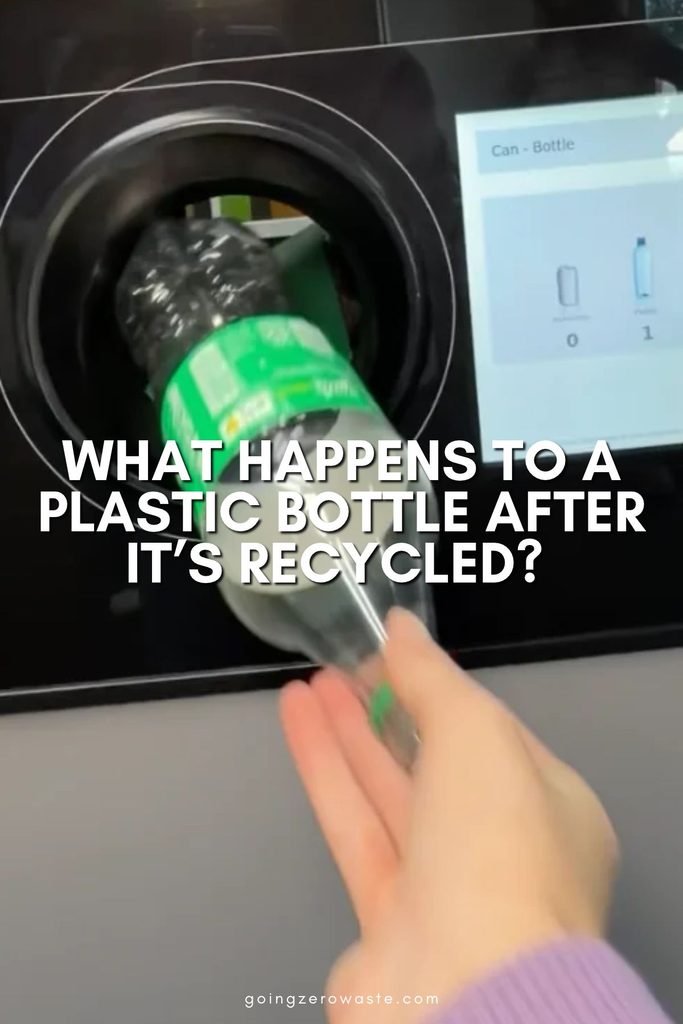
bottle deposits
I live in Maine, where we have a bottle deposit program, and I’ve been a big advocate for bottle bills for years.
If you’re unfamiliar, when you purchase certain beverages, you pay a small deposit, usually 5 or 10 cents, on the container. Once you’re finished with your drink, you return the empty bottle or can to a redemption center or participating retailer to get your deposit back.
It’s pretty simple, but it’s incredibly effective.
This is for things like aluminum cans, glass bottles, and different types of plastic beverage containers. And while each of these materials goes through its own recycling process, collecting them separately creates a cleaner, more reliable supply of material that manufacturers can use to make new products.
Which is really important, because recycling is a business!! REPEAT AFTER ME! RECYCLING IS A BUSINESS.
PEOPLE HAVE TO BUY WHAT YOU PUT IN YOUR BIN. Next time you go to your bin, I want you to ask yourself, ‘Would I buy this??’
When you start viewing your recycling in this way, it really changes how you approach the whole process in a good way. No more wishcycling!
That’s what makes these programs so exciting. It’s creating a reliable infrastructure that can almost guarantee a reduction in virgin material needed!
And Michigan has an incredibly effective system where you can go bottle to bottle in a 30 mile radius. This is an incredibly effective process I’d love to see replicated.
Michigan offers a 10-cent deposit on eligible beverage containers, and historically, the state has had some of the highest redemption rates in the country at almost 70%.
But, Germany’s deposit system collected approximately 96% beverage bottles in 2023, with an overall PET bottle collection rate of 98.7% across its different collection systems… so how do we increase this?
Because if we compare it to the United States, where the average is only 29% of PET bottles, that’s a LOT of valuable material we’re not collecting.
Which means we’re losing it to landfills, incinerators, litter, or other disposal routes.

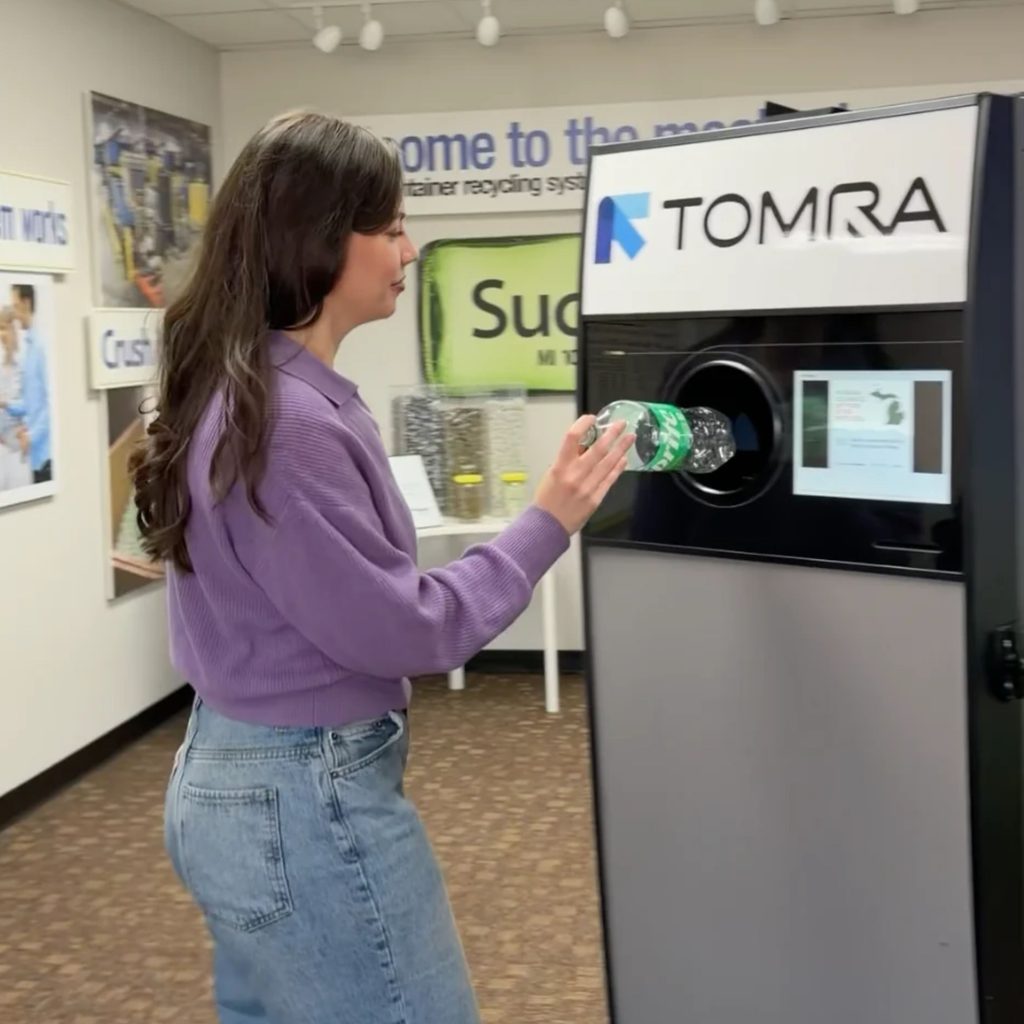
following a plastic bottle through the recycling process
While I was in Michigan, I visited Shcupan, Clean Tech, and Plastipak which is the full journey after you return your bottles at the grocery store or at a UM football game.
Now, I knew plastic bottles could be recycled into other materials like fabric or carpets, but did you know PET (plastic #1) could actually become another food-grade plastic bottle with 100% recycled material?
collecting and sorting
So after you drop your bottle or can into the beverage deposit machine at the grocery store, a truck comes and picks it all up. Where everything is sorted into like material. Glass is with glass, PET is with PET, HDPE is with HDPE. Aluminum is with Aluminum, you get the idea.
And, this is a very impressive process. Each material goes on it’s own journey. Once all the PET bottles were gathered, their first stop was my favorite machine – the label remover. When you recycle a plastic bottle you don’t need to remove the label and keep the cap on because they have machines to handle all of that for you.
shredding, washing, and separating
After the label is removed the bottles are shredded into small pieces, and they are passed through a machine that contains water. The lids of plastic bottles are made from HDPE (plastic #2) which floats while PET sinks so they can be separated and recycled with their own material.
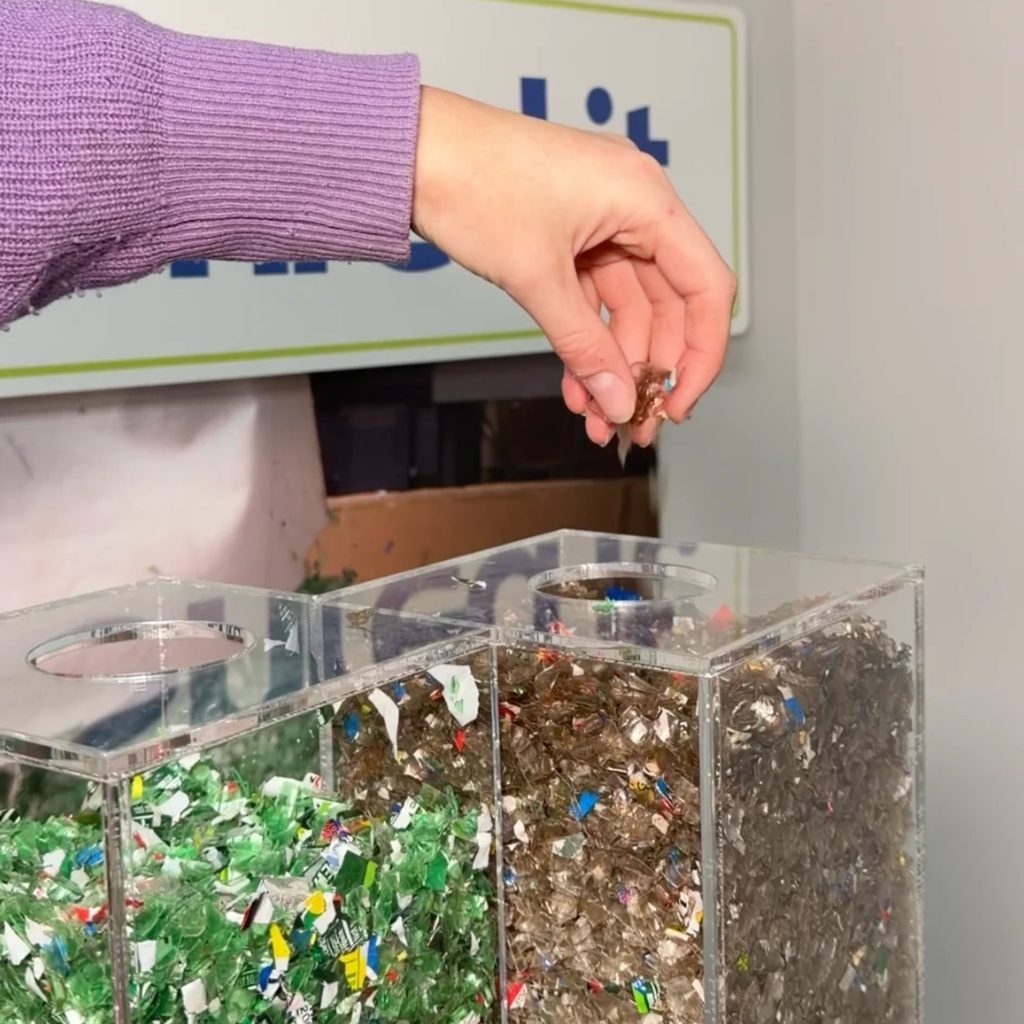
from plastic flakes to brand-new bottles
The clean PET flakes go through additional process to ensure it meets food safety requirements set by the FDA. This flake material is then turned into something called a preform, and these preforms are heated and blown into molds to create full-size bottles.
And just like that, an old plastic bottle has become a new plastic bottle, and I think that’s pretty cool! When I started my zero-waste journey, so much of the conversation around plastic recycling focused on downcycling, where materials are turned into products that might not be recycled again.
And while that still happens, It’s really nice to see bottle-to-bottle recycling that’s done mechanically and efficiently. (because chemical recycling is a whole ‘nother can of worms)
zero waste football stadium?
Part of my sponsored trip was to go to the University of Michigan RECYCLE BOWL!! UM has a zero waste football stadium and it’s one of the largest in the world.
Now, I love a good opps tour at a sporting event. Most people are excited to go to the game but I am thrilled to dig through the trash. There are really unique opportunities at arenas for education and really effective design.
Because if you can control what comes into the stadium, you can control what goes out and WHERE it goes. Essentially you can have a full end of life plan for every item sold or offered inside guaranteeing a massive diversion from landfill.
Michigan Stadium has a substantial recycling and composting program, with the university reporting that it typically diverts around 70-80% of game-day waste from landfills.
That’s an impressive undertaking when you consider just how much packaging, food waste, and other material can be generated during one football game with more than 100,000 fans in attendance.
In fact, we just got the results from the 2026 Recycle Bowl! Recycling is up 2,434 more pounds than last year, and 5 tons more than the very first Recycle Bowl.
Almost 50,000 pounds of material were collected for recycling, composting, reuse, and food donation. That’s nearly 25 TONS equivalent to almost 5 elephants. Not too shabby for a football game, but I have a confession to make. I actually bought a plastic bottle of water while I was there.
I could probably count on two hands the number of plastic water bottles I’ve purchased in the last decade. But you can’t bring your own bottles into the stadium, and I was thirsty.
The reality is that we’re not always going to have a reusable option available. Sometimes we’re going to forget something, find ourselves in a situation where reusables aren’t allowed, or simply need to buy a drink.
Thankfully, they had water refill stations, so I was able to refill my bottle instead of purchasing another one, but I feel a little less bad knowing that the stadium has a dedicated recycling program and I got to see the whole journey of my bottle.
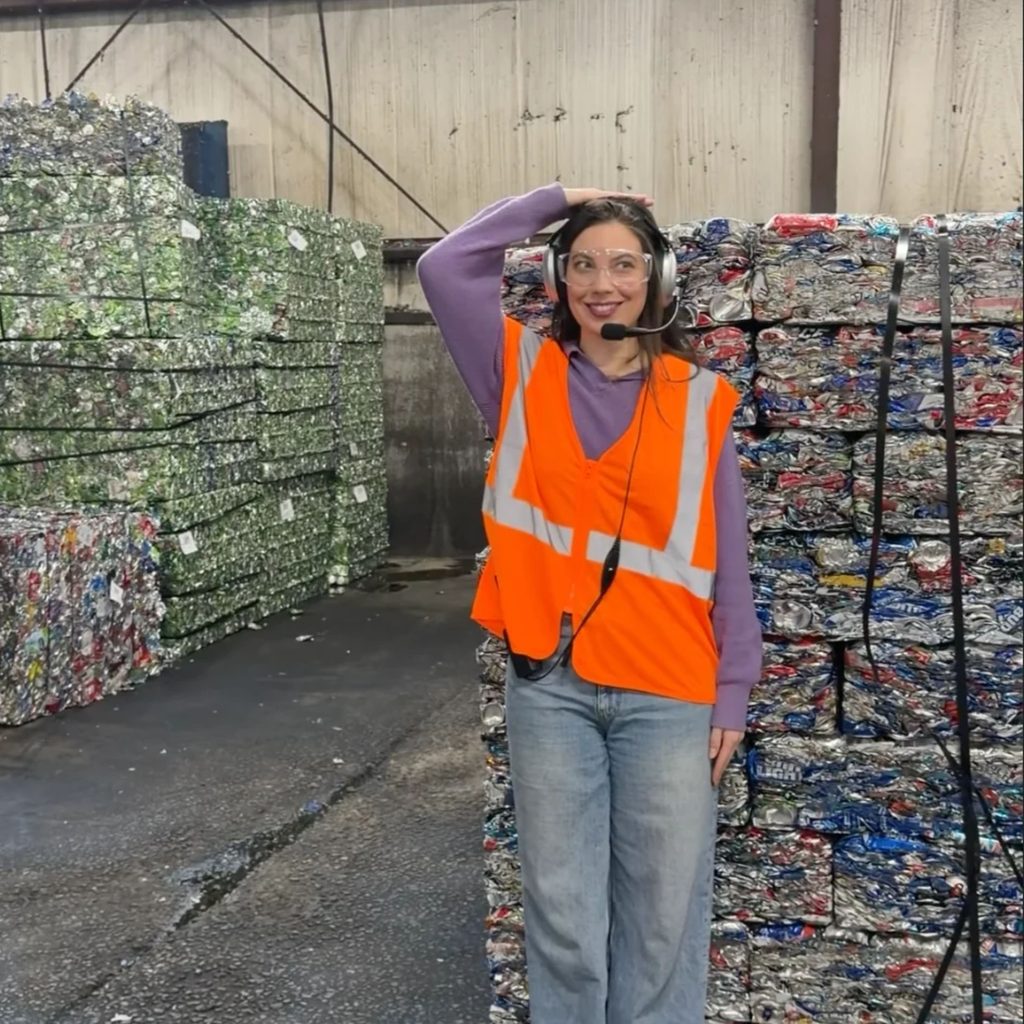
we need to reduce plastic AND recycle more of it
Now look, I’m not planning on buying more plastic bottles. I still believe we should reduce first, reuse second, and recycle as a last resort. But I don’t think reducing plastic consumption and improving plastic recycling are competing goals.
I wrote a blog post several years ago about whether glass or plastic is better for the environment, and it challenged a lot of my assumptions about packaging.
Glass is often viewed as the obvious environmentally friendly choice, but it’s also heavier to transport, and manufacturing it requires significant energy. The truth is that packaging has a lot of trade-offs, and we have to consider how it’s manufactured, transported, reused, and recycled.
And this trip has added another layer to that conversation for me.
I have family members who are never going to give up their bottled soda. And while I will always encourage people to reduce unnecessary packaging, I’d much rather see those bottles collected and turned into new bottles than have them end up in a landfill.
so how do we keep the bottles out of the landfill and environment?
BOTTLE BILLS. We desperately need more bottle bills. Since we’re capable of turning used plastic bottles into new, food-grade bottles, why aren’t we collecting more of them?
Germany’s collection rates show us what’s possible. We already have so much valuable material in circulation so let’s make sure we’re actually getting it back. We need more convenient redemption locations, and better infrastructure to reclaim the materials we’re already producing.
The post I Followed a Plastic Bottle Through the Recycling Process. Here’s What I Learned. appeared first on Going Zero Waste.
I Followed a Plastic Bottle Through the Recycling Process. Here’s What I Learned.