Ocean Acidification
How to thrive on a German ship (by and for non-Germans)

By Nathalie Rodríguez Lara (GEOMAR), Federico Scarscelli (GEOMAR), Ajit Subramanian (LDEO), Qi-fan Wu (University of Copenhagen), Eduardo Lima (UFPE), Herbert Barbosa (UFPE), Joelle Habib (LOV) and Zengchao Xu (GEOMAR)
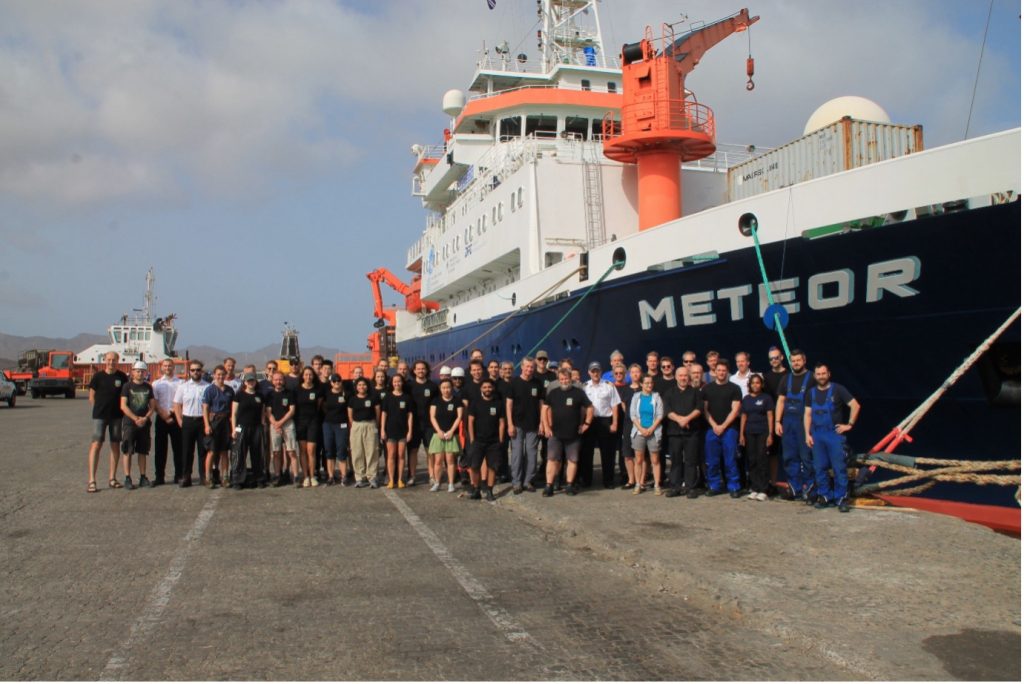
So, you have been invited to participate in an oceanographic research vessel? Congrats! Oh, it’s German… well. Here are some tips that will be especially useful in the following days.

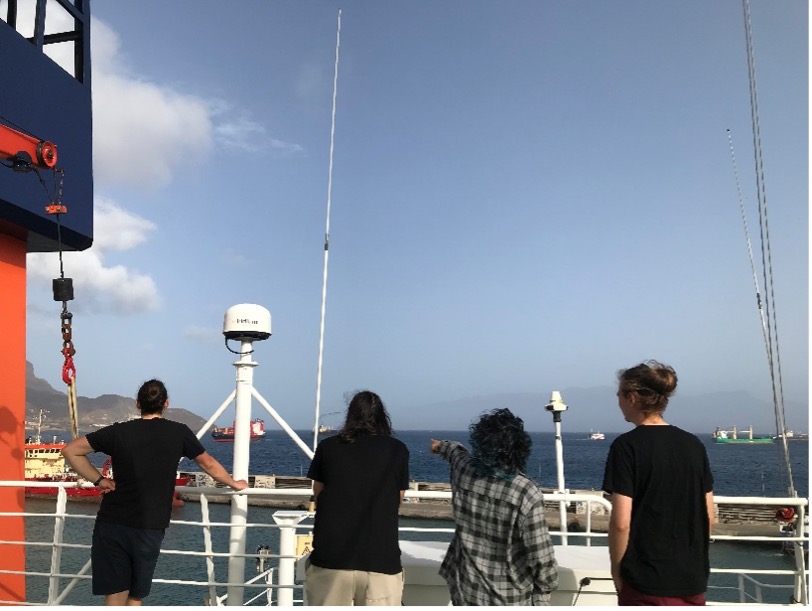
We shall start with food. Everyone needs it after all.
As with all ships, the Meteor has some hard rules on mealtimes, so be aware of the hour and get ready to enjoy some German delicacies. Keeping the mealtimes is important because the staff must clean up and prepare for the next meal. However, if you are working, you can ask for your food to be put aside for you to eat later.
First of all, breakfast. For the first bite after getting up (or before going to bed, in case you had the night shift), you can always expect a large variety of eggs, cheese, ham, and bread. Moreover, in the Meteor breakfast menu, you even get a little surprise dish each day, featuring a specialty Hausmannskost, or traditional homemade recipe, usually chosen among north Germany’s delicacies. These recipes are made for people that work hard all day, so of course the hearty meals are there to sustain hours on hours of manual labour, with strong flavour as well. Some of our favourites are the Schlemmerschnitte, Bremen Knipp, Wurstschnitzel and, of course, one of Germany’s greatest, the Zwiebelmettbrötchen. Yes, they are quite heavy compared to a nice yogurt, but they will provide you with enough energy for any scientific endeavour or challenge you will face.
As you walk towards the Messe be ready to say Moin, hello, Morgen, morning or any variety of greeting for the day to anyone who passes you by. Even when this is not customary on German land, it is most imperative that you do it on a German ship. Otherwise, be prepared to be greeted by a very loud “Morgen” at 7 am and a disapproving look.
“Mahlzeit” you say as you enter lunch time, a greeting for mealtimes meaning quite literally “mealtime”. A selection of food is served buffet style, so you may choose your desired quantity and meal type. Vegetarian options are included at every meal for those who prefer it, and you can never forget bit of potato on the side. On Sunday, the cooks usually prepare some traditional “family lunch” menu, as a way to enjoy a small moment of home feeling, even when it is far away on land. Even in the hottest day in the Tropical Atlantic, you will immediately feel like celebrating Christmas at your German friend’s home.
For dinner, a similar situation can be expected: a selection of food awaits you at the Messe including everything you need for a good Abendbrot, or evening bread, to those initiating on the German lifestyle.
A lot of attention shall be put on shoes and clothes for all mealtimes. The Messe is to be enjoyed by everyone, so no dirty safety shoes or dirty work clothes shall cross the door (leave the shoes outside, if you must). Sit down with your fellow scientist, eat with people, talk to them, ponder about all the life choices that led you to this point in time and the contributions your days at sea will do to science. Let yourself enjoy the company of other humans and DO NOT use your phone!
Oh, look at the clock, its 15:00! Well, dear reader, I shall introduce you to the great German culture of “Kaffee und Kuchen” or coffee and cake. Every afternoon, the kitchen lays out a variety of sweet little treats for you to enjoy, only a piece though, as everyone should enjoy this lovely tradition. Those in not so friendly terms with caffeine, may also find various selections of teas or even a glass of milk. Perhaps some chocolate or snacks (at your own cost), if you prefer. What’s more, as you see your fellow men work tirelessly under the sun, bring some cake to them, offer a little break from science, and enjoy the long-lived tradition of pastries.
Regarding the work on board, although there is a predefined shift schedule, some activities require most people to be available to help, such as mooring recovery and deployment. Offer a hand with those who need it, using the ancient spells “Do you need some help?” and “Do you want to switch?”. It is very much appreciated by those on deck, who have been bearing the load of the sun and hours of manual labour, and who probably haven’t had a nice meal yet.

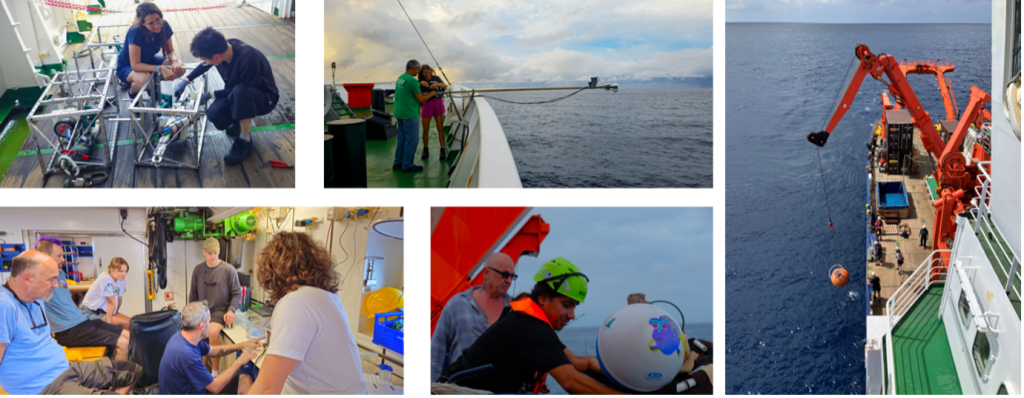
For the ones not so familiar with the German language, we offer two very useful work-related words: “stop” and “weiter”, meaning stop and continue. If you want to become a real professional and show off some advanced German skills, you can also add “schneller” and “langsamer”: faster and slower. Keep them in your heart and in your mind, and when the moment comes, you will find them more useful than not.
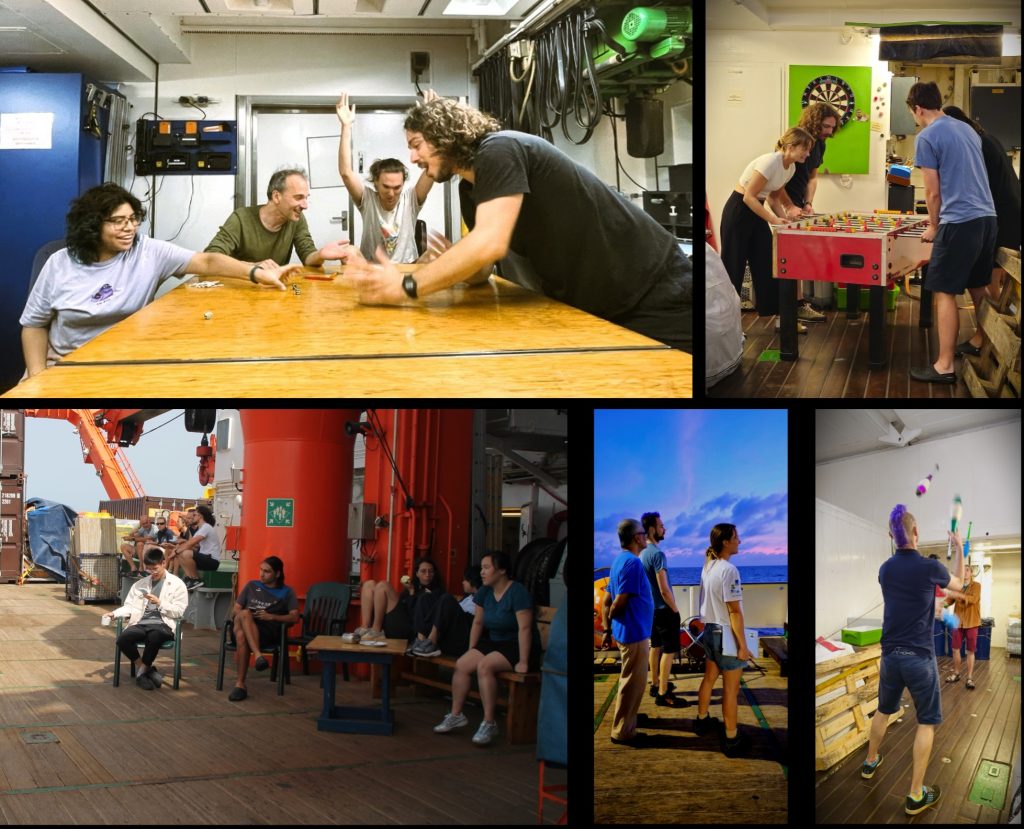
And, of course, after a tiring day of work, there are smiles, conversations, and music, along with the good feeling that comes from a job well done. Walk into the common areas for the evening: talk with people, maybe play a good round (or two) of Kniffel; perhaps join the kicker or pingpong tournament, a movie night sounds good, or just looking at the stars and the vastness of the night sky would suffice for today.

Another thing to keep in mind is house-keeping rules.
Follow your steward rules. Your cabin is your personal space, keeping it tidy and clean helps you and the housekeeping crew. Remember to leave your door open if you are not sleeping and take care of your shower curtain so it dries properly, we do not want mold on a ship!
Since we are already here, some general advice for life at sea.
An important aspect of life at sea is, sadly, sea sickness. It’s as common as it’s normal, everyone has tips and tricks. Here is ours: bring your pills, also known as Reisetabletten, take them every day and see how it works for you, maybe you are lucky and don’t need them after a few days. But never be too careless, the sea is as vast as it is treacherous, and big waves can change your internal balance easily. So, keep your pills close and keep them safe.
Be aware of the time changes, crossing the Atlantic may feel like a timeless void but time zones still exist to the rest of the world. The captain will announce the changes in time zone, moving an hour forward or backwards as needed, so be aware of this, keep an eye on the clocks and be prepared for a bit of a longer, or shorter, day ahead.
We thought of giving advice on science, but that’s what you are here for. Do not fret. Do your work and do it well. Trust that the knowledge that has brought you to this vessel can contribute, and be contributed, by those around you. Both the scientists and the crew are welcoming (but you have to follow the rules both for safety reasons and to work well in a limited shared space) and make a good effort to communicate in English, even if it is not so comfortable for all of them to so. So, dear reader, may your equipment be efficient, your samples uncontaminated and your results significant. Have a good trip, enjoy the camaraderie of new friends, and remember to enjoy these crazy days ahead.
Gute Reise und viel Spaß!