Green Living
How to Store Food So It Lasts Weeks
Have you ever opened your fridge and found a carton of moldy strawberries you didn’t get to in time? It’s happened to the best of us.
In the US alone, we waste 40 percent of our food. That hits us both in our gut and wallet: The average American household loses $2,913 a year to food waste.

Why does this happen? A big culprit is simply not storing food properly. Ex: keeping milk in the fridge door when it should be on one of the shelves, then wondering why it went bad so fast.
Most of our food is stored in plastic containers or bags, which can speed up the decomposition process. Plastic is also a known endocrine disruptor, so limiting your exposure to it is ideal.
Here’s how to properly store your food so it lasts weeks, not days, without plastic.
produce storage
If you throw all your produce as-is into the fridge after buying it, please stop.
When you keep your produce in plastic bags and containers they’re more susceptible to rotting. This is especially true of greens which get slimy and shrivel up.
As a general rule of thumb:
- Wash produce before you eat it, not before you store it. Especially berries.
- Before shopping for more food, make a note of what you already have and plan meals around the older food.
- Choose the right containers to keep food in tip-top shape (more on this later).
- Check labels before putting your food away, as many products carry storage instructions (ex: Peanut butter or jams may say refrigerate after opening).
Personally, I have several hacks for keeping my monthly grocery budget to $300 a month. And it helps I meal plan and prep too!
A quick guide to storing produce:
- Lettuce – chop lettuce, store in airtight container with a cloth on top
- Cucumbers – wrap in cloth towel and store in airtight container
- Potatoes and onions – mortal enemies, store separately in a cool dry place
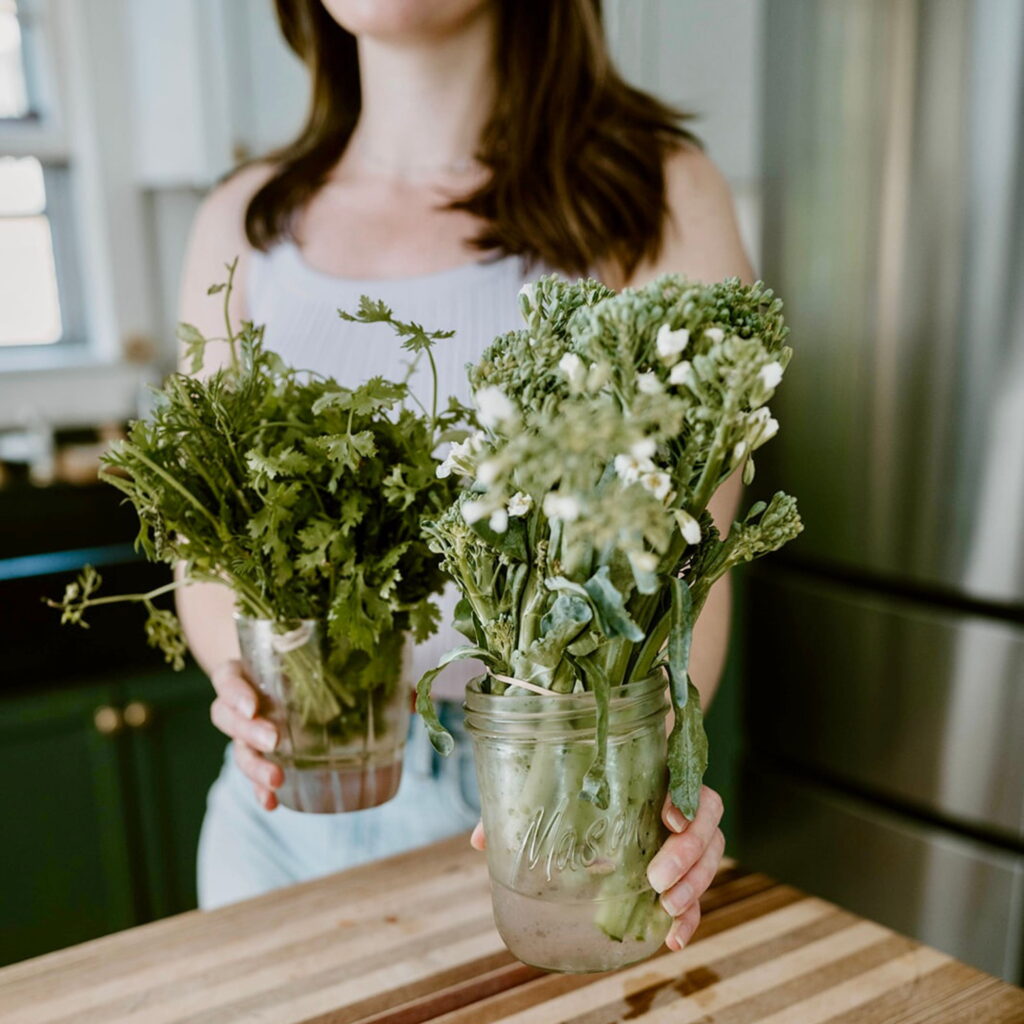
- Herbs – store like bouquets of flowers, mostly in the fridge. Mint and basil can go in a dark and cool corner on countertop
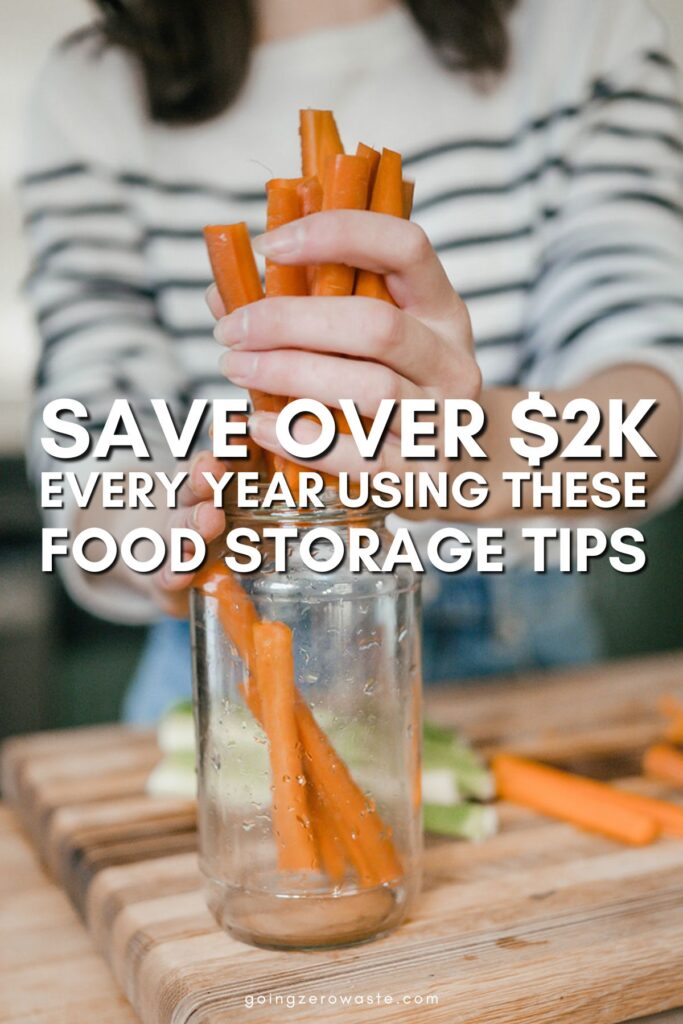
- Carrots and celery – chop and store in a glass of water in the fridge
- Mushrooms – brown paper bag in the fridge
- Berries – store in airtight containers in fridge
- Citrus – on countertop, but if it starts to get wrinkly, place in a bowl of water in your fridge
- Apples and bananas – room temperature
- Avocado – Let them ripen at room temperature before storing in the fridge
- Zucchini, squash – Roam free in crisper drawer
- Kale, asparagus, broccoli, broccolini – cut the ends off and store it like a bouquet of flowers in fridge
- Tomato and garlic – store on the countertop. Pro tip: Stop garlic from spoiling by tying bulbs in panty hose and hang them up

food storage containers
Supporting your local farmers market and local refillery make it easier to shop plastic-free. Most produce is package-free and has no produce stickers, and dry goods can be placed inside your own containers.
But if you don’t have access to those, you can still find what you need in most grocery stores. Try to prioritize package-free produce whenever you can. Alternatively, stick to paper, cardboard, and glass packaging as these are easier to recycle/upcycle.
If plastic is unavoidable, aim for products packaging in rigid plastics #1 (PET) and #2 (HDPE), as these are often considered more recyclable than soft plastics. Though some grocery stores do offer take-back programs for soft plastics worth looking into.
Once you’re home, you’ll want to transfer produce and dry goods into the proper containers. Here are some plastic-free options I recommend.
the swag bag
The Swag bags are made from unbleached, unseeded cotton and are scientifically proven to keep fruit and veg fresh for two weeks or more. They come with color coded trim that makes for easy organization and can be used to store fruits (not bananas!), veggies, leafy greens and herbs.
To use, you’ll want to machine wash and dry it first, then dampen The Swag under tap. Wring out excess water before packing your produce of choice and storing it in the crisper drawer.
At the end of its life, Swag Bags are fully compostable. Love a full-circle product!
silicone bags
Silicone bags, like Stasher bags, are great for storing leftovers, marinating food, and freezing food. I especially love using them to save up my vegetable scraps for homemade veggie stock.
Stasher bags come in various sizes, from a pocket 2-pack to a gallon. And some bags even have flat bottoms, enabling them to stand up.
Stasher Bags are freezer, dishwasher, and oven safe. And at the end of its life, your bag can be recycled with Terracycle to avoid waste.
RELATED: Is Silicone Plastic? Here’s What You Need to Know
glass snapware and jars
I love to upcycle empty marinara and jam jars – they’re great for repurposing around the kitchen! One of my favorite uses for them is storing my herbs and produce like bouquets in the fridge.
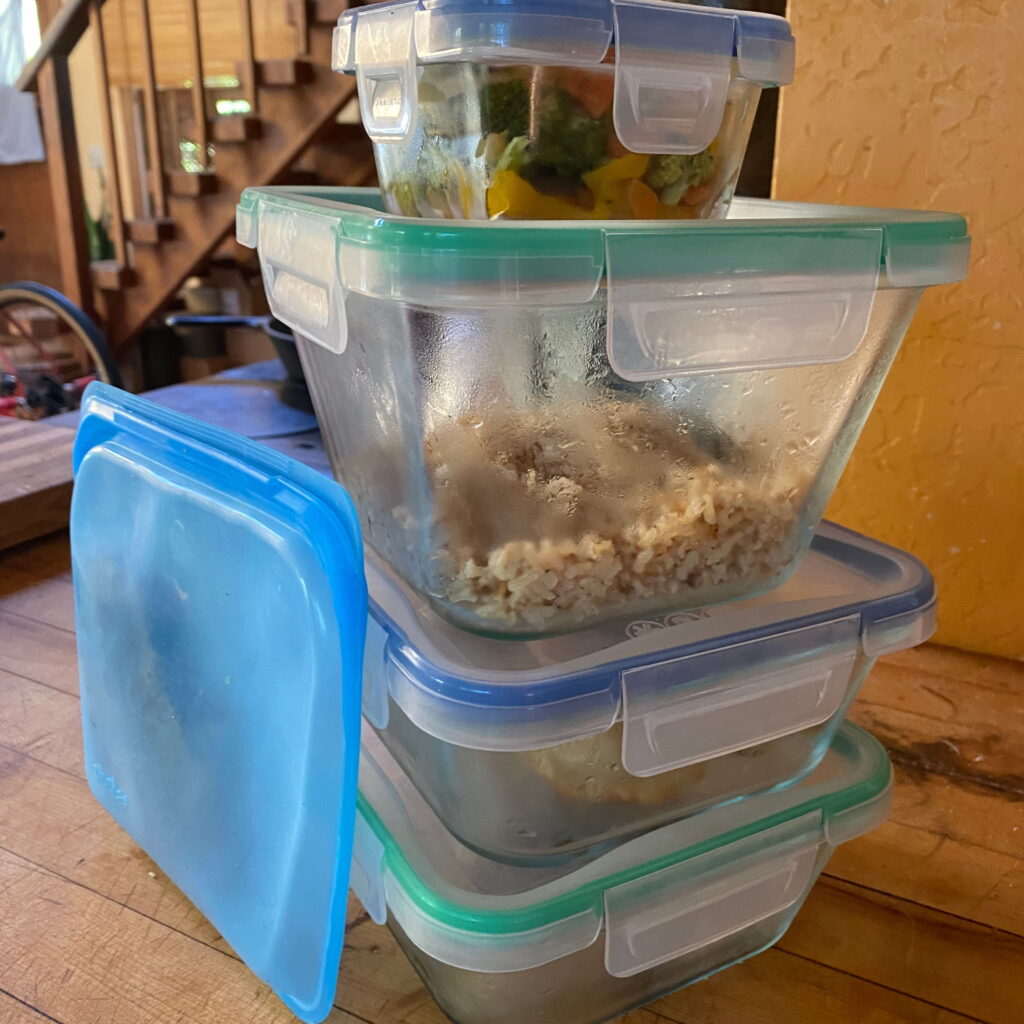
However, some produce requires a bit more space (like chopped lettuce), so investing in glass snapware is handy.
OXO’s BPA-free borosilicate glass container sets are spill-proof and seal with a snap. The 12-piece set comes in a variety of sizes, fit for any use. They can go from freezer, to oven, to fridge without a problem (just make sure to remove the lid before microwaving or putting in the oven).
It’s dishwasher safe, plus you can remove the silicone seal to make cleaning easy. They’re perfect for nesting and stacking, making them ideal for optimizing storage space.
beeswax wraps
Beeswrap is a great alternative to plastic wrap, and it can be used to store a variety of items like produce, cheese, bread, and more. You can also use it to cover a jar, a pie dish, a bowl, or even fold into a snack pouch.
Beeswraps are made from organic cotton, beeswax, plant oil and tree resin. But they do carry vegan wraps as well, made using candelilla wax. Both are compostable at the end of their life!
To use, just wrap the item of your choice and secure it using the warmth of your hands. Clean using cold water, mild dish soap, and then air dry. If it no longer sticks to itself, it’s time for a refresh (though with proper care, they can last up to a year).
metal tiffins
Metal tiffins are wonderful for storing food you intend to travel with, like commuting to work or on a picnic. ECO Lunch Box creates Tri Bentos that are 3 layers that stack and clip together. Made from stainless steel, it’s built to last.
The 3-layer design allows you to pack three separate foods, perfect for when you don’t want flavors mixing together. It’s also dishwasher safe, making it easy to clean.
There’s no plastic and its reusable for years to come. But if you want a leakproof metal tiffin, try their Bento Wet Box, which contains silicone gaskets.
fridge organization
Not every area of your fridge is created equal. Different shelves and drawers should be used to store different foods for the best longevity.
It’s also a great idea to have a ‘use it up!’ basket where you store a bunch of food on the verge of going bad. Keep this somewhere you can easily see so you remember to reach for it.
The fridge door: This is the warmest part of your fridge so use it for items that are less sensitive to temperature. Condiments, sauces, sodas, and bottles of juice do well here.
Top shelf: This is where the most consistent temperature is, so anything you intend to eat right away, or leftovers, should be kept here.
Bottom shelf: These are the coldest, so store raw items like fish, meat, dairy and eggs here. It also helps prevent cross-contamination.
Crisper drawers: One is high humidity (ideal for thin-skinned veggies and leafy greens), another is low humidity (ideal for ethylene-emitting fruits). Don’t overpack crisper drawers, as this can also cause accelerated spoilage. Aim to only fill a quarter of the way. I highly recommend laying some cloth towels down onto your crisper drawers, as this will help absorb excess moisture and reduce cleanup. Make sure you replace it every week.
Freezer: Make sure you label everything you freeze, including what kind of food it is, the date you made/bought it. Make sure the older foods face the front so you can easily use it up. You can freeze all kinds of things from nuts to cake to cooked pasta – not just fruits and veggies!
So, what are your tips for storing food? Let me know in the comments!
The post How to Store Food So It Lasts Weeks appeared first on Going Zero Waste.