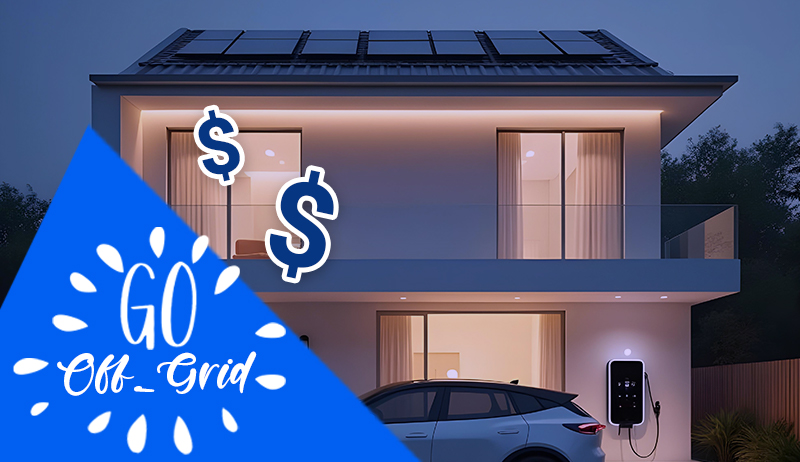
In Australia, the renewable energy revolution isn’t just about large-scale solar farms; it’s about empowering homes, farms, and remote communities to operate efficiently with off-grid living.
As 2025 unfolds, a bold shift toward energy independence is transforming the nation’s energy landscape.
With over 4 million rooftop solar systems installed and one in three homes now equipped with solar panels, Australia is already brimming with off-grid potential.
But why is going off-grid in Australia more than just a choice? Why is it a powerful step toward energy freedom, cost savings, and a brighter, sustainable future? Let’s find out!
So, here are the reasons why more Aussies are going off-grid in 2025:
Over the past few years, electricity prices have been increasing dramatically, particularly in Australian rural and regional areas.
Therefore, people find it an effective solution to live off the grid, which ultimately helps them to escape excessive energy bills and avoid power disruptions during bushfires, storms, or unexpected grid outages.
- Environmental Benefits &Sustainability Goals
Transitioning to off-grid systems means cutting carbon footprint while supporting Australia’s renewable energy targets.
With renewables supplying nearly 46% of electricity during late 2024 and early 2025, the country has significantly reduced its reliance on fossil fuels, thereby gradually achieving the goal of reaching net-zero emissions by 2050.
Many remote communities experience frequent blackouts or have no access to the grid at all.
In these areas, the grid isn’t just unreliable, it’s unsustainable, with residents facing nearly 70 hours of power outages annually. Between 2020 and 2024, quotes for full off-grid solar installations surged by over 1547%.
However, this spike has been driven by rising electricity prices and connection issues across regions like southeast Queensland, New South Wales, and Victoria.
- Government Incentives & Rebates for Living Off the Grid
Besides the local people and utility companies, the Australian government has introduced attractive rebates and subsidies to make off-grid living more accessible.
These rebates on solar energy and battery storage, shared community projects, and energy efficiency schemes lower the upfront cost, ensuring energy freedom for all groups of people in society.
- Energy Independence & Energy Security
Want complete control over your energy production, usage, and storage?
Living off the grid can be your ultimate solution, leading to greater resilience, lower long-term costs, and freedom from rising electricity prices and unpredictable outages.
With renewable energy sources like solar paired with battery storage, you can now generate, store, and manage your power anytime, anywhere, without relying on the grid.
What are the Main Components Needed for Going Off-Grid?
Whether you’re in a rural property or simply seeking independence from volatile energy markets, off-grid systems put you in complete control of your energy future.
But how to generate power off-grid? Which components are needed for an off-grid setup?
Key Components Include:
- Solar Panels: To capture sunlight and convert it into electricity.
- Battery Storage: To store excess energy for nighttime or cloudy days.
- Inverter: To convert DC electricity into AC, which powers most home appliances.
- Charge Controller: Manages power going to the batteries to avoid overcharging.
- Alternative Power Sources: Typically, a diesel or petrol-powered system, such as a generator (backup power), is used for emergency needs.
- Monitoring System: Lets you track usage, battery levels, and system health.