Climate Change
How clean energy can boost business for Africa’s food producers

Despite millions of dollars in grants and technical help for African businesses to power farming and other food production activities with renewable energy, most efforts remain stuck at the early stages because they struggle to find the investors, markets and expertise they need to grow.
This was the message from a coalition of global institutions working on energy, water and agriculture at this month’s Africa Food Systems Forum in Kigali, Rwanda.
“Energy, agriculture, water and nutrition actors rarely design solutions together,” the Agri-Energy Coalition said in a Call to Action on powering food systems with clean energy.
Using more renewables – especially solar power – to drive food systems would reduce food losses, ensure year-round availability and affordability of healthy foods, and improve productivity, income and resilience among farmers, food processors and other small enterprises, the coalition added.
In an interview with Climate Home News at the forum, Olamide Niyi-Afuye, CEO of the Africa Minigrid Developers Association (AMDA) – a body representing private-sector developers of small-scale, off-grid electricity systems across the continent – said its members are starting to recognise this interdependence and are increasingly considering businesses that combine energy with agricultural activities.
-
Second Africa Climate Summit seeks to jump hurdles to green industrialisation
A report on progress since the first summit in 2023 says financial, infrastructure and trade obstacles are hampering “climate-positive growth” on the continent

This, Niyi-Afuye added, could lead to greater supply and use of clean power for key processes like irrigation, food processing and storage, creating new sources of revenue for both sectors.
CHN: Conversations at the Africa Food Systems Forum highlighted how organisations working in energy and agriculture often operate in silos. What has hampered their collaboration, and how has that affected Africa’s economic development?
A: Most mini-grid companies in Africa were primarily incentivised to achieve connections. If you look at some ongoing projects, you see a cost-per-connection model [of revenue]. When a subsidy is tied to achieving a connection, regardless of whether it is a productive connection, you might not notice the problem until five years down the line, when you realise the cash flows are not what you projected.
Despite African walkout, fractious land COP ends without drought deal
So now we’re in a “come-to-Jesus moment” as an industry, where we’re righting the wrongs and adjusting our business models to make sure companies do not go bust and there is some level of sustainability over the long term.
The saying is not wrong that we’ve been working in our own silos because we’ve focused on the smaller things instead of the helicopter view. There needs to be cross-pollination [between the energy and agriculture sectors] because, if we are thinking about industrialisation, energy is a key driver of industrialisation. We will not achieve that if we’re not in the room and part of those conversations.
CHN: Productive use of energy is intended to ensure electricity access goes beyond lighting homes to improving livelihoods, creating jobs and powering equipment. But what happens when farmers cannot afford the equipment they need to do that? How can energy, agriculture and equipment players work together to make the transition more accessible?
A: That’s why we’re having conversations with companies set up to de-risk the agriculture sector. By leveraging that connection, we’re able to aggregate potential energy needs and develop instruments that make equipment more affordable through bulk procurement.
We can have arrangements that make it easier for farmers and food producers to lease equipment and eventually own it over a period. There’s no real pressure to recover the capital very quickly because you’re looking at scale.

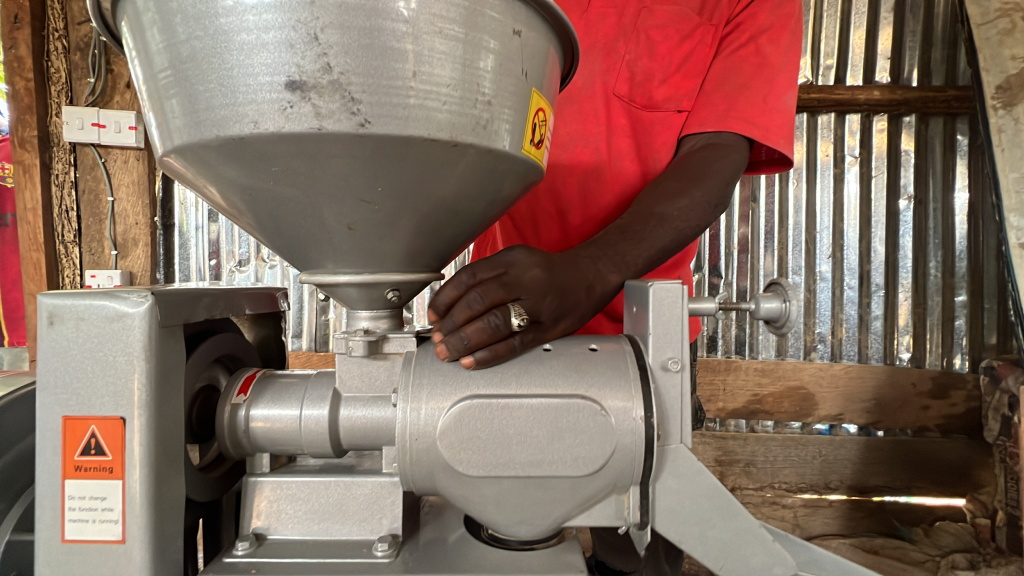
There is a whole lot across the agricultural value chain that needs energy, from farming and harvesting to food processing and value-addition. We need to understand the energy needs across the value chain and bring our members in to provide solutions.
Developers do not necessarily need to provide every productive-use solution themselves. They can partner with equipment suppliers, financiers, agribusinesses and other service providers to enable customers to use electricity productively. The objective is simple: do not just electrify communities; enable economic activity that uses that electricity.
CHN: When Africa’s industrialisation is discussed, you hear things like renewables cannot provide enough baseload, while some food processors are sceptical about switching to renewable energy because of these concerns about reliability. What is your response?
A: It’s not a controversial statement to say that a typical baseload is usually from the grid, and it’s usually from multiple sources including renewable energy. For large-scale operations, we can look at blending multiple sources of energy. But how do we solve the problem of a mid-sized farmer? We can solve it with a mini-grid using renewable energy.
Comment: Every country needs a model to help optimise its energy transition
If you go to a small farmer in a rural area, they don’t care about what source of energy they’re getting. They just want something that can help them get from A to B. If you look at the direct energy needs of farmers and food processors, I’m sure 90 percent of their consumption can be solved by renewable energy. Let’s start with that problem first. Then, as they scale, they might need to ramp up, and we can start talking about a bigger baseload.
CHN: How much agricultural value is lost because farmers and food businesses lack reliable, affordable electricity?
A: If you look at, for example, the fact that we need to maybe plant tomatoes or strawberries in Jos before it gets to Lagos [Nigeria], which most likely is by road, I can assure you that a good chunk, if not stored properly, would be bad by then. So the fact that we do not have energy is in itself a lost opportunity to maximise the potential of the agriculture sector. So until we’ve solved the energy problem, we will not salvage waste – and for me that is a lost opportunity.
CHN: AGRA, an institution focused on scaling agricultural innovations to help smallholder farmers, estimates a massive shortfall between current investments in the continent’s food systems and what is actually needed to build a resilient, profitable agricultural economy – to the tune of $180 billion per year. Can integrating energy into food systems help bridge that gap?
A: Yes – if energy can help unlock the potential to earn more money, investors will follow the money. Investments go where there is certainty, and until there is certainty around cash flow and revenue, investment will be limited.
My vision is to see more Power Purchase Agreements (PPAs) being signed between energy players and the agriculture sector. We can start by getting people into the room, understanding their pain points, crafting a framework and documentation that works for both parties, and then seeing deals happen.
This interview was shortened and edited for clarity.
The post How clean energy can boost business for Africa’s food producers appeared first on Climate Home News.
How clean energy can boost business for Africa’s food producers