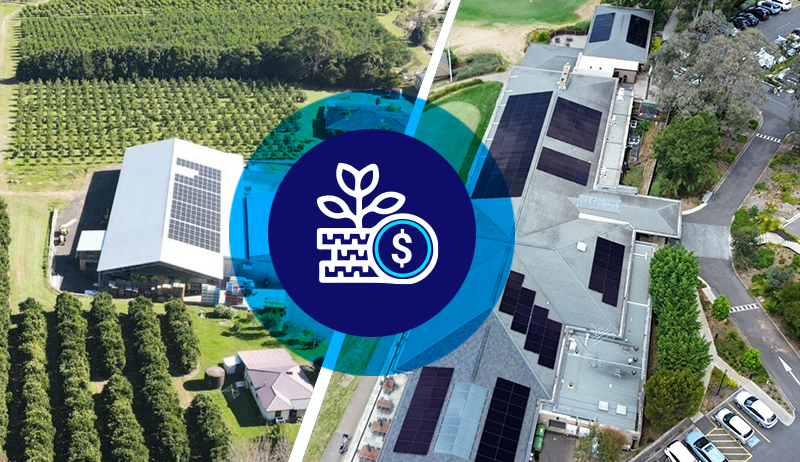
To understand how these benefits play out in real situations, let’s dive into several commercial solar projects executed by Cyanergy. These case studies show diverse applications of solar power and tangible outcomes for different kinds of businesses.
1. Kew Golf Club (VIC): Sporting Facility Goes Solar
At a local golf club that relied on consistent electricity for lighting, clubhouse operations, and course facilities, Cyanergy installed an 88 kW commercial solar system to reduce costs.
Key Results
- Payback period: around 63 months (5 years)
- Annual savings: $26,165, a 50% drop in electricity costs
- Energy generated per year: 141 MWh
This project demonstrates that not only industrial property but also community-oriented facilities can benefit greatly from solar power.
Beyond cost savings, the golf club also reinforced its commitment to sustainability, attracting eco-conscious members and reducing its carbon footprint.
Why This Matters?
Solar is not limited to manufacturing or heavy industry. In Australia, many Sports clubs, community centres, and similar facilities often have high energy use during peak daylight hours, which can be supported by solar.
2. Sparacino Farms: Where Agriculture Meets Solar Innovation!
Whether for irrigation, cooling, processing, or storage, agricultural operations have faced rising energy costs for a long time.
Similarly, Sparacino Farm was suffering from high electricity costs. For this family-run farm, Cyanergy implemented a 99.76 kW solar system that revolutionised their energy expenses.
Project Highlights
- Electricity cost dropped: from $48,000 to $12,000 per year
- Monthly savings: roughly $3,000
- Payback period: 30 months (2.5 years)
- Annual clean energy production: 87 MWh
This dramatic turnaround showcases how rural and agricultural businesses can achieve some of the fastest returns on solar investments.
In environments where a roof, sunlight, or a shed space is available, solar becomes both a strategic and practical choice.
The Sparacino farms example proves that solar isn’t just an environmental sustainability, it’s a core business decision that can significantly improve margins.