Green Living
Green Roof Policies Face: 2026 Update
For 15 years, Toronto showed North America what a green roof mandate could build. Its 2009 bylaw, the first on the continent to both require green roofs and set a construction standard for them, produced more than 1,200 green roofs across the city. On November 3, 2025, the Ontario government revoked the provision of the City of Toronto Act that allowed the bylaw, with no advance notice or phase-out period.
That reversal represents the state of green roof policy in 2026. It’s a time of backlash against environment-minded construction practices. Housing-cost pressure is pushing some governments to loosen or drop requirements, while other cities keep adding them, and most of the newer laws let owners choose solar panels, vegetation, or both.
For building owners, advocates, and homeowners, the practical question now is which roof, under which local rule, delivers the most value for a specific building.
What Are Green Roofs?
A green roof, also called a living roof or ecoroof, is a roofing system that supports living plants. Sod roofs have existed since at least the Middle Ages. The modern version is engineered: Toronto’s definition calls for, at minimum, a root repellent layer, a drainage system, a filtering layer, a growing medium, and plants, all installed over a waterproof membrane.
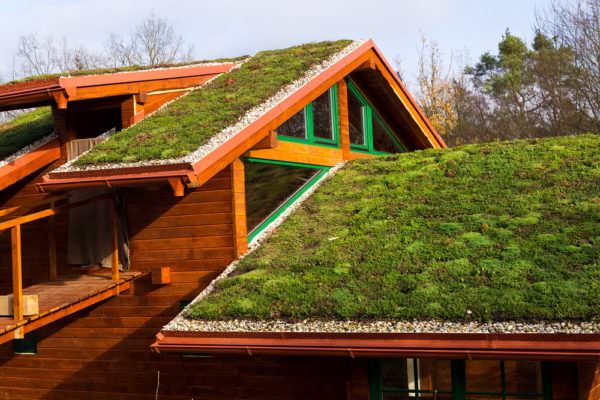
Today’s ecoroof systems fall into two broad families. Extensive roofs use a few inches of lightweight media and hardy, drought-tolerant plants such as sedums. Intensive roofs, on the other hand, use deeper soil that can hold grasses, shrubs, and even trees. The difference is the price: the Environmental Protection Agency noted in January 2025 on a page now removed that a simple extensive roof without public access can cost one-tenth to one-third as much as an intensive roof built for public access.

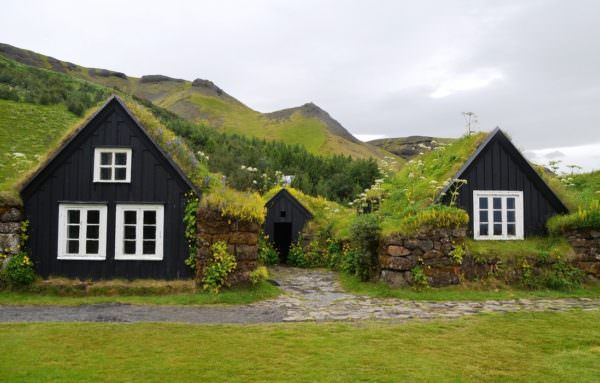
A modern green roof involves more than just plants. It needs high-quality waterproofing and protection against root damage, a drainage system, filter cloth, and a lightweight growing medium. The plants may be small, drought-tolerant ones like sedums, or larger grasses. The system can be modular or site-built, and depending on the planting medium depth, may even resemble a natural meadow or a garden with shrubs and trees.
Project Drawdown ranks green roofs and cool roofs as #73 in their list of solutions to global warming, with an anticipated 0.77 gigaton reduction in carbon dioxide by 2050. If green roofs cover 30% of roof space by 2050 and cool roofs cover 60%, approximately 407 billion square feet of efficient roofing would be in place globally.
A 2024 study published in Nature Cities reports that Seoul’s city-wide green roof implementation could reduce building energy use intensity by up to 7.7%. Another comprehensive 2024 study in Nature Urban Sustainability projected that by 2100, green and cool roofs could reduce HVAC use by up to 71.72% in six cities studied. A 2023 meta-analysis found that green roofs reduce rooftop surface temperatures by an average of 30°C during summer months.
A U.S. General Services Administration study that was removed from its website following the Trump Administration’s anti-green guidance estimated that the heating and cooling savings from green roofs on commercial and public buildings paid back the cost of installation in about 6.2 years.
Residential and Commercial Applications
Green roofs on private residences are very efficient. Despite the high cost of design and installation, which has slowed their adoption as a standard roofing option, they can provide lifetime savings.
Single-family homes accounted for less than 2 percent of green roofs in the U.S. in 2015. Multifamily homes, on the other hand, provide economies of scale that can justify the expense (and sometimes have the square footage to trigger green roof requirements), accounting for 22 percent of green roof projects. That still leaves the vast majority of green roofs to industrial and commercial buildings.
But private homeowners need not despair. Many of the incentives for green roof construction are also available for single-family residences.
Several impressive green roof installations have been completed in recent years:
Will’s Garden at Carle Foundation Hospital is a 2023 Award of Excellence winner that features a therapeutic garden in Urbana, Illinois. The immersive, wheelchair-accessible rooftop included significant technical achievements that allow the plants to grow in only six inches of media.
Construction began on the LXK Office and Residential Campus in Berlin. A designed development, it includes green rooftops and terraces.
Kö-Bogen II, in Düsseldorf, Germany, is a commercial complex features one of Europe’s largest green façades with over 30,000 hornbeam plants that provide a “green heart” and “urban mountain” in the city.
The Vancouver Convention Centre’s six-acre living roof remains the largest in Canada.
The California Academy of Sciences in San Francisco features 1.7 million plants in its living roof.
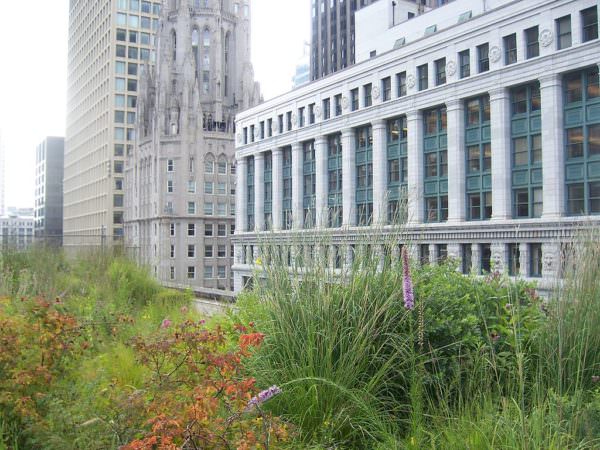
Chicago City Hall’s green roof remains one of the most studied examples, with more than 20,000 plants from 150 species.

Toronto’s Mandate Ends, Its Lessons Remain
Toronto’s bylaw applied to new commercial, institutional, and multi-unit residential developments with more than 2,000 square meters of floor area. Developers who could not fit the required coverage into a floor plan could pay $200 CAD per square meter in fees for the missing ecoroof. The city now advises building applicants that the bylaw is no longer applicable law under the Ontario Building Code.
The repeal followed Bill 17, the Protect Ontario by Building Faster and Smarter Act, which passed on June 3, 2025, after a rapid review process.
The province argued the law bars municipal requirements that go beyond the building code, including Tier 1 of the Toronto Green Standard; city staff disputed that reading, and a builders’ group was already suing the city over the standard. Green Roofs for Healthy Cities founder Steven Peck cited an analysis by local green roof companies that put the added cost at between $1 and $2.50 CAD per square foot of condominium living space, against units selling for $800 to $1,200 CAD per square foot.
Green roofs remain legal and voluntary in Toronto. The city published updated Eco-Roof Incentive Program terms in November 2025, so owners of existing buildings should check whether funding is available.
Where the Rules Stand in 2026
The most aggressive North American ecoroof requirements are concentrated in a handful of U.S. cities, and nearly all of them now treat solar as a qualifying or companion option. The summary below draws on city sources and a 2026 Roofing Brief roundup of mandates by city.
| Jurisdiction | What it requires | Applies to | Status, Nov. 2026 |
|---|---|---|---|
| New York City | Local Laws 92 and 94 (2019): a “sustainable roofing zone” of green roof, solar, or both | New buildings and full roof replacements | In effect |
| San Francisco | Better Roofs Ordinance (2017): 15% of roof as solar or 30% as living roof; SoMa needs 15% solar plus 50% living roof | Most new construction of 10 or fewer occupied floors | In effect |
| Denver | Green Buildings Ordinance (2019): cool roof plus one green option; the green-roof path means 60% vegetation (new) or 18% (existing) | New buildings, additions, and roof permits at 25,000 sq. ft. or more | In effect |
| Portland, Ore. | Central City 2035 ecoroof standard (effective July 2018) | Buildings of 20,000 net sq. ft. or more in the Central City | In effectSolar allowed as an alternative for residential projects since March 2024 |
| Cambridge, Mass. | Article 22 (2021): green roof and/or solar on 80% of available roof, or a per-square-foot payment | Most new buildings over 25,000 sq. ft. | In effect2026 payment is $64.29/sq. ft. of vegetated roof not built |
| Somerville, Mass. | Late 2023 ordinance: vegetation on 80% of available roof area | New mid-rise and high-rise buildings and major renovations, outside the Affordable Housing overlay | In effect |
| Toronto | Green Roof Bylaw (2009): 20% to 60% of available roof, scaled by building size | New buildings over 2,000 square meters | RepealedNo longer in effect since Nov. 3, 2025; Eco-Roof grants for existing buildings remain open |
| France | Climate and Resilience and APER laws: solar or vegetation on a share of the roof | Covered nonresidential new builds, extensions, and heavy renovations | 40% since July 1, 202650% from July 1, 2027; a bill that passed the Senate in Feb. 2026 and awaits National Assembly action would drop the green option |
San Francisco’s 2017 ordinance gives owners a choice between solar and a living roof rather than requiring living roofs outright. Denver’s current ordinance, adopted in 2019, replaced the voter-approved 2017 measure and pairs a cool roof requirement with a menu of compliance options. Portland’s ecoroof standard took effect in July 2018, and the plan was re-adopted in July 2020 after a court challenge.
Portland loosened, Massachusetts tightened. Portland’s Housing Regulatory Relief package, effective March 1, 2024, kept the ecoroof requirement while permitting solar panels as an alternative for buildings with residential uses. On the other side of the country, Cambridge requires green or solar coverage on 80% of available roof area for most new buildings over 25,000 square feet, and developers who build less pay a unit contribution that reaches $64.29 per square foot of vegetated roof in 2026. Neighboring Somerville went further at the end of 2023, requiring 80% vegetated coverage on new mid-rise and high-rise buildings and significant renovations.
France raised its bar, then reopened the debate. French law requires covered nonresidential buildings to put solar or vegetation on part of their roofs, and the share rose from 30% to 40% on July 1, 2026, and will reach 50% on July 1, 2027. A pending bill to align French law with EU rules would, in its Article 45, remove the vegetation option and require solar alone; legislators who object note that the EU buildings directive itself asks member states to account for green roofs.
Vancouver is still writing guidance. The city published a Rain City Green Roof Best Practices Guide in February 2026 and updated its rainwater management requirements in January 2026, but local advocates note that a mandate the council voted to explore in 2018 has not arrived.
Incentives Look Generous, but Few Owners Use Them
New York State extended New York City’s green roof property tax abatement in June 2026. The law, signed June 26, 2026, runs the program through June 30, 2031, at $10 per square foot citywide and $15 per square foot in designated community districts, capped at $200,000 per application and $4 million citywide per year. The application deadline moved to March 15, 2030.
Uptake has been the problem. A 2024 analysis of city Department of Finance records found that only two buildings had received the abatement, which helps explain why lawmakers keep raising the rate. The city’s Department of Environmental Protection runs a separate, rolling grant for green roof retrofits of at least 3,500 square feet on private property; a deputy commissioner told the City Council in 2025 that the program had funded $13 million across 32 sites, mostly green roofs.
Other programs have shrunk. Washington, D.C.’s RiverSmart Rooftops rebate, which offered $15 per square foot in target areas, now carries a notice that the program is closed. Chicago still offers developers in its downtown districts a floor area ratio bonus for green roofs, allowing more buildable space on the same lot.
Barriers to Adoption
Despite growing support, several challenges continue to limit widespread implementation.
- High Costs: Initial installation costs remain a financial barrier. A University of Michigan study found that a 21,000-square-foot green roof costs about $100,000 more to install than a conventional roof. Maintenance costs and the need for specialized expertise add to these expenses.
- Structural Concerns: Existing buildings, especially older ones, may not have been designed to bear the additional weight of saturated soil and vegetation. Assessing and potentially reinforcing structural capacity adds complexity and cost.
- Technical Challenges: The design and construction process requires coordination across multiple disciplines. Green roof components appear on architectural, structural, landscape, and plumbing drawings, while civil engineers handle exterior drainage—creating potential for coordination challenges.
- Policy and Regulatory Gaps: In municipalities without green roof policies, the permitting process for a living roof can pose barriers. Complex approval timelines often mean stormwater management plans are submitted before green roof designs are finalized.
Lack of awareness of green roofs across the public and private sectors, insufficient promotion by government entities, and limited experience with green roof systems in some regions continue to slow adoption. More research is needed to confidently price the public and environmental benefits of green roofs, including their distributed energy savings and cooling effects on surrounding buildings.
Carrots and Sticks: Policy Approaches
Toronto became the first city to require green roofs in 2009; in 2019, New York City became one of the latest major cities to pass mandatory legislation. At least 25 cities in North America now have programs to encourage green roofs, with a trend toward making them mandatory rather than voluntary. The organization also developed the Living Architecture Performance Tool, a free rating system and best practice guide for policymakers.
These cities are taking the next step toward making green roofs a fixture in their skylines:
Portland, Oregon (2020): The city’s “ecoroof” requirement went into effect, mandating that vegetation must cover 100% of roofs on buildings in the central city over 20,000 square feet (with some exceptions).
Denver, Colorado: Denver’s green roof ordinance requires new construction and existing buildings over 25,000 square feet to dedicate portions of their rooftops to vegetation or solar panels. The percentage of vegetation required increases with building size: 20% for 25,000 sq ft buildings, up to 60% for buildings 200,000 sq ft or larger.
San Francisco: The city implemented the first green roof mandate in the United States in January 2017 with its “Better Roofs Ordinance,” requiring living roofs on most new construction as part of the Sustainable City initiative.
New York City: Through the Climate Mobilization Act, Local Laws 92 and 94, passed in 2019, require solar panels or green roofs on all new construction and buildings undertaking major roof renovations. Additionally, the city’s Resolution 66 tripled the tax break for property owners who install green roofs in high-priority areas.

Barriers to Adoption
- Upfront cost. Green roofs cost more to install than conventional roofs, and intensive systems cost several times more than extensive ones. Maintenance and specialized expertise add to the bill.
- Structural capacity. Older buildings may not be designed to carry saturated soil and vegetation. Assessing and reinforcing a roof adds time and cost.
- Green roof components appear on architectural, structural, landscape, and plumbing drawings, while civil engineers handle exterior drainage, which creates room for errors.
- Permitting gaps. Where cities lack green roof policy, approval can be slow, and stormwater plans are often submitted before roof designs are final.
- Housing politics. Ontario and Portland both framed their changes as housing-cost relief. Requirements that lack clear cost data and flexible compliance paths are the most exposed to rollback.
Tips for Planning a Green Roof
For homeowners
- Start small. A garage, shed, carport, or porch roof is a manageable first project and teaches you how plants behave on your site.
- Get the structure checked first. Ask a structural engineer to confirm the roof can carry the system’s saturated weight before you buy materials.
- Choose plants for neglect. Sedums and drought-tolerant natives suited to your region survive best with little irrigation, and native mixes add more habitat value.
- Protect the membrane. Insist on a root barrier, ask about leak detection, and get a warranty that covers the whole assembly, waterproofing included.
- Budget for upkeep. Plan for watering during establishment, weeding, replanting, and at least two inspections a year to keep drains clear.
- Apply before you build. Most rebates and abatements require approval in advance. If your utility charges a stormwater fee, ask whether a green roof earns a credit.
- Handle old materials responsibly. Use Earth911’s recycling search to find outlets for old shingles, membranes, and metal flashing.
For building owners and developers
- Model a biosolar roof. Combining solar panels and vegetation satisfies the compliance menus in New York, Denver, Cambridge, and France, and gives you stormwater and energy benefits from one surface.
- Compare build versus pay. Where cities offer payment in lieu, as Cambridge does, price the payment against the lifecycle savings of building the roof.
- Hire credentialed teams. Look for designers and installers with Green Roof Professional (GRP) training or similar credentials, and require a written maintenance plan.
For advocates and policymakers
- Watch housing bills closely. Toronto’s requirement disappeared by provincial order within months of Bill 17. Comment early when code or zoning relief packages are drafted.
- Push for performance-based rules. Standards keyed to stormwater retention and heat reduction let green, cool, and solar roofs compete on results.
- Fund maintenance and monitoring. Toronto’s experience shows long-term success is achievable: a recent study found more than 90% of the city’s green roofs thriving.
Resources
- Green Roofs for Healthy Cities: Green Roof and Wall Policy in North America
- Living Architecture Monitor for ongoing policy news
- Project Drawdown: Deploy Green Roofs
- Your local planning, building, or stormwater department
Related Earth911 Reading
- Design Your Landscaping to Handle Stormwater Runoff
- How To Combat the Urban Heat Island Effect at Home
- How To Create a Rain Garden
- What Can You Do About Nonpoint Source Pollution?
Editor’s Note: This article was updated in November 2026 to include recent research, policy developments, and examples of green roof installations across North America.
The post Green Roof Policies Face: 2026 Update appeared first on Earth911.
https://earth911.com/home-garden/green-roof-policies-are-a-growing-trend/