Climate Change
Global deforestation slowed in 2025 but Brazil’s election could undo “fragile” gains
Latin American governments cracked down on forest clearing in 2025, leading global deforestation to fall by the most this decade, but political shifts and the likely impact of a strong El Niño threaten to undo those “fragile” gains, a new report has found.
Seven million hectares of forests – roughly the size of Ireland – were lost last year, a 15% drop from 2024. This marks the first meaningful slowdown in deforestation since 145 countries committed to ending deforestation by 2030 at COP26 in Glasgow in 2021, according to an annual assessment of the pledge.
But the researchers cautioned that the world remains 70% off track from fulfilling that promise and, despite progress in Latin America, deforestation in tropical Africa, home to the Congo Basin, kept rising. For the first time, it nearly matched losses in Latin America – a trend the report’s publishers called “particularly ominous”.
Erin Matson, a lead consultant at Climate Focus and one of the report’s authors, said the slowdown in the rate of deforestation “is welcome news”, but last year’s figures “look good in part because previous years look so bad”.
She added that, at the moment, last year’s progress should be seen as an “exception and not a new trajectory because the underlying problem has not gone away”.

Lula’s policies drive progress
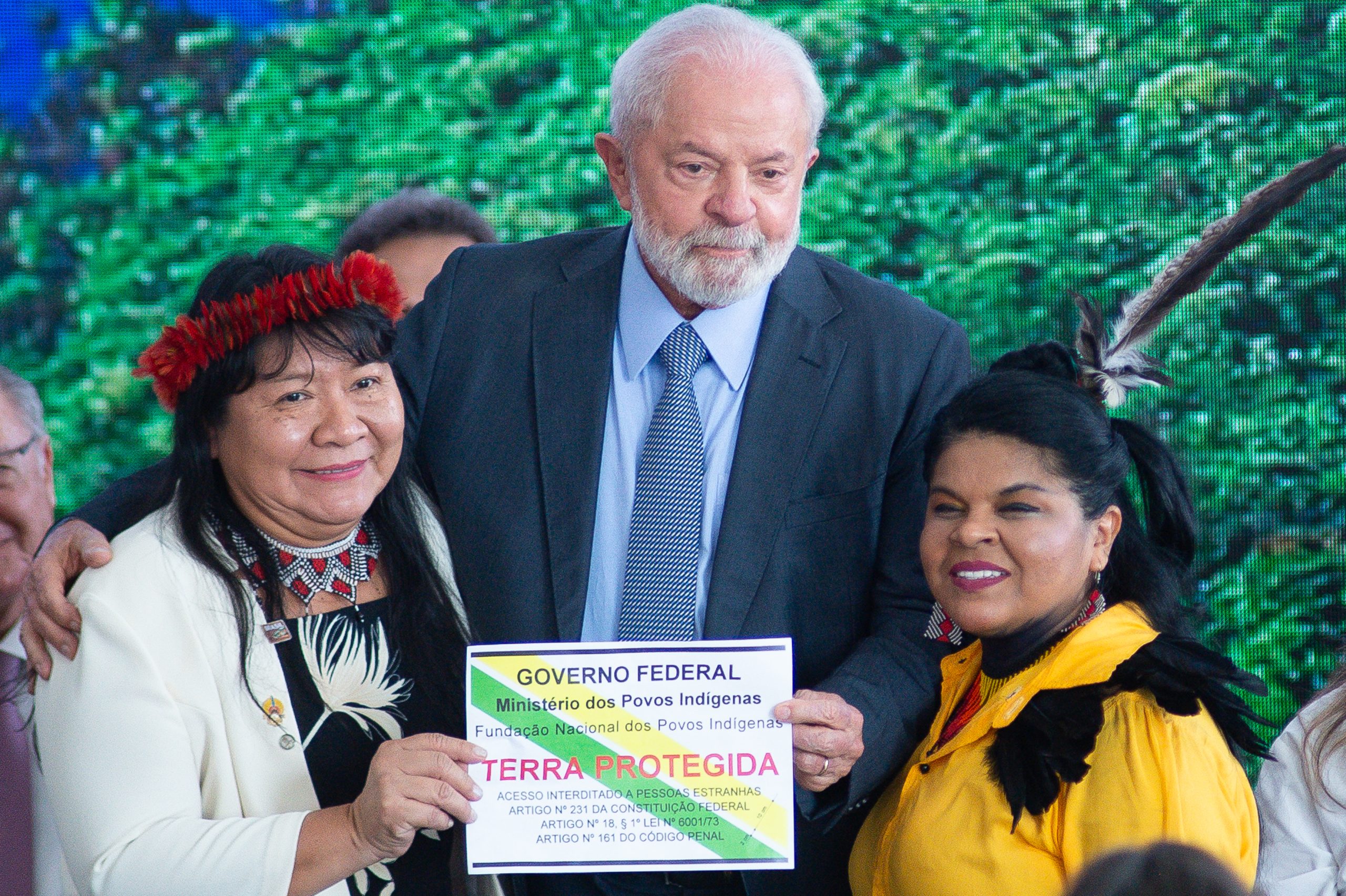
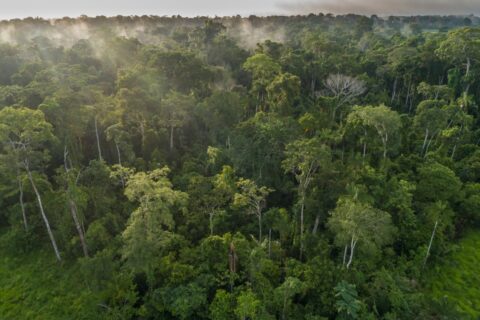
The decline in deforestation was primarily driven by reduced expansion of agriculture and cattle ranching in the Brazilian Amazon rainforest, thanks to a new deforestation action plan introduced by the Lula government and stronger enforcement measures, the report found.
“Brazil provides a concrete example of how national policies can be successful,” said Ana Flávia Corleto, legal analyst at Climate Policy Initiative in Brazil. “The combination of near real-time monitoring and targeted enforcement has contributed to a historical reduction in deforestation alerts in the Amazon, with a 36% decline between August 2025 and July 2026”.
-
Brazil confident new rainforest fund will reach $10bn donor milestone
Brazil’s environment minister said the Tropical Forest Forever Facility has raised billions in record time – which he hopes will convince more investors -
As El Niño intensifies, we should be investing more in the world’s farmers
Finance to help agriculture adapt to a hotter world and more extreme weather is vital for food security – but new data shows it’s on a downward trend


President Lula bolstered efforts to protect the vital Amazon ecosystem when he returned to office in 2023 after enforcement had deteriorated and deforestation skyrocketed under his far-right predecessor Jair Bolsonaro.
Neighbouring Colombia also contributed to the slowdown in forest loss in Latin America last year, posting a fourth consecutive year of falling deforestation, driven in part by reduced cattle-linked clearing.
Brazilian election puts gains at risk
But the researchers warn that this progress rests heavily on the choices of a small number of governments and it is “highly vulnerable” to political shifts in recent and upcoming elections across the Amazon basin.
On October 25, Brazilian voters will choose between Lula and Flávio Bolsonaro, the former president’s son, in a run-off election. Bolsonaro narrowly led the first round with 47% of the vote to Lula’s 45% and polls show the pair neck and neck.
In an interview with TV Globo in August, Bolsonaro said he did not believe in climate change, only in “cyclical” extreme weather events. As a senator, he voted in 2025 for a bill loosening environmental licensing rules.
Although he has pledged to end illegal deforestation by 2029, Brazilian environmental groups fear he could follow his father’s example of weakening forest protections. “Instead of restoring forests, we would face the dismantling of environmental safeguards, land grabbing, illegal mining, and deforestation,” Observatório do Clima, a network of climate NGOs, said on Tuesday. “At the worst possible moment in the global climate crisis, electing another Bolsonaro would be a gift to environmental crime and those who profit from the destruction of the planet”.
Climate Policy Initiative’s Corleto said changing political priorities in the Brazilian federal government can have significant consequences, especially for federal institutions and budgets. But she added that much of the country’s environmental policy is implemented at local or state level and some continuity can be expected there.
Deforestation growth in Congo Basin
Threats to forest conservation are already growing elsewhere in the Amazon region. In Colombia, recently elected far-right President Abelardo de la Espriella has repealed mining restrictions and promised to support oil and gas exploration, which the report’s authors said pose threats to forests.
Latin America has historically been the world’s deforestation hotspot but the second-largest tropical forest, Africa’s Congo basin, has been catching up, the assessment found. Deforestation in tropical Africa rose to 2.4 million hectares in 2025, almost level with the 2.5 million hectares lost across tropical Latin America and the Caribbean.
Forest loss there is driven primarily by smallholder agricultural expansion, logging, infrastructure development, and regulatory systems that lack either the capacity or the political mandate to counter those pressures, the authors found.
“We need to see states with very clear policies, strong legislation and very rigorous enforcement capacity,” said Samuel Nguiffo, a lawyer and founder of Cameroon’s Centre for Environment and Development. “Unfortunately, this is what we seem to be missing. There is a deficit in government capacity”.
El Niño threat
The report also warns that last year’s progress in keeping trees standing could also be eroded by a possible spike in forest fires fuelled by the so-called super El Niño weather pattern which could peak this December.
In Indonesia, which is severely affected by drought in El Niño years, wildfires are currently burning vast swathes of forest. Fire emissions in Indonesia are on track to match 2015, the country’s worst fire season this century, experts told Carbon Brief.
Matson said the world saw a “huge spike” in tree cover loss during the last “super” El Niño event in 2015 and expects to see a similar increase this year. “We can’t fully project the future, but it’s unlikely that in 2026, we’ll see the same kind of reductions that we saw last year”.
The post Global deforestation slowed in 2025 but Brazil’s election could undo “fragile” gains appeared first on Climate Home News.
Global deforestation slowed in 2025 but Brazil’s election could undo “fragile” gains