Carbon Footprint
EU Plans Major Carbon Pricing Overhaul and €30B Clean Tech Boost to Drive Decarbonization


The European Union is preparing to make large changes to its carbon pricing system. EU Commission President Ursula von der Leyen announced that the bloc will revise its Emissions Trading System (ETS) and launch a new €30 billion cleantech investment fund. These moves aim to support the bloc’s climate goals and help industry cope with shifting energy markets.
The announcements came after a summit of EU leaders focused on energy prices and economic challenges. Rising global energy prices and geopolitical pressures are affecting Europe’s economy and industry.
The new proposals aim to improve the EU’s carbon pricing system. They will also encourage investment in clean technology throughout the bloc.
Von der Leyen said:
“The Emissions Trading System is working. It has massively reduced gas consumption. Because of that, it has reduced our dependency on imports of fossil fuels, and it has reduced our vulnerability. And it has driven major investments in the energy transition in the low-carbon energy sources like renewables and nuclear that are homegrown and give us independence. But we need to modernise it and make it more flexible.”
What Is the EU Emissions Trading System and Why Change It?
The EU’s Emissions Trading System is the bloc’s main carbon pricing tool. It was set up in 2005 to reduce greenhouse gas emissions from major industrial sectors. These include electricity and heat generation, steel, cement, chemicals, and commercial aviation.
Under the ETS, companies must buy permits for each ton of carbon dioxide they emit. The total number of permits is capped to reduce emissions over time.
Over nearly two decades, the ETS has helped reduce Europe’s dependence on fossil fuels and encouraged investment in cleaner energy. It is often viewed as a cornerstone of the EU’s climate policy.
The EU ETS continues to generate large revenues that fund climate action across Europe. In 2025, total ETS auction revenues exceeded €43 billion, with about €24 billion going directly to EU member states.
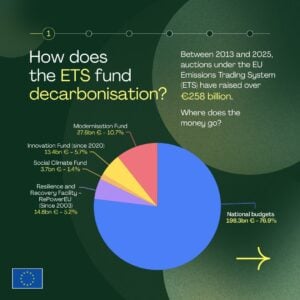

The remaining funds were allocated to EU-level programs such as the Innovation Fund, Modernisation Fund, and the Social Climate Fund. Overall, ETS revenues since 2013 have surpassed €258 billion, making it one of the world’s largest carbon market funding sources.
However, rising energy costs are pressuring European industries. They started with the war in Ukraine and are now impacted by conflicts in the Middle East. Some member states have asked for a review of the ETS to ease short‑term burdens.
Planned changes “in the next days” may include:
- Updating benchmarks for free allowances given to the industry.
- Strengthening the Market Stability Reserve, which manages the supply of carbon allowances to stabilize prices.
Future changes will seek a “more realistic trajectory.” They may also extend free allocation for some industries past 2034.
Carbon Pricing in Europe: The Stakes and the Context
Carbon pricing has been a key driver of investment in clean energy. ETS prices influence how companies weigh fossil fuels versus low‑carbon options. In recent weeks, ETS prices have fluctuated, partly in response to talks about reform and broader energy market volatility.
Recent reports noted that benchmark EU carbon prices jumped almost 10% after policy statements from EU leadership.
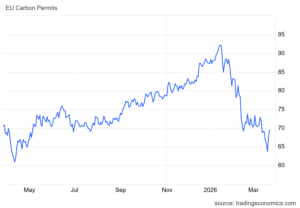

Market stability is a core concern. The ETS’s design includes mechanisms to support consistent carbon prices, especially during times of economic stress. A strong and predictable carbon price can help investors commit to long‑term clean energy projects. Conversely, sudden changes can raise costs for industrial players and weaken investment incentives.
At the same time, formal industry and civil society groups have called for regulatory certainty. They say stable carbon pricing is key for planning big clean energy projects. It also helps the EU keep its role as a leader in global climate efforts. These groups emphasize that unpredictable policy shifts could slow clean industrial growth and raise risk for new projects.
A New €30 Billion Cleantech Fund to Boost Decarbonization
Alongside ETS reform, von der Leyen announced plans for a €30 billion ETS Investment Booster. This new fund will support decarbonization and clean technology projects across Europe. It will be financed by revenues from the ETS, meaning carbon pricing will help fund climate action directly.
The booster fund will operate on a “first-come, first-served” basis to support ready‑to‑deploy projects. Von der Leyen said that the fund will ensure access for lower‑income member states. This is intended to promote fairness across the EU and help balance regional disparities in clean technology investment.
The new fund complements existing EU climate finance mechanisms. The Innovation Fund has backed many projects. These include renewable energy, energy storage, and industrial decarbonization.
In 2024, the Innovation Fund provided €4.8 billion in grants. This supported 85 innovative net-zero projects. These efforts helped reduce nearly 476 million tonnes of CO₂ in the first decade.
Expanding funding sources for clean industrial investments reflects a broader EU trend. The Clean Industrial Deal, launched in 2025, plans to raise over €100 billion. This funding will support clean technology manufacturing, create jobs, boost energy efficiency, and promote circular economy solutions.
Renewables, Baseload, and Energy Market Trends in Europe
The EU’s net‑zero journey sits against a backdrop of changing energy markets. Renewable energy deployment in Europe continues to grow rapidly.
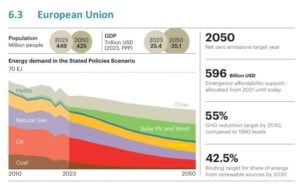

Wind and solar now make up an increasing share of electricity generation in many member states. These technologies are expected to gain further market share as costs fall and grid integration improves.
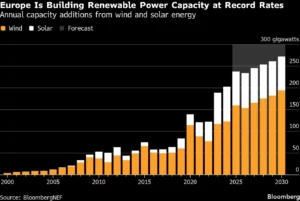

However, the need for stable and resilient power systems has grown. Renewable sources like wind and solar are variable by nature. This increases interest in baseload options like geothermal, hydropower, nuclear, and storage paired with renewables.
Meanwhile, global energy prices have remained volatile. Brent crude prices rose above $110 per barrel due to geopolitical tensions. This increase is driving up electricity and heating costs in Europe. These price swings can influence industrial competitiveness and household energy bills.
EU leaders view carbon pricing and investment in decarbonization as key to reducing long-term risks from unstable fossil fuel markets. Policymakers want to use ETS revenues for clean technologies. This will help reduce the need for imported fuels and boost energy independence.
Industry Reaction: Balancing Flexibility and Climate Signals
The proposed changes have drawn mixed reactions. Some industry groups welcomed the updates to the ETS. They said the funding support could help reduce short-term cost pressures. Others warn that too much flexibility could weaken long‑term climate signals and reduce investment certainty.
Civil society organizations have stressed the importance of maintaining carbon pricing integrity. They believe a strong, predictable ETS is key. It will boost investment in electrification, renewables, energy efficiency, and circular economy solutions. Maintaining the market’s rules‑based design, supporters say, will help the EU stay on track with its 2030 and 2040 climate targets.


The European Council has invited the Commission to present a formal ETS review by July 2026 at the latest. This timeline reflects the urgency of balancing climate goals with current economic pressures.
Looking Ahead: Combining Policy and Investment for Climate Goals
The post EU Plans Major Carbon Pricing Overhaul and €30B Clean Tech Boost to Drive Decarbonization appeared first on Carbon Credits.